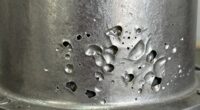
After a coolant service, air pockets can form if the system isn’t properly bled, causing overheating and poor heater performance. To fix this, you need to carefully follow a bleeding procedure: fill the system slowly, run the engine, and open bleeder valves while squeezing hoses to release trapped air. repeating these steps guarantees all air is removed. If you’re interested in a detailed step-by-step guide, keep going for all the essential tips.

Get business pricing on garage and car supplies
- Business-only prices and quantity discounts
- Tax-exempt purchasing
- Multiple users, one account, clear invoices
Key Takeaways
- Air pockets form when trapped air isn’t fully expelled during coolant refilling, causing engine overheating.
- Proper bleeding involves running the engine, opening bleeder valves, and squeezing hoses to release trapped air.
- Monitoring coolant levels and engine temperature after bleeding ensures all air is removed and the system functions correctly.
- Common mistakes include not opening bleeder valves or filling too quickly, leading to persistent air pockets.
- Persistent overheating or noise indicates the need for re-bleeding or professional inspection of the cooling system.
As an affiliate, we earn on qualifying purchases.
Why Air Pockets Form After Coolant Service
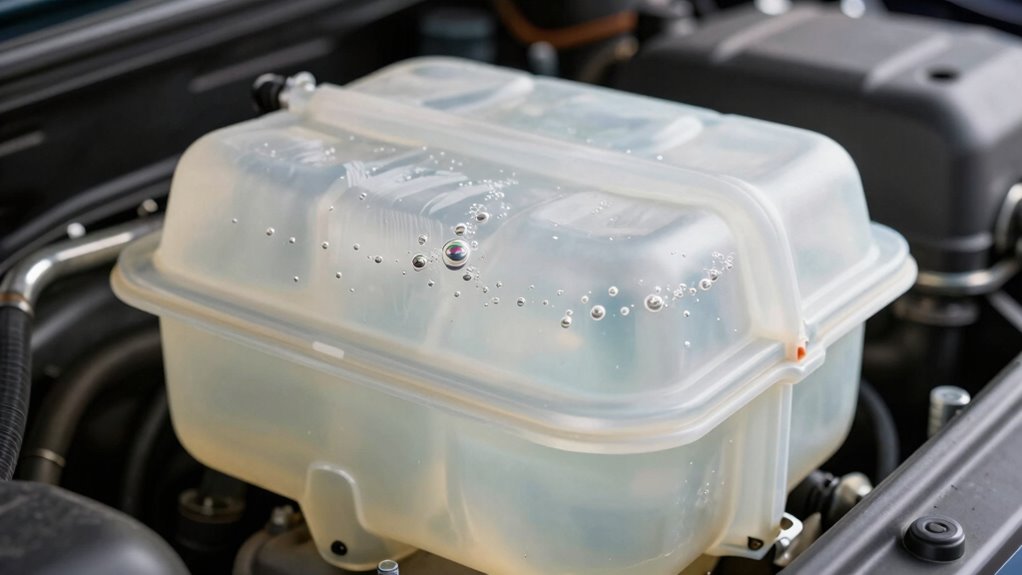
Air pockets often form after coolant service because air gets trapped inside the cooling system when you drain or replace the coolant. As you remove old coolant, small amounts of air can enter through open hoses or fittings. When you refill the radiator, the coolant may not completely fill every nook and cranny, leaving pockets of air behind. These trapped air bubbles are hard to see but can cause problems later. Additionally, when you top off the system without properly bleeding it, air can accumulate, especially if the system isn’t designed to vent automatically. This residual air can interfere with proper coolant flow, increasing the risk of overheating and engine damage. Proper bleeding is essential to eliminate these air pockets and ensure efficient cooling. Understanding coolant systems helps clarify why proper bleeding procedures are crucial for preventing these issues.
As an affiliate, we earn on qualifying purchases.
Signs of Air Pockets in Your Cooling System

When air pockets form in your cooling system, they often trigger noticeable warning signs that something isn’t functioning properly. You might notice your engine running hotter than usual, with the temperature gauge creeping higher than normal. A common sign is frequent overheating, especially after a coolant service. You could hear gurgling or bubbling noises coming from the radiator or heater core. Reduced heater performance might also occur, with warm air turning cold. Additionally, you may see coolant leaks or low coolant levels without an obvious cause. These symptoms indicate trapped air disrupting proper coolant flow. Recognizing these signs early helps prevent engine damage, overheating, or hot spots. Addressing air pockets promptly guarantees your cooling system functions efficiently and keeps your engine protected. Understanding cooling system principles can help you better diagnose and resolve these issues.
As an affiliate, we earn on qualifying purchases.
Step-by-Step Guide to Bleeding Air Pockets
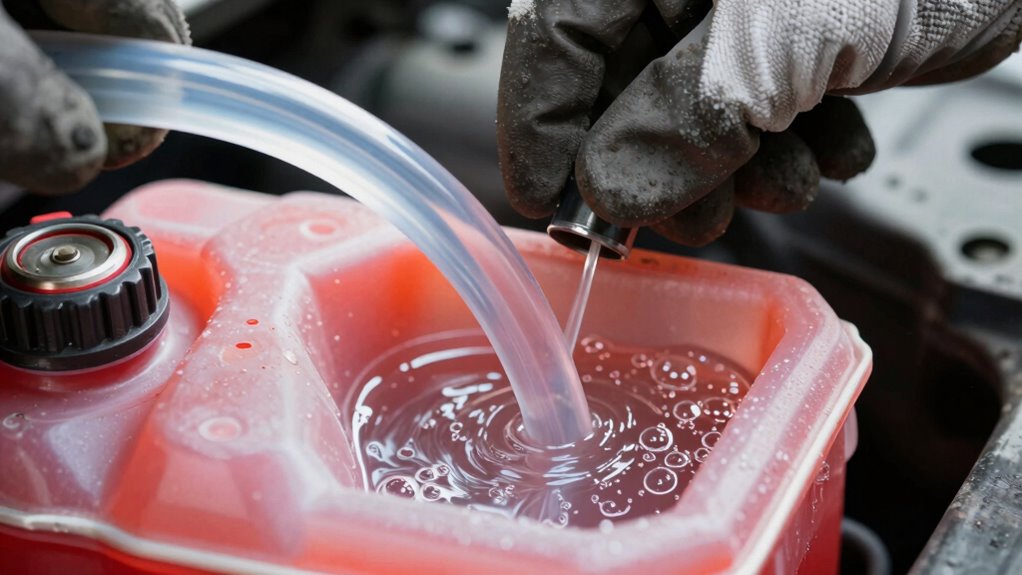
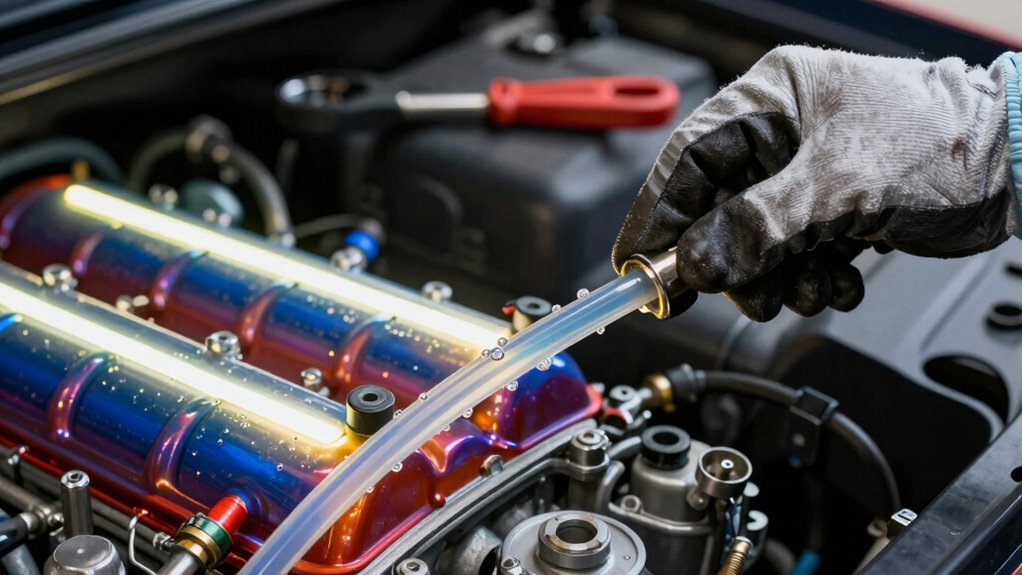
To effectively remove trapped air from your cooling system, start by ensuring the engine is off and completely cooled down. This prevents burns and allows the coolant to settle. Next, loosen the radiator cap slightly to release pressure, then remove it entirely. Fill the radiator slowly with a funnel, keeping an eye on the coolant level. Start the engine and let it run at idle; this circulates the coolant. Open any bleeder valves to vent air, and squeeze the upper radiator hose gently to help dislodge pockets. Additionally, consulting a comprehensive cooling system guide can provide more detailed troubleshooting steps. Finally, set your A/C to the hottest setting to help purge remaining air. Keep an eye on the temperature gauge. Repeat the process as needed until no air bubbles appear, and the system remains steady.
As an affiliate, we earn on qualifying purchases.
Tools and Safety Tips for Bleeding Air Pockets
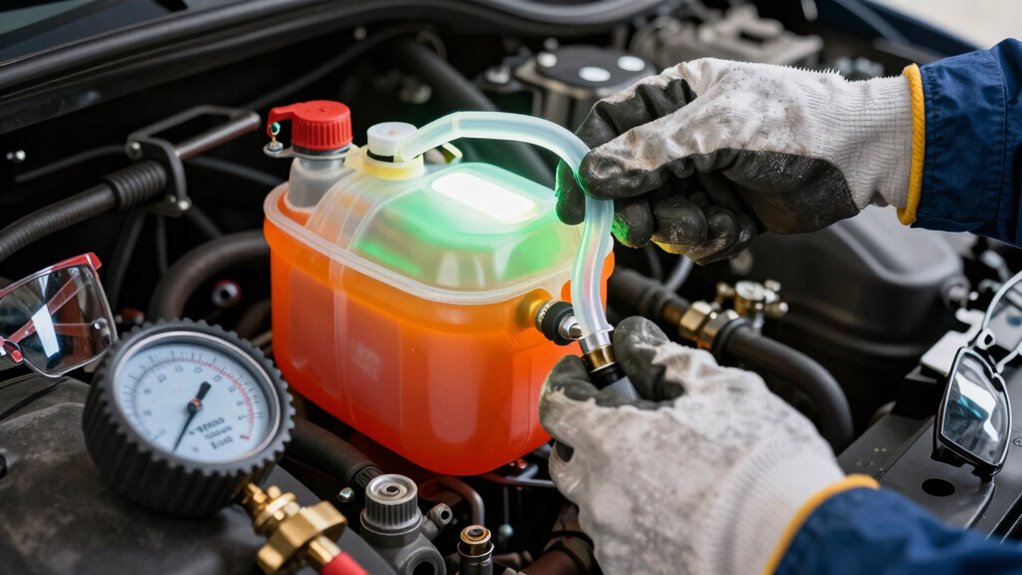
Before you start bleeding air pockets, make sure you have the right tools and safety gear. Handling wrenches, screwdrivers, and coolant requires caution to prevent injuries or damage. Always follow proper tool handling procedures and wear gloves and safety goggles to stay protected. For added safety, ensure your home safety measures are up to date to prevent accidents during maintenance.
Essential Safety Equipment
Having the right safety equipment is essential for a safe and effective bleeding process. It protects you from potential hazards and guarantees smooth operation. Always wear gloves to prevent contact with hot coolant and safety goggles to shield your eyes from splashes. Keep a fire extinguisher nearby in case of emergencies involving flammable materials. Use a wrench or screwdriver properly to avoid slipping or damaging components. Have a container ready for old coolant to prevent spills and environmental harm. Finally, confirm the workspace is well-ventilated to avoid inhaling fumes. Proper color accuracy ensures that the coolant system is correctly bled, reducing the risk of future issues.
Proper Tool Handling
Proper tool handling is essential for safely and effectively bleeding air pockets from your cooling system. Always use the correct wrenches and screwdrivers to avoid damaging fittings or hoses. Before starting, inspect your tools for wear or damage, and keep them clean. Wear gloves and safety goggles to protect your hands and eyes from hot coolant or splashes. When removing or tightening components, do so gently to prevent stripping threads or cracking plastic parts. Use a funnel to avoid spills and ensure precise coolant filling. Keep old coolant in a sealed container, and dispose of it properly. Handle the radiator cap carefully—wait until the engine is cooled to prevent burns. Proper tool handling minimizes accidents and ensures a smooth, safe bleeding process. Additionally, understanding the plant parts involved in herbal remedies can help you select the most effective components for your health.
Common Mistakes When Bleeding Your Cooling System

One common mistake when bleeding your cooling system is neglecting to remove all air pockets thoroughly, which can lead to overheating and engine damage. If you leave trapped air, your engine won’t cool efficiently, risking hot spots and potential failure. To avoid this, pay close attention during the bleed process.
Be sure to:
- Skip opening bleeder valves or neglect to use them properly
- Fill the radiator too quickly, trapping air inside
- Fail to run the engine long enough to circulate coolant fully
- Squeeze hoses without opening bleed points to release trapped air
- Forget to set the heater to hot to help purge air from the system
These mistakes can compromise your cooling system and cause costly repairs.
How to Check If All Air Pockets Are Gone
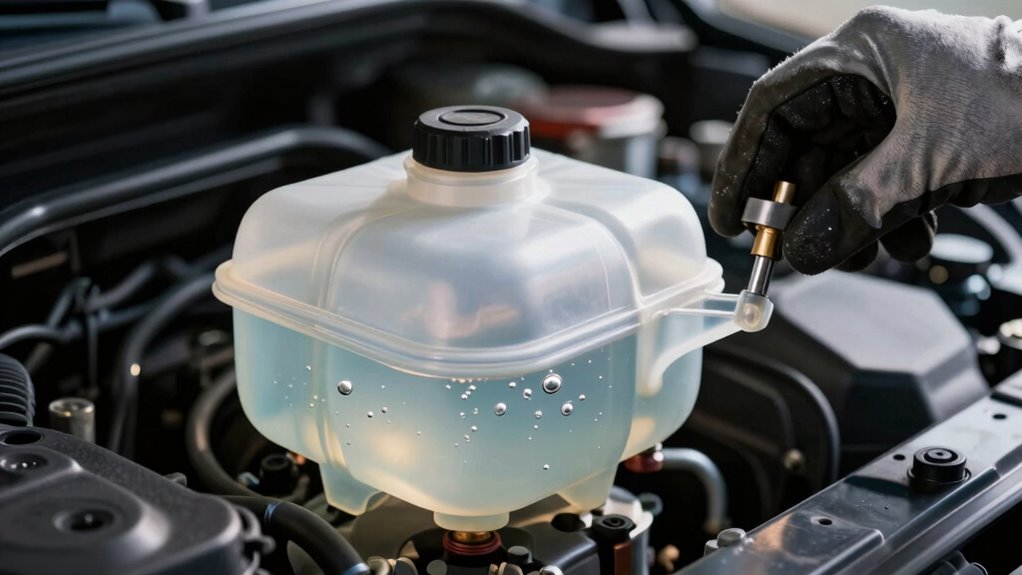
To guarantee all air pockets are gone, start by watching your temperature gauge for any sudden rises. Next, check the coolant level in the reservoir and radiator—if it’s low, trapped air might still be present. Finally, pay attention to your engine’s performance; if it runs smoothly without overheating or overheating signs, the air pockets are likely gone. Additionally, ensure you have properly followed the bleed procedure recommended for your vehicle to prevent residual air from remaining in the system.
Check Temperature Gauge
How can you tell if all air pockets are gone from your cooling system? The main indicator is the temperature gauge. If it stays within the normal range during operation, your system is likely free of air pockets. Watch for sudden spikes or fluctuations, which suggest trapped air. Also, listen for gurgling sounds from the radiator or heater core, signaling trapped air moving. Consistent engine temperature during idle and driving confirms proper circulation. Keep an eye on warning lights or error codes related to overheating. Finally, check for steady coolant flow from the heater core hoses. Regularly monitor these signs to ensure your cooling system runs efficiently and prevent overheating issues. Additionally, performing a bleed procedure properly helps eliminate residual air pockets that may still be present.
Inspect Coolant Level
After bleeding your cooling system, checking the coolant level is essential to confirm that all air pockets are gone. Start by removing the radiator cap carefully once the engine cools down to prevent burns. Observe the coolant level inside the radiator; it should be near the top or within the marked safe range. If the level is low, add the correct coolant type using a funnel, filling slowly to avoid introducing more air. Reinstall the cap securely. While the engine is running and warmed up, watch for consistent coolant levels without significant drops. Fluctuations may indicate trapped air still present. Verify the coolant remains at the proper level, as an insufficient amount could cause overheating or air pockets to re-form.
Observe Engine Performance
Monitoring your engine’s performance after bleeding the cooling system helps confirm that all air pockets are gone. Pay attention to how the engine runs and watch for signs of issues. If the engine temperature stays steady and below the red zone, it indicates proper cooling. Listen for unusual noises like knocking or overheating sounds. Notice if the heater blows warm air consistently, which shows good coolant flow. Keep an eye on the temperature gauge for any fluctuations. If the engine runs smoothly without overheating or temperature swings, you likely removed all air pockets. Additionally, proper coolant circulation ensures the system is free of trapped air and functioning correctly.
- Check for steady engine temperature
- Observe heater performance
- Listen for abnormal noises
- Monitor for coolant leaks
- Take a short test drive to confirm proper operation
Troubleshooting Ongoing Cooling Problems
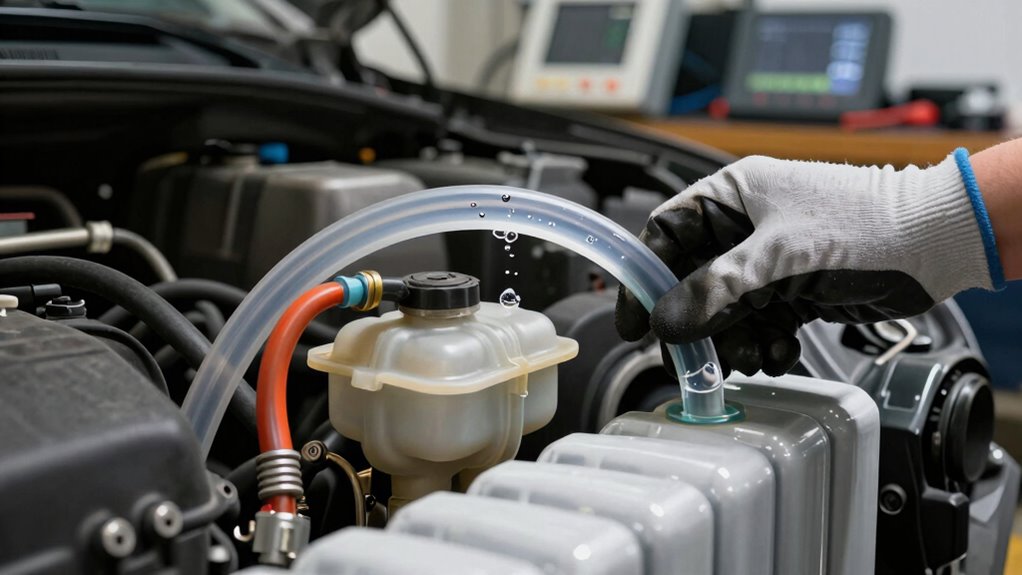
Persistent cooling issues often indicate trapped air or other underlying problems in your cooling system. If your engine still runs hot despite a recent coolant service, start by checking for air pockets. Repeat the bleeding process, ensuring you open bleeder valves properly and squeeze the radiator hoses to release trapped air. Verify coolant levels are correct and look for leaks around hoses, radiator, and water pump. Inspect the thermostat and water pump for proper operation, as malfunctions here can cause overheating. Keep a close eye on the temperature gauge during operation and test drive your vehicle to confirm cooling performance. If problems persist after these steps, further inspection of the cooling system components may be necessary to identify hidden issues affecting heat dissipation. Recognizing market cycles can also help anticipate when cooling system components might be under increased stress due to seasonal temperature variations.
When to Call a Mechanic for Cooling System Issues

Knowing when to call a mechanic can save you time and prevent further damage to your engine. If you notice persistent overheating despite bleeding the system, it’s time to seek professional help. You should also call a mechanic if coolant leaks continue after repairs, or if your temperature gauge spikes unexpectedly. Unusual engine noises, steam from the hood, or a sweet smell from the engine bay are warning signs. Additionally, if your coolant levels drop quickly or the heater stops working, these issues may need expert diagnosis. Don’t ignore warning signs like persistent air pockets or unresolved overheating. Prompt professional assistance ensures your cooling system gets properly inspected, repaired, and tested to prevent costly engine damage later. Regular maintenance and a holistic SEO approach can help identify underlying issues before they become serious problems.
Preventing Air Pockets After Future Coolant Changes
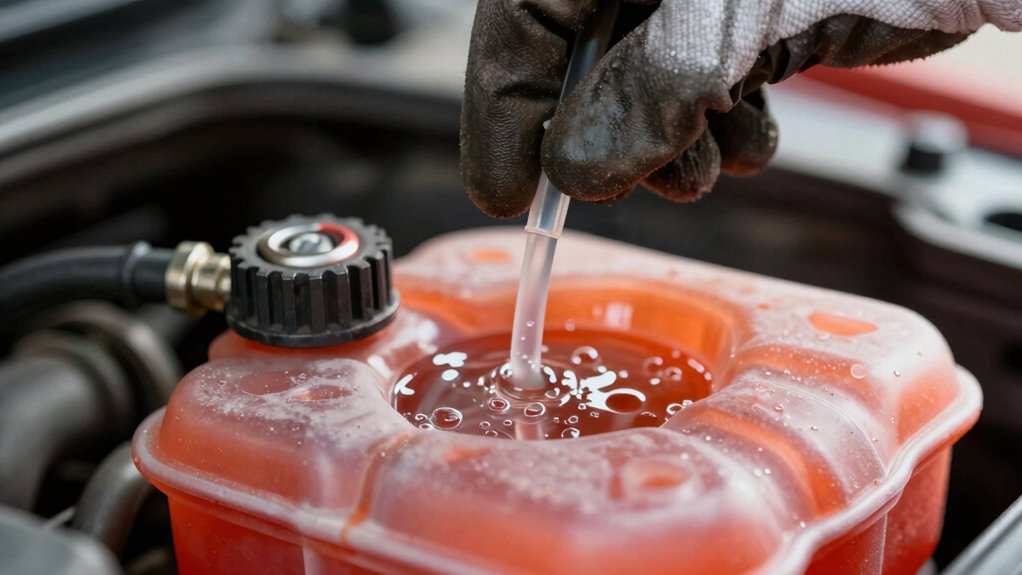
To minimize the chances of air pockets forming after future coolant changes, proper preparation and careful procedures are key. Always start with a cooled engine and ensure the vehicle is parked on an incline or jacked up to help coolant flow smoothly. Use the correct coolant type and fill the radiator slowly with a funnel to prevent air entrapment. Before replacing the radiator cap, double-check that the system is topped off. When topping off, squeeze the hoses gently to push out trapped air. After refilling, run the engine and open bleeder valves if available to release any remaining air. Regularly monitor the temperature gauge and coolant level, and repeat the bleeding process if needed. These steps help prevent air pockets and keep your cooling system running efficiently. Proper understanding of traditional Indonesian home decor principles can also inspire aesthetic choices that complement your vehicle’s interior or garage space, creating a harmonious environment.
Frequently Asked Questions
How Do I Know if Air Pockets Are Causing Engine Overheating?
You’ll notice the engine overheating if the temperature gauge rises above normal or if you see steam or coolant leaks. You might also feel the engine running hotter than usual or experience inconsistent temperature readings. If the heater isn’t providing warm air, that’s another sign. Address these issues promptly, as air pockets trap heat and reduce cooling efficiency, risking engine damage if not resolved quickly.
Can I Bleed Air Pockets Without Professional Tools?
Yes, you can attempt to bleed air pockets without professional tools. Start by filling the radiator slowly with coolant using a funnel, then run the engine with the heater on high to circulate the fluid. Open any bleeder valves you find, and gently squeeze the radiator hose to help release trapped air. Keep an eye on the temperature gauge, and repeat if needed until you see no more bubbles.
How Long Does the Bleeding Process Typically Take?
The bleeding process usually takes about 15 to 30 minutes, and it’s vital to do it thoroughly. Did you know that incomplete bleeding can cause engine overheating in as little as 10 minutes of driving? You should run the engine, open bleeder valves, and squeeze hoses until no more air bubbles appear. Take your time—rushing this step risks damaging your engine, so patience guarantees a proper fix.
Is It Necessary to Repeat Bleeding After Every Coolant Change?
Yes, you should repeat the bleeding process after every coolant change. Air pockets can still form despite initial bleeding, especially if the system wasn’t fully purged. Repeating guarantees all trapped air is removed, maintaining proper circulation and preventing overheating. Always check the coolant level and temperature gauge afterward, and consider bleeding again if you notice any signs of overheating or inconsistent temperature readings.
What Are the Risks of Not Removing Air Pockets Properly?
If you don’t remove air pockets properly, you risk engine overheating because hot spots develop, leading to potential engine damage. Reduced cooling efficiency means your engine won’t stay at the right temperature, possibly causing it to run poorly or fail. Air pockets can also cause inconsistent heater performance and trigger warning lights. To avoid these issues, always make certain you thoroughly bleed the cooling system after any coolant service.
Conclusion
Now that you know how to bleed air pockets, you’re like a skilled captain steering clear of turbulence in your cooling system. By following the steps carefully, you’ll keep your engine running smooth and cool, avoiding overheating like a ship avoiding storms. Remember, a well-bleed system is your best defense against costly repairs. Stay vigilant, and your cooling system will stay as calm as a lake on a windless day.
Columbus Day / Indigenous Peoples' Day Picks
long weekend sales
As an affiliate, we earn on qualifying purchases.