
Coolant test strips mainly measure chemical properties like glycol concentration and pH levels, helping you assess if your coolant still offers proper antifreeze protection. They can detect contaminants and dilution but don’t reveal issues like corrosion or sediment buildup. Keep in mind, results can be affected by improper use or expired strips. To guarantee accurate info on your cooling system’s condition, continue exploring what else these strips can and can’t tell you.
Open a free Amazon Business account
Business pricing, bulk buying and tax-exempt orders.
As an affiliate, we earn on qualifying purchases.
Key Takeaways
- Coolant test strips primarily measure glycol concentration and pH levels to assess antifreeze properties and coolant acidity.
- They do not evaluate corrosion, sediment buildup, or oil contamination within the cooling system.
- Results can be influenced by improper storage, contamination, or incorrect testing procedures.
- Strips provide a quick chemical snapshot but should be supplemented with comprehensive system diagnostics.
- Limitations include potential false readings; regular monitoring ensures better engine health and prevents costly repairs.
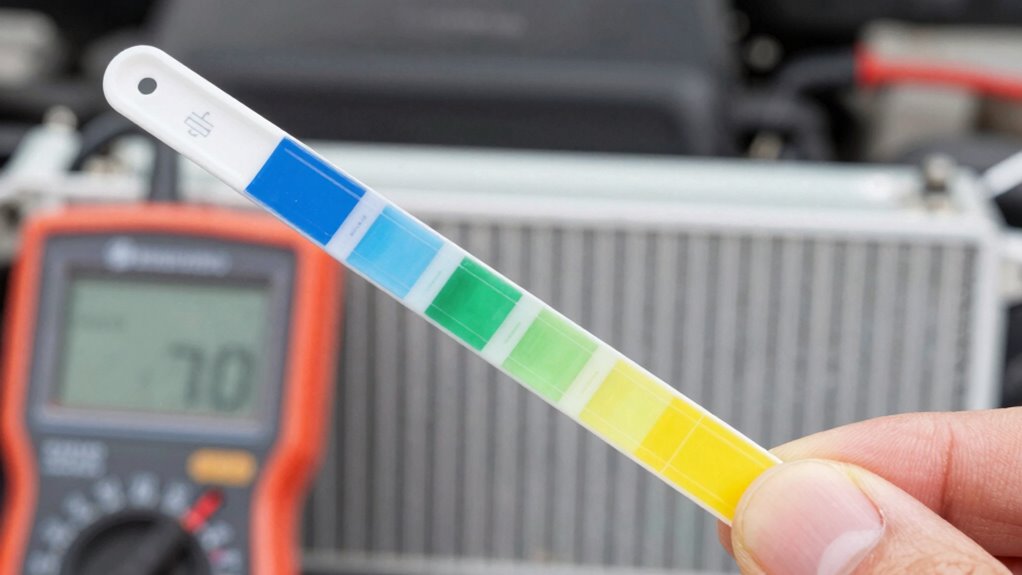
If you want to keep your vehicle running smoothly, regularly testing your coolant is essential. Coolant test strips are an easy and affordable way to check the condition of your vehicle’s cooling system without needing specialized equipment. These strips work by measuring specific chemical properties in the coolant, giving you a quick snapshot of whether your coolant still offers proper antifreeze properties. However, it’s important to understand what these strips actually measure and their limitations to avoid relying on them solely for maintenance decisions.
When you dip a coolant test strip into your vehicle’s radiator or reservoir, it reacts with the liquid’s chemicals, primarily focusing on indicators like pH, glycol concentration, and sometimes the presence of contaminants. These readings help determine if your coolant still maintains its antifreeze properties, which are crucial for protecting your engine against freezing in cold weather and overheating in high temperatures. Because antifreeze properties directly influence your engine’s performance and longevity, testing accuracy becomes vital—if the strips give false readings, you might either think your coolant is fine when it’s not or replace it prematurely.
Most coolant test strips are designed to measure the concentration of glycol, the primary component responsible for antifreeze qualities. If your coolant’s glycol level drops below a certain point, it indicates the coolant has degraded or become diluted, reducing its ability to prevent freezing and overheating. The strips are simple to use, but their testing accuracy can be affected by factors like contaminations, the age of the strip, or improper storage. It’s essential to follow the instructions carefully and ensure the strip is used within its expiration date for the most reliable results.
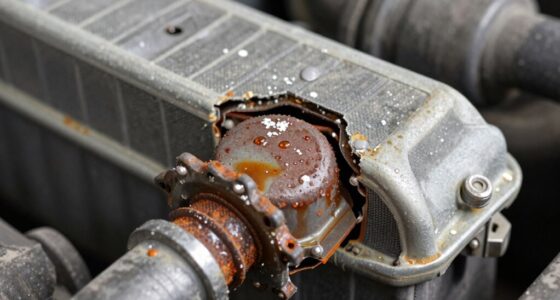
However, coolant test strips do have limitations. They don’t measure every aspect of coolant condition, such as corrosion levels, sediment build-up, or the presence of oil contamination. These issues can also impair cooling system performance but won’t be detected by simple chemical strips. Additionally, the temperature at which you perform the test can influence the reading, so ensure you’re testing at the recommended temperature for accurate results. Regularly monitoring coolant quality using comprehensive testing methods can help maintain optimal engine health and prevent costly repairs.
coolant test strips for vehicles
As an affiliate, we earn on qualifying purchases.
As an affiliate, we earn on qualifying purchases.
Frequently Asked Questions
How Often Should Coolant Test Strips Be Used?
You should use coolant test strips every 3 to 6 months to maintain proper engine health. This ideal testing frequency helps you monitor coolant condition without overusing the strips, considering their limited test strip longevity. Regular testing detects issues early, preventing costly repairs. Keep in mind that environmental factors and vehicle use may influence how often you need tests, so adjust your routine accordingly for best results.
Can Test Strips Detect All Types of Coolant Contaminants?
Imagine you’re checking your coolant and suspect a contamination. Test strips mainly detect common antifreeze components like glycol levels but can’t identify all contamination types, such as oil or dirt. So, no, they don’t detect all coolant contaminants. For example, if oil leaks into your system, test strips won’t catch it. Use thorough testing methods for a complete assessment, especially if you suspect unusual contamination.
Are There Different Test Strips for Different Vehicle Models?
Yes, there are different test strips for various vehicle models. You need to verify vehicle compatibility before purchasing, as some strips are designed for specific engine types or coolant brands. Brand variations also matter, since certain test strips work better with particular coolants. Always read product labels carefully to guarantee you select the right test strips for your vehicle to get accurate readings and avoid potential damage.
How Accurate Are Coolant Test Strips Compared to Lab Tests?
Coincidences happen, and so do surprises in coolant testing. You’ll find that test strips are fairly accurate for quick checks, but their readings can be affected by sensor calibration and the chemical composition of your coolant. Lab tests, however, offer more precise measurements, especially when you need detailed analysis. While strips are convenient, don’t rely solely on them if you need exact data; calibration issues can skew results.
What Should I Do if the Test Strip Shows a Problem?
If your test strip indicates a problem, you should promptly check for signs of a coolant leak and assess your radiator’s performance. You might need to top off the coolant or schedule a professional inspection to prevent overheating. Keep an eye on the radiator for leaks or damage, and consider using a coolant leak detection kit for more accurate results. Addressing issues early helps maintain ideal engine cooling.
As an affiliate, we earn on qualifying purchases.
Conclusion
Ultimately, coolant test strips clarify what they can measure but caveats count. While they quickly check chemistry, they can’t capture complex conditions or detect every issue. Remember, don’t rely solely on strips—combine caution with consistent care. Conduct thorough checks, consider calibration, and stay cautious. Clear conclusions come from careful, conscientious care—because understanding coolant conditions keeps your car cool and your confidence high.
automotive glycol concentration test strips
As an affiliate, we earn on qualifying purchases.
As an affiliate, we earn on qualifying purchases.
As an affiliate, we earn on qualifying purchases.
NFL season / tailgating Picks
team gear
As an affiliate, we earn on qualifying purchases.