
Some cooling systems need silicates because they form a protective, self-healing film on metal surfaces, which helps prevent corrosion and keep the engine running smoothly. Other systems avoid silicates to prevent deposit buildup, which can clog the radiator or heater core. The choice depends on your engine’s design and the type of coolant used. If you want to understand which options best protect your vehicle, there’s more to discover below.
Key Takeaways
- Some cooling systems rely on silicates for forming a protective, self-healing film on metal surfaces to prevent corrosion.
- Silicate-containing coolants are essential for older engines designed specifically for silicate chemistry.
- Modern engines often avoid silicates (using HOAT or OAT coolants) to reduce deposit formation and clogging risks.
- Compatibility between coolant type and engine materials determines whether silicates are needed or can cause issues.
- Using the correct coolant ensures optimal heat transfer, prevents deposits, and maintains system longevity.
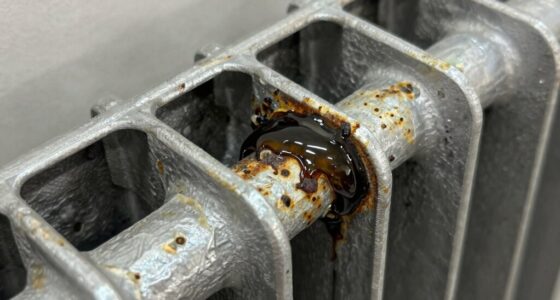
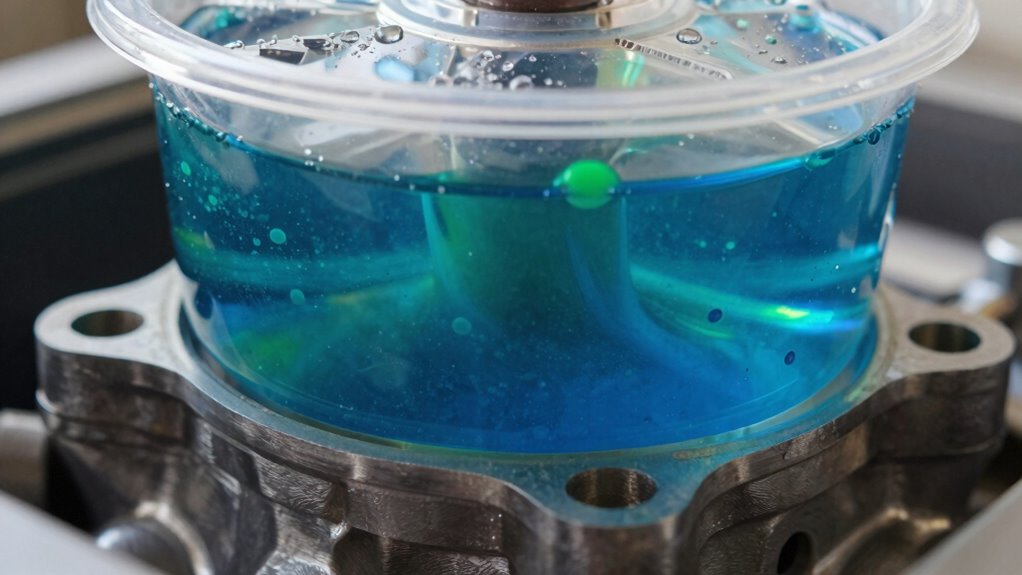
Silicates are commonly added to engine coolants because they help protect metal surfaces from corrosion. When you look at the chemistry inside your cooling system, silicates play a vital role by forming a protective film on metal parts, preventing rust and deterioration. This process, known as silicates formation, is essential for maintaining the integrity of the engine’s cooling system, especially in older or specific types of engines. However, not all coolants are compatible with silicates, which influences whether they’re included in the formulation. Some coolants, particularly inorganic acid technology (IAT) coolants, rely heavily on silicates to provide corrosion protection, but others, like hybrid organic acid technology (HOAT) or organic acid technology (OAT) coolants, avoid silicates altogether. The reason behind this lies in coolant compatibility: certain formulations can cause silicates to precipitate or form deposits, leading to clogging or reduced efficiency. If you use a coolant that isn’t compatible with silicates, introducing silicate-based coolants could result in silicate deposits building up inside your radiator or heater core, impairing heat transfer and potentially causing overheating. Hence, understanding your engine’s specific requirements is key to choosing the right coolant.
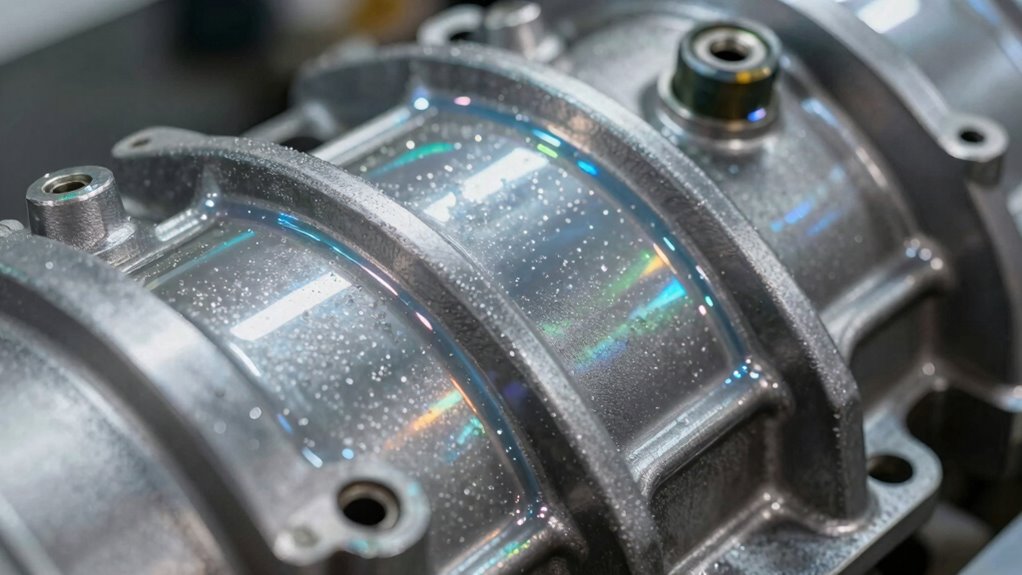
In engines designed to work with silicate-containing coolants, the silicates formation process is finely balanced. When properly formulated, these silicates create a thin, adherent film that shields metal surfaces from corrosive agents. This film is self-healing, meaning if it gets damaged, new silicates continuously form to restore the protective barrier. However, if coolant compatibility isn’t considered, silicates can sometimes cause problems. For instance, in engines designed for low-silicate or silicate-free coolants, introducing silicates might lead to rapid deposit buildup, reducing heat transfer efficiency and possibly causing blockages. This is why manufacturers specify which coolants are suitable for their engines, emphasizing the importance of matching coolant type to your vehicle’s design and materials.
You should always check your owner’s manual before switching coolants to guarantee compatibility. Using the wrong type can jeopardize your engine’s longevity and performance. If your system is designed to benefit from silicates, using a compatible coolant ensures ideal protection and minimal maintenance issues. Conversely, if your engine is built for silicate-free coolants, sticking to those formulations prevents unwanted deposits and corrosion risks. Remember, the goal is to preserve the delicate balance between corrosion protection and system cleanliness. Choosing the right coolant based on silicates formation and coolant compatibility keeps your engine running smoothly, avoiding costly repairs and ensuring it stays cool under pressure.

Zerex Asian Vehicle Red Silicate and Borate Free 50/50 Prediluted Ready-to-Use Antifreeze/Coolant 1 GA
Formulated to replace the OEM fluid in Asian make vehicles such as Toyota , Lexus , Scion and…
As an affiliate, we earn on qualifying purchases.
As an affiliate, we earn on qualifying purchases.
Frequently Asked Questions
How Do Silicates Affect Coolant Lifespan?
Silicates help extend coolant longevity by forming a protective layer that prevents silicate degradation, which can cause corrosion and reduce system efficiency. Without silicates, your coolant may break down faster, leading to decreased performance and more frequent replacements. Proper silicate levels maintain the coolant’s stability, protecting your system components and ensuring longer-lasting cooling performance. Keep an eye on silicate levels to maximize your coolant’s lifespan and avoid costly repairs.
Are Silicates Harmful to Engine Components?
Silicates can be harmful to engine components because they lead to silicate corrosion and form silicate deposits that clog cooling passages. These deposits can cause overheating and damage to metal parts over time. If your system isn’t designed for silicates, their presence accelerates corrosion, reducing engine lifespan. Always follow your manufacturer’s recommendations to avoid silicate-related issues and keep your engine running smoothly.
Can Silicate Levels Be Safely Monitored at Home?
Yes, you can safely monitor silicate levels at home with DIY testing kits. These kits allow you to perform simple tests during regular coolant checks, giving you quick insights into your system’s condition. Just follow the instructions carefully, use proper safety gear, and interpret the results accurately. Regular home testing helps you catch potential issues early, preventing costly repairs and ensuring your engine runs smoothly.
Do All Vehicle Types Require Silicate-Containing Coolants?
Do all vehicle types require silicate-containing coolants? Not necessarily. Your vehicle’s compatibility depends on its engine design and the specific silicate formulations recommended by the manufacturer. Some engines benefit from silicates for their corrosion protection, while others don’t need them and rely on alternative coolants. Always check your owner’s manual or consult a mechanic to confirm you use the correct coolant type for your vehicle’s specific requirements.
What Are Alternative Corrosion Inhibitors to Silicates?
You can use organic acids as alternative corrosion inhibitors to silicates. They actively form protective films on metal surfaces, preventing corrosion effectively. Organic acids, like citric or amino acids, are eco-friendly options that enhance corrosion prevention without the drawbacks of silicates, such as scaling or system incompatibility. Switching to these inhibitors can improve coolant longevity and protect your engine parts, especially in systems designed to work without silicates.
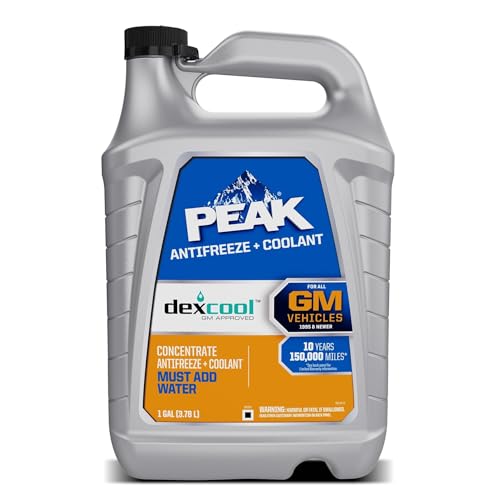
PEAK DEX-Cool® Antifreeze + Coolant, Premium Engine Coolant with Antifreeze, Car Antifreeze Coolant Mixture for GM Vehicles, 1 Gallon
VERSATILE ENGINE COOLANT: This antifreeze + coolant is designed for use in all GM vehicles 1995 and newer…
As an affiliate, we earn on qualifying purchases.
As an affiliate, we earn on qualifying purchases.
Conclusion
Understanding silicates in coolant is like tuning a delicate instrument—you need just the right amount to keep everything singing smoothly. Some systems thrive with silicates, forming a protective shield like armor, while others dance without them, relying on different rhythms. Knowing when to add this mineral is your key to harmony and longevity. Trust your system’s song, and let silicates be the subtle note that keeps your engine in perfect tune.

PEAK OET Extended Life Purple 50/50 Prediluted Antifreeze and Coolant for North American Vehicles, Long-Lasting Premium Engine Coolant/Antifreeze with Organic Acid Techology (Oat), 1 Gal.
1-GAL. EXTENDED LIFE PURPLE PREDILUTED ANTIFREEZE/COOLANT: Long-lasting antifreeze/coolant based on proprietary state-of-the-art organic acid technology (OAT) and is…
As an affiliate, we earn on qualifying purchases.
As an affiliate, we earn on qualifying purchases.

Zerex Dex-Cool 50/50 Ready-to-Use Antifreeze Coolant 1 Gallon
Unsurpassed freeze protection and anti-boil performance outperforms industry standards
As an affiliate, we earn on qualifying purchases.
As an affiliate, we earn on qualifying purchases.