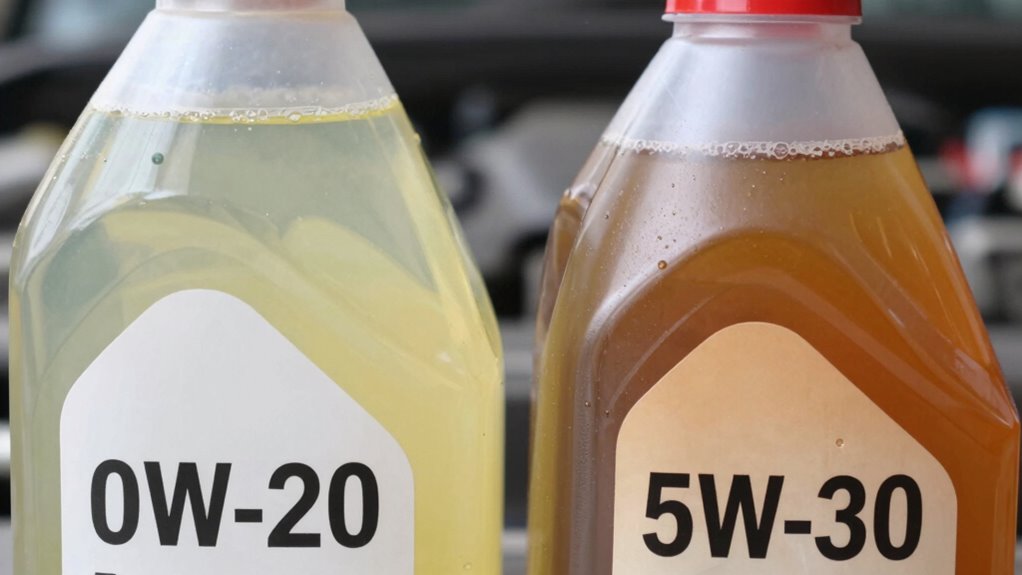

Choosing between 0W-20 and 5W-30 affects how your engine is lubricated in different temperatures. 0W-20 flows more easily at cold starts, providing quicker lubrication, while 5W-30 stays thicker in warm conditions, offering better protection at higher temperatures. This difference impacts engine wear, performance, and longevity. If you want to understand how these variations influence your engine’s inner workings and operation, keep exploring further.

Get business pricing on garage and car supplies
- Business-only prices and quantity discounts
- Tax-exempt purchasing
- Multiple users, one account, clear invoices
Key Takeaways
- 0W-20 flows more easily at cold temperatures, ensuring quicker startup lubrication than 5W-30.
- 5W-30 is thicker at operating temperature, providing a higher viscosity and potentially better protection under high heat.
- The lower winter rating of 0W-20 improves cold weather startup and reduces engine strain.
- 5W-30 offers enhanced protection in high-temperature or demanding driving conditions due to its thicker viscosity.
- The choice of oil impacts engine wear, with synthetic oils maintaining better lubrication and stability over time.

Are you unsure which engine oil to choose between 0W-20 and 5W-30? When it comes to making the right decision, understanding how these oils differ inside your engine is vital. One key aspect is the type of oil—synthetic versus conventional. Synthetic oils are engineered with chemically modified molecules, giving them superior stability, better lubrication, and enhanced resistance to breakdown. Conventional oils, on the other hand, are refined from crude oil and often contain additives that wear out faster. If you’re driving in extreme conditions or want longer-lasting protection, synthetic oil generally outperforms conventional. It flows more smoothly at startup and maintains its protective qualities longer, making it a popular choice for modern engines.
Cold weather performance is another significant factor. When temperatures drop, your engine oil thickens and struggles to circulate properly, which can lead to increased wear during startup. 0W-20 oil is designed to flow more easily at lower temperatures due to its lower winter rating. This means your engine starts more smoothly and gets better protection right from the first turn of the key. Conversely, 5W-30, with its higher winter rating, might be a bit thicker in cold conditions, potentially delaying oil circulation. If you live in a cold climate, 0W-20 is often the better choice for cold weather performance because it guarantees quicker lubrication and less engine strain during those chilly mornings.
However, the choice isn’t solely about winter conditions. You also need to take into account your engine’s specifications and driving habits. Some engines are designed specifically for 5W-30 oil, especially if they operate at higher temperatures or require thicker oil for proper lubrication. Using the wrong oil can lead to increased engine wear or suboptimal performance. Always check your owner’s manual to see what’s recommended.
As an affiliate, we earn on qualifying purchases.
Frequently Asked Questions
How Does Oil Viscosity Affect Engine Wear Over Time?
You’ll notice that oil viscosity impacts engine wear over time by affecting the oil film strength. Thicker oils, like 5W-30, create a more durable oil film, reducing wear patterns during cold starts and heavy loads. Conversely, thinner oils, like 0W-20, flow easily at low temperatures but may provide less protection under high stress. Choosing the right viscosity helps minimize wear and prolongs engine life.
Can Switching Between 0W-20 and 5W-30 Cause Engine Damage?
Switching between 0W-20 and 5W-30 generally won’t cause engine damage if you consider oil compatibility and a smooth viscosity shift. Think of it like changing lanes on a highway — as long as the switch is gradual and within manufacturer guidelines, your engine adapts easily. However, abrupt changes or ignoring recommendations can lead to increased wear. Always check your owner’s manual before making a switch to guarantee safety and ideal performance.
Which Oil Type Is Better for Cold Climates?
In cold climates, 0W-20 oil is better for you because it flows more easily at low temperatures, helping your engine start smoothly. The lower “W” number indicates better cold-weather performance, reducing wear during startup. If you face harsh winters, choosing 0W-20 ensures your oil flows quickly, protecting your engine and improving efficiency. Always check your vehicle’s manual for the recommended oil for maximum performance in cold conditions.
How Often Should I Change Synthetic Versus Conventional Oils?
You should change synthetic oil every 7,500 to 10,000 miles, and conventional oil every 3,000 to 5,000 miles — because who doesn’t love the thrill of more frequent oil recycling? Synthetic oils boast advanced additive formulations that last longer, so you get better protection and fewer changes. Ironically, though, sticking with conventional oil means more visits to the shop, just to keep that engine happy and eco-friendly.
What Are the Environmental Impacts of Using Different Oil Viscosities?
Using different oil viscosities impacts the environment through factors like eco-friendly formulations and oil recycling initiatives. Lighter oils like 0W-20 often reduce fuel consumption and emissions, making them more eco-friendly. Supporting oil recycling initiatives guarantees proper disposal and reuse, minimizing pollution. By choosing the right viscosity and participating in recycling programs, you help reduce your vehicle’s environmental footprint and promote sustainable practices in automotive maintenance.
5W-30 motor oil for high temperatures
As an affiliate, we earn on qualifying purchases.
As an affiliate, we earn on qualifying purchases.
Conclusion
So, the truth is, switching between 0W-20 and 5W-30 isn’t about drastic engine changes. It’s more about how your engine responds in different conditions. While some believe one oil is always better, the real key is following your manufacturer’s recommendations. Trust the specs, and you’ll keep your engine running smoothly. After all, it’s not magic — it’s just the right oil for the right situation.
As an affiliate, we earn on qualifying purchases.
best engine oil for cold climate
As an affiliate, we earn on qualifying purchases.
As an affiliate, we earn on qualifying purchases.
Halloween Picks
halloween
As an affiliate, we earn on qualifying purchases.