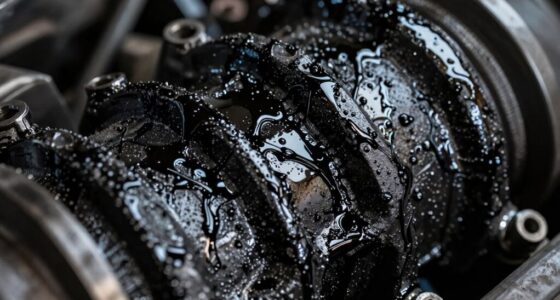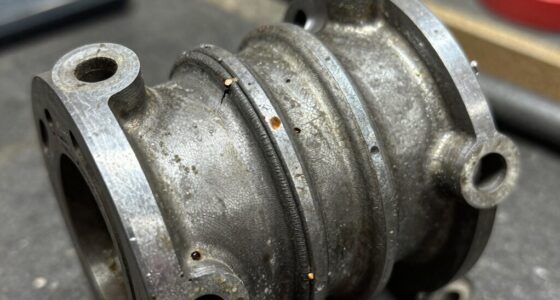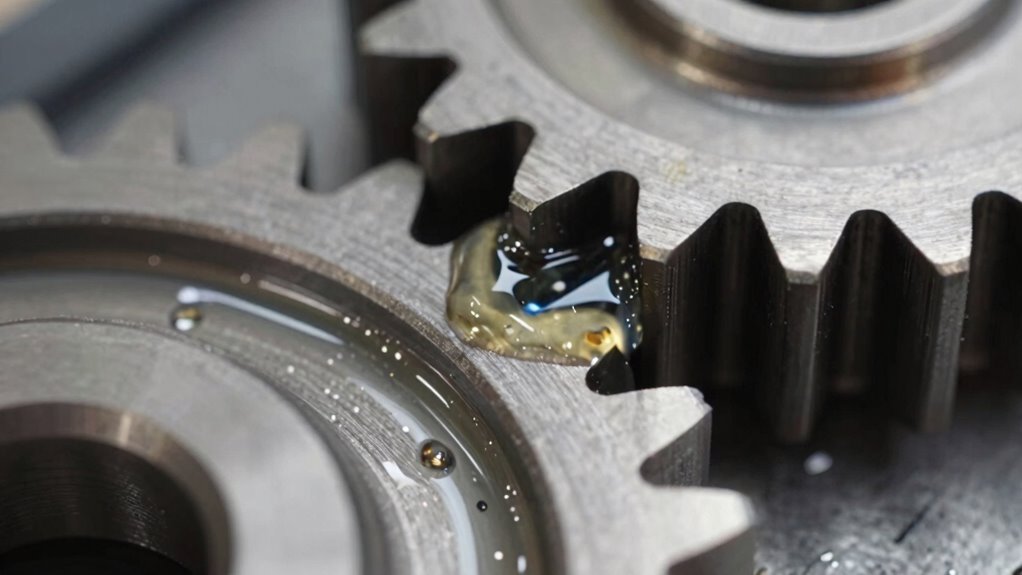

In boundary lubrication, additives play a vital role by forming protective molecular films at microscopic contact points, preventing direct metal-to-metal contact. You’ll find these additives most effective on rough surfaces where asperities—tiny peaks—are prominent. They bond chemically or physically to the surface, reducing friction and wear even under high pressure or low speeds. If you’re curious about how this protective layer works and what factors influence its performance, there’s more to explore ahead.
Key Takeaways
- Additives form protective boundary films on asperities, preventing metal-to-metal contact during boundary lubrication.
- They are most crucial on rough surfaces where thick, resilient films shield microscopic peaks.
- Additives chemically bond with surfaces, offering durable protection under high loads and low speeds.
- Surface chemistry and roughness influence how effectively additives form and maintain boundary films.
- Proper additive selection based on operating conditions enhances boundary film stability and wear prevention.
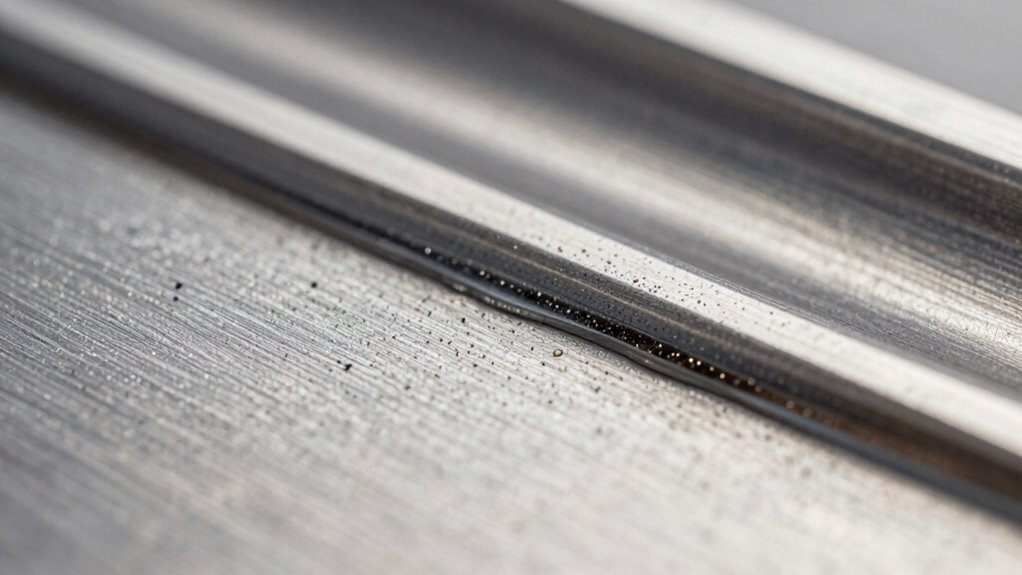
Boundary lubrication occurs when two surfaces are in close contact, and a thin film of lubricant prevents direct metal-to-metal contact. This type of lubrication is critical in situations where loads are high, speeds are low, or when surfaces are rough, making full fluid film lubrication impossible. The effectiveness of boundary lubrication depends largely on the molecular interactions between the lubricant additives and the surface asperities—the microscopic peaks and valleys on the metal surfaces. These asperities are where most wear initiates, so understanding how additives influence these irregularities is key to enhancing wear resistance and reducing friction.
Boundary lubrication prevents direct contact between rough surfaces, forming protective molecular films that reduce wear and friction under high loads.
When you consider the role of molecular interactions, it becomes clear that boundary lubricants work by forming protective layers at the microscopic level. Additives, such as zinc dialkyldithiophosphate (ZDDP), molybdenum disulfide, or organic friction modifiers, chemically react with surface asperities to form boundary films. These films act as barriers, reducing direct contact and minimizing metal-on-metal wear. The chemical bonds formed between additives and surface asperities are strong enough to withstand the pressures at contact points, yet flexible enough to adapt to surface movements. This dynamic interaction helps smooth out the microscopic irregularities, leading to less localized stress and wear. Additionally, the effectiveness of boundary films can be influenced by the surface chemistry, which affects how well additives bond and form protective layers.
You should also recognize that the surface asperities influence how well additives perform. Rougher surfaces with pronounced asperities require more robust boundary films to prevent damage. In these cases, additives that can form thicker, more resilient films are more effective. Conversely, smoother surfaces might rely on additives that produce thinner, more adhesive boundary layers. The compatibility between the additive’s molecular structure and the nature of the surface asperities determines the stability and durability of the boundary film.
Moreover, the molecular interactions between additives and surface asperities are influenced by temperature, pressure, and surface chemistry. Under high loads, these interactions become more critical because the boundary film must withstand increased stresses. Additives that form covalent or ionic bonds tend to provide more durable protection than those relying solely on physical adsorption. As you select lubricants, understanding these molecular interactions allows you to choose additives suited for specific operating conditions, ensuring optimal boundary film formation and longevity.

Lubrication Degradation Mechanisms (Reliability, Maintenance, and Safety Engineering)
As an affiliate, we earn on qualifying purchases.
As an affiliate, we earn on qualifying purchases.
Frequently Asked Questions
How Do Additives Influence Boundary Lubrication at the Molecular Level?
Additive molecules influence boundary lubrication by altering molecular interactions at contact points. They form a protective film on surfaces, reducing friction and wear. These molecules can bond to metal surfaces or interact with each other, creating a barrier that prevents direct contact. As a result, the additives enhance lubrication efficiency, especially under high pressure, ensuring smoother operation and longer equipment life through improved boundary layer performance.
What Are the Environmental Impacts of Common Boundary Lubrication Additives?
Think of eco-friendly additives as gentle guardians protecting our planet. They reduce harmful chemical runoff and emissions, minimizing environmental harm. By choosing biodegradable options, you support sustainable practices that break down naturally, avoiding pollution. These eco-friendly additives help preserve ecosystems and reduce toxic waste. Using them in boundary lubrication means you’re actively contributing to a cleaner environment while maintaining ideal equipment performance.
How Does Temperature Affect Additive Performance in Boundary Lubrication?
Temperature effects can substantially influence additive performance in boundary lubrication. As temperatures rise, some additives may lose stability, reducing their effectiveness. Conversely, lower temperatures can hinder additive flow and film formation, leading to increased wear. You should select additives designed for your operating temperature range to guarantee ideal performance. Maintaining proper temperature control helps preserve additive stability, ensuring consistent boundary protection and extending equipment lifespan.
Can Boundary Lubrication Additives Be Used in Renewable or Biodegradable Lubricants?
You might be surprised, but boundary lubrication additives can indeed be used in renewable or biodegradable lubricants. It’s all about additive compatibility and careful lubricant formulation, ensuring they work effectively without harming the environment. When selecting additives, consider eco-friendly options that preserve performance. This coincidence of sustainability and functionality shows that eco-conscious lubricants can deliver excellent boundary lubrication while reducing environmental impact, making them a smart choice for modern applications.
What Are the Latest Innovations in Additive Technology for Boundary Lubrication?
You’ll find recent innovations in additive technology focus on nanoparticle enhancements and bio-based formulations. These advances improve boundary lubrication by providing better film strength and wear protection while aligning with eco-friendly trends. Nanoparticles, like solid lubricants, strengthen the boundary layer, and bio-based additives reduce environmental impact. Together, they create high-performance, sustainable lubricants suitable for modern machinery, making your lubrication systems more efficient and environmentally conscious.

Fluid Film® Aerosol 11.75oz
Rust and Corrosion Prevention
As an affiliate, we earn on qualifying purchases.
As an affiliate, we earn on qualifying purchases.
Conclusion
As you navigate the world of boundary lubrication, remember that additives are your guiding stars in a cloudy sky. They dance between surfaces, forming a resilient shield that keeps friction at bay. When you choose the right additives, you’re weaving a tightrope of protection, ensuring smooth journeys even under pressure. Embrace these tiny warriors, and you’ll keep your machinery humming like a well-tuned orchestra—silent, steady, and unstoppable.

Squirt E-Bike Chain Wax 120 ml with High-Pressure Additives for E-Bikes – Ebike Lubricant for Wet & Dry Conditions – Electric Bike Chain Lube Reduces Noise & Friction – Ebike Accessories
CHAIN WAX FOR E-BIKES: Prolong the chain life of your e-bike with Squirt ebike chain wax. This bike…
As an affiliate, we earn on qualifying purchases.
As an affiliate, we earn on qualifying purchases.

FOTU 760 Molybdenum Disulfide Grease Anti-Seize Thread Lubricant,Automotive High Temp Brake Cams Grease ,Thread Compound ,Bolt & Screw Lube (3 Oz, 1-Pack)
FOTU Molybdenum Disulfide Anti-Seize Lubricant is a Mixture of molybdenum disulfide and grease. Use during assembly to prevent…
As an affiliate, we earn on qualifying purchases.
As an affiliate, we earn on qualifying purchases.