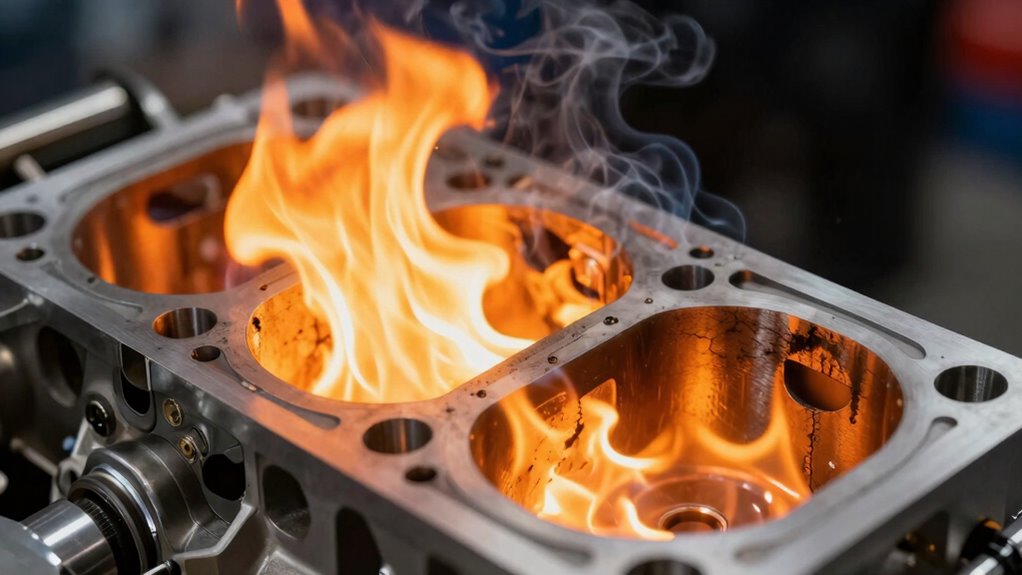
Understanding detonation and pre-ignition is key to diagnosing engine knocking. Detonation happens when the air-fuel mixture explodes unexpectedly after spark ignition, often due to incorrect timing or low-octane fuel, causing rough sounds and engine damage. Pre-ignition occurs when hot spots ignite the mixture before the spark, leading to localized damage and knocking sounds. Knowing these differences helps you identify their unique causes and solutions—continue exploring to learn more about fixing these issues effectively.
Key Takeaways
- Detonation involves uncontrolled combustion due to incorrect timing, causing uneven pressure; pre-ignition is premature ignition from hot spots.
- Detonation occurs during normal operation, often under load, while pre-ignition happens before the spark, usually due to engine heat.
- Symptoms of detonation include knocking sounds during acceleration; pre-ignition may cause localized damage like melted pistons.
- Detonation damages engine parts through pressure spikes; pre-ignition leads to overheating and component melting.
- Correcting ignition timing and improving cooling are key to preventing both, but diagnostics differ based on their causes and symptoms.
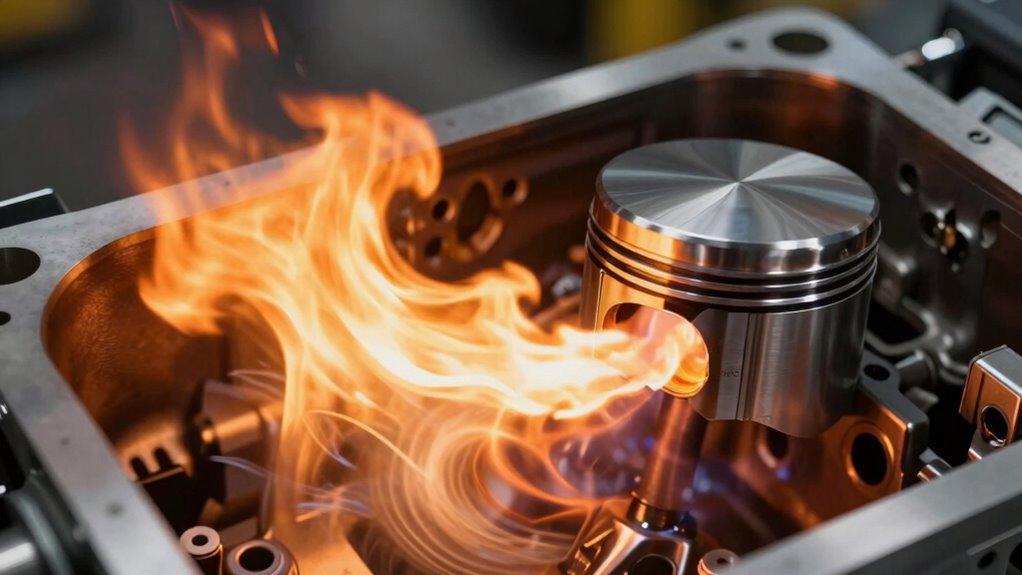
Understanding the differences between detonation and pre-ignition is essential for maintaining engine performance and longevity. Both issues can cause serious damage if left unchecked, but they stem from different causes and require distinct approaches to diagnosis and repair. Recognizing how they affect your engine helps you fine-tune ignition timing and prevent engine knocking, which is often a symptom of these problems. When your engine runs too hot or the air-fuel mixture ignites prematurely, you risk knocking or knocking sounds that signal deeper issues within the combustion chamber.
Detonation occurs when the air-fuel mixture explodes violently after the spark plug ignites it, instead of burning smoothly and controlled. This phenomenon is often linked to improper ignition timing, especially if your ignition system fires too early or too late, causing uneven combustion. Engine knocking happens when the pressure inside the cylinder spikes suddenly, producing a rattling noise that can damage pistons, rods, and valves over time. You might notice knocking during acceleration or under heavy loads when conditions favor higher cylinder pressures. If you ignore these signs, detonation can escalate, deteriorating engine components and reducing efficiency. Adjusting your ignition timing correctly is critical here; retarding or advancing it slightly can reduce knocking and optimize combustion. High-octane fuel can also help prevent detonation by resisting premature ignition, but the root cause often lies in the timing.
Pre-ignition, on the other hand, happens before the spark plug fires. Instead of a controlled explosion, a hot spot, glowing carbon deposit, or overheated spark plug causes the mixture to ignite prematurely. This early ignition leads to knocking sounds too, but the cause is different from detonation. With pre-ignition, the engine’s temperature plays a significant role—if parts of the combustion chamber become too hot, they can ignite the mixture prematurely. It’s often associated with overheating, carbon buildup, or a faulty spark plug. Unlike detonation, pre-ignition can cause more localized damage, such as melted pistons or damaged valves, if not addressed quickly. To fix pre-ignition, you need to check and improve cooling systems, replace worn spark plugs, and remove carbon deposits that create hot spots. Proper engine cooling and maintenance are vital to prevent hot spots that lead to pre-ignition.
Both conditions can produce knocking sounds, but their root causes differ. Understanding these differences allows you to troubleshoot effectively. Proper ignition timing plays a fundamental role in preventing both issues; setting it correctly ensures the air-fuel mixture burns at the right moment, reducing stress on engine parts. Recognizing the symptoms early, such as unusual noises or a drop in performance, helps you avoid costly repairs. Regular maintenance, attentive driving, and proper fuel choices all contribute to preventing detonation and pre-ignition, preserving your engine’s health and ensuring smooth operation over the long haul.

DUSCOKE Car Engine Mechanic Stethoscope Sensitive Hearing Tool, Automotive Engine Diagnostic Tool with Extended Probe, Automotive Stethoscope Sound Diagnostic Device for Car Motorcycle Truck (2PCS)
【High Quality】: Crafted from a combination of stainless steel and high-quality rubber, this car mechanical stethoscope offers strong…
As an affiliate, we earn on qualifying purchases.
As an affiliate, we earn on qualifying purchases.
Frequently Asked Questions
How Can I Prevent Detonation and Pre-Ignition in My Engine?
You can prevent detonation and pre-ignition by adjusting your ignition timing to make certain it’s not too advanced, which reduces knocking risks. Regularly inspect your intake valve for carbon buildup, as clogged valves can cause hot spots that trigger pre-ignition. Use high-quality fuel with the right octane rating, and keep your engine well-maintained with proper spark plug gaps and cooling system checks to avoid these issues altogether.
What Are the Signs of Early Detonation or Pre-Ignition?
You might notice engine knocking or unusual exhaust sounds, which are signs of early detonation or pre-ignition. These issues cause knocking noises, especially under acceleration or load. You may also see a drop in engine performance or rough idling. Pay attention to any metallic pinging or rattling, and check if exhaust emissions seem abnormal. Addressing these signs early helps prevent engine damage and keeps your vehicle running smoothly.
Do Different Engine Types Experience These Issues Differently?
Different engine types experience detonation and pre-ignition uniquely, influenced by engine design and combustion chamber shape. High-performance engines with turbochargers or aggressive timing may be more prone, while smaller, naturally aspirated engines might resist these issues better. You’ll notice variations in how early signs appear, how severe the knocking sounds are, and how quickly engine damage can occur, all shaped by the specific design and combustion chamber characteristics.
How Does Fuel Quality Influence Detonation and Pre-Ignition?
Fuel quality directly impacts detonation and pre-ignition. Using high-octane fuel helps prevent knocking because it resists premature ignition under pressure. Adding fuel additives can improve combustion stability and reduce these issues. If you use low-octane fuel or poor-quality gasoline, you’re more likely to experience detonation or pre-ignition, leading to engine damage. Always choose the right octane rating and consider fuel additives to maintain peak engine performance.
Can Modifications Increase the Risk of Detonation or Pre-Ignition?
Yes, engine modifications can increase the risk factors for detonation or pre-ignition. Upgrading your intake, exhaust, or compression ratios might boost performance but can also raise cylinder temperatures and pressure, making knocking more likely. You should consider how these modifications affect your engine’s combustion process and verify you use appropriate fuel and tuning to minimize the risk of damaging knocking or pre-ignition issues.

TecoTek 11-Piece Spark Plug Socket Set with 3/8" Drive Ratchet Handle, Spark Plug Gapper, Universal Joint and Extension Bar, 5/8", 3/4", 13/16", 14mm, 18mm, CR-V Sockets with Rubber Retaining Rings
✅【Size Include】6pt spark plug socket 5/8-Inch, 3/4-Inch, 13/16-Inch, 14mm, 18mm, 3/8 Inch drive ratchet handle, spark plug gapper,…
As an affiliate, we earn on qualifying purchases.
As an affiliate, we earn on qualifying purchases.
Conclusion
Understanding the difference between detonation and pre-ignition is like knowing the villains in a car’s story; each causes chaos in its own way. By recognizing their signs early, you can keep your engine running smoothly and avoid costly damage. Think of it as steering clear of rocky waters—you’ll enjoy a smoother ride and longer engine life. Stay sharp, and always prioritize diagnostics to keep your engine singing like a well-tuned orchestra.

Lucas Oil 10977 High Mileage Fuel Treatment – 5.25 Ounce
Clean fuel injectors and keeps them clean
As an affiliate, we earn on qualifying purchases.
As an affiliate, we earn on qualifying purchases.

ACDelco GM Original Equipment 10-108 (12378255) Cooling System Sealing Tabs – 4 g (Pack of 5)
Engineered for use on a variety of engine components – effective on: oil pan, ladder frame, front and…
As an affiliate, we earn on qualifying purchases.
As an affiliate, we earn on qualifying purchases.