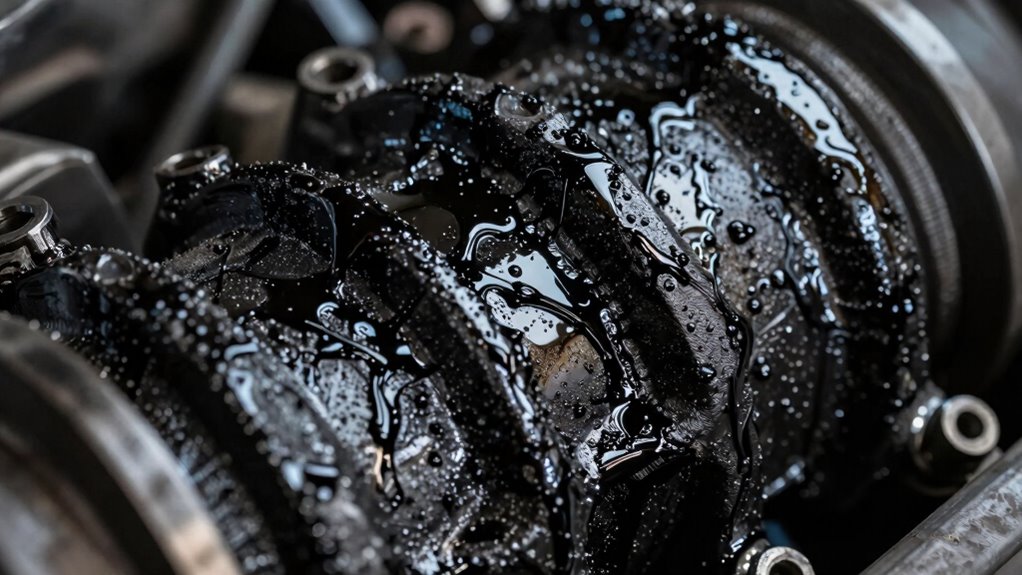

Blackening of diesel engine oil is common because soot from combustion naturally enters the oil during normal operation. Usually, this darkening isn’t harmful if levels stay within normal limits and your engine runs smoothly. However, if the oil rapidly turns black, becomes sticky, or causes issues like rough idling or power loss, it signals excessive soot buildup that can damage your engine. To keep things running well, learn how to distinguish normal wear from problems that need attention.
Key Takeaways
- Slight darkening of engine oil during operation is normal due to soot particles entering the oil.
- Excessively rapid blackening, stickiness, or increased viscosity indicates excessive soot buildup.
- Prolonged dark oil with deposits or reduced engine performance signals potential problems needing attention.
- Proper maintenance, high-quality fuels, and suitable oils help manage soot and prevent abnormal oil darkening.
- Regular oil analysis and component checks are essential to distinguish normal soot from harmful accumulation.

Oil Analysis Starter Kit Including Test Kits, tubing and Sample Pump
NOT FOR USE ON AIRCRAFT!
As an affiliate, we earn on qualifying purchases.
As an affiliate, we earn on qualifying purchases.
What Causes Diesel Oil to Turn Black? Understanding Soot Formation
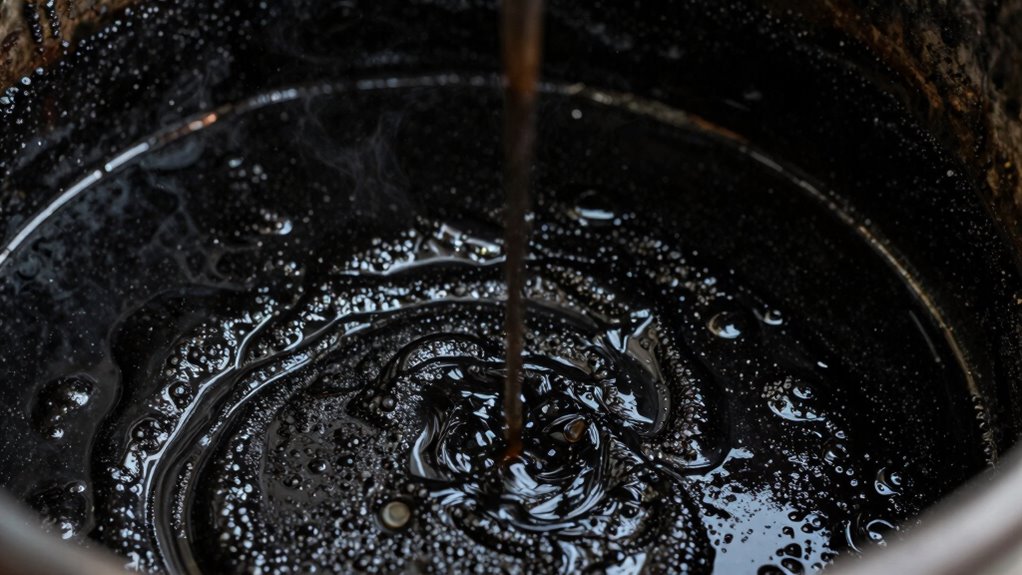
Diesel oil turns black mainly because of soot, which forms during incomplete fuel combustion. When your engine doesn’t burn fuel fully, tiny solid carbon particles called soot are produced. Diesel engines tend to generate more soot than gasoline engines because of late fuel injection during the compression stroke, creating fuel-rich pockets. This incomplete combustion results from rich air-fuel mixtures, poor injection patterns, or insufficient air supply. Soot particles then enter the oil through combustion gas blow-by or are scraped from cylinder walls by piston rings. Composed of about 98% carbon, these particles are sticky organic compounds that gradually turn your engine oil black over time. This accumulation is a natural byproduct of diesel’s combustion process, but excessive soot can cause serious engine problems. Additionally, engine maintenance practices such as regular oil changes and proper air filter replacements can help reduce soot buildup and prolong engine life.

Delo 400 XLE Heavy Duty Synblend Diesel Engine Oil 15W-40, 1 Gallon, Pack of 1
A premium synthetic blend, long drain mixed-fleet engine oil specifically formulated for on- highway applications, including 2017 greenhouse…
As an affiliate, we earn on qualifying purchases.
As an affiliate, we earn on qualifying purchases.
Is Black Oil Normal in Diesel Engines? Recognizing Routine Soot Buildup

It’s common for engine oil to turn black during normal diesel engine operation due to the buildup of soot particles. This coloration results from soot entering the oil as a natural byproduct of combustion. Modern engines and oils are designed to handle this routine soot load, especially with emission systems like DPFs and high dispersancy oils. You might notice your oil darkening after some use, but it doesn’t necessarily indicate a problem. The key is understanding that this blackening is typical in diesel engines and not always harmful unless soot levels become excessive.
| Soot Level | Oil Appearance |
|---|---|
| Normal | Slightly darkened |
| Mild | Darker, but manageable |
| Moderate | Noticeably black |
| Excessive | Thick, tar-like |
| Harmful | Contaminated, sludge formation |

Oil Analysis Premier Kit by Under My Hood with return postage included
NOT FOR USE ON AIRCRAFT!
As an affiliate, we earn on qualifying purchases.
As an affiliate, we earn on qualifying purchases.
How to Spot Excessive Soot and When It’s Harmful to Your Engine
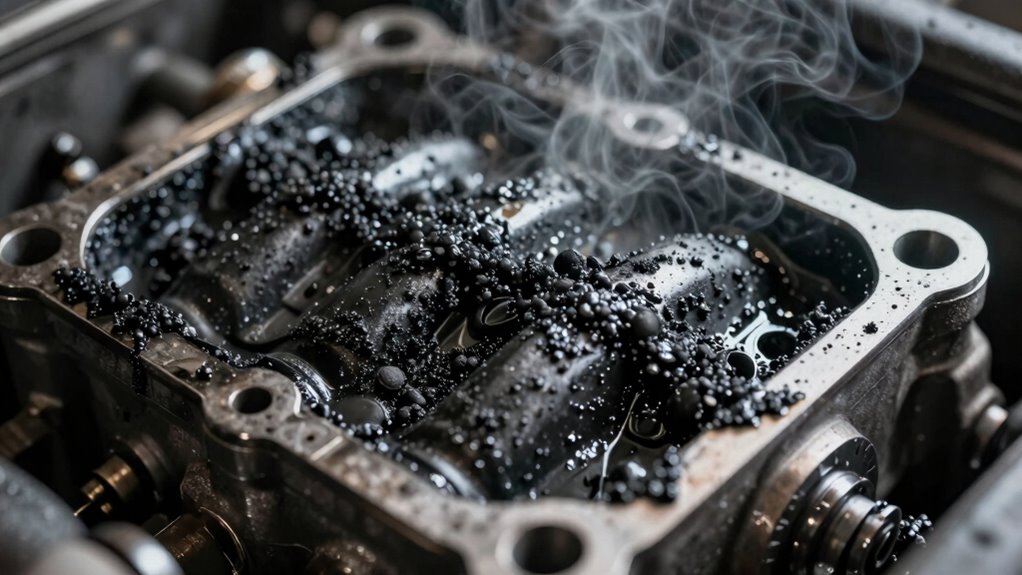
Excessive soot buildup can quickly become a serious threat to your engine’s health if left unchecked. Look for dark, thick oil that turns black or sticky much faster than usual, indicating excessive soot. You might notice increased engine temperatures, rough idling, or a loss of power, signaling soot-related issues. Pay attention to higher oil consumption and more frequent oil changes, as soot can clog filters and reduce lubrication. Excessive smoke from the exhaust, especially black smoke during acceleration, is another red flag. If your vehicle exhibits these signs, it’s a clear indication that soot levels are surpassing normal limits. Ignoring these symptoms can lead to increased wear, sludge buildup, and potential engine failure. Monitor your engine’s condition regularly, and address excessive soot promptly.

Liqui Moly MoS2 Anti-Friction Engine Treatment | 300 ml | Oil additive | SKU: 2009
Motor oil additive – Liqui Moly MoS2 anti-friction (300 ml. Can).Fit Type: Universal
As an affiliate, we earn on qualifying purchases.
As an affiliate, we earn on qualifying purchases.
How Soot Affects Oil Performance and Engine Longevity
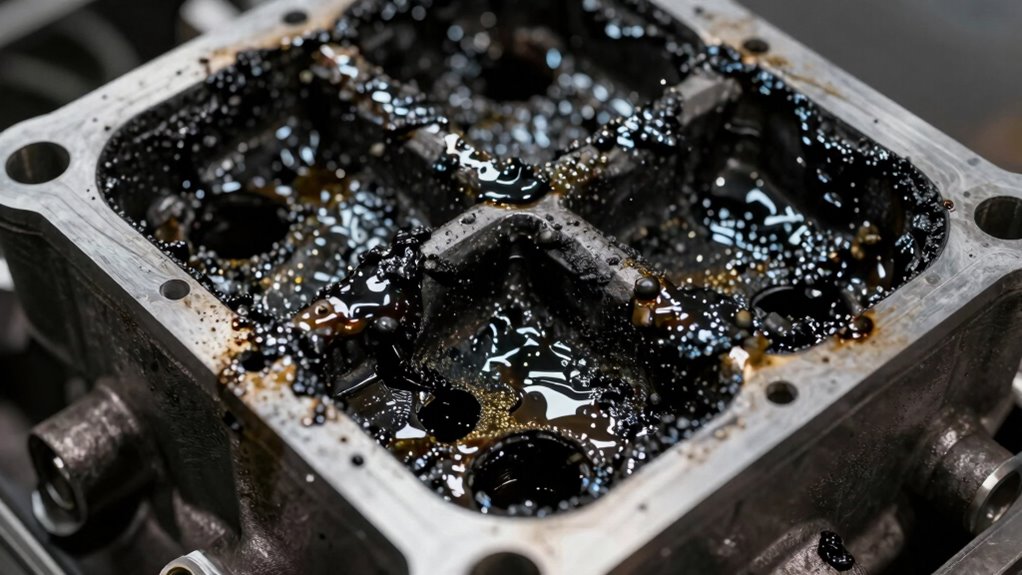
Soot particles can considerably reduce your oil’s ability to protect your engine, causing it to thicken and lose dispersancy. As oil degrades faster, it becomes less effective at lubricating and shielding engine parts from wear. To keep your engine running smoothly and prolong its life, understanding how soot impacts oil performance is essential. Regular oil analysis can help detect soot contamination early, ensuring timely maintenance to prevent damage.
Soot’s Impact on Oil
Have you ever wondered how soot particles influence the performance of your engine oil? Soot can considerably impair oil’s ability to lubricate and protect your engine. When soot levels rise, dispersant additives become overwhelmed, causing particles to clump and form sludge. This thickens the oil, reducing flow and increasing wear on engine components. Higher soot content also raises oil viscosity, making it harder for the oil to circulate efficiently. Over time, soot deposits clog filters and settle on crucial parts, accelerating wear and risking engine damage. Understanding oil quality can help in selecting the right type to withstand soot contamination. Below is a table illustrating how different oil qualities respond to soot:
| Oil Type | Soot Resistance | Impact on Engine Longevity |
|---|---|---|
| Group I | Limited dispersancy, quicker degradation | Shorter lifespan, higher wear |
| Group II | Better dispersancy, moderate resistance | Moderate longevity, less wear |
| Group III | High dispersancy, good soot handling | Longer engine life |
| Group IV | Superior resistance, ideal performance | Max engine protection |
Oil Degradation Processes
As soot accumulates in engine oil, it initiates a series of degradation processes that compromise oil performance and shorten engine life. Soot particles increase oil viscosity, making it thicker and harder to flow, which hampers lubrication and raises operating temperatures. The dispersant additives struggle to suspend the growing soot, leading to agglomeration and sludge formation. Thickened oil can block filters, reduce oil flow, and cause abrasive wear on engine components. Soot also promotes deposit buildup on pistons, valves, and other surfaces, accelerating corrosion and wear. Over time, these effects diminish the oil’s ability to protect the engine, increase fuel consumption, and elevate emissions. Continuous soot contamination accelerates oil breakdown, necessitating more frequent oil changes and maintenance to preserve engine longevity. Regular oil analysis can help detect early signs of oil degradation caused by soot buildup, enabling timely intervention.
Protecting Engine Longevity
When soot accumulates in engine oil, it directly compromises the oil’s ability to protect your engine over time. Soot particles increase oil viscosity, impairing flow and causing higher operating temperatures. This thickened oil struggles to lubricate moving parts effectively, leading to increased wear and potential damage. Soot also reduces dispersant effectiveness, causing particles to cluster into sludge and deposits on essential engine surfaces. Over time, these deposits can block filters, strain components, and accelerate corrosion. To protect engine longevity, use high-quality oils with advanced additives designed to suspend soot and prevent chain reactions. Regular maintenance—such as timely oil changes, monitoring air filters, and ensuring proper fuel injection—helps minimize soot buildup and keeps your engine running smoothly longer. Additionally, employing engine air filtration systems can significantly reduce the amount of soot entering the engine, further preserving oil quality and engine health.
What Causes Too Much Soot in Diesel Engines? Key Factors Explored
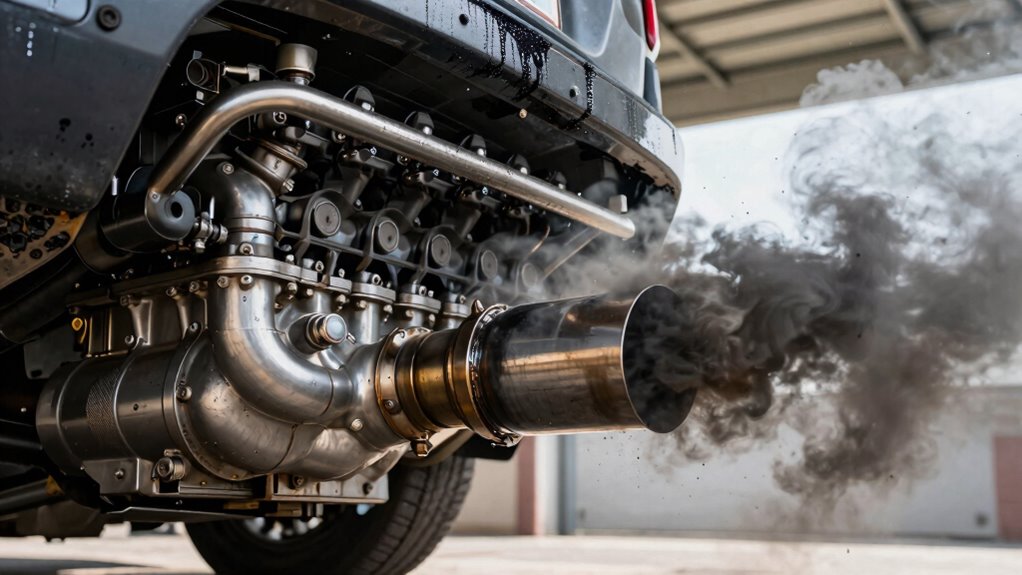
Excessive soot in diesel engines primarily results from incomplete combustion, which occurs when fuel burns inefficiently due to several interconnected factors. Worn piston rings or injectors allow more blow-by, letting unburned fuel and soot enter the oil. Poor fuel spray patterns from faulty injectors or nozzles create rich mixtures, increasing soot production. Clogged air filters reduce airflow, causing the engine to run with excess fuel. Additionally, improper fuel injection timing, low compression, and engine lugging hinder complete combustion. Excessive idling also contributes by allowing incomplete burning of fuel. All these issues lead to higher soot levels, which then enter the engine oil, causing thickening, deposits, and accelerated wear if left unaddressed. Proper maintenance helps minimize these causes and keeps soot levels in check. Regularly inspecting and replacing air filters and injectors can significantly reduce soot buildup and extend engine life.
How to Prevent Soot Buildup in Diesel Oil: Best Practices
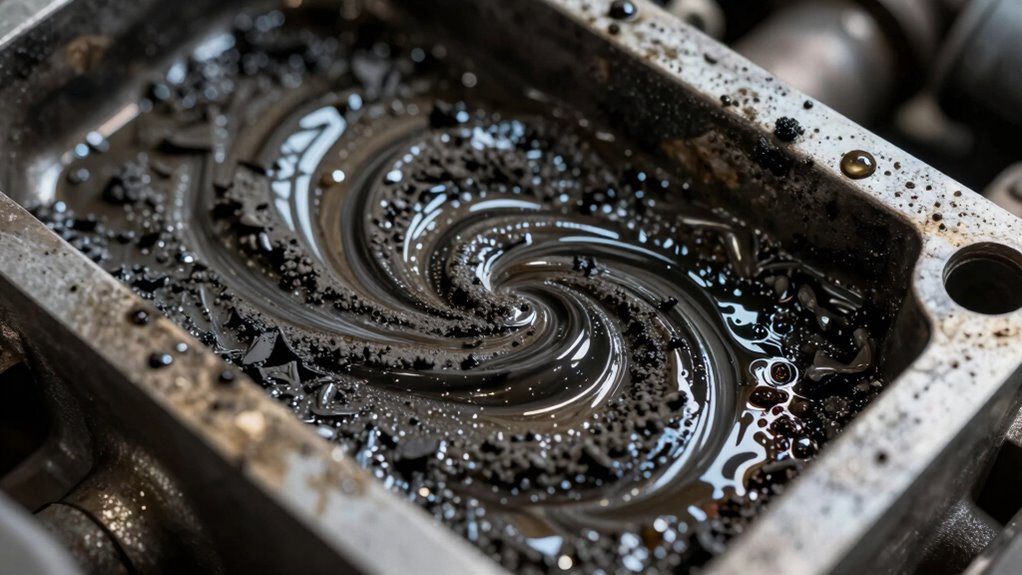
Regular maintenance and proper operating practices are key to preventing soot buildup in diesel oil. Ensure your engine runs efficiently by sticking to recommended service intervals, especially for oil changes and filter replacements. Use high-quality diesel fuels with low sulfur content to reduce soot formation. Keep air filters clean and replace them when necessary to maintain ideal airflow and combustion. Regularly inspect and maintain fuel injectors and piston rings to prevent excessive blow-by and incomplete combustion. Avoid prolonged idling and lugging the engine, as these increase soot production. Monitor engine performance and address issues like poor fuel spray patterns immediately. Incorporate oils with advanced dispersant additives designed to suspend soot particles and prevent sludge buildup, extending oil life and protecting engine components. Additionally, paying attention to engine combustion efficiency can significantly help in minimizing soot accumulation.
Choosing Oils and Additives to Fight Soot Problems
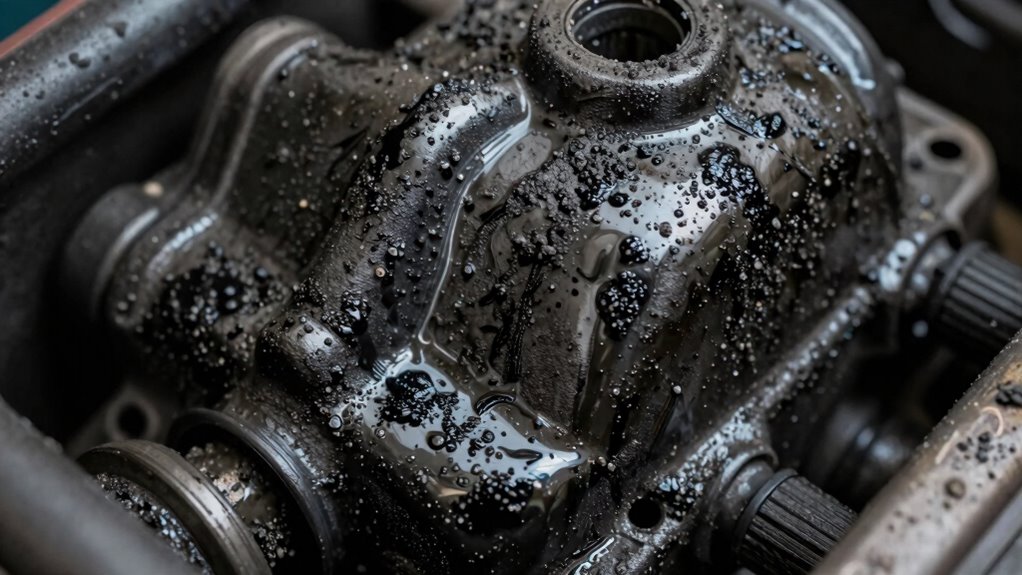
Choosing the right oils and additives is essential for combating soot buildup in diesel engines. Opt for high-quality oils formulated with advanced dispersant and detergency additives that prevent soot chain formation and keep contaminants suspended. Look for oils labeled as high dispersancy or with specific soot-fighting properties. These formulations help maintain oil flow, reduce viscosity increases, and prevent sludge formation. Adding fuel additives designed to improve combustion efficiency can also reduce soot generation at the source. Regularly using these products, combined with proper oil change intervals and maintenance, ensures your engine stays cleaner longer. Be mindful of oils compatible with your engine’s specifications and emission control systems to maximize soot control without risking damage or increased wear. Incorporating Free Floating techniques can also help optimize your engine’s performance and reduce soot deposits.
What to Do When Soot Causes Engine Issues: Next Steps
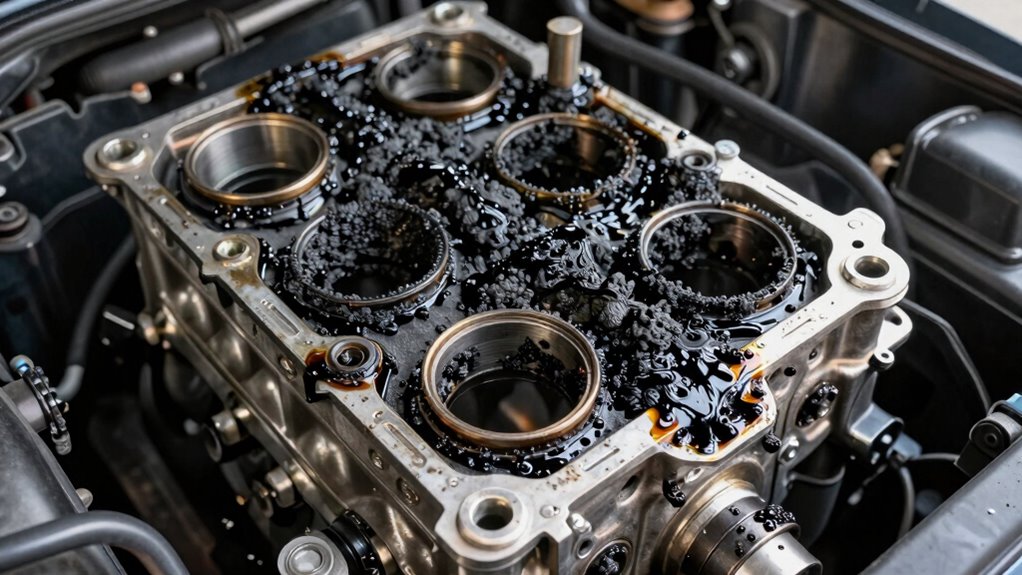
When soot buildup begins to impact engine performance, addressing the issue promptly can prevent costly damage and downtime. Start by inspecting your air filters, injectors, and piston rings for wear or clogging. Consider changing to high-quality, dispersant-enhanced oils to improve soot handling. Using a diesel particulate filter (DPF) and performing regular regeneration cycles can reduce soot accumulation. Schedule routine maintenance and monitor engine parameters like temperature and oil viscosity. If problems persist, consult a mechanic for advanced diagnostics. Additionally, implementing wall art trends like digital frames or interactive murals can create a more engaging workspace to promote awareness about engine care. Here’s a quick guide:
| Step | Action | Benefit |
|---|---|---|
| Check filters & injectors | Clean or replace as needed | Restores proper airflow and combustion |
| Use high-dispersancy oil | Switch to oils with advanced additives | Enhances soot suspension |
| Regular maintenance | Follow manufacturer’s service schedule | Prevents buildup and prolongs engine life |
Frequently Asked Questions
How Often Should I Change My Diesel Engine Oil to Prevent Soot Damage?
You should change your diesel engine oil every 5,000 to 10,000 miles, depending on your driving conditions and oil type. If you do a lot of idling, short trips, or operate in harsh environments, consider more frequent changes. Regular oil changes help remove accumulated soot and contaminants, preventing buildup that can harm your engine. Always follow your manufacturer’s recommendations and use high-quality, high-dispersancy oils to protect against soot damage.
Can Using Lower-Quality Fuel Increase Soot Formation in My Engine?
Think of your engine like a finely tuned orchestra—using lower-quality fuel throws it off harmony. Yes, it can increase soot formation because poor fuel quality often contains impurities and lacks proper additives, leading to incomplete combustion. This results in more carbon particles entering your oil. To keep your engine singing smoothly, always opt for high-quality fuel, which burns cleaner, reduces soot, and prolongs engine life.
Are Synthetic Oils More Effective at Resisting Soot-Related Viscosity Changes?
Yes, synthetic oils are more effective at resisting soot-related viscosity changes. They have advanced additive packages and higher dispersancy, which help prevent soot from causing thickening and deposit formation. You’ll notice better engine protection, longer oil life, and less sludge buildup. By choosing synthetic oils, you reduce the risk of soot-related issues, especially in high-performance or diesel engines, keeping your engine cleaner and running smoothly longer.
What Are the Signs That Soot Is Causing Engine Parts to Wear Prematurely?
Like a slow leak in a tire, premature engine wear due to soot shows subtle signs. You’ll notice increased oil consumption, rough idling, and decreased engine performance. Blackened oil on the dipstick hints at excessive soot. You might also hear knocking or rattling sounds, indicating worn bearings or piston rings. Regular maintenance and monitoring oil condition help catch these issues early, preventing costly repairs and prolonging engine life.
How Do Different Engine Designs Impact Soot Accumulation and Oil Blackening?
Your engine design markedly influences soot buildup and oil blackening. For instance, turbocharged or direct-injection engines tend to produce more soot due to higher combustion temperatures and advanced injection timings. Conversely, engines with better air intake and optimized fuel delivery reduce soot formation. If your engine’s design promotes incomplete combustion or has worn components, you’ll notice more soot in the oil, leading to faster blackening and potential wear issues.
Conclusion
While some soot buildup is normal, excessive black oil can harm your engine. Don’t assume it’s just part of running a diesel; regular maintenance and proper oil choices can keep soot in check. Even if it seems minor now, ignoring persistent darkening can lead to costly repairs later. Stay vigilant, follow best practices, and your engine will run smoother and longer, proving that a clean engine truly makes a difference.