TL;DR

Get business pricing on garage and car supplies
- Business-only prices and quantity discounts
- Tax-exempt purchasing
- Multiple users, one account, clear invoices
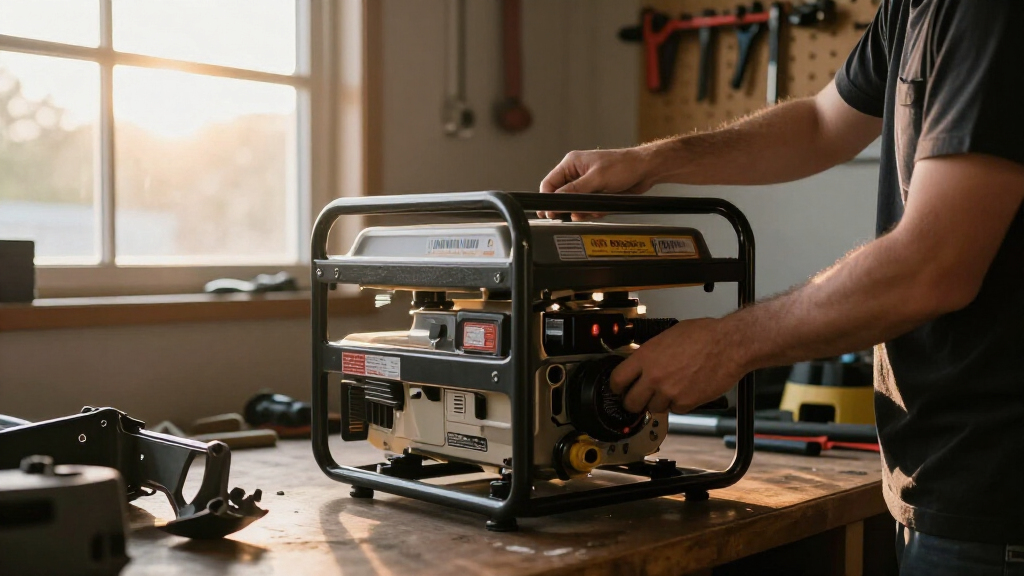
A generator wattage calculator estimates the capacity needed by adding up your appliances’ running and startup watts. It helps you pick a generator that’s neither too small nor unnecessarily large, saving money and ensuring reliable backup power.
Use a wattage calculator to accurately determine your essential power needs and avoid under- or over-sizing.
Always account for startup surge watts, especially for motors and compressors, to prevent overloads.
Add a safety margin of 10-25% above your calculated load to handle unexpected surges and future expansion.
Check appliance labels for exact wattage and consider the type of generator—like inverter models for sensitive electronics.
Follow safety rules: operate outdoors, use proper cords, and install transfer switches correctly.
What is a generator wattage calculator and why does it matter?
A generator wattage calculator is a handy tool that estimates the right generator size based on your appliances and needs. It factors in both running watts and startup watts, which is crucial for avoiding overloads. For example, a fridge might run at 200 watts but surge to 1,200 when the compressor kicks in. Knowing this helps prevent buying a generator that can’t handle the initial power spike.
Choosing the right size isn’t just about adding up wattages. It’s about understanding the difference between continuous demand and brief surges, which most calculators account for automatically. Run the numbers correctly, and you’ll avoid frustrating shutdowns or dangerous overloads. This understanding ensures your generator can handle real-world demands, preventing costly damage or power failures. It’s the key to a reliable backup system that matches your actual needs, avoiding the tradeoff of overspending on excessive capacity or risking insufficient power during critical moments.
portable inverter generator for home backup
As an affiliate, we earn on qualifying purchases.
As an affiliate, we earn on qualifying purchases.
How to use a generator wattage calculator in 3 simple steps
- List all appliances and tools you want to power. Write down their running watts and peak starting watts. For example, a sump pump might need 800 running watts but 2000 starting watts. Recognizing these differences helps you understand the maximum load your generator must handle and prevents underestimating startup demands that could trip your system.
- Input these numbers into the calculator. It will add the total running load and identify the highest surge load. For instance, if your total running watts are 1,600 and the largest surge is 2,000, your minimum requirement is 3,600 watts. This step is critical because it translates your household or worksite needs into a clear power target, avoiding the mistake of oversimplified calculations that ignore startup surges, which can cause failures or damage.
- Choose a generator rated slightly above that total—say 4,000 watts—to allow for future expansion and unexpected surges. This buffer prevents overloads and keeps your power steady during outages. It’s about balancing cost and reliability; selecting a generator with just enough capacity ensures you’re prepared for growth or unexpected demands without overspending on unnecessary capacity.
Most calculators also ask about voltage, phase, and whether loads run simultaneously. Filling these out accurately ensures your chosen generator can handle real-life scenarios without surprises, reducing the risk of overloads, equipment damage, or insufficient power that could compromise safety or functionality.
As an affiliate, we earn on qualifying purchases.
Comparison: 2000W, 3500W, and 5000W generators — which suits you?
| Generator Type | Best For | Typical Use | Pros | Cons |
|---|---|---|---|---|
| 2000 Watt Portable | Small essentials, RV, camping | Lights, small fridge, laptop | Lightweight, affordable | Limited power, can’t run large appliances |
| 3500 Watt Inverter | Home backup, electronics | Refrigerator, TV, small power tools | Quiet, fuel-efficient, clean power for electronics | More expensive, slightly heavier |
| 5000 Watt Portable | Whole house, larger tools | Multiple appliances, sump pump, window AC | More capacity, handles bigger loads | Heavier, higher fuel use |
Choosing the right generator isn’t just about matching wattage. It’s about understanding your specific needs and the tradeoffs involved. A smaller generator might save you money and be easier to move, but it could leave you unprepared for sudden power demands. Conversely, a larger generator provides ample capacity but at a higher cost, increased noise, and fuel consumption. Matching your load with the right size involves assessing what appliances are critical, how often you need backup power, and balancing budget constraints with reliability. Making this choice carefully ensures you won’t be caught off guard during an outage, and you avoid unnecessary expenses or safety risks.
backup power generator for appliances
As an affiliate, we earn on qualifying purchases.
As an affiliate, we earn on qualifying purchases.
What factors can throw off your wattage estimate?
A calculator provides a foundational estimate, but real-world variables can significantly affect your power needs. For example, motor-driven appliances like refrigerators, well pumps, or air compressors require a surge power that can be two to three times their running watts. Underestimating this surge can cause your generator to trip or damage your equipment during startup, leading to costly repairs or failure of critical devices. Recognizing these demands and including a safety margin helps ensure your system can handle these brief but intense power draws.
Other factors such as altitude and temperature can impact generator performance. Higher altitudes and extreme temperatures reduce engine efficiency, meaning your generator might produce 10-15% less power than rated at sea level. This reduction could be the difference between a generator that just meets your needs and one that falls short during peak demand. Sensitive electronics, like computers or medical devices, require clean, stable power—something inverter generators excel at providing. Failing to account for these variables can lead to unexpected failures or damage, emphasizing the importance of thorough planning and conservative estimates.
Always check appliance labels for exact wattage ratings and consider future needs or potential growth. Planning with a margin of 10-25% helps prevent overloads, accommodate surges, and future-proof your backup power system against unforeseen demands or changes in your setup.
construction site portable generator
As an affiliate, we earn on qualifying purchases.
As an affiliate, we earn on qualifying purchases.
Key safety tips when sizing and using your generator
Never run a generator indoors or in enclosed spaces — carbon monoxide fumes are deadly. Keep it outside, away from windows, doors, and vents. Use heavy-duty, outdoor-rated extension cords, and don’t overload the circuits.
Always connect through a transfer switch or approved interlock system. This prevents dangerous backfeed into utility lines, which can endanger utility workers and your family. Regular maintenance and testing extend your generator’s life and keep it ready when needed.
Remember: a larger generator consumes more fuel and produces more noise. Match your needs precisely—oversizing is wasteful, undersizing is dangerous.
Choosing a generator that is too small can lead to frequent overloads, equipment damage, or system shutdowns, especially during peak startup demands. Conversely, a generator that is excessively large may operate inefficiently, waste fuel, and produce unnecessary noise and emissions, which can be problematic in residential areas. Therefore, balancing size with actual load requirements is essential for safety, efficiency, and environmental considerations. Properly sizing your generator ensures safe operation, reduces operating costs, and minimizes environmental impact while providing reliable power when needed most.
Frequently Asked Questions
How do I know which appliances to include in my wattage calculation?
Start with essential appliances—fridge, freezer, sump pump, lights, and electronics. Check their labels for wattage info, or use typical estimates. Include only those you plan to run during an outage to keep your calculator accurate.Should I always size my generator 20-25% above my total load?
Yes, adding a buffer helps account for startup surges, future needs, and minor calculation errors. It ensures your generator can handle sudden demands without shutting down unexpectedly.Can I run a central air conditioner with a small generator?
Probably not. Central A/C units often need 5,000 to 15,000 watts or more, depending on size. For large appliances like this, a proper-sized generator—often 10,000 watts or higher—is necessary to start and run the compressor.What’s the difference between running watts and surge watts?
Running watts are the continuous power your appliances need, while surge watts are the extra power required briefly during startup. For example, a refrigerator might need 200 running watts but surge to 1,200 watts when the compressor starts.Is it better to buy a larger generator than I need?
While oversizing offers more headroom, it also increases cost, noise, and fuel consumption. Aim for a size that covers your needs plus a 10-25% safety margin—no bigger, no smaller.Conclusion
Choosing the right generator size isn’t guesswork — it’s a calculation. A wattage calculator transforms complex numbers into a simple, reliable plan for backup power. Remember, the goal isn’t just enough watts — it’s enough headroom for peace of mind when the lights go out. Make smart choices now, and you’ll stay powered through any storm or outage.Generator Wattage Calculator
Estimate running and starting watts for a short list of common backup loads.
Your selected load fits the small-generator range. Compare 2,000 watt portable generators for essentials-only backup.
See small-generator matchesYour surge load points to a mid-size inverter generator. Compare 3,500 watt options and verify each appliance label.
See mid-size generator matchesYour list needs a larger generator class. Compare 5,000 watt portable generators and plan circuits with a qualified pro.
See larger generator matchesEstimate only. Check product specs, local rates, and site conditions before buying or planning around these numbers.
Evergreen bestsellers Picks
bestsellers
As an affiliate, we earn on qualifying purchases.