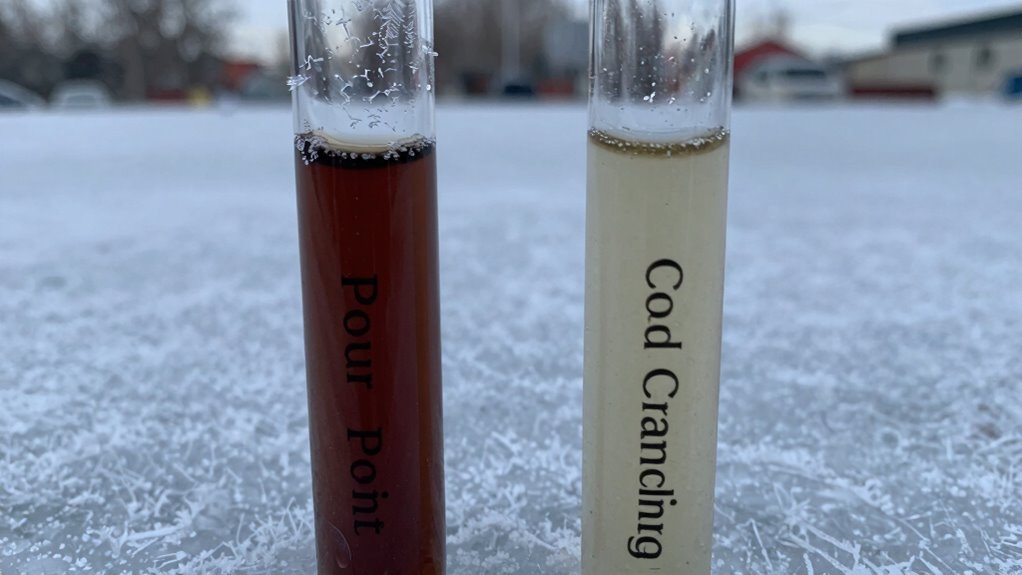

Pour point indicates the lowest temperature where your oil still flows, ensuring it remains liquid in cold conditions. Cold cranking measures how well the engine can start when the oil thickens in low temperatures, affecting how easily the engine turns over. Although both specs relate to cold weather, they focus on different aspects: flowability versus startup performance. Understanding these differences helps you choose the right lubricant to protect your engine in winter—there’s more to uncover if you keep exploring.

Get business pricing on garage and car supplies
- Business-only prices and quantity discounts
- Tax-exempt purchasing
- Multiple users, one account, clear invoices
Key Takeaways
- Pour point indicates the lowest temperature where oil remains pourable; cold cranking measures engine start-up ability at low temperatures.
- Pour point relates to oil viscosity and flow, while cold cranking assesses how viscosity impacts engine turning during cold starts.
- Thickened oil at low temperatures can hinder flow (pour point) and make engine starting more difficult (cold cranking).
- Both specs predict low-temperature performance but focus on different aspects: flowability vs. engine startup ease.
- Understanding the distinction helps choose lubricants suitable for cold weather to prevent engine damage.

Understanding the differences between pour point and cold cranking is essential for evaluating how lubricants perform in low temperatures. These two specifications are often confused, but they reveal distinct aspects of a lubricant’s behavior under cold conditions. When you look at viscosity differences, you’re examining how easily the oil flows at specific temperatures. The pour point indicates the lowest temperature at which the lubricant remains fluid enough to pour or flow, directly relating to viscosity at extremely low temperatures. Conversely, cold cranking specifications focus on how well the oil lubricates during engine startup when viscosity temporarily increases due to cold, affecting how the engine turns over initially. Recognizing this distinction helps you choose the right oil to prevent engine damage during winter months. Additionally, understanding viscosity behavior in cold temperatures can help you select the most suitable lubricant for your needs.
Pour point shows the coldest oil flow, while cold cranking reflects startup lubrication performance in low temperatures.
Temperature impact plays a crucial role in both measurements, but they reflect different behaviors. The pour point measures the temperature at which the oil’s viscosity becomes so high that it ceases to flow, effectively turning the lubricant into a semi-solid. This is critical in ensuring the oil can still circulate through the engine when temperatures drop below freezing. Cold cranking, however, assesses how the oil’s viscosity influences engine start-up, especially when the engine requires significant effort to turn over. If the oil’s viscosity is too high at low temperatures, the engine will struggle to start, and the starter motor will work harder, risking damage. Both specifications are designed to help you understand how the lubricant will behave in cold weather, but they address different stages of engine operation.
In practical terms, if you see a low pour point, it means the oil remains fluid at very cold temperatures, reducing the risk of thickening and flow blockage. This is essential for ensuring your engine’s lubrication system remains operational during cold snaps. On the other hand, a good cold cranking rating indicates that the oil can provide adequate lubrication immediately upon engine start-up, minimizing wear and tear. It’s worth noting that viscosity differences at low temperatures directly impact both these specifications. The colder it gets, the more the viscosity increases, which can hinder flow and engine starting. That’s why selecting a lubricant with appropriate cold-weather specs is essential—it’s all about understanding the temperature impact on viscosity and how it affects your engine’s performance.
Ultimately, grasping the nuances between pour point and cold cranking helps you make smarter choices when it comes to winter lubricants. You want an oil that stays fluid enough to flow at low temperatures (low pour point) and provides reliable lubrication during engine startup (good cold cranking). Recognizing their differences ensures you’re prepared for cold weather, reducing the risk of engine problems and extending the life of your vehicle.
As an affiliate, we earn on qualifying purchases.
Frequently Asked Questions
How Does Ambient Temperature Affect Pour Point and Cold Cranking?
Ambient temperature influences both pour point and cold cranking, affecting viscosity behavior and temperature thresholds. As temperatures drop, your oil’s pour point becomes critical, since it can thicken and lose flow, risking engine damage. Cold cranking requirements also increase because low temperatures make starting harder, demanding oils with better cold flow properties. You need to choose oils that maintain ideal viscosity behavior across temperature thresholds for reliable engine operation in cold weather.
Can Synthetic Oils Improve Low-Temperature Performance More Than Conventional Oils?
Synthetic oils markedly boost low-temperature performance thanks to their synthetic advantages. You’ll notice quicker starts and smoother spins in cold conditions. Their additive effects help maintain fluidity and prevent thickening when temperatures plummet. Unlike conventional oils, synthetics flow freely, fend off freezing, and keep your engine energized. So, if you want a reliable, resilient ride in winter’s worst, synthetic oils are your best bet for superior low-temperature performance.
What Are the Risks of Using Oil With Incorrect Cold-Weather Specs?
Using oil with incorrect cold-weather specs risks poor oil viscosity, which can cause harder starts, increased engine wear, and reduced fuel efficiency. If the oil is too thick for cold conditions, it won’t circulate properly, straining your engine. Conversely, if it’s too thin, it won’t protect against wear. Always match your oil to manufacturer recommendations to guarantee ideal cold-weather performance and maintain fuel efficiency.
How Often Should I Check My Oil’s Pour Point Before Winter?
You should check your oil’s pour point before winter every season, ideally a few weeks ahead, to guarantee winter readiness. Regular oil testing helps verify that your oil still flows well at low temperatures, reducing engine risks. By monitoring conditions early, you can switch to winter-grade oil if needed, preventing costly damage and ensuring your vehicle runs smoothly in cold weather.
Are There Industry Standards for Testing Pour Point and Cold Cranking?
Yes, industry testing standards exist for both pour point and cold cranking. These standards, like ASTM D97 for pour point and ASTM D5293 for cold cranking, guarantee products meet specific cold-weather performance specifications. When selecting oils, you should verify they comply with these standards to guarantee proper performance in low temperatures. Always check for certification labels or documentation to confirm specification compliance and reliable cold-weather operation.
As an affiliate, we earn on qualifying purchases.
Conclusion
So, next time you’re picking motor oil, don’t let pour point and cold cranking specs trip you up. Imagine pouring that icy-cold syrup into your engine only to find it’s thicker than molasses—your car won’t start, and you’re stuck in the freezing cold! Knowing the difference could be the key to surviving the worst winter mornings. Remember, a simple choice could mean the difference between a smooth ride and a frozen nightmare!
As an affiliate, we earn on qualifying purchases.
As an affiliate, we earn on qualifying purchases.
Halloween Picks
halloween
As an affiliate, we earn on qualifying purchases.