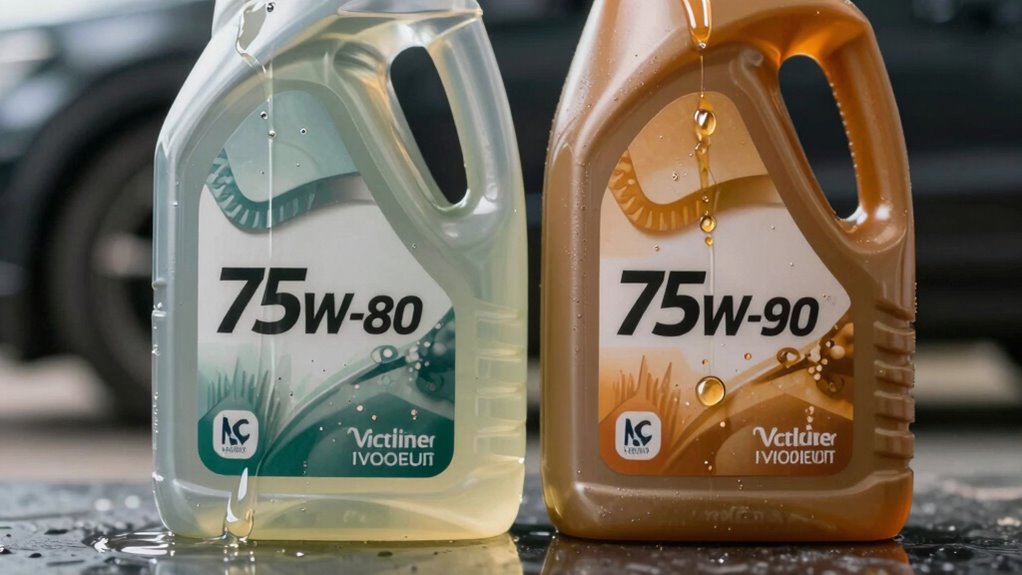

Choosing between 75W-80 and 75W-90 gear oil affects how your transmission shifts right away. 75W-80 offers smoother, quicker shifts, especially in colder weather, because it’s thinner at operating temperatures. On the other hand, 75W-90 tends to feel a bit stiffer, which can lead to slightly harder shifts but provides better protection under heavy loads and high temperatures. If you want to feel the difference immediately, understanding these tradeoffs can help you choose the best option for your driving needs.

Get garage and car supplies delivered free — and shop member deals
- Fast, free delivery on millions of items
- Access to Prime Big Deal Days deals on October 6–7
- Prime Video, Amazon Music and more included
Key Takeaways
- 75W-80 offers smoother shifts in cold weather due to better low-temperature viscosity.
- 75W-90 provides more stable gear engagement during high-temperature, heavy-duty driving.
- The lighter 75W-80 reduces shift effort immediately in colder climates.
- 75W-90 may cause slightly stiffer shifts initially in cold conditions but excels in hot environments.
- Selecting the right oil depends on climate and driving demands for optimal shift feel.
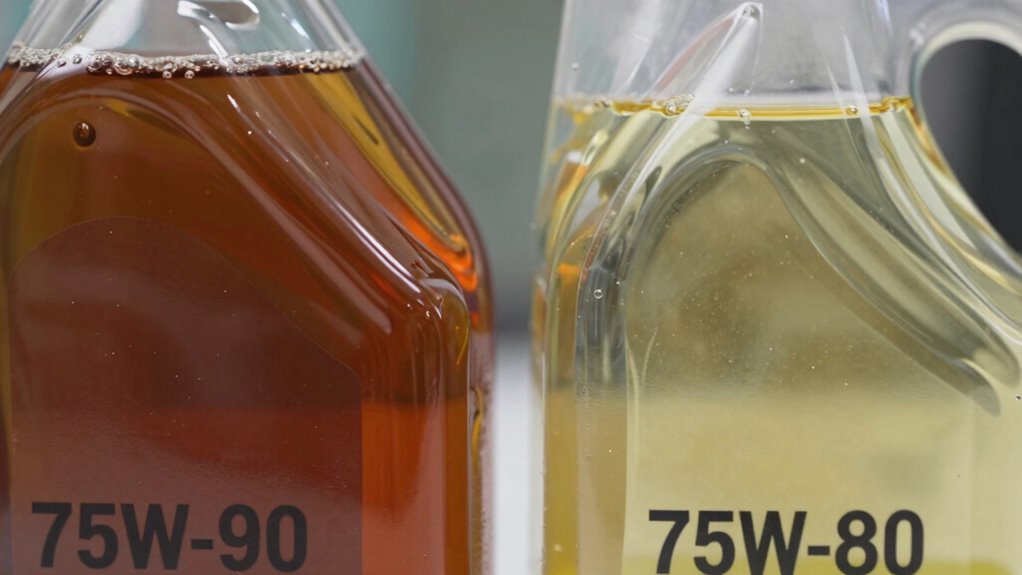
Are you unsure which gear oil to choose for your vehicle—75W-80 or 75W-90? The decision hinges on understanding how each oil interacts with your transmission, particularly regarding gear compatibility and temperature performance. Gear compatibility is essential because not all oils suit every type of transmission. If your vehicle’s manufacturer recommends a specific viscosity, sticking to that guarantees your transmission operates smoothly and avoids unnecessary wear. Using the wrong gear oil can lead to increased friction, gear slippage, or even damage over time. So, verifying your vehicle’s specifications is the first step to making an informed choice.
Choosing the right gear oil depends on your vehicle’s specifications and transmission type.
Temperature performance plays a significant role in your gear oil’s effectiveness. 75W-80 oil is designed to perform well at lower temperatures, providing easier cold starts and quicker lubrication during cold weather. When temperatures drop, this oil maintains its viscosity better, ensuring your transmission shifts smoothly without delay or noise. On the other hand, 75W-90 oil is thicker at operating temperatures, offering enhanced protection in high-stress conditions like towing or heavy-duty driving. It maintains a thicker film between gears, reducing metal-to-metal contact and potential wear during demanding tasks. However, at lower temperatures, 75W-90 can be more viscous, which might make gear shifts feel stiffer until the oil warms up.
Your choice ultimately depends on your driving environment and vehicle specifications. If you live in a colder climate or your vehicle operates under light-duty conditions, 75W-80 is likely the better option because of its superior cold temperature performance and compatibility with lighter gearboxes. Conversely, if you frequently tow, haul heavy loads, or operate in hotter environments, 75W-90’s thicker consistency at high temperatures offers more durable protection, even if it feels slightly more resistant during initial starts.
Additionally, understanding the thermal properties of gear oils can help you make a more informed decision based on your typical driving conditions. Understanding how these oils perform across temperature ranges helps you anticipate how your vehicle will respond in different conditions. The key is matching the oil’s characteristics with your vehicle’s needs. Remember, gear compatibility isn’t just about the right viscosity but also about ensuring the oil can withstand the thermal stresses your driving habits impose. By aligning your choice with your typical driving environment and your vehicle’s specifications, you’ll experience ideal shift quality and gear protection, making your drives smoother and more reliable.
As an affiliate, we earn on qualifying purchases.
Frequently Asked Questions
How Does Temperature Affect Shifting With These Oils?
Temperature impacts shifting because it influences the oil’s viscosity fluctuations. When it’s cold, 75W-80 oil maintains better temperature performance, ensuring smoother shifts since it’s less viscous. In hot conditions, 75W-90 oil’s higher viscosity provides better protection but may cause slightly stiffer shifts. You’ll notice that proper oil choice, based on temperature, helps maintain ideal shifting and gear engagement, preventing harsh or delayed shifts.
Are There Compatibility Issues With Specific Vehicle Models?
You should always check your vehicle’s compatibility before choosing oil, as some models require specific oil specifications. Using the wrong oil type can cause shifting issues or damage your transmission. Refer to your owner’s manual for recommended viscosity and specifications. If unsure, consult your mechanic or vehicle manufacturer to guarantee the oil you select aligns with your vehicle’s compatibility needs, preventing potential problems down the line.
Can Using the Wrong Oil Void My Transmission Warranty?
Using the wrong oil can indeed void your transmission warranty, especially if warranty concerns arise due to oil compatibility issues. Manufacturers specify specific oil grades for best performance and protection. If you use an incompatible oil, it might be considered improper maintenance, which could lead to warranty denial. Always check your vehicle’s manual and stick to the recommended oil type to guarantee your warranty stays valid and your transmission stays protected.
How Often Should I Change Each Type of Gear Oil?
Think of your gear oil as the lifeblood of your transmission. For maximum performance, follow your vehicle’s maintenance schedule, typically changing gear oil every 30,000 to 60,000 miles. Whether it’s 75W-80 or 75W-90, sticking to recommended oil change intervals guarantees smooth shifts and prevents costly repairs. Regular maintenance keeps your transmission healthy, much like a well-tended garden flourishes with timely watering.
Do Synthetic Options Exist for 75W-80 and 75W-90?
Yes, synthetic options exist for both 75W-80 and 75W-90 gear oils. You’ll find gear oil formulations that are fully synthetic, offering better lubrication and temperature stability. These synthetic options are designed to improve gear protection and longevity, especially in extreme conditions. When choosing, look for high-quality synthetic formulations tailored to your vehicle’s specifications for ideal performance and protection.
As an affiliate, we earn on qualifying purchases.
Conclusion
Ultimately, choosing between 75W-80 and 75W-90 is like selecting the right balance for your ride’s personality. While 75W-80 offers a smoother, more effortless feel, 75W-90 provides that extra touch of robustness beneath the surface. It’s all about finding what suits your driving style best. Remember, a well-matched oil can subtly enhance your experience, guiding you toward a more harmonious journey without ever revealing all its secrets at once.
As an affiliate, we earn on qualifying purchases.
heavy-duty transmission gear oil
As an affiliate, we earn on qualifying purchases.
As an affiliate, we earn on qualifying purchases.
Halloween Picks
halloween
As an affiliate, we earn on qualifying purchases.