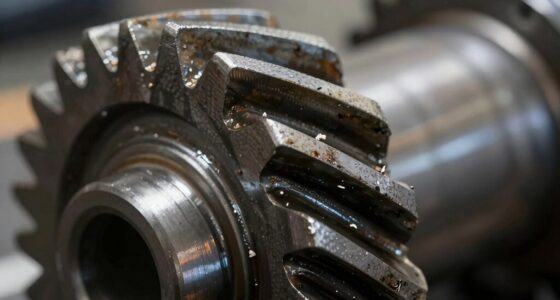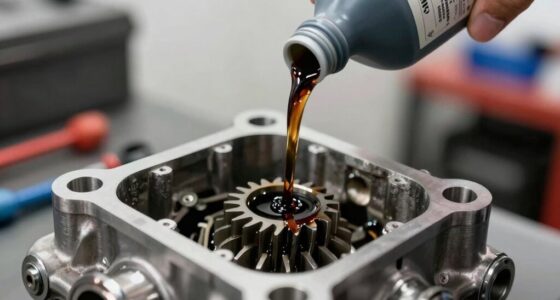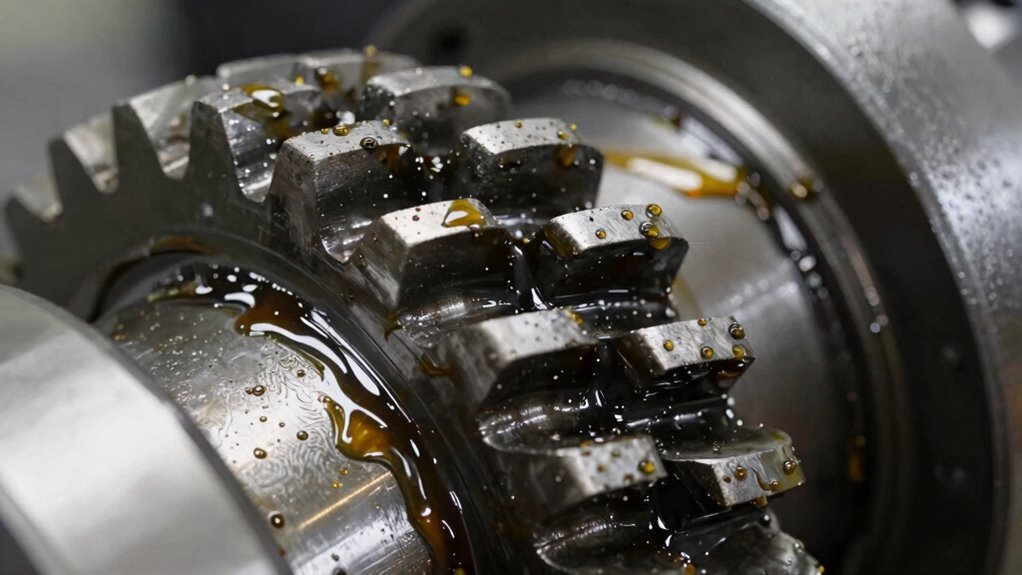

Gear oil experiences shear in much the same way as engine oil, breaking down under mechanical stresses like heavy loads and constant friction. However, its resistance to viscosity loss depends on its formulation, specifically designed to withstand the intense contact and pressures in gear systems. While both oils can shear, gear oils are formulated with additives to improve shear stability. To understand how to choose the right gear oil for your needs, you’ll find useful tips below.

Get business pricing on garage and car supplies
- Business-only prices and quantity discounts
- Tax-exempt purchasing
- Multiple users, one account, clear invoices
Key Takeaways
- Gear oil is more prone to shear-induced viscosity loss due to heavy loads and constant friction.
- Shear stability varies; gear oils are formulated to resist breakdown under mechanical stress, unlike engine oils.
- Mechanical shear in gear oils causes molecular breakdown, leading to thinning and reduced lubrication effectiveness.
- Proper formulation and viscosity grades help gear oils withstand shear forces, preventing rapid viscosity decline.
- Regular monitoring and using shear-stable oils extend gear service life and prevent equipment failure.
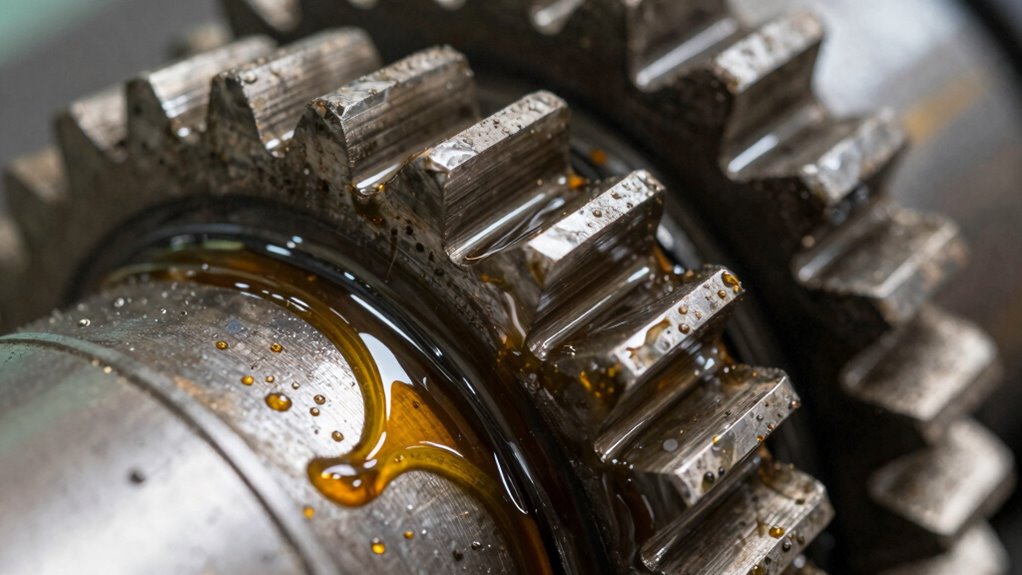
Gear oil shear occurs when the oil’s viscosity decreases due to mechanical stress, leading to reduced lubrication performance. When gears operate under heavy loads and constant friction, the oil experiences shear forces that can break down its molecular structure. This process causes the oil to become thinner, compromising its ability to form a protective film between gear surfaces. Unlike engine oil, which is designed to handle high shear forces and maintain shear stability, gear oils vary markedly in their resistance to shear. Hence, understanding how gear oil viscosity reacts under stress is vital for selecting the right lubricant for your equipment.
Shear stability plays a key role in determining how well gear oil maintains its viscosity over time. Oils with high shear stability resist breakdown better, ensuring consistent lubrication and prolonging gear life. When the shear stability of a gear oil is poor, its viscosity can drop quickly once subjected to mechanical stress, leading to increased metal-to-metal contact, wear, and ultimately, equipment failure. This is why many manufacturers emphasize the importance of using oils formulated with high shear stability, especially in demanding applications such as heavy machinery or high-speed gear drives.
In contrast to engine oils, gear oils are generally thicker and formulated specifically for gear contact and load-bearing capacity. They often contain additives designed to enhance shear stability, preventing viscosity loss even under intense stress. This difference in formulation means that gear oils are less prone to shear-induced viscosity decrease compared to engine oils, which are engineered to operate at higher temperatures and across a broader range of conditions. However, even high-quality gear oils can experience shear if subjected to prolonged or extreme mechanical forces, especially if their viscosity is not properly matched to the application’s demands.
You should pay attention to the viscosity grade recommended by the manufacturer, as it provides a guideline for how the oil will perform under typical operating conditions. Choosing an oil with good shear stability ensures that, even after continuous operation under heavy load, it retains enough viscosity to keep gears properly lubricated. This minimizes wear and reduces the risk of gear failure caused by inadequate lubrication.
As an affiliate, we earn on qualifying purchases.
Frequently Asked Questions
How Does Shear Affect Gear Oil Longevity?
Shear reduces gear oil longevity by lowering its lubrication viscosity, making it less effective at protecting gears. As shear occurs, wear particles form, which can accelerate component wear and breakdown of the oil. You’ll notice increased metal-to-metal contact and potential gear damage. To prevent this, choose shear-resistant gear oil and monitor oil condition regularly. Proper lubrication helps extend gear life and keeps equipment running smoothly.
Can Shear Lead to Gear System Failure?
Yes, shear can lead to gear system failure by breaking down gear oil’s lubricating film, especially if the gear material is highly susceptible to wear. When shear occurs, it compromises lubrication methods, increasing friction and heat. This deterioration can cause gear damage or failure over time. To prevent this, select gear oils with shear stability and guarantee proper lubrication methods suited to your gear system’s material and operating conditions.
What Are Signs of Gear Oil Shear in Machinery?
Like a ship losing its anchor in a storm, you’ll notice reduced lubricant viscosity and increased metal-to-metal contact, signaling gear oil shear. You might see signs such as abnormal noise, overheating, or gear slippage. These issues indicate the shear stability of your lubricant has compromised, making it less effective at protecting your gears. If you catch these early, you can prevent serious damage and maintain smooth operation.
Is Shear More Common in Certain Types of Gear Oils?
Shear is more common in gear oils with lower lubricant viscosity because they tend to have less shear stability. When selecting gear oils, you should consider their shear stability ratings; oils with poor shear stability are prone to viscosity loss under stress. Heavier viscosity oils often resist shear better, maintaining proper lubrication. So, choose gear oils with high shear stability to minimize shear-related issues, especially in demanding machinery.
How Can Shear Be Minimized in Gear Systems?
To minimize shear in gear systems, focus on proper lubrication techniques and material selection. Use high-quality, shear-resistant gear oils designed for heavy loads, and guarantee correct application to reduce shear stress. Choose gear materials with strong, durable properties that resist deformation. Regular maintenance and monitoring also help prevent shear-related issues, ensuring smooth operation and extending gear life.
As an affiliate, we earn on qualifying purchases.
Conclusion
So, stay savvy about shear and shine a light on gear oil’s true nature. Whether it’s similar to or separate from engine oil, understanding shear helps you make smarter, smoother shifts. Don’t let shear sneak up silently—stay vigilant, verify viscosity, and value your vehicle’s essentiality. By knowing whether shear strikes differently or similarly, you’ll keep your gears gliding gracefully and your drive dependable. Drive confidently—your knowledge keeps your machine moving smoothly!
gear oil additive for shear stability
As an affiliate, we earn on qualifying purchases.
As an affiliate, we earn on qualifying purchases.
As an affiliate, we earn on qualifying purchases.
Fall Picks
fall essentials
As an affiliate, we earn on qualifying purchases.