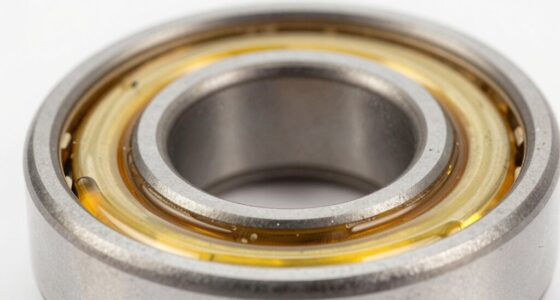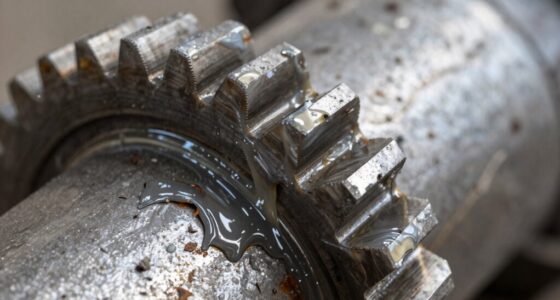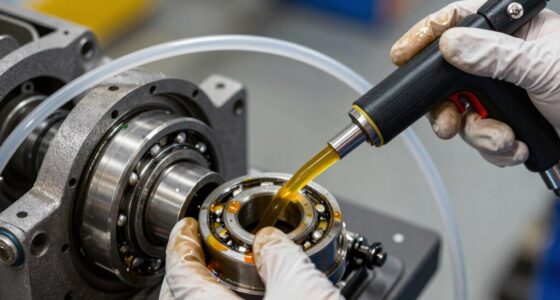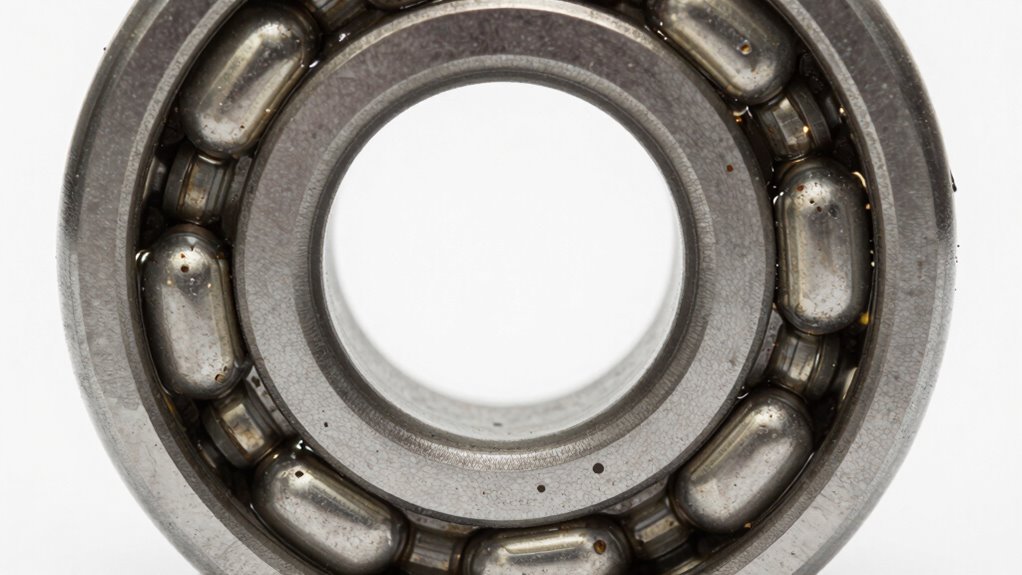

Grease-related issues can cause bearing noise that mimics mechanical damage, making diagnosis tricky. Using the wrong or insufficient grease, contaminating it during relubrication, or overgreasing can increase friction, heat, and surface distress, leading to unusual sounds like squealing, rattling, or grinding. These noises often resemble genuine bearing damage, but proper maintenance, correct lubrication, and contamination prevention can resolve these issues. Keep exploring to understand how to distinguish genuine problems from grease-related noise.

Get garage and car supplies delivered free — and shop member deals
- Fast, free delivery on millions of items
- Access to Prime Big Deal Days deals on October 6–7
- Prime Video, Amazon Music and more included
Key Takeaways
- Improper or insufficient grease can cause squealing or grinding sounds that resemble mechanical damage.
- Overgreasing traps excess lubricant, increasing heat and noise similar to bearing wear.
- Contaminated grease introduces particles that produce rattling or bouncing noises mimicking internal damage.
- Use of wrong grease types leads to poor lubrication and noises that resemble micro-spalling or surface distress.
- Seal or shield failure allows dirt entry, causing noise patterns that can be mistaken for mechanical issues.
As an affiliate, we earn on qualifying purchases.
What Causes Bearing Noise Due to Grease Problems?
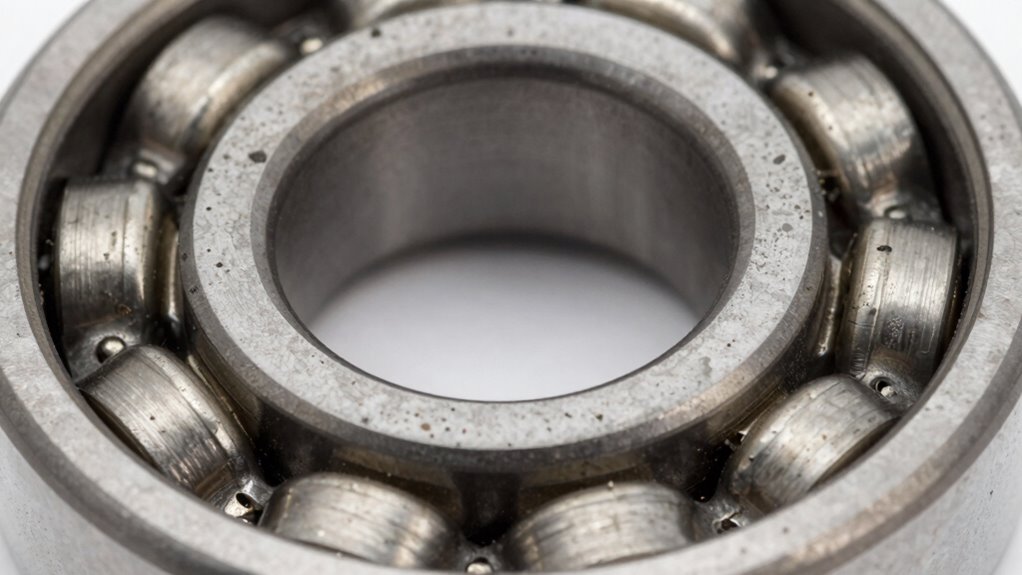
Bearing noise caused by grease problems often results from improper lubrication practices. When you underfill the bearing with insufficient grease, it leads to excess heat and increased metal wear. This increased wear can generate irregular sounds similar to those caused by mechanical faults. This causes friction between rolling elements and raceways, producing noise that may temporarily subside after adding grease but quickly return once levels drop again. Low grease volume also signals that the bearing no longer has adequate lubrication, often accompanied by a temperature rise. Using the wrong type of grease—like high viscosity instead of the recommended grade—can cause skidding or micro-spalling, generating irregular sounds. Contamination during relubrication introduces particles that damage surfaces, leading to bouncing or rattling. Overgreasing and degraded grease further exacerbate noise issues, mimicking mechanical faults while masking the true cause. Proper maintenance and lubrication practices are essential to prevent these issues from arising.
As an affiliate, we earn on qualifying purchases.
How Grease Volume and Type Affect Bearing Performance

Proper grease volume and type are crucial for ideal bearing performance. Too little grease increases friction and heat, causing metal wear and noise. You might notice a temporary quieting after adding grease, but the noise often returns if levels remain low. Conversely, overgreasing traps excess lubricant, raising temperatures and causing the rolling elements to fight through the grease, which also generates noise. The wrong grease type—whether incompatible or with improper viscosity—can lead to poor lubrication, skidding, or micro-spalling, all producing noise that mimics damage. Using the correct grease with appropriate viscosity and additives ensures proper film thickness and damping, reducing friction and wear. Maintaining the right grease volume and selecting the proper type are essential for minimizing noise and prolonging bearing life. Additionally, understanding the types of bearing grease and their specific applications helps in selecting the most suitable lubricant for different operating conditions.
As an affiliate, we earn on qualifying purchases.
Signs Your Bearing Has the Wrong or Insufficient Grease

If your equipment is making unusual noises or running hotter than normal, it could be a sign that the grease in the bearing is either wrong or insufficient. You might notice increased friction, leading to squealing, grinding, or rattling sounds. Overheating is common because inadequate lubrication causes excess heat buildup. These signs often appear suddenly and persist even after re-lubrication, indicating that simply adding grease isn’t enough. If the grease is incompatible or too little, it won’t form a proper film to separate rolling elements from raceways, causing metal-to-metal contact. Additionally, inconsistent noise levels or irregular vibrations can point to improper grease. Recognizing these signs early helps prevent bearing failure, saving you from costly repairs and downtime. Proper bearing lubrication maintenance is essential for ensuring optimal performance and longevity.
bearing contamination prevention kit
As an affiliate, we earn on qualifying purchases.
As an affiliate, we earn on qualifying purchases.
How Contamination During Relubrication Causes Noise

Contamination during relubrication can substantially impact bearing noise by introducing foreign particles into the lubrication system. These particles can damage raceways, causing the rolling elements to bounce or rattle, which produces noise. They also create voids by removing surface material, leading to surface distress that mimics fatigue. Damage often occurs when seals or shields are compromised during lubrication, allowing dirt and debris to enter. Over-rolled particles can leave dents, further escalating noise levels. To prevent this, assure your lubrication process involves clean, properly filtered grease and that sealing components are intact. Understanding the testing accuracy of your measurement tools can help detect contamination levels more effectively.
Why Overgreasing Leads to Bearing Heat and Noise

Overgreasing a bearing causes excess lubricant to build up, which increases friction between the rolling elements and raceways. This extra grease creates resistance, leading to higher operating temperatures. The heat results from the rolling elements fighting through the thick lubricant, generating friction and energy loss. As temperatures rise, the grease may burn or leak, producing darkened, unpleasant-smelling grease and noise. Overgreasing also attracts dirt and debris, worsening contamination issues. The increased friction can cause the outer race to spin or wobble, creating irregular noise. Continuous overgreasing accelerates wear and can cause early bearing failure. You might notice a persistent squeal or growl that doesn’t subside with lubrication, indicating that excess grease is disrupting normal bearing operation and causing heat buildup. Proper lubrication practices, including correct application, are essential to prevent these issues and ensure bearing longevity.
How Grease Degradation Creates Persistent Bearing Noise

Grease degradation can lead to persistent bearing noise by compromising the lubricant’s ability to reduce friction. As grease breaks down, it loses its film strength, leading to increased metal-to-metal contact and accelerated wear. Contaminants and dirt mixed into degraded grease create rough surfaces that produce continuous noise. Additionally, old, burned, or contaminated grease can cause surface pitting and dents, mimicking damage.
- Degraded grease causes cavity formation, increasing surface roughness.
- Contaminants act as abrasive particles, creating persistent noise.
- Loss of lubrication film results in metal contact and surface distress.
This ongoing friction and surface deterioration generate noise that doesn’t subside without proper cleaning or bearing replacement. The noise becomes a constant reminder that the grease’s protective function has failed, leading to premature bearing failure.
Why Adding Grease Only Masks the Real Bearing Problems

Adding grease might temporarily quiet bearing noise, but it doesn’t address the underlying issues causing the problem. When you add grease without fixing the root cause, you’re only masking symptoms, not resolving them. The noise may seem to disappear initially, but the real damage continues underneath. For example, contamination, improper grease type, or insufficient lubrication persist, worsening over time. Overfilling can increase heat and friction, while using the wrong grease can lead to micro-spalling or skidding. These issues cause ongoing wear, surface distress, and even false indications of damage. Relying solely on lubrication as a fix can delay necessary repairs, letting problems escalate. Ultimately, the noise returns, often more severe, revealing that adding grease was just a temporary Band-Aid. Additionally, neglecting proper gear maintenance can contribute to these issues, making it crucial to identify and address the root causes rather than just applying more grease.
Preventive Tips to Avoid Grease-Related Bearing Noise

Implementing proactive maintenance practices can substantially reduce the risk of grease-related bearing noise. Regularly check grease levels to prevent underfilling or overfilling, which can cause heat buildup or increased friction. Use the correct grease type, matching viscosity and additives to your bearing’s specifications, to assure proper lubrication and damping. Always clean and inspect seals and shields during relubrication to prevent contamination from dirt and debris. Additionally, establish a consistent relubrication schedule based on manufacturer guidelines and operating conditions.
Proactive maintenance with proper lubrication and inspections reduces grease-related bearing noise.
- Verify grease volume and type regularly
- Keep seals and shields intact during relubrication
- Follow manufacturer-recommended relubrication intervals
Frequently Asked Questions
Can Bearing Noise Be Caused by Improper Seal Installation or Damage?
Yes, improper seal installation or damage can cause bearing noise. When seals aren’t fitted correctly, dirt, debris, or moisture can enter the bearing, leading to contamination and increased friction. Damaged seals may also fail to retain lubrication properly, resulting in insufficient or uneven grease distribution. This causes noise, vibration, and potential early bearing failure, mimicking mechanical damage. Ensuring seals are correctly installed and intact helps prevent these issues and reduces noise.
Is It Possible for Environmental Factors to Influence Grease-Related Bearing Noise?
Like a storm brewing on the horizon, environmental factors can stir up grease-related bearing noise. You might notice increased noise from dust, dirt, moisture, or temperature fluctuations, which can compromise lubrication. These elements cause contamination, alter grease consistency, or accelerate degradation, making bearings squeal or rattle. Staying vigilant and maintaining proper seals and seals can help shield your bearings from these environmental menaces, keeping them quiet and reliable.
How Do Temperature Fluctuations Affect Grease Performance and Noise Levels?
Temperature fluctuations directly impact grease performance and noise levels. When it gets too hot, grease thins out, losing its lubricating properties, which increases friction and causes noise. Cold temperatures make grease stiff, reducing movement and leading to increased wear and noise. Sudden changes can cause expansion or contraction in the bearing, creating vibrations. Regularly monitoring and adjusting lubrication based on temperature helps maintain ideal performance and minimizes noise issues.
Can Manufacturer Defects Contribute to Grease-Related Bearing Noise?
Yes, manufacturer defects can contribute to grease-related bearing noise. If the bearing or grease is improperly manufactured, it might have incompatible materials, incorrect seals, or poor quality control, leading to inadequate lubrication. You might notice noise, uneven wear, or early failure. These defects can cause the grease to degrade faster or fail to provide proper lubrication, resulting in noise that mimics mechanical damage and complicates troubleshooting.
What Role Does Bearing Design Play in Susceptibility to Grease-Induced Noise?
You know what they say, “Beauty is in the details.” Bearing design considerably influences how susceptible it is to grease-induced noise. If your bearing has tight clearances or complex geometry, it’s more prone to issues like inadequate lubrication or contamination buildup. Conversely, well-designed bearings with proper seals and clearances can better handle grease variations, reducing noise. So, choosing the right design helps prevent grease-related problems from turning into costly repairs.
Conclusion
If you ignore grease issues, your bearing noise could turn into a roaring nightmare that shakes your entire machine to its core! By understanding grease’s role, you can dodge endless hours of repairs, catastrophic failures, and costly downtime. Don’t let greasy mistakes turn your equipment into a ticking time bomb. Stay vigilant, follow maintenance tips, and keep your bearings happy—before a tiny grease problem snowballs into a machine-destroying disaster!
Halloween Picks
halloween
As an affiliate, we earn on qualifying purchases.