
A high dropping point shows when a material begins to soften and flow, but it doesn’t guarantee it performs well at high temperatures over time. Softening at a certain temperature isn’t the same as maintaining strength or stability under prolonged heat exposure. Other factors like chemical stability, thermal degradation, and long-term behavior play big roles. If you want to understand these differences in more detail, there’s more to discover about material performance.
Key Takeaways
- Dropping point measures initial softening, not overall thermal stability or behavior under sustained high heat.
- A high dropping point does not guarantee the material will resist degradation or become brittle at elevated temperatures.
- Thermal performance depends on multiple factors like chemical stability, long-term stability, and other thermal properties beyond dropping point.
- Testing standards ensure consistent measurement but do not reflect how a material performs during prolonged high-temperature exposure.
- For high-temp applications, consider comprehensive thermal data and real-world testing rather than relying solely on dropping point.
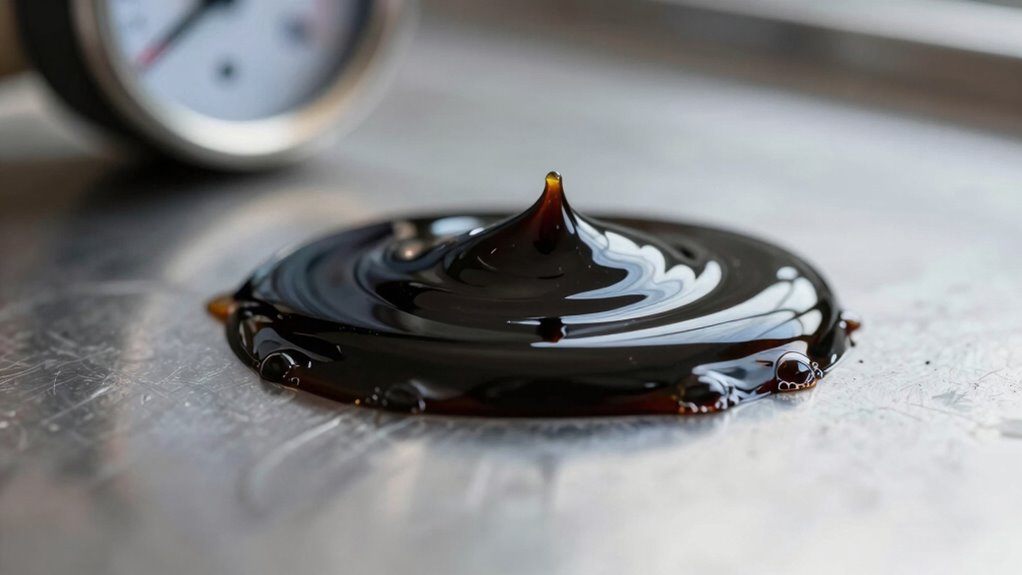
Have you ever wondered what the dropping point of a substance is and why it matters? The dropping point, also known as the flow point, is the temperature at which a material begins to soften enough to flow or drip. This measurement provides insight into the thermal properties of a substance, especially its behavior under heat. It’s a critical parameter in industries like plastics, waxes, and lubricants, where understanding how a material responds to heat can influence processing and performance. However, it’s important to recognize that a high dropping point doesn’t always mean a material will perform well at high temperatures in real-world applications.
The dropping point indicates when a material begins to soften and flow under heat.
When you look at polymers, their behavior at elevated temperatures is complex. The dropping point only indicates when the polymer softens significantly, but it doesn’t reveal how the material will behave under sustained high heat or mechanical stress. For example, some polymers may have a high dropping point yet become brittle or degrade rapidly when continuously exposed to heat. This is where testing standards come into play. These standards, established by industry organizations, define precise procedures for measuring the dropping point, *guaranteeing* consistency and reliability across different materials and laboratories. They help you compare materials accurately and understand their true thermal limits.
But don’t be fooled into *equating* a high dropping point with overall high-temperature performance. Many factors influence a material’s ability to withstand heat, including chemical stability, mechanical properties, and how it interacts with other substances. For instance, a wax with a high dropping point might still melt or lose integrity at temperatures well below its softening point if it’s chemically unstable or contains impurities. Similarly, in polymers, the glass transition temperature and melting point are often more relevant indicators of high-temperature performance than the dropping point alone. Additionally, understanding the thermal stability of a material is crucial for predicting its long-term behavior under heat.
Understanding the differences between these thermal properties helps you make better choices for your projects. If you’re selecting a material for high-temperature applications, look beyond the dropping point. Consider *thorough* testing standards and other thermal parameters that reveal how the substance behaves under real operating conditions. This approach *guarantees* that you choose materials that won’t just soften or drip at a certain temperature but will maintain their integrity, strength, and functionality when it truly counts. Remember, the dropping point is just one piece of the puzzle—context and *extensive* testing are key to understanding how a material will perform at elevated temperatures.

Heat Resistant Silicone, Heat Resistant Glue, Heat Resistant Glue 50ml X 2 Pack, High Temperature Silicone Sealant for Oven Door for Sealing Glass Cooktops, Fireplace Surrounds Kitchen Fittings
Superior Sealing Properties: Featuring advanced viscosity, our heat resistant silicone creates airtight seals to resist moisture ingress. Its…
As an affiliate, we earn on qualifying purchases.
As an affiliate, we earn on qualifying purchases.
Frequently Asked Questions
How Is Dropping Point Measured in Different Lubricants?
You measure dropping point in lubricants by gradually heating a sample until it turns from solid to liquid, observing the temperature at which it fully melts. This process assesses temperature stability, showing how well the lubricant withstands heat. Thickening agents influence dropping point, as they can raise or lower it. Keep in mind, a high dropping point doesn’t necessarily mean better high-temp performance, so consider other factors too.
Can Additives Alter the Dropping Point of a Lubricant?
Additives can alter the dropping point of a lubricant, depending on their additive effects and formulation impact. Some additives, like pour point depressants or anti-oxidants, can lower or raise the dropping point by modifying the lubricant’s chemical properties. You should consider how these additives interact within the formulation, as they influence the lubricant’s behavior at high temperatures, but don’t solely determine its actual high-temp performance.
What Environmental Factors Influence the Dropping Point?
As you observe your lubricant in different environments, factors like oxidation stability and contamination effects come into play. Elevated temperatures accelerate oxidation, reducing the dropping point, while dirt or water contamination can create unwarranted nucleation sites, causing the lubricant to melt or break down sooner. Humidity and exposure to air further influence these changes, so controlling these environmental factors helps maintain your lubricant’s integrity and performance.
How Does Dropping Point Relate to Lubricant Viscosity?
Your lubricant’s dropping point indicates the temperature at which it begins to break down, but it doesn’t directly determine viscosity stability or lubricant flow at high temperatures. While a high dropping point suggests the lubricant can withstand higher heat, it doesn’t guarantee it maintains ideal viscosity or flows well under thermal stress. For reliable high-temp performance, focus on viscosity stability, ensuring the lubricant remains effective without thinning excessively when heated.
Are There Industry Standards for Testing Dropping Point?
Yes, industry standardization and testing protocols exist for measuring dropping point. You’ll find organizations like ASTM and IP providing standardized test methods, such as ASTM D2265, to guarantee consistent and reliable results. These protocols specify precise procedures, sample preparations, and temperature rates, helping you compare lubricants accurately across brands and formulations. Following these established standards ensures your testing is valid, reproducible, and aligned with industry best practices.

Programmable Load Device 3A Variable Current & Smart Thermal Management for Lab Equipment Smart Thermal Management for Lab Equipment
Adjustable Constant Current Electronic Load with Industrial Durability Precisely regulates DC3.7-13V voltages and 0.15A-3A current for power testing
As an affiliate, we earn on qualifying purchases.
As an affiliate, we earn on qualifying purchases.
Conclusion
Remember, a high dropping point doesn’t automatically mean your lubricant can handle high temperatures for long. It’s just one factor, and relying solely on it can lead to misjudgments. Always consider other properties like viscosity and thermal stability. Don’t be fooled into thinking it’s a magic number—look at the whole picture. This way, you’ll choose the right lubricant for your needs, ensuring better performance and longer-lasting equipment.

Car Wax Polish, Carnauba Wax Restores Shine High Hydrophobicity & Antioxidant, Long-Lasting Protection Gentle Formula For Cars, Rvs, Trucks, Motorcycles – Includes Sponge & Towel – 3.53oz, 2 Set
Natural Formula: Our solid car wax polish is made with Brazilian Carnauba and a unique proprietary blend, featuring…
As an affiliate, we earn on qualifying purchases.
As an affiliate, we earn on qualifying purchases.

Super Lube Multi-Purpose Synthetic Grease w/ Syncolon – High Temperature, Water & Corrosion Resistant Grease – Workshop & Industrial Use – Food Grade – Translucent White – Tube – 3 oz (21030)
Versatile Use: Super Lube Multi-Purpose Synthetic Grease with Syncolon is perfect as a tool grease, automotive grease, gear…
As an affiliate, we earn on qualifying purchases.
As an affiliate, we earn on qualifying purchases.