To prevent damage when using induction bearing heaters, you need to keep the temperature below about 120°C (248°F). Exceeding this limit can cause lubricant breakdown, deformation, or cracks in the bearing. It’s vital to monitor temperature carefully and stop heating as you approach this safe threshold. Precise control and proper equipment setup are key to avoiding overheating. If you want to understand how to stay within this limit consistently, learn more about effective temperature monitoring and control techniques.
Key Takeaways
- Keep bearing temperature below approximately 120°C (248°F) to prevent lubrication degradation and material damage.
- Use accurate temperature sensors and real-time monitoring to detect approaching temperature limits during heating.
- Employ controlled, uniform induction heating to avoid localized overheating and thermal stress.
- Stop heating immediately if temperature sensors indicate nearing the safe threshold to prevent damage.
- Regular calibration and proper equipment setup ensure precise temperature control and safe operation.

SKF TIH 030M/110V Induction Heater, Timer, Temperature Control, Used With Bearing Up to 88lbs
Induction heater for use in heating bearings with interference fit
As an affiliate, we earn on qualifying purchases.
As an affiliate, we earn on qualifying purchases.
How Do Induction Bearing Heaters Work to Ease Installations
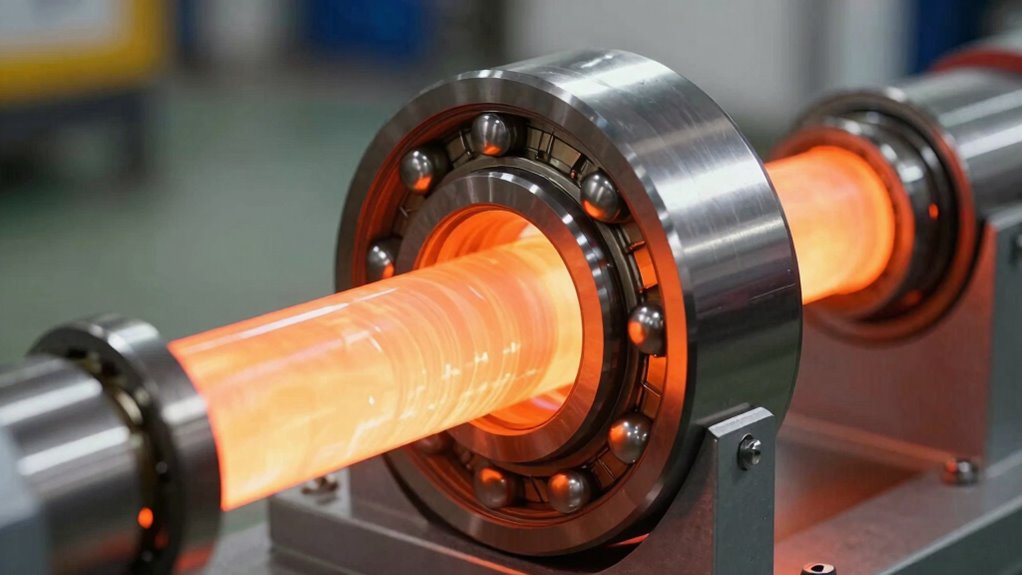
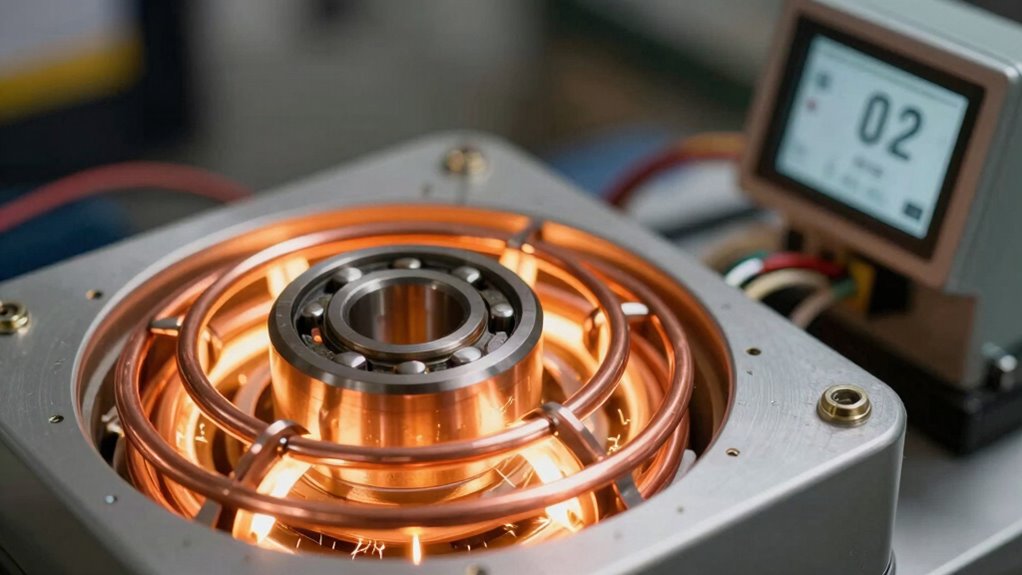
Have you ever wondered how induction bearing heaters make installing bearings so much easier? They work by using electromagnetic induction to generate heat directly within the bearing’s metal, providing fast and uniform heating. This process requires careful consideration of material compatibility, as different metals respond uniquely to induction heating. When the right materials are used, the heater efficiently transfers energy, ensuring quick heating without wasting power. This energy efficiency reduces the time and energy needed for installation, minimizing downtime and operational costs. Unlike traditional methods, induction heaters allow precise control over the heating process, preventing damage to bearings or surrounding components. Additionally, understanding material response is crucial for optimizing the heating process and avoiding potential damage. Proper DIY safety tips should also be followed to ensure safe operation of induction heaters during installations. Incorporating temperature control techniques can further enhance process safety and efficiency. Recognizing the importance of energy transfer efficiency helps maximize the benefits of induction heating and reduces operational risks. Overall, this technology streamlines bearing installation, making it safer, faster, and more reliable.
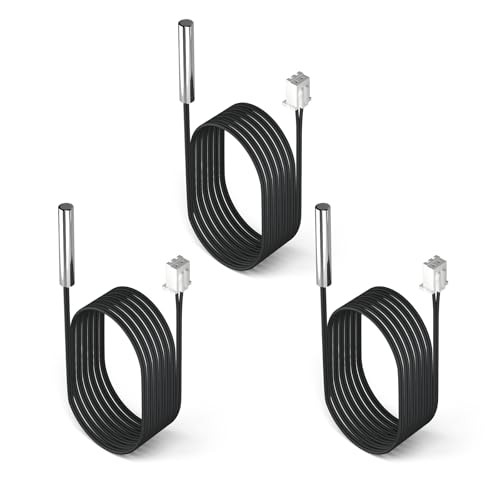
DROK 10K Temperature Sensor Probe 3pcs, 1 Meter Waterproof Temp Sensor Probe, Stainless Steel 3950 NTC Temp Sensor Probe, Digital Temperature Transmitter Extension Cable
Advanced Technology: DROK smart sensors cable adopts sensitive and reliable NTC thermistor and connected by PVC wire, 1…
As an affiliate, we earn on qualifying purchases.
As an affiliate, we earn on qualifying purchases.
How to Choose the Right Induction Heater for Safe Bearing Heating
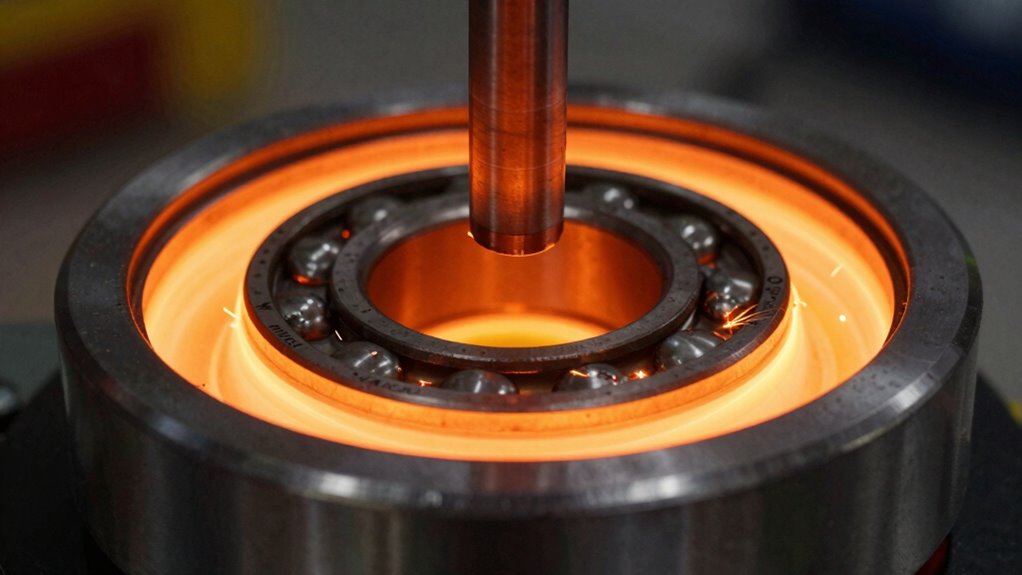
Choosing the right induction heater is essential for safe and effective bearing heating because selecting equipment that matches your specific application guarantees proper temperature control and prevents damage. First, consider material compatibility; verify the heater is suitable for the bearing’s material to avoid uneven heating or damage. Next, focus on power selection—choose a unit with enough power to heat the bearing efficiently without exceeding the critical temperature limit. Too much power can cause overheating, while too little prolongs the process and risks uneven heating. Assess the size and thermal properties of your bearing to determine the appropriate power level. Additionally, understanding induction heating principles can help optimize the process and prevent issues related to improper heating. Proper knowledge of thermal management techniques is vital for maintaining the bearing’s integrity during heating. Recognizing the importance of temperature limits ensures that you do not surpass the maximum safe temperature, which is crucial for preventing damage. Furthermore, understanding material thermal conductivity can assist in predicting how quickly and evenly the bearing will heat, ensuring consistent results. Incorporating accurate temperature measurement methods can provide real-time feedback and help prevent overheating. By matching the heater’s features with your bearing’s material and heating requirements, you ensure a safe, efficient installation process.
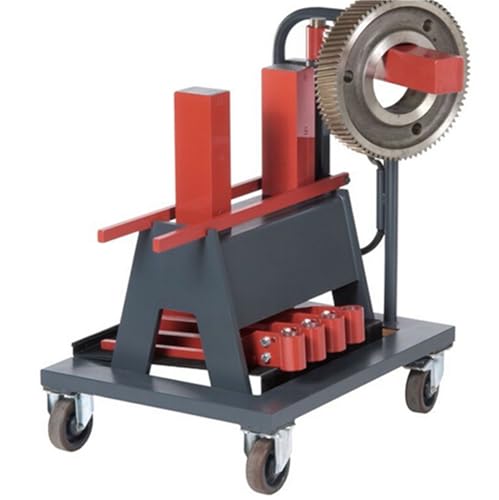
Induction Heater, Portable Industrial Magnetic Induction Bearing Heater Induction Heater
Bearing heater, also known as bearing induction heater or electromagnetic induction heater. They are a heating tool. The…
As an affiliate, we earn on qualifying purchases.
As an affiliate, we earn on qualifying purchases.
Why Is Precise Temperature Control Critical When Heating Bearings
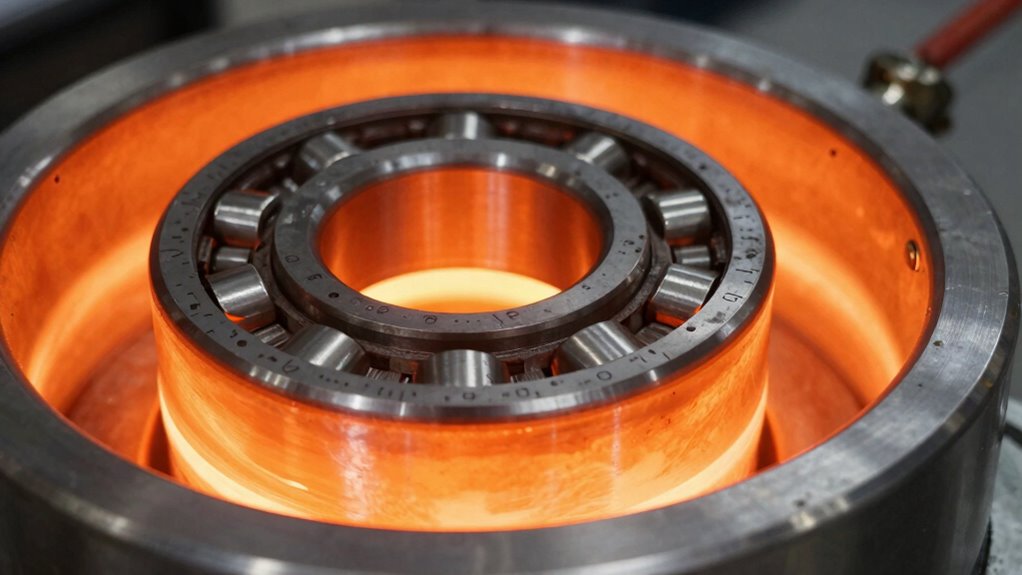
Precise temperature regulation is essential when heating bearings because even slight deviations can lead to significant problems. Overheating can compromise lubrication integrity, causing premature failure, while underheating may prevent proper installation. Additionally, controlled heating minimizes unwanted material expansion, preserving bearing dimensions and fit. To illustrate, consider the following factors:
| Factor | Effect of Improper Control | Recommended Range |
|---|---|---|
| Lubrication Integrity | Degrades with excessive heat, risking failure | Maintain below 120°C |
| Material Expansion | Uncontrolled expansion causes misalignment | Limit temperature rise |
| Bearing Fit | Over-expansion leads to tight fits or damage | Precise, consistent heating |
| Residual Stress | Increased stress causes cracks or warping | Controlled cooling process |
Maintaining strict temperature regulation ensures bearing longevity and ideal performance.

PGN UCFL201-8 Pillow Block Bearing – Pack of 2 Flange Mounted Pillow Block Bearings – Chrome Steel Bearings with 1/2" Bore – Self Alignment
ULTRA-DURABLE – The chrome steel alloy (AISI 52100) body has high resistance to wear and tear, meaning it…
As an affiliate, we earn on qualifying purchases.
As an affiliate, we earn on qualifying purchases.
What Is the Safe Temperature Limit to Prevent Bearing Damage
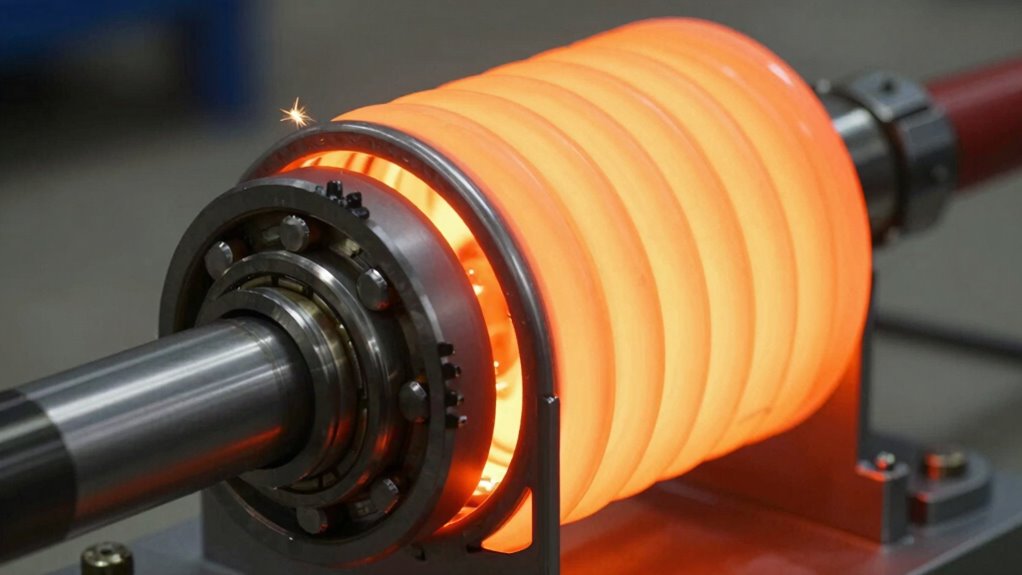
To prevent bearing damage during heating, it’s essential to stay within a specific temperature range that safeguards the bearing’s components. The safe temperature limit typically falls around 120°C (248°F), where thermal expansion remains controlled and doesn’t compromise the bearing’s integrity. Exceeding this temperature risks reducing bearing lifespan, as excessive heat can weaken or deform bearing materials. Maintaining a temperature below this threshold ensures that the bearing’s internal parts expand evenly, preventing uneven stresses that cause premature failure. Proper temperature control helps you maximize bearing durability and performance. AI-driven solutions are increasingly being used to monitor and control temperature precisely during heating processes. Additionally, implementing temperature monitoring can help detect issues early and prevent overheating. To further protect bearings, understanding thermal expansion is crucial, as it influences how materials respond to heat and impacts the safe heating limits. Recognizing how different materials respond to heat allows for better prediction and management of thermal stress during heating procedures. Being aware of material properties can help optimize heating parameters and avoid damage. Remember, the goal is to heat the bearing enough to facilitate installation without pushing it beyond the point where thermal expansion causes damage. Staying within this safe temperature range is key to long-term reliability.
How Can You Recognize When You’re Nearing the Safe Heating Threshold
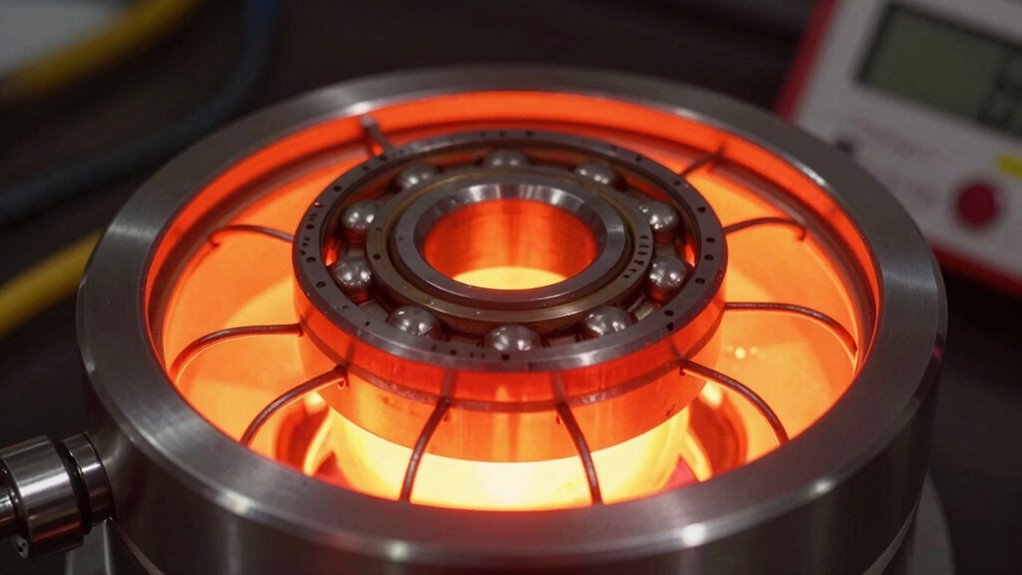
How can you tell when you’re approaching the safe heating limit for a bearing? One key way is by monitoring thermal indicators, such as temperature sensors or infrared readings. These tools help you stay within the designated temperature thresholds, preventing overheating. As the bearing heats up, you’ll notice a steady rise in temperature, but if it approaches or surpasses the recommended limit, it’s a sign to stop heating immediately. Pay close attention to any sudden changes or rapid temperature increases, which could indicate that you’re nearing the danger zone. Additionally, understanding the concept of Free Floating can assist in recognizing how bearings behave under different conditions. Recognizing thermal expansion and how it affects bearing performance can further help in maintaining safe operating conditions. Being aware of bearing load variations can also provide insights into when the bearing is approaching its thermal limits. Monitoring thermal thresholds consistently allows you to gauge when you’re close enough to the safe heating threshold, helping you avoid thermal damage and ensure a smooth, efficient process. Recognizing temperature stability can also be crucial in preventing overheating and ensuring optimal operation.
What Are Best Practices for Monitoring Temperature During Heating
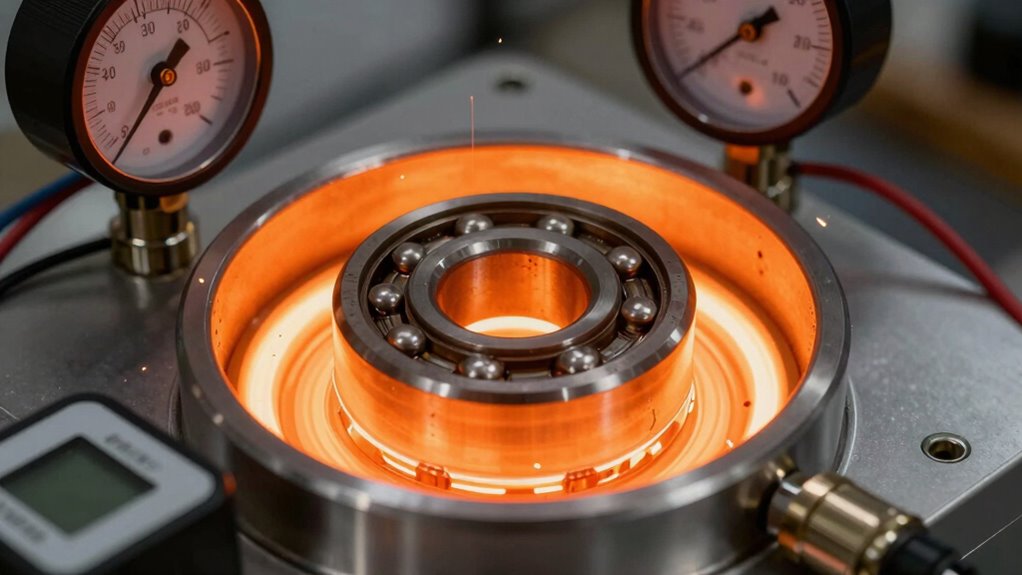
Effective temperature monitoring during induction bearing heating requires using reliable tools and techniques to guarantee safety and efficiency. Temperature sensors, such as infrared or thermocouple devices, are essential for accurate readings. Place sensors properly to ensure they measure the bearing surface or critical areas without interference. Follow strict monitoring protocols, including continuous or periodic checks, to track temperature progress in real-time. Establish clear thresholds aligned with the bearing’s safe temperature limits, and act immediately if readings approach these boundaries. Regular calibration of sensors ensures precision. Avoid relying solely on visual cues or assumptions; consistent, accurate temperature data helps prevent overheating and damage. Proper sensor placement and temperature measurement techniques are crucial for achieving reliable results. Employing proper sensor calibration practices further enhances measurement accuracy over time. Incorporating reliable temperature sensors and proper data logging methods can also improve the overall monitoring process. Additionally, using real-time data analysis can help identify trends and anomalies early, supporting proactive decision-making. Implementing advanced monitoring systems can further enhance the safety and efficiency of the heating process. By implementing robust monitoring practices, you safeguard equipment integrity and optimize your induction heating process.
How Can You Avoid Common Overheating Mistakes With Induction Heaters
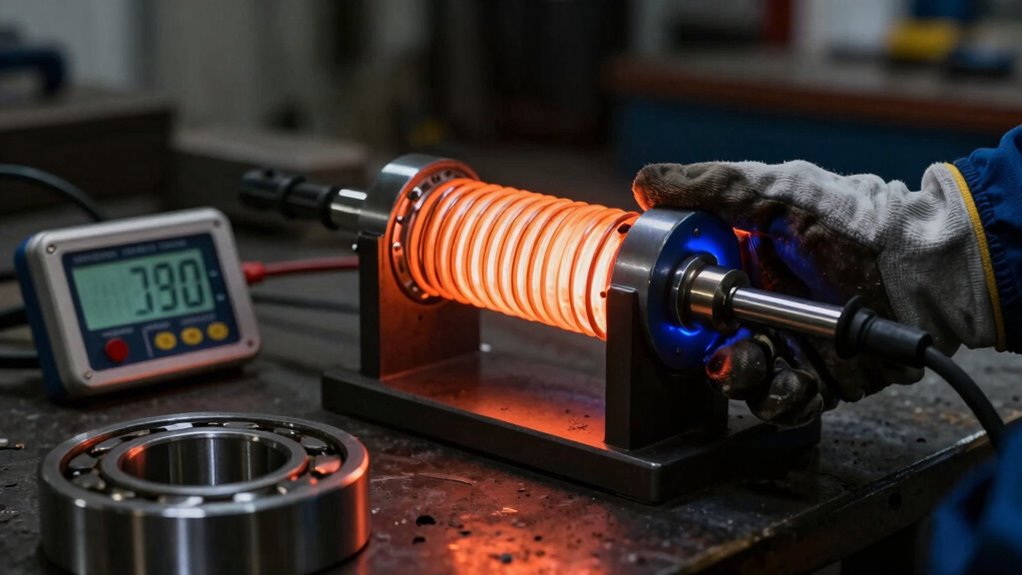
Avoiding common overheating mistakes with induction heaters starts with understanding the importance of proper temperature control and equipment setup. You should regularly monitor temperature levels to prevent exceeding safe limits, which can damage bearings or cause failures. Proper lubrication management is critical; ensure lubricants are compatible with the heating process to avoid breakdowns or contamination. Always verify material compatibility before heating, as some materials may deform or degrade if overheated. Use appropriate temperature sensors and follow manufacturer guidelines to maintain consistent, accurate readings. Avoid rushing the process or applying excessive heat, which can lead to uneven heating and damage. Additionally, being aware of piercing materials and their heat tolerance is essential to prevent material-specific damage during induction heating. Implementing regular calibration of your heating equipment helps maintain precise temperature control, reducing the risk of overheating. Maintaining proper equipment setup is also crucial for consistent results and safety. By controlling temperature precisely, managing lubrication, and confirming material compatibility, you reduce the risk of overheating and ensure safe, effective bearing heating.
Frequently Asked Questions
What Are the Signs of Bearing Overheating During Induction Heating?
You’ll notice signs of bearing overheating during induction heating if you see lubrication failure, such as thickened or burnt lubricant, or if the bearing emits unusual noise or vibration. Overheating can also cause material degradation, leading to increased friction and eventual bearing failure. Keep an eye on temperature gauges and listen for abnormal sounds to prevent damage, ensuring you don’t surpass the critical temperature limit.
How Does Ambient Temperature Affect Safe Bearing Heating Limits?
Ambient temperature impacts safe bearing heating limits by influencing environmental factors that affect temperature readings. Higher surroundings can cause your sensors to register lower temperatures than actual, risking overheating. To guarantee safety, you should follow calibration standards that account for environmental conditions, adjusting heating parameters accordingly. By doing so, you prevent damage from excessive heat and maintain ideal bearing performance during induction heating processes.
Can Improper Insulation Cause Temperature Measurement Inaccuracies?
If your insulation isn’t up to par, it can throw a wrench in your temperature measurements. Poor insulation integrity allows heat to escape or skew sensor readings, making your temperature sensors less reliable. This is like trying to read a map through fog—you won’t get an accurate picture. Always guarantee proper insulation and secure sensor placement to prevent inaccuracies, so you can trust your readings and avoid overheating or damage.
Are There Specific Bearing Types More Susceptible to Heat Damage?
Certain bearing types are more susceptible to heat damage, especially those with softer bearing materials like bronze or polymer, which can deform or degrade faster under high temperatures. You should also consider lubrication effects; inadequate or incompatible lubrication can cause uneven heat distribution, increasing damage risk. Always monitor bearing temperature closely, especially for sensitive materials, to prevent overheating and extend bearing life.
How Often Should Temperature Calibration Be Performed on Induction Heaters?
You should calibrate your induction heater’s temperature sensors at least once a year, but more often if you notice inconsistent readings—that’s irony for you. Regular calibration intervals help prevent damage from overheating or inaccurate readings, so don’t ignore them. Keep a schedule, stay vigilant, and remember, neglecting calibration can turn a simple job into a costly failure. Better safe than sorry, right?
Conclusion
To keep your bearings in top shape, remember that hitting the right temperature is key—don’t push your luck. By choosing the proper heater and monitoring temperatures closely, you can prevent damage and guarantee smooth installations. Keep a close eye on the limits; otherwise, you risk more trouble than it’s worth. When it comes to bearing heating, playing it safe is the best way to stay ahead of the game and get the job done right.