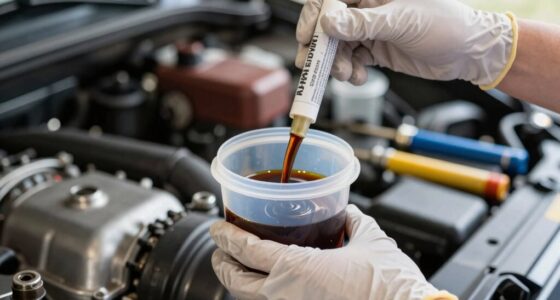

To trend oil analysis by hours instead of miles, schedule sampling at consistent intervals based on operational hours—typically every 250 to 500 hours. Always collect samples from the same point under similar conditions to guarantee accuracy. Track the data over time, focusing on changes in wear metals, contamination, and viscosity. Monitoring these trends helps you catch issues early, making maintenance more effective. If you keep these tips in mind, you’ll gain better insights into equipment health.

Get garage and car supplies delivered free — and shop member deals
- Fast, free delivery on millions of items
- Access to Prime Big Deal Days deals on October 6–7
- Prime Video, Amazon Music and more included
Key Takeaways
- Schedule oil sample collection at consistent operational hour intervals, such as every 250 or 500 hours.
- Record and track oil analysis results alongside specific operating hours for accurate trend analysis.
- Use a dedicated database or log to plot oil condition metrics against accumulated operational hours.
- Focus on changes in wear metals, contamination, and additive levels over time, normalized by operating hours.
- Avoid relying solely on mileage; instead, base maintenance decisions on trends observed through hours-run data.
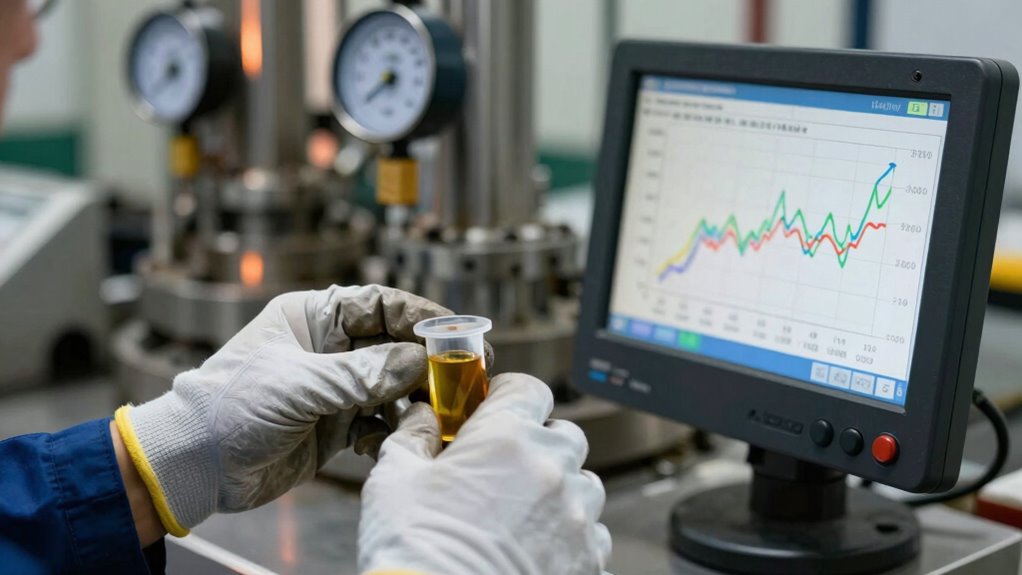
Tracking oil analysis trends is essential for maintaining machinery health and preventing costly failures. When you regularly review your oil sample data, you get a clearer picture of how your equipment is performing over time. Instead of relying solely on mileage, which can be misleading in industrial settings where machines operate under varying loads and conditions, focusing on analysis intervals measured in hours offers a more accurate approach. This method allows you to monitor wear and contamination levels relative to actual operational time, giving you the ability to catch issues early before they escalate into major repairs. Additionally, establishing consistent analysis intervals helps create a reliable baseline for comparison over time.
Monitoring oil analysis by hours helps detect equipment issues early and improve maintenance accuracy.
To effectively trend oil analysis by hours, you should establish consistent analysis intervals based on operational hours rather than miles. For example, you might plan to take an oil sample every 250 or 500 hours of machine operation. This consistency helps you build a reliable baseline and detect subtle changes in oil condition or additive depletion. When you stick to a predetermined interval, it becomes easier to compare data points over time, identify trends, and determine whether your machinery is experiencing normal wear or signs of trouble.
Gathering oil samples at these intervals is straightforward, yet it requires discipline. Make sure each sample is taken from the same point in the system and under similar operating conditions to ensure data accuracy. Proper sampling techniques are vital; contaminated or inconsistent samples can lead you to incorrect conclusions. Once you have your samples, send them to a reputable lab that can perform comprehensive analyses, including tests for viscosity, contamination, metal wear particles, and additive levels. The results will provide insights into the internal condition of your machinery, alerting you to potential problems like excessive wear or oil degradation.
Tracking trends over multiple analysis intervals enables you to observe patterns that may not be obvious from a single sample. For instance, a steady increase in iron particles might point to bearing wear, while rising contamination levels could indicate filtration issues. Recognizing these trends early allows you to plan maintenance proactively rather than reactively, reducing downtime and repair costs. By focusing on analysis intervals based on operational hours, you tailor your maintenance schedule to the actual workload and health of your equipment rather than arbitrary mileage markers, leading to more precise and cost-effective maintenance.
As an affiliate, we earn on qualifying purchases.
Frequently Asked Questions
Can Hourly Oil Analysis Predict Equipment Failure More Accurately?
Yes, hourly oil analysis can predict equipment failure more accurately. By monitoring oil viscosity and wear particles regularly, you catch early signs of issues like increased wear or viscosity changes. This frequent tracking helps you identify trends faster, allowing for timely maintenance. So, analyzing oil hourly enables you to prevent unexpected failures, ensuring equipment runs smoothly and extends its lifespan.
What Equipment Types Benefit Most From Hourly Oil Trends?
If you want to catch trouble before it hits, you’ll see that high-horsepower equipment like turbines and compressors benefit most from hourly oil trends. These machines face rapid lubricant degradation and oil contamination that can cause disaster if ignored. By trending oil analysis hourly, you stay ahead of the game, catching contamination or degradation early, saving you from catastrophic failures and costly downtime.
How Does Temperature Affect Oil Analysis Trends by Hours?
Temperature substantially impacts oil analysis trends by hours because higher temperatures cause oil viscosity to decrease, making the oil thinner and potentially accelerating wear. Additionally, thermal expansion can alter oil flow and distribution within equipment, affecting analysis results. By monitoring temperature variations, you can better interpret oil condition data, recognizing when changes are due to temperature shifts rather than actual degradation, leading to more accurate maintenance decisions.
Are There Specific Industries That Prefer Hourly Over Mileage Analysis?
You’ll find that industries like aviation, maritime, and heavy equipment manufacturing prefer hourly oil analysis over mileage because they operate under strict safety and maintenance standards. In fleet management, hourly trends ensure accurate maintenance scheduling, preventing unexpected failures. While some may think miles are enough, hourly analysis captures real-time wear and tear, helping you optimize maintenance and extend equipment lifespan more effectively.
What Are the Cost Implications of Hourly Oil Trending?
You’ll find that hourly oil trending can impact your cost efficiency by enabling more precise maintenance scheduling. While it may increase monitoring costs initially, it helps prevent costly breakdowns and unscheduled repairs, ultimately saving money. By analyzing oil data based on operating hours, you optimize maintenance intervals, reduce downtime, and extend equipment life. This proactive approach guarantees you allocate resources effectively, balancing costs with the benefits of improved equipment reliability.
As an affiliate, we earn on qualifying purchases.
Conclusion
Tracking oil analysis by hours instead of miles is like tending a garden—you need to water your plants regularly, not just when they look thirsty. I once ignored hours and waited for miles, only to face costly repairs. By monitoring oil trends based on operational hours, you catch issues early, much like catching pests before they ruin your crop. Stay proactive, and your equipment will flourish, saving you time and money in the long run.
hourly machine oil monitoring system
As an affiliate, we earn on qualifying purchases.
As an affiliate, we earn on qualifying purchases.
metal wear particle analysis kit
As an affiliate, we earn on qualifying purchases.
As an affiliate, we earn on qualifying purchases.
Halloween Picks
halloween
As an affiliate, we earn on qualifying purchases.