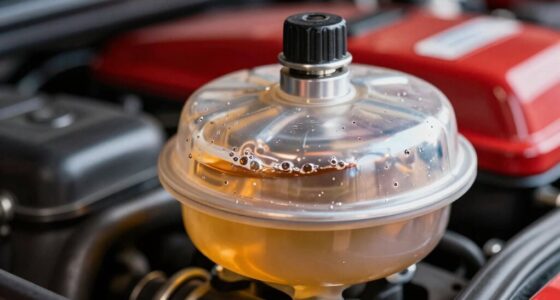

Short track sessions often prevent your engine from reaching proper operating temperature, leading to incomplete fuel combustion and increasing the risk of fuel dilution in your oil. Cold engines don’t burn fuel efficiently, which means unburned fuel mixes with the oil, thinning it out and reducing its protective properties. Over time, this can cause engine wear and knocking. Understanding how temperature impacts fuel efficiency can help you avoid these issues—continue if you want to learn more.

Get business pricing on garage and car supplies
- Business-only prices and quantity discounts
- Tax-exempt purchasing
- Multiple users, one account, clear invoices
Key Takeaways
- Short track sessions prevent the engine from reaching optimal temperature, leading to incomplete fuel combustion.
- Incomplete combustion during brief runs causes unburned fuel to mix with engine oil, increasing dilution risk.
- Longer runs allow the engine to stabilize temperature, ensuring complete fuel burn and reducing fuel dilution.
- Insufficient warm-up and cool-down periods in short sessions hinder oil and fuel mixture stabilization.
- Regular maintenance and extended runs help mitigate fuel dilution by promoting thorough combustion and temperature cycling.
During short track sessions, your engine might not reach its ideal operating temperature. When that happens, fuel doesn’t burn completely, leading to excess fuel mixing with the oil. Over time, this fuel dilution thins out the oil, reducing its lubricating properties. This can cause increased wear on engine components, knocking, and even long-term damage if left unchecked. That’s why routine engine maintenance is essential. Checking oil levels and quality after each session helps you catch early signs of fuel dilution. If you notice a significant drop in oil viscosity or a distinct fuel smell, it’s time to investigate further. Proper kitchen gear care and ensuring your engine components are clean and well-maintained can also help prevent fuel system issues that contribute to dilution.
Fuel system diagnostics play an important role here. A thorough inspection can reveal whether your fuel injectors are delivering too much fuel or if there’s an issue with the fuel pressure regulator. Sometimes, faulty injectors or incorrect fuel pressure settings cause unburned fuel to flow into the combustion chamber. During diagnostics, you might use tools like a fuel pressure gauge or an OBD-II scanner to identify anomalies. Ensuring your fuel system operates correctly not only prevents fuel dilution but also improves overall engine efficiency. Proper disposal of old or contaminated engine oil and fuel residues is crucial for environmental safety; consider eco-friendly disposal tips when servicing your vehicle.
Another key aspect is understanding how short sessions impact your engine’s temperature cycle. Longer runs give your engine enough time to reach its ideal temperature, burn off excess fuel, and stabilize oil composition. Short sessions often leave your engine in a semi-cold state, which hampers complete combustion. This means you’re more likely to experience fuel dilution issues compared to longer, sustained runs. To mitigate this, consider doing longer warm-up and cool-down periods, or perform multiple short sessions with adequate cooling time in between.
As an affiliate, we earn on qualifying purchases.
Frequently Asked Questions
How Does Fuel Dilution Affect Engine Longevity Over Time?
Fuel dilution accelerates engine wear over time by contaminating the oil, which reduces its lubricating properties. When fuel mixes with oil, it creates thinner, less effective lubrication, leading to increased friction and potential damage to engine components. This ongoing oil contamination can shorten your engine’s lifespan, especially if you don’t monitor and address fuel dilution promptly, ultimately risking costly repairs and reduced engine reliability.
Can Fuel Dilution Cause Immediate Engine Failure During a Race?
Ironically, fuel dilution can cause instant damage, risking your race and safety. It might not always lead to complete engine failure immediately, but it certainly raises the danger of catastrophic damage if not caught early. You could face sudden engine failure during a vital moment, putting your safety and performance on the line. Ignoring signs of fuel dilution isn’t just risky for your engine, but for your entire race and well-being.
What Are the Best Practices to Prevent Fuel Dilution in Short Sessions?
To prevent fuel dilution during short sessions, you should focus on proper fuel management and regular engine maintenance. Guarantee your fuel system is clean and free of contaminants, and avoid over-fueling before sessions. Monitor engine temperatures closely, as overheating can cause fuel to mix with oil. Additionally, check and maintain seals and injectors to prevent leaks, keeping your engine running efficiently and reducing fuel dilution risks.
How Do Different Fuel Types Influence Dilution Rates?
Different fuel types influence dilution rates based on their fuel compatibility and additives. You should choose fuels compatible with your engine to reduce dilution risks. Using fuel additives can also help stabilize the fuel, preventing excessive evaporation or separation during short sessions. By selecting the right fuel and adding appropriate stabilizers, you can minimize dilution and maintain ideal engine performance, especially during quick, intense track sessions.
Are There Specific Engine Components More Vulnerable to Fuel Dilution?
Think of your engine as a delicate orchestra, where each instrument must stay in tune. The fuel system and combustion chamber are especially vulnerable to fuel dilution, like sensitive strings that can easily go out of harmony. Excessive fuel mixing can cause wear, corrosion, and inefficient combustion. Keep these components clean and well-maintained, or risk disrupting the symphony of performance and risking long-term damage.
OBD-II scanner for engine diagnostics
As an affiliate, we earn on qualifying purchases.
As an affiliate, we earn on qualifying purchases.
Conclusion
Just like a sudden gust can topple a delicate house of cards, short sessions can hide hidden risks like fuel dilution. Don’t be fooled by the quick burst—it’s often the quiet moments that cause the biggest trouble. Stay vigilant, monitor your engine’s health, and remember, sometimes the shortest runs can be the longest in hidden damage. Keep your engine running smoothly, and don’t let quick sessions be your engine’s undoing.
As an affiliate, we earn on qualifying purchases.
As an affiliate, we earn on qualifying purchases.
Fall Picks
fall essentials
As an affiliate, we earn on qualifying purchases.