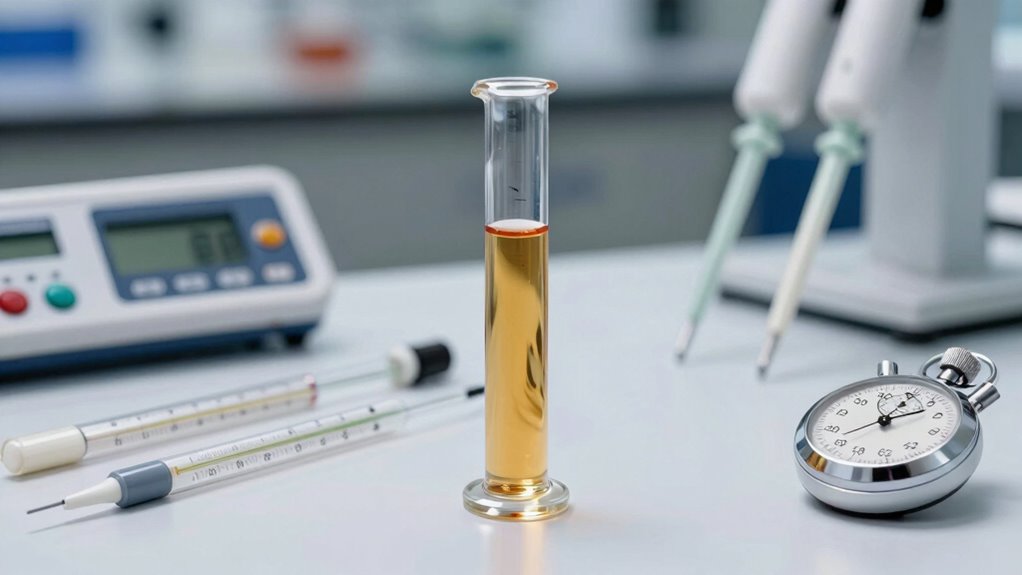

ASTM D445 is a standardized test that measures the viscosity of petroleum products like oils and fuels, which is vital for understanding how fluids flow under different temperatures. You heat the sample and use a special viscometer to time how long it takes for the liquid to pass through a capillary tube. This test guarantees consistency and reliability across datasheets, helping you evaluate product performance. Continuing will reveal more about how this essential test fits into industrial standards.
Key Takeaways
- ASTM D445 measures the flow rate of petroleum liquids to determine their viscosity at specific temperatures.
- It uses standardized viscometers like Ubbelohde or Cannon-Fenske tubes for consistent results.
- Accurate testing requires precise temperature control and proper sample preparation to ensure repeatability.
- Results are calculated from flow times, providing kinematic viscosity values essential for product performance.
- Standardized procedures ensure data reliability, enabling comparison across laboratories and supporting quality assurance.
The ASTM D445 viscosity test is a standardized method used to measure the viscosity of petroleum products, such as lubricating oils and fuels. This test provides essential data that helps you understand how a fluid flows under specific conditions, which is crucial for ensuring proper performance in engines, machinery, and other applications. When you perform a viscosity measurement, you’re essentially quantifying the fluid’s resistance to flow, giving you a clear picture of its flow characteristics at different temperatures. The test procedure is designed to be precise and repeatable, ensuring that results are consistent across laboratories and over time. It involves carefully heating the sample, measuring the time it takes for a specified volume to pass through a capillary tube, and then calculating the viscosity based on that time.
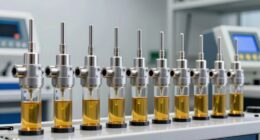
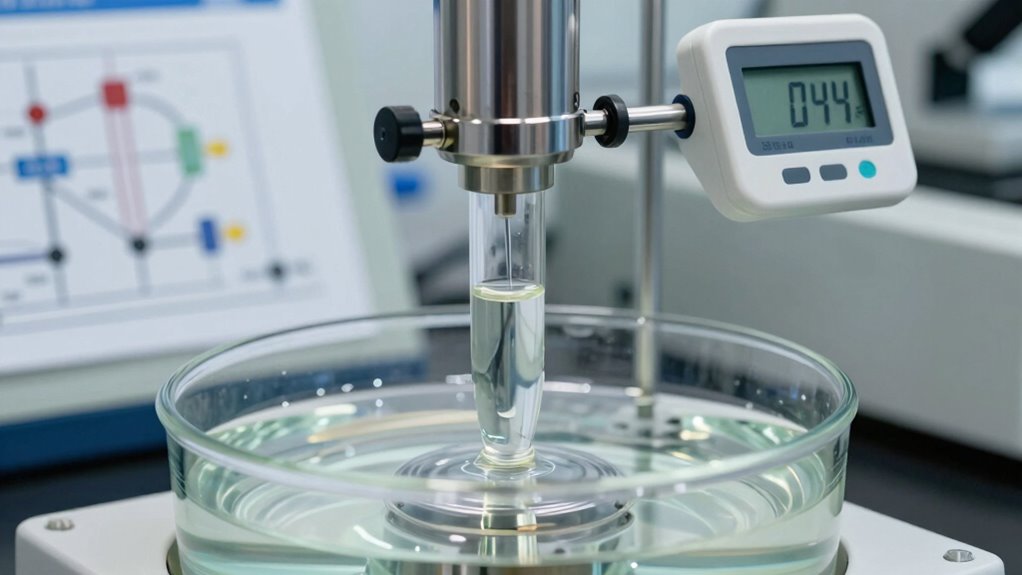
During the test, you start by preparing the sample, which needs to be conditioned at a specific temperature—typically 40°C or 100°C, depending on the product and the testing standards. You then pour the sample into a standardized viscometer, such as a Ubbelohde or Cannon-Fenske tube, which are designed for accurate flow measurement. Once the sample is set, you immerse the viscometer in a temperature-controlled bath to ensure the sample stays at the required temperature throughout the test. This temperature control is critical because viscosity varies significantly with temperature, and precise measurement relies on maintaining consistent conditions.
Prepare the sample at the specified temperature and use a calibrated viscometer for accurate viscosity measurement.
As you perform the test procedure, you observe the flow of the fluid through the capillary tube. You measure the time it takes for the liquid to pass between two marked points. This timing is then used in conjunction with the viscometer’s calibration data to determine the fluid’s kinematic viscosity. The entire process must be conducted carefully to avoid any air bubbles or disturbances, which can skew the results. Once you have the flow time, you apply the calculation formulas provided in the ASTM D445 standards to obtain an accurate viscosity reading. Additionally, understanding the content formats used in reporting these measurements can help you better interpret datasheets and technical documents.
The importance of following the test procedure precisely cannot be overstated, as even small deviations can lead to inaccurate results. This standardization allows manufacturers, engineers, and quality control labs to compare data reliably, ensuring that lubricants and fuels meet their specified performance criteria. By understanding the viscosity measurement process outlined in ASTM D445, you can confidently interpret datasheets and select the right petroleum product for your application, knowing that the data is consistent, reliable, and standardized.

Viscosity Meter Automatic Kinematic Viscosity Tester Oil Diesel Lubricating Oil Petroleum Viscometer Oil Detection Instrument (MC-1322)
As an affiliate, we earn on qualifying purchases.
As an affiliate, we earn on qualifying purchases.
Frequently Asked Questions
How Does Temperature Affect ASTM D445 Viscosity Results?
Temperature influence considerably impacts ASTM D445 viscosity results, causing viscosity variation. As temperature rises, your oil’s viscosity decreases because the molecules move faster, making the fluid thinner. Conversely, lower temperatures increase viscosity, making the oil thicker. You need to control and record temperature carefully during testing to guarantee accurate, consistent results, because even small temperature fluctuations can lead to notable viscosity variation in your measurements.
What Types of Liquids Can Be Tested With ASTM D445?
Imagine a river flowing smoothly, carrying diverse treasures—ASTM D445 can test various liquids like oils, lubricants, and fuels. You need to consider liquid compatibility and proper sample preparation to guarantee accurate results. Whether it’s thick motor oil or thin solvents, this test adapts to multiple viscosities, helping you understand how each liquid behaves under different conditions, guiding your decisions with clarity and confidence.
How Long Does a Typical ASTM D445 Viscosity Test Take?
A typical ASTM D445 viscosity test takes about 30 to 60 minutes. You start by preparing your sample carefully, guaranteeing proper temperature control. Then, you calibrate the equipment precisely to guarantee accurate results. The actual measurement process is quick, but proper sample preparation and calibration can add to the total time. By following these steps, you’ll get reliable viscosity readings efficiently.
Are There Any Common Errors in Conducting the Test?
You should watch out for common errors like calibration issues and sample contamination when conducting the ASTM D445 viscosity test. Calibration problems can lead to inaccurate viscosity readings, so verify your equipment is properly calibrated before testing. Contaminated samples can skew results, so always use clean containers and handle samples carefully. Double-check your procedures to avoid these errors and ensure precise, reliable measurements.
How Is Viscosity Data Used in Product Formulation?
Did you know that viscosity measurement directly influences over 80% of product formulations? You use viscosity data to guarantee consistent product performance, adjusting ingredients for the right flow properties. It helps you optimize formulations, maintain product stability, and meet industry standards. By understanding viscosity, you can fine-tune your product’s consistency, ensuring it meets customer expectations and performs reliably across various conditions.
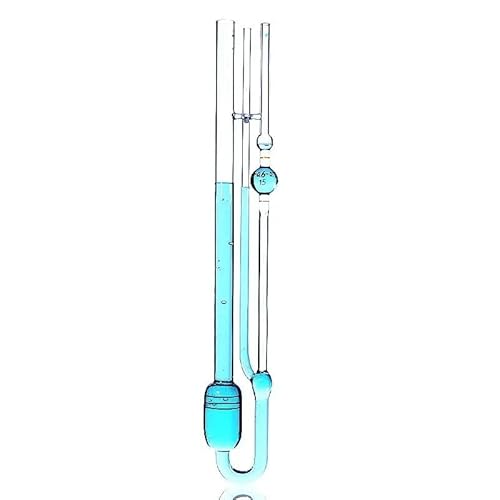
Capillary viscometer for Measuring Liquid Viscosity Coefficient, Laboratory Ubbelohde viscometer 1835 1/PK Type(1.0-1.1)
Instructions for usage:According to the structure and shape of the capillary viscometer, it can be divided into four…
As an affiliate, we earn on qualifying purchases.
As an affiliate, we earn on qualifying purchases.
Conclusion
Just like a watchmaker fine-tunes a delicate gear, understanding ASTM D445 helps you grasp the heart of a lubricant’s behavior. By mastering this viscosity test, you gain insight into how oils perform under different conditions, ensuring your machinery runs smoothly. Remember, this test is the backbone behind most datasheets, guiding your choices with precision. So, embrace the process, and let this knowledge keep your equipment running like clockwork.

Cannon Cannon-Fenske Routine Calibrated Viscometers, Size 100
Determine viscosities using ASTM testing methods
As an affiliate, we earn on qualifying purchases.
As an affiliate, we earn on qualifying purchases.

MOLUCKFU Engine Oil Comparator Tool and Transmission Oil Viscosity Tester Acrylic Stand for Accurate Car Maintenance and Quality Testing
Versatile functionality: not only compares engine oil but also tests the viscosity of transmission oil, providing comprehensive oil…
As an affiliate, we earn on qualifying purchases.
As an affiliate, we earn on qualifying purchases.