ASTM D5800, known as the NOACK test, measures how much lubricant evaporates at high temperatures, which is vital for engine efficiency and emissions. As you evaluate motor oils, understanding volatility helps you choose products that resist excessive evaporation, maintaining proper lubrication and reducing fuel consumption. By testing under controlled conditions, this standard guarantees your lubricant balances stability and performance. Staying informed about these details can guide you toward better engine protection and environmental benefits.

Get garage and car supplies delivered free — and shop member deals
- Fast, free delivery on millions of items
- Access to Prime Big Deal Days deals on October 6–7
- Prime Video, Amazon Music and more included
Key Takeaways
- ASTM D5800, also known as the NOACK test, measures lubricant volatility by assessing weight loss at high temperatures.
- Volatility indicates how easily a lubricant evaporates, affecting engine performance, fuel efficiency, and emissions.
- The test involves heating a small sample and recording weight loss to simulate real engine conditions.
- Lower volatility results in improved lubricant stability, reducing oil consumption and protecting engine components.
- The test helps manufacturers develop compliant, environmentally friendly oils with optimal evaporation characteristics.
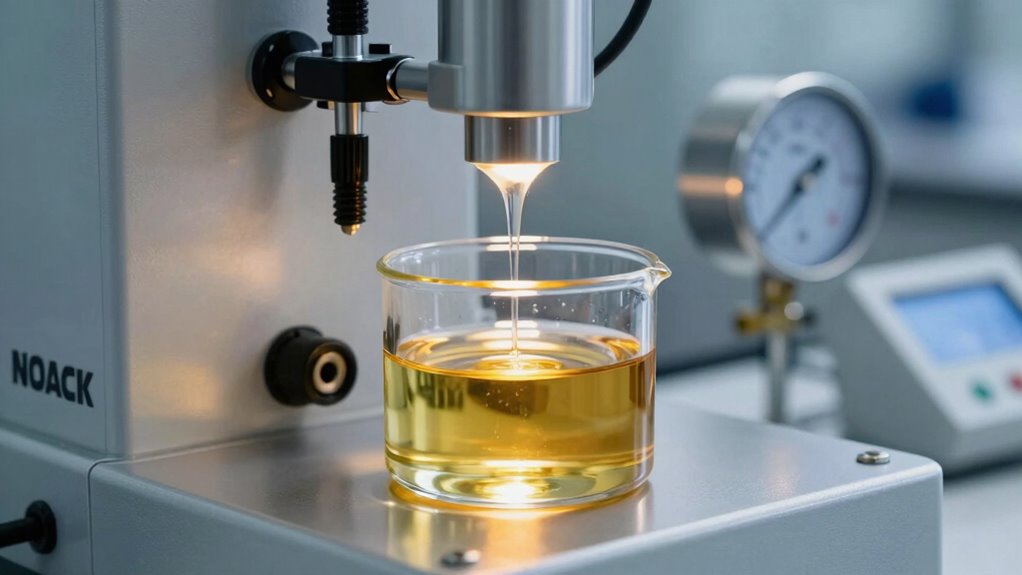
Are you wondering what ASTM D5800 is and why it matters? If so, you’re not alone. This standard test method, often called the NOACK test, plays a critical role in evaluating the volatility of lubricants, especially engine oils. Volatility refers to how easily a lubricant evaporates at high temperatures, which directly impacts fuel evaporation and lubricant stability. When lubricants evaporate too quickly, they can lead to increased fuel consumption and emissions. Conversely, if they don’t evaporate enough, they might not perform well under operational stresses. Understanding and controlling volatility is essential for ensuring that lubricants provide reliable protection while minimizing environmental impact.
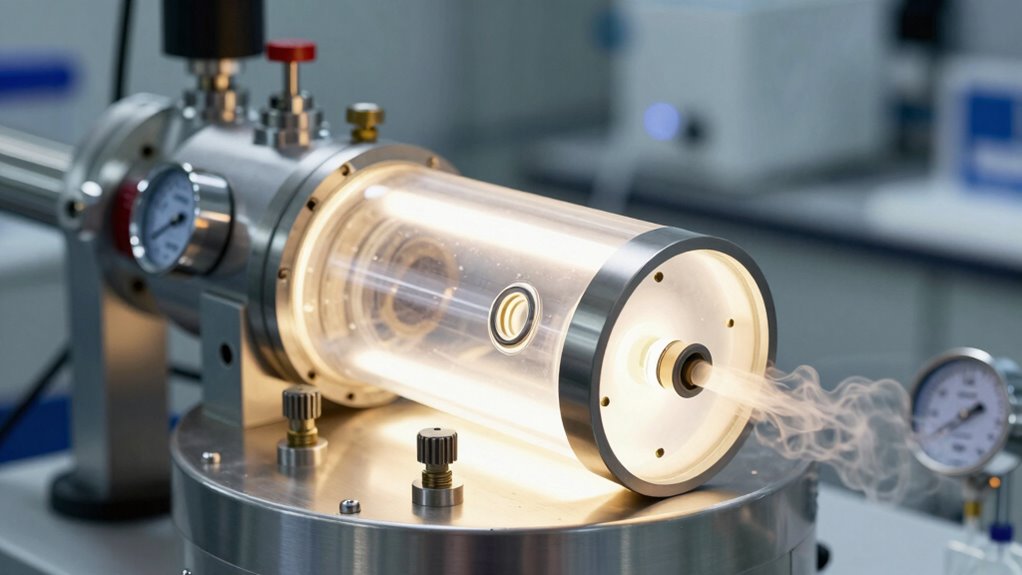
The NOACK test measures the percentage of a lubricant’s weight that evaporates when exposed to high temperatures over a specified period. During the test, you heat a small sample of the oil in a controlled environment and periodically measure the weight loss. This process simulates the conditions an engine oil faces during actual operation, especially under high-temperature scenarios. The lower the evaporation loss, the better the lubricant’s ability to resist fuel evaporation, which is indispensable for maintaining overall engine efficiency. This is where ASTM D5800 becomes indispensable—it provides a standardized way to compare different lubricants’ volatility and predict how they’ll perform in real-world applications.
Fuel evaporation is a significant concern because excessive volatility can cause the lubricant to thin out prematurely, reducing its ability to protect engine components. It can also lead to increased emissions as more fuel vapor escapes into the atmosphere. By adhering to ASTM D5800, manufacturers can formulate lubricants that strike a balance—minimizing fuel evaporation without sacrificing lubrication properties. This balance enhances lubricant stability, ensuring the oil maintains its protective qualities over longer periods and under extreme conditions. When a lubricant is stable, it resists breakdown and thickening, extending its service life and reducing the frequency of oil changes.
In essence, ASTM D5800 serves as an essential tool for controlling volatility in lubricants. It helps you, as a manufacturer or consumer, understand how a product will behave under high-temperature conditions, directly affecting fuel evaporation rates and lubricant stability. By ensuring low evaporation losses, you improve engine efficiency, reduce emissions, and promote longer-lasting lubricants. This test’s insights empower you to select or develop oils that are not only high-performing but also environmentally friendly. Additionally, regulatory standards often reference ASTM D5800 to ensure compliance with environmental and safety requirements. So, when evaluating lubricants, remember that ASTM D5800 isn’t just about numbers; it’s about creating smarter, more sustainable solutions for engine health and performance.
As an affiliate, we earn on qualifying purchases.
Frequently Asked Questions
How Does the NOACK Test Compare to Other Volatility Tests?
The NOACK test offers a precise volatility measurement by simulating high-temperature evaporation, making it more accurate than simple evaporation tests. You’ll find it’s highly regarded for test accuracy, especially in evaluating fuel and lubricant stability. Compared to other volatility tests, it provides consistent, reliable results under controlled conditions, helping you assess product performance. It’s a standard choice when you need dependable data on how materials behave at elevated temperatures.
What Are the Typical Applications of ASTM D5800 in Industry?
Think of ASTM D5800 as your industry’s lighthouse, guiding you through the fog of lubricant performance. You’ll find it essential in automotive lubrication, helping to guarantee engines run smoothly without excessive oil loss. It’s equally important in industrial testing, where controlling oil evaporation maintains equipment efficiency and longevity. By applying this test, you make informed decisions that enhance product reliability and meet strict industry standards, ultimately safeguarding your equipment’s future.
Can the NOACK Test Be Used for Non-Engine Oils?
Yes, you can use the NOACK test for non-engine oils like industrial lubricants. It measures volatility, helping you assess how much oil evaporates at high temperatures. This is vital for engine oils, but also valuable for industrial lubricants where evaporation impacts performance and longevity. By applying the NOACK test, you guarantee your oils maintain their protective qualities, whether for engines or industrial machinery.
How Does Temperature Variation Affect NOACK Test Results?
A stitch in time saves nine, and the same applies to your test results. Temperature fluctuation can considerably affect NOACK test results, making them less reliable. Higher temperatures tend to increase volatility readings, while lower temps may underestimate it. To guarantee test consistency, control the temperature precisely during testing. Consistent temperature conditions help you achieve accurate, comparable results, giving you confidence in your oil’s volatility performance regardless of environmental changes.
What Are the Limitations of ASTM D5800 Testing Methods?
You should be aware that ASTM D5800 testing methods have sample limitations, such as small sample sizes that may not represent all fuel types. Testing variability can also occur due to equipment calibration and environmental factors, which might affect consistency. These limitations mean you need to interpret results carefully, considering potential inconsistencies and the specific fuel samples tested to ensure accurate volatility assessment.
As an affiliate, we earn on qualifying purchases.
Conclusion
Understanding ASTM D5800 and the Noack test helps you grasp how oil volatility impacts engine performance and longevity. Think of your engine as a delicate dance partner; if the oil evaporates too quickly, it’s like losing your rhythm and slipping out of sync. By choosing oils with ideal volatility, you’re ensuring a smooth, reliable performance that lasts. When you prioritize this test, you’re effectively safeguarding your engine’s health, much like tending to a garden to keep it vibrant and thriving.
As an affiliate, we earn on qualifying purchases.
synthetic motor oil for fuel efficiency
As an affiliate, we earn on qualifying purchases.
As an affiliate, we earn on qualifying purchases.
Halloween Picks
halloween
As an affiliate, we earn on qualifying purchases.