
ISO VG (Viscosity Grade) is the standard system that specifies the viscosity of hydraulic fluids at 40°C, helping you select the right fluid for your equipment’s needs. Higher ISO VG numbers mean thicker oils, suitable for different operating conditions. Matching the correct grade guarantees smooth performance, efficiency, and system longevity. To get the most out of your hydraulic system, understanding how these grades work is essential — and more details follow below.
Key Takeaways
- ISO VG indicates the viscosity of hydraulic fluids at 40°C, standardized for consistent fluid selection.
- Common ISO VG grades for hydraulics include 32, 46, and 68, chosen based on temperature and load conditions.
- Higher ISO VG numbers mean thicker fluids with higher resistance to flow, suitable for heavy-duty applications.
- Viscosity index (VI) reflects how well a fluid maintains viscosity across temperature changes; higher VI is preferable.
- Proper selection of ISO VG ensures optimal pump performance, reduces wear, and enhances hydraulic system efficiency.

MAG 1 00326 AW ISO 32 Hydraulic Oil – 1 Gallon
MAG 1 AW ISO 32 Hydraulic Oil is designed to help improve uptime, reduce costs and increase productivity.
As an affiliate, we earn on qualifying purchases.
As an affiliate, we earn on qualifying purchases.
What Is ISO VG and Why It Matters for Hydraulic Fluids

ISO VG, or International Standards Organization Viscosity Grade, is a classification system that indicates the viscosity of hydraulic fluids at 40°C. It helps you choose the right lubricant for your equipment by standardizing viscosity ratings worldwide. The ISO VG number reflects the fluid’s resistance to flow; higher numbers mean thicker fluids. For example, ISO VG 32 is thinner than ISO VG 68. This system guarantees compatibility between lubricants and machinery, reducing the risk of damage or inefficiency. Knowing the ISO VG makes it easier to select a hydraulic fluid suited to your operating conditions, whether you need a low-viscosity oil for cold environments or a thicker one for high-temperature applications. Ultimately, ISO VG simplifies lubricant selection, supporting excellent equipment performance and longevity. Understanding viscosity system standards ensures that users can make informed choices aligned with industry practices.

Ultra 1PLUS AW ISO 46 Hydraulic Oil (1 Gallon)
ANTI-WEAR PROTECTION – Ultra1Plus AW ISO 46 Hydraulic Oil contains advanced additives that reduce wear and tear on…
As an affiliate, we earn on qualifying purchases.
As an affiliate, we earn on qualifying purchases.
How ISO Viscosity Grades Are Set and What They Mean
Have you ever wondered how viscosity grades are determined for hydraulic fluids? ISO VG grades are set based on precise viscosity ranges at 40°C, ensuring consistency worldwide. Here’s how it works:
- The standard assigns a specific viscosity value to each grade, like ISO VG 32 with a midpoint around 32 cSt.
- Each grade’s range is approximately 10% above and below its midpoint, providing clear separation.
- The progression between grades follows a logarithmic scale, with each subsequent grade about 50% higher in viscosity than the previous one.
- This viscosity system helps manufacturers select the right fluids for specific hydraulic applications, ensuring optimal performance and equipment longevity.
This system simplifies selection, guarantees compatibility, and highlights differences clearly. The set ranges make it easy to match fluids to equipment requirements, providing a reliable and standardized approach to viscosity classification.

TRIAX Powerflow AW 68 Multi-Viscosity HLP Hydraulic Oil | 6,000 Hour Extended Life | Triple Anti-Wear | True All Season | Pour Point Down to -40F | Virtually Zero Foaming (1 Gallon)
Exceptionally Long Life: Designed for 6,000-hour severe service with high oxidation resistance, providing up to 3 times the…
As an affiliate, we earn on qualifying purchases.
As an affiliate, we earn on qualifying purchases.
How to Read and Use ISO VG Ratings in Hydraulic System Selection

Understanding how to read ISO VG ratings helps you choose the right hydraulic oil for your system. You’ll need to match the viscosity grade to your equipment’s operating conditions and manufacturer recommendations. Proper interpretation guarantees ideal performance and prevents system issues. Decoding lubricant specifications is essential to ensure compatibility and reliability in your hydraulic applications.
Interpreting Viscosity Grades
Interpreting viscosity grades involves understanding what the ISO VG rating indicates about a lubricant’s flow characteristics at 40°C. The number reflects the fluid’s kinematic viscosity in centistokes (cSt). To interpret these grades:
- Recognize that lower numbers like VG 2 or VG 32 mean thinner oils, suitable for lighter loads or colder environments.
- Higher numbers such as VG 100 or VG 460 indicate thicker oils, ideal for high-pressure or high-temperature applications.
- Note the approximate 50% increase in viscosity between consecutive grades, helping you compare options quickly.
- Remember that viscosity ratings serve as a standardized way to specify lubricant flow properties, simplifying the selection process.
This system simplifies selecting lubricants that match your equipment’s operating conditions. Keep in mind that the viscosity rating guides you in choosing fluids that guarantee ideal flow, protection, and efficiency across various hydraulic systems.
Selecting Proper ISO VG
Choosing the right ISO VG for your hydraulic system starts with evaluating the operating conditions and equipment specifications. Consider the expected temperature range, load, and pump requirements. Generally, select an ISO VG that matches the manufacturer’s recommendations. For typical industrial applications, ISO VG 32, 46, or 68 are common. Use the table below to compare viscosity grades and their typical uses:
| ISO VG | Typical Applications | Operating Temp Range | Viscosity (cSt) at 40°C |
|---|---|---|---|
| 32 | Light-duty hydraulics, precision systems | 45°F-150°F (7°C-66°C) | 28.8-35.2 |
| 46 | General-purpose hydraulics | 45°F-150°F (7°C-66°C) | 43.2-53.2 |
| 68 | Heavy-duty, high-pressure systems | 45°F-150°F (7°C-66°C) | 62.4-76.8 |
Additionally, understanding viscosity index can help in selecting a fluid that maintains consistent viscosity across temperature variations.
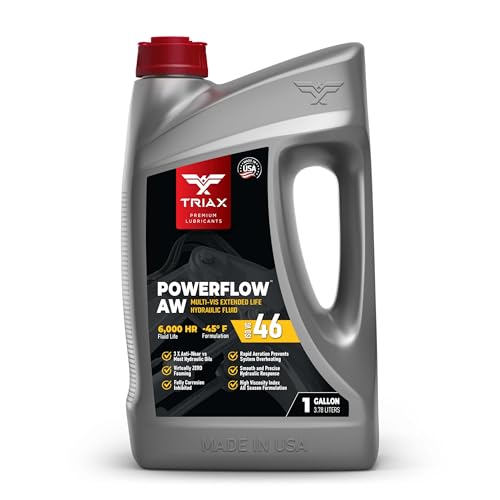
TRIAX Powerflow AW 46 Multi-Viscosity HLP Hydraulic Oil | 6,000 Hour Extended Life | Triple Anti-Wear | True All Season | Pour Point Down to -40F | Virtually Zero Foaming (1 Gallon)
Exceptionally Long Life: Designed for 6,000-hour severe service with high oxidation resistance, providing up to 3 times the…
As an affiliate, we earn on qualifying purchases.
As an affiliate, we earn on qualifying purchases.
Choosing the Right ISO VG for Your Hydraulic Equipment and Conditions

Selecting the right ISO VG for your hydraulic equipment depends on your operating conditions and the manufacturer’s specifications. To choose effectively, consider these factors:
- Operating Temperature: Match your fluid’s viscosity to the temperature range of your system. Lower temps require lower ISO VG oils to ensure proper flow, while higher temps need higher ISO VG oils to maintain film strength.
- System Load and Speed: Heavier loads and faster equipment benefit from higher viscosity oils (e.g., VG 46 or 68) to prevent metal-to-metal contact.
- Manufacturer Recommendations: Always follow the equipment’s guidelines for viscosity grade, as they account for design tolerances and ideal performance.
- Viscosity Index: Consider the viscosity index of the oil, which indicates how much the viscosity changes with temperature, ensuring consistent performance across operating conditions.
Balancing these elements ensures reliable operation, minimizes wear, and extends equipment lifespan.
How Temperature and Viscosity Index Affect Hydraulic Fluid Performance

As temperature changes, your hydraulic fluid’s viscosity shifts, affecting flow and pump efficiency. The viscosity index helps you understand how stable that viscosity remains across temperature variations. Multi-grade oils can give you better performance over a wider temperature range, ensuring smoother operation in different conditions. Regular maintenance, including monitoring filter indicators, can help maintain optimal fluid performance and prolong equipment life.
Temperature’s Impact on Viscosity
Temperature considerably influences the viscosity of hydraulic fluids, affecting their flow and lubrication performance. As temperature rises, viscosity drops, causing fluids to thin out and flow more easily. Conversely, lower temperatures increase viscosity, making fluids thicker and harder to circulate. This impact can be summarized as:
- Flow Rate Changes: Higher temperatures reduce resistance, improving flow but risking inadequate lubrication if viscosity drops too much.
- Lubrication Effectiveness: Thinner fluids at elevated temperatures may fail to maintain a proper film, increasing wear.
- Pump Efficiency: Cold conditions cause higher viscosity, leading to increased energy consumption and potential startup issues.
Understanding these effects helps you select the right ISO VG grade and additives to guarantee optimal performance across temperature ranges.
Role of Viscosity Index
Understanding the role of viscosity index (VI) is essential because it directly influences how well a hydraulic fluid maintains its viscosity across temperature changes. A high VI means the fluid’s viscosity remains stable, ensuring reliable performance in varying conditions. Conversely, a low VI indicates significant viscosity fluctuations, which can cause wear, energy loss, or equipment failure. Multi-grade oils are designed to have higher VI values, offering better temperature adaptability. Here’s a comparison:
| VI Level | Viscosity Stability Description |
|---|---|
| 0-50 | Low stability; viscosity varies greatly |
| 50-100 | Moderate stability |
| 100-200 | High stability |
| >200 | Very high stability |
| <0 | Poor stability, unsuitable for critical use |
A higher VI guarantees your hydraulic system performs consistently, regardless of temperature swings. Viscosity stability is a key factor that influences the overall efficiency and longevity of hydraulic equipment.
Multi-Grade Oil Benefits
Multi-grade oils offer significant advantages in hydraulic systems by maintaining consistent viscosity across a wide temperature range. This stability guarantees reliable operation, reduces wear, and extends equipment life. With multi-grade oils, you benefit from:
- Better cold-start performance, as viscosity remains suitable even in low temperatures.
- Reduced machine downtime due to less need for viscosity adjustments or oil changes.
- Improved efficiency, since consistent viscosity minimizes energy losses and optimizes pump performance.
- They also support sustainable practices by reducing the need for frequent oil replacements and lowering environmental impact.
These benefits are especially valuable in environments with fluctuating temperatures, where mono-grade oils might become too thick or too thin. By choosing multi-grade oils, you ensure your hydraulic system stays protected and performs at its best, regardless of temperature variations.
Tips for Maintaining Hydraulic Fluids Based on ISO VG
Maintaining hydraulic fluids according to their ISO VG classification guarantees ideal performance and prolongs equipment life. Choose the correct viscosity grade based on your operating temperature and system requirements. Regularly check fluid viscosity with appropriate testing methods to assure it remains within the specified range. Avoid mixing different ISO VG grades, as this can compromise lubrication and efficiency. Keep the fluid clean by filtering out contaminants and replacing it when it shows signs of degradation, such as increased viscosity or contamination. Store hydraulic oils in a cool, dry place to prevent viscosity changes due to temperature fluctuations. Follow manufacturer recommendations for oil change intervals, especially when operating in extreme temperatures. Proper maintenance based on ISO VG helps optimize system performance and reduces downtime.
FAQs About ISO VG and Hydraulic Oil Selection
Are you unsure which ISO VG grade is best suited for your hydraulic system? To choose correctly, consider these key points:
- Operating Temperature: Match the oil’s viscosity to your system’s typical temperature range for ideal performance.
- Equipment Specifications: Follow manufacturer recommendations, usually between ISO VG 32 to 68 for hydraulics.
- Viscosity Range: ensure the oil’s viscosity allows proper film formation and pump efficiency, avoiding too thin or thick fluids.
Frequently Asked Questions
How Does ISO VG Influence Hydraulic System Efficiency?
ISO VG influences your hydraulic system’s efficiency by ensuring the lubricant’s viscosity matches the operating conditions. When you select the right ISO VG, it reduces fluid resistance, minimizes wear, and improves pump performance. Proper viscosity at the operating temperature allows for smooth flow, better power transfer, and enhanced system longevity. Using an appropriate ISO VG helps you optimize efficiency, prevent breakdowns, and maintain consistent hydraulic performance.
Can I Mix Different ISO VG Oils Safely?
You can mix different ISO VG oils, but it’s not always recommended. Mixing oils with substantially different viscosities can cause compatibility issues, reduce lubrication efficiency, and potentially damage your equipment. To guarantee safety and ideal performance, check manufacturer guidelines and consider blending only oils with similar ISO VG grades. When in doubt, consult a professional or use a single, consistent oil grade to maintain system reliability.
What Are the Signs of Using Incorrect ISO VG?
Using the wrong ISO VG can cause issues, as 70% of hydraulic system failures are linked to improper oil viscosity. You might notice increased operating noise, reduced efficiency, or overheating. Viscosity that’s too low leads to insufficient cushioning, while too high causes sluggish movement. Pay attention to equipment performance and temperature; these signs indicate you’re using an incorrect ISO VG, risking damage or downtime.
How Does Temperature Affect ISO VG Performance?
Temperature substantially impacts ISO VG performance because as temperatures rise, the oil’s viscosity decreases, making it thinner, which can reduce lubrication and increase wear. Conversely, at lower temperatures, the oil thickens, possibly causing starting difficulties and higher energy consumption. To maintain ideal performance across temperature ranges, you should select oils with appropriate viscosity indices and use multi-grade oils designed for temperature fluctuations. Always follow manufacturer guidelines for your specific operating conditions.
Is Higher ISO VG Always Better for Hydraulics?
No, a higher ISO VG isn’t always better for hydraulics. You need to choose the right viscosity based on your equipment’s operating temperature and load conditions. Thicker oils (higher ISO VG) can improve lubrication at lower temperatures, but they may cause higher energy consumption and reduced pump efficiency at higher temperatures. Always match the viscosity grade to your system’s specifications for ideal performance and longevity.
Conclusion
Understanding ISO VG is like having a reliable compass in the vast sea of hydraulic fluids. It guides you to choose the right viscosity for smooth sailing, no matter the temperature storms or equipment demands. With this knowledge, you’ll steer your hydraulic systems clear of turbulence and ensure peak performance. Remember, selecting the correct ISO VG isn’t just a detail—it’s the secret ingredient that keeps your machinery humming like a well-tuned orchestra.