If your transmission fluid foams, it often signals overfilling or contamination, which traps air and creates false slip symptoms. These foamy bubbles reduce lubrication and can make your transmission seem like it’s slipping, even if it isn’t. Addressing the issue involves checking the fluid level, draining excess, and replacing dirty fluid. Ignoring these signs can lead to serious damage. Keep going to discover how proper maintenance can prevent these issues before they cause costly repairs.

Get business pricing on garage and car supplies
- Business-only prices and quantity discounts
- Tax-exempt purchasing
- Multiple users, one account, clear invoices
Key Takeaways
- Foaming occurs when air mixes with transmission fluid, often caused by overfilling or contamination.
- Excess fluid creates aeration, leading to false slip symptoms that mimic mechanical issues.
- Proper fluid level checks and removal of overfill prevent foaming and misleading slip signs.
- Dirty, degraded, or contaminated fluid increases foaming risk and false slip diagnoses.
- Regular maintenance and correct fluid use help avoid fill-level errors and associated fake slip symptoms.

If your vehicle’s transmission is showing an ATF foaming fill-level error, it indicates that the transmission fluid isn’t at the proper level or has become contaminated. This warning is significant because transmission fluid plays an essential role in lubricating, cooling, and transmitting power within your transmission system. When the fluid foams, it creates a false impression of low fluid levels or incorrect fill, leading to potential misdiagnoses. To address this, you need to understand the importance of proper transmission maintenance and recognize the effects of fluid contamination.
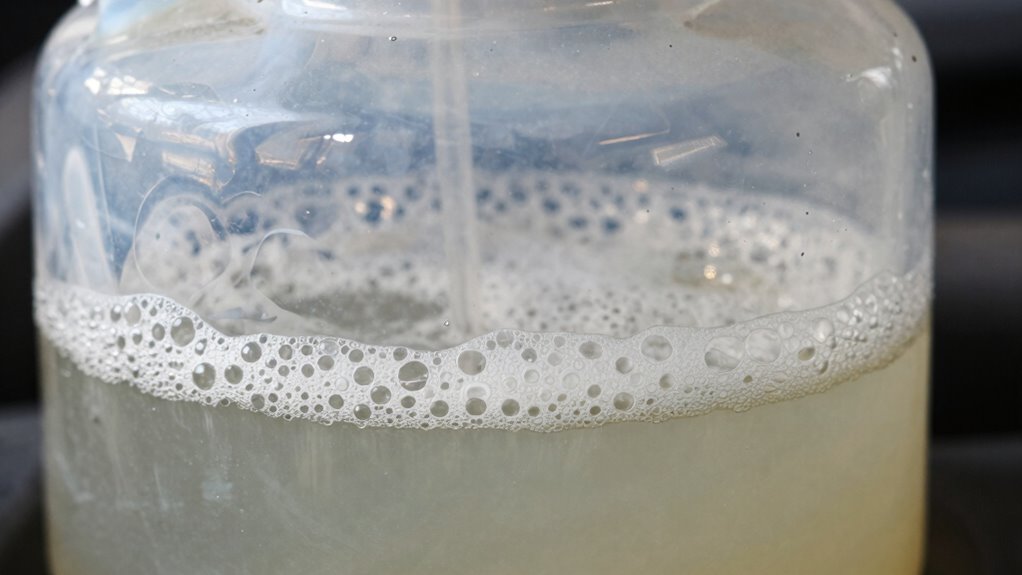
Foaming occurs when air mixes with the transmission fluid, forming bubbles that reduce the fluid’s ability to lubricate and absorb heat effectively. This can happen if the fluid level is too high, or if contaminated fluid introduces air into the system. Overfilled transmission fluid can cause aeration, leading to foaming. Similarly, fluid contamination—often from dirt, debris, or degraded fluid—disrupts the fluid’s viscosity and can trap air, exacerbating foaming issues. These factors not only impair transmission performance but can also lead to false slip symptoms, where the transmission appears to be slipping even when it isn’t. Additionally, using incorrect or degraded fluid can accelerate contamination and foaming problems.
Foaming occurs when air mixes with transmission fluid, causing false slip symptoms and impaired performance.
Proper transmission maintenance is essential to prevent these problems. Regularly checking and maintaining the correct fluid level ensures that the transmission operates smoothly without excess air or debris present. Using the correct type of transmission fluid, replacing it at manufacturer-recommended intervals, and inspecting for leaks or contamination are key steps. When fluid contamination occurs, it’s critical to flush and replace the fluid promptly. Contaminated fluid can cause long-term damage to internal components, leading to increased repair costs and potential transmission failure.
If you notice foaming or the fill-level error, avoid ignoring it. Instead, start by inspecting the fluid level and condition. If the fluid is overfilled, drain the excess carefully. If the fluid appears dirty, discolored, or has a foamy texture, it’s time for a fluid change. Keep in mind that a false “slip” symptom caused by foaming can mislead you into thinking there’s a mechanical issue when the problem is actually fluid-related. Proper transmission maintenance not only prevents fluid contamination but also ensures that your transmission remains responsive and reliable. Recognizing measurement accuracy and maintaining proper fluid levels are key to preventing these issues from worsening.
As an affiliate, we earn on qualifying purchases.
Frequently Asked Questions
Can Foaming Occur in All Types of Automatic Transmissions?
Yes, foaming can occur in all types of automatic transmissions. When transmission fluid gets aerated due to overfilling or contamination, it causes fluid aeration, leading to foaming. This foaming reduces lubrication and hydraulic pressure, which can mimic slip symptoms. You should regularly check your transmission fluid level and quality to prevent fluid aeration, ensuring your transmission operates smoothly and avoiding false slip diagnoses caused by foaming.
How Can I Prevent ATF Foaming During Maintenance?
To prevent ATF foaming during maintenance, you should guarantee proper fluid level and avoid overfilling. Use fluid additives designed to reduce foaming, and maintain ideal temperature control by checking transmission fluid temperature regularly. Keep the transmission cool and avoid rapid driving conditions post-maintenance. These steps help stabilize fluid properties, reduce air entrapment, and minimize foaming, ensuring smooth shifting and long transmission life.
What Are the Long-Term Effects of Continued Foaming?
If you ignore continued foaming, it can lead to fluid degradation over time, which damages internal components and reduces transmission lifespan. The constant aeration stresses the fluid, causing it to break down faster, and ultimately results in poor shifting performance. Long-term, this can lead to costly repairs or complete transmission failure. To protect your transmission, address foaming issues promptly and maintain proper fluid levels and quality.
Does ATF Foaming Affect Vehicle Fuel Efficiency?
Imagine your transmission fluid, like a busy highway, suddenly gets clogged with bubbles. Foaming issues in the transmission fluid can reduce efficiency, making your vehicle work harder. When ATF foams, it can’t lubricate properly, increasing strain on the engine and decreasing fuel economy. So, yes, persistent foaming issues in your transmission fluid can negatively impact your vehicle’s fuel efficiency, leading to higher fuel consumption over time.
Are There Specific Signs That Indicate the Fill Level Is Incorrect?
You can spot an incorrect fill level by observing foam detection signs, such as excessive foaming during fluid checks. Fluid overfill may cause spongy shifts or leaks, while level sensors might read inaccurately or trigger warning lights. If you notice unusual foaming, check the fill level carefully. Overfilling or underfilling impacts transmission performance, so maintaining the correct level is vital to prevent false slip symptoms and guarantee smooth operation.
automatic transmission fluid replacement
As an affiliate, we earn on qualifying purchases.
As an affiliate, we earn on qualifying purchases.
Conclusion
Just like a car misfiring due to a tiny fuel leak, a small fill-level error can cause big slip symptoms. I once saw a forklift suddenly lose grip because of ATF foaming—like trying to pour syrup into a jar that’s already full. Don’t overlook these tiny errors; they can disguise themselves as bigger issues. Keep your fill levels precise, and you’ll prevent those fake slips from sneaking up on you when you least expect it.
As an affiliate, we earn on qualifying purchases.
As an affiliate, we earn on qualifying purchases.
Fall Picks
fall essentials
As an affiliate, we earn on qualifying purchases.