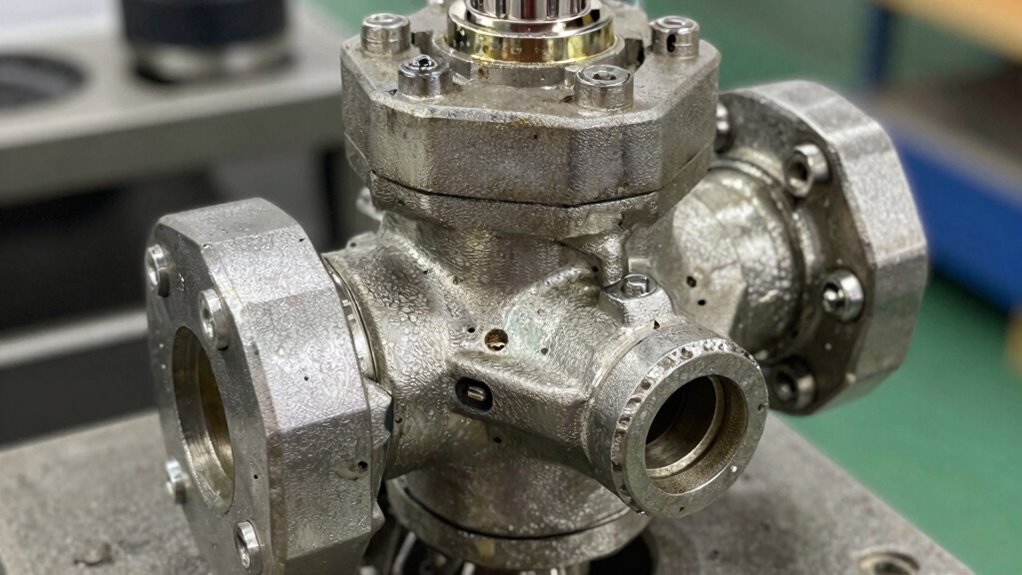

If your valve body feels like it’s acting up, hydraulic contamination might be the culprit. Dirt, metal shavings, or debris can clog tiny passages, causing valves to stick and mimic electrical faults. This buildup can also interfere with sensor signals, making the issue seem electrical when it’s hydraulic. Symptoms often overlap, making diagnosis tricky. Keep exploring to discover how contamination and electrical problems can intertwine and how to tell them apart effectively.
Key Takeaways
- Hydraulic contamination from debris can clog passages, causing valve sticking that mimics electrical faults.
- Dirty or worn fluid particles can lead to sluggish valve operation, confusing diagnosis with electrical issues.
- Electrical interference disrupting sensor signals may produce symptoms similar to hydraulic contamination effects.
- Hydraulic pressure irregularities caused by contamination can trigger false electrical fault indications in the system.
- Overlapping symptoms require systematic testing of both hydraulic cleanliness and electrical components for accurate diagnosis.
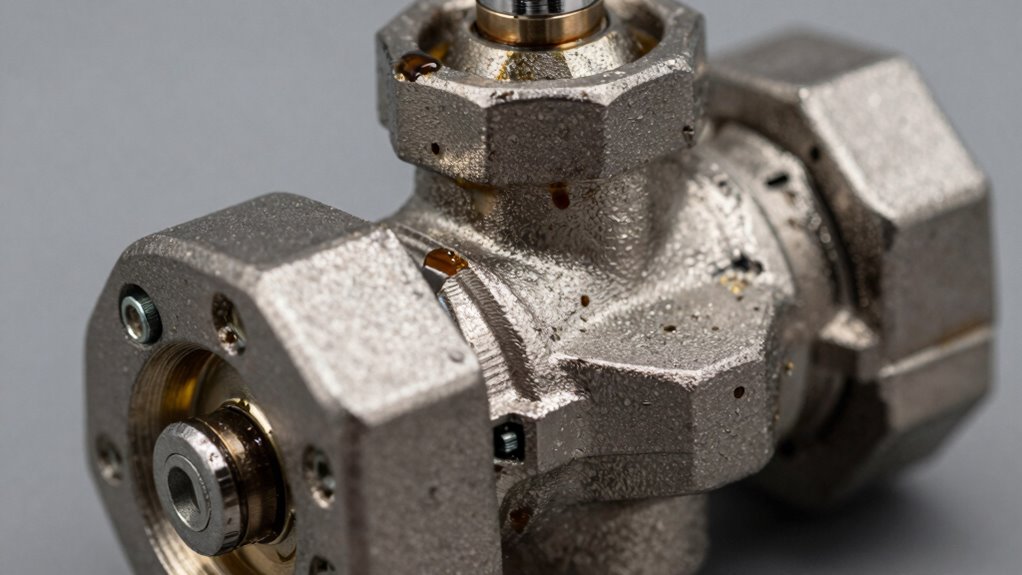
Hydraulic contamination is a leading culprit behind a sticking valve body. Over time, dirt, metal shavings, or worn-out fluid particles can infiltrate the hydraulic lines. Once inside, these contaminants clog tiny passages and interfere with the precise movement of valves. Instead of responding fluidly, the valves become sluggish or stick in place, mimicking symptoms of an electrical malfunction. This contamination can accumulate gradually, making it difficult to diagnose until the problem becomes noticeable in your shifting experience. Implementing smart maintenance practices can help monitor and manage hydraulic fluid quality more effectively. Another factor that complicates diagnosis is electrical interference. Many modern transmissions rely heavily on sensors and electronic controls. When electrical signals are disrupted—perhaps due to faulty wiring, a damaged sensor, or electromagnetic interference—it can appear similar to a mechanical sticking valve. The transmission control module (TCM) might interpret errant signals as a need to shift or lock up unexpectedly, leading you to think there’s an electrical fault. In reality, the root cause could be hydraulic contamination affecting the valve body’s movement, but the symptoms manifest as electrical errors. The tricky part is that these issues often overlap. Contamination can cause hydraulic pressure irregularities that send false signals to the TCM, further confusing the diagnosis. Meanwhile, electrical interference can exacerbate the problem by disrupting communication between sensors and the control unit, making it seem like the valve body is malfunctioning mechanically when it’s really a signal problem. This interplay can make troubleshooting frustrating unless you take a systematic approach. To prevent or address valve body sticking caused by hydraulic contamination, regular fluid changes and filter replacements are essential. Keeping the hydraulic fluid clean minimizes the risk of debris buildup that leads to sticking valves. For electrical interference, inspecting wiring harnesses, sensors, and connectors for damage or corrosion is crucial. In many cases, resolving the contamination and electrical issues together will restore smooth shifting. If you’re unsure, a professional diagnosis can differentiate between hydraulic and electrical causes, ensuring you target the real problem without unnecessary repairs.

BANGTE LVA16054 Hydraulic Transmission Filter Compatible with John Deere Compact Tractor 1025R 1026R 2027R 2036R 2032R 3203 3032R 3038R 3036E 3038E Replace M806418 M131802 AM116304
Replace part number:LVA16054 M806418 M131802 MIU804763 AM116304
As an affiliate, we earn on qualifying purchases.
As an affiliate, we earn on qualifying purchases.
Frequently Asked Questions
How Can I Prevent Valve Body Contamination?
To prevent valve body contamination, you should prioritize fluid filtration, using high-quality filters to catch debris before it enters the system. Regularly inspect and replace filters to avoid buildup from contamination sources like dirt, metal shavings, or sludge. Keep the hydraulic fluid clean and maintain proper system seals. By controlling contamination sources and ensuring proper filtration, you markedly reduce the risk of valve body sticking and electrical-like faults.
What Are Early Signs of Valve Body Sticking?
Like a watch losing time, early signs of valve body sticking include erratic shifting or delayed responses. You might notice rough gear changes or the transmission slipping unexpectedly. Regular valve diagnostics help catch these issues early, and maintaining fluid cleanliness is vital. If you see these symptoms, it’s time to check your transmission system, as ignoring them can lead to more significant problems down the road.
Is Valve Body Replacement Necessary for Contamination?
If contamination is causing valve body issues, replacement might be necessary. Proper fluid filtration and contamination control are key to preventing further damage. You should inspect the valve body for signs of debris or sludge, and if contamination has severely compromised it, replacing the unit is advisable. Regular maintenance, including fluid changes and filtration upgrades, can help avoid future problems and extend the lifespan of your valve body.
How Long Does a Valve Body Repair Typically Take?
A valve body repair usually takes about 4 to 8 hours, depending on the vehicle and severity of the issue. You’ll want to start with diagnostic procedures to pinpoint the problem accurately. Once diagnosed, the repair timeline involves removing, cleaning, or replacing components, then reassembling and testing the system. Keep in mind, complex cases may extend the process, so plan for possible delays.
Can Contamination Cause Electrical Faults in Other Systems?
Imagine your vehicle suddenly stalls without warning. Contamination, like coolant leaks, can cause electrical faults elsewhere in your system by creating electrical interference. This interference disrupts signals and can lead to sensor errors or misfires. Coolant contamination, in particular, can seep into electrical connectors, exacerbating problems. So yes, contamination doesn’t just affect the valve body; it can also trigger electrical faults in other critical systems, compromising your vehicle’s performance.

TRANSGO Automatic Transmission Shift Kit, SHIFT KIT, Valve Body Repair Kit, Valve/Shim/Spacers/Springs, GM 4L60E, Kit
increased durability while providing short smooth shifts as well as a more efficient TCC apply
As an affiliate, we earn on qualifying purchases.
As an affiliate, we earn on qualifying purchases.
Conclusion
Just like a lighthouse’s beam can be obscured by fog, contamination can hide within your valve body, causing it to stick and mimic electrical faults. Stay vigilant, keep your system clean, and don’t let unseen debris cast shadows on your vehicle’s performance. Regular maintenance clears the fog, ensuring smooth operation and clear signals. Remember, a well-maintained valve is your vehicle’s guiding light, steering you safely past hidden dangers.

GRYVOZE Hydraulic Pressure Test Kit with 5 Gauges(Max 10000 PSI), 13 Test Couplings 14 Tee Connectors 5 Test Hoses, Hydraulic Gauge Tester Set for Excavator, Construction, Machinery, and Mine
GRYVOZE Hydraulic Pressure Test Kit – Includes 5 Hydraulic Test Gauges, 12 Test Couplings, 14 Tee Connectors, 1…
As an affiliate, we earn on qualifying purchases.
As an affiliate, we earn on qualifying purchases.

XTOOL D5S OBD2 Scanner with Touchscreen: Code Reader for Cars & Trucks with 16 Resets, Crank Sensor Relearn, Throttle Relearn, EPB, FCA, CAN FD for GM, Engine ABS SRS Transmission Car Diagnostic Tool
Comprehensive OBD2 Scanner with 16 Resets: The XTOOL D5S car code reader and vehicle reset tool provides an…
As an affiliate, we earn on qualifying purchases.
As an affiliate, we earn on qualifying purchases.