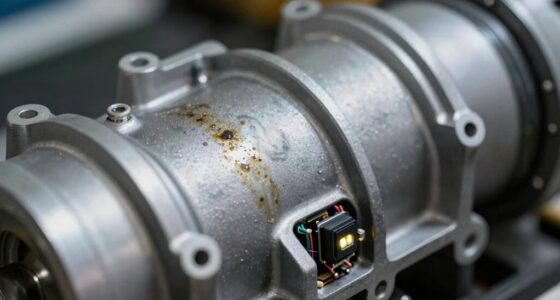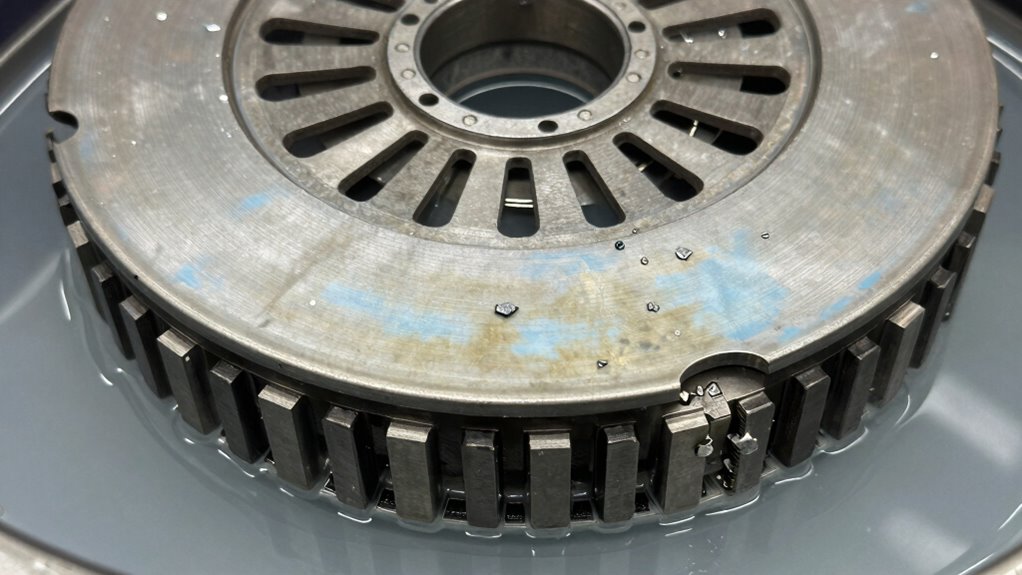
If you want to spot wet DCT clutch wear from fluid, focus on its condition. Contaminated fluid can appear dark, gritty, or burnt-smelling, indicating debris, heat, and material breakdown. Viscosity changes may suggest fluid thinning or thickening, affecting clutch performance. Low fluid levels cause increased friction and overheating, accelerating wear. By regularly checking fluid color, smell, and level, you can catch early signs of clutch issues and avoid costly repairs—discover more insider tips ahead.
Key Takeaways
- Dark, gritty, or burnt-smelling transmission fluid indicates contamination that can accelerate clutch wear.
- Clutch slipping or delayed engagement often correlates with degraded or contaminated fluid.
- Unusual or inconsistent fluid levels may cause increased friction and heat, harming clutch components.
- Presence of debris or metal shavings in fluid suggests excessive clutch plate or gear wear.
- Regular fluid checks and timely replacements help detect early signs of fluid-related clutch deterioration.
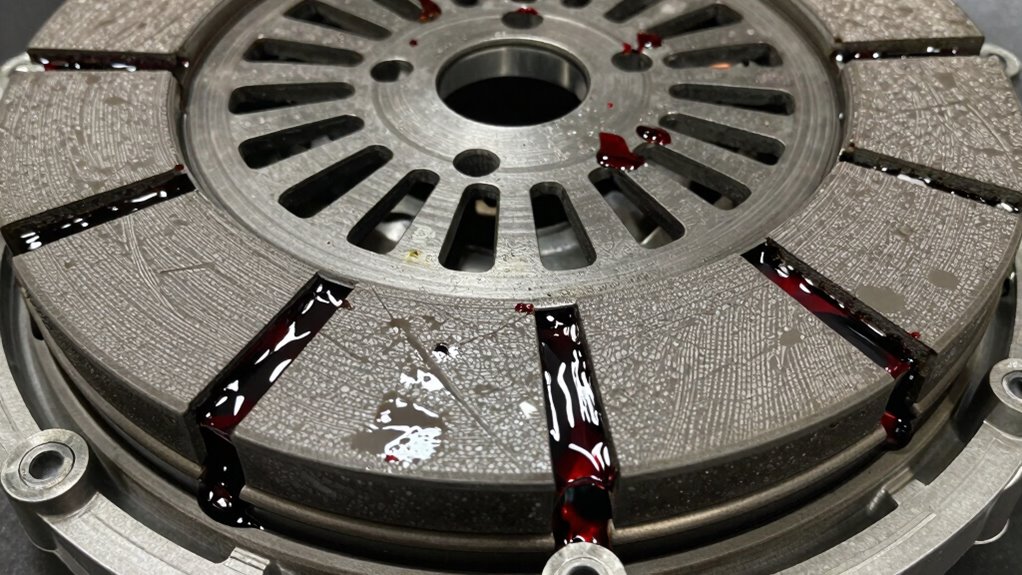
Wet DCT clutches are designed to handle high torque loads and provide smooth shifting, but they are also prone to wear over time. Understanding how this wear manifests can help you catch problems early. One key aspect to monitor is the clutch material, which is often made from friction plates composed of specialized composites. Over time, these materials can degrade due to heat and friction, leading to slipping, delayed engagement, or rough shifts. Your vehicle’s behavior may give you clues—like jerky acceleration or a burning smell—indicating that the clutch material is wearing thin and needs attention. Additionally, clutch material degradation can be accelerated by improper maintenance or excessive heat, making early detection even more critical.
Monitoring clutch material wear helps prevent slipping, rough shifts, and potential transmission damage.
Fluid contamination plays a significant role in clutch wear. The transmission fluid in a wet DCT system isn’t just a lubricant; it also cools and helps transfer power. When this fluid becomes contaminated—by dirt, metal shavings, or debris—it hampers the clutch’s ability to engage smoothly. Contaminants can accelerate the deterioration of clutch material by increasing friction and heat, causing the plates to wear unevenly or prematurely. Regularly checking your transmission fluid’s condition is vital. If it appears dark, gritty, or smells burnt, it’s a sign that contamination has set in and could be speeding up clutch wear.
You might also notice that the fluid level drops over time, which can lead to increased friction and heat buildup. Low or contaminated fluid means the clutch plates don’t slide as smoothly as they should, leading to slipping or a delay in gear engagement. This not only wears out the clutch material faster but can also cause damage to other transmission components. Addressing fluid contamination early by changing the transmission fluid according to your vehicle manufacturer’s recommendations can extend the life of your clutch. Using the right type of fluid designed for wet DCT systems is essential because incompatible fluids can break down quicker, further contaminating the system.
Pay attention to shifts—if they become rough or delayed, it may indicate that the clutch material is wearing out or that fluid contamination has compromised the system’s efficiency. Sometimes, a simple fluid change can restore smooth operation, but if symptoms persist, it’s a sign that the clutch plates themselves might need replacement. Regular maintenance, including fluid checks and changes, is your best defense against premature clutch wear. This proactive approach helps guarantee that the clutch material stays in good shape longer and that fluid contamination doesn’t accelerate deterioration, keeping your transmission operating smoothly for miles to come.

TRIAX DCT ATF – Full Synthetic Dual Clutch Automatic Transmission Fluid – OEM Grade – Compatible with Direct Shift Gearboxes and Dual Clutch Transmissions (5 Quart)
Superior Formulation: Full synthetic, PAO / Ester based formulation with extensive testing and performance data – far exceeding…
As an affiliate, we earn on qualifying purchases.
As an affiliate, we earn on qualifying purchases.
Frequently Asked Questions
How Often Should DCT Fluid Be Changed?
You should change your DCT fluid every 30,000 to 60,000 miles, depending on your vehicle’s maintenance schedule. Regular fluid changes help prevent fluid degradation, which can cause clutch wear and transmission issues. Check your owner’s manual for specific recommendations, but sticking to the maintenance schedule guarantees smooth shifting and prolongs your transmission’s lifespan. Don’t neglect this routine service to keep your DCT operating reliably.
Can Clutch Wear Be Reversed or Repaired?
Clutch wear caused by material deterioration and hydraulic system issues can’t be fully alleviated, but repairs are possible. You might need a clutch replacement or repair if you notice slipping or rough shifting. Regular maintenance, like fluid changes, can prevent further wear. Address hydraulic issues promptly, as they worsen clutch damage. Consulting a professional mechanic ensures accurate diagnosis and proper repairs, helping extend your clutch’s lifespan.
What Are Early Signs of Clutch Slipping?
You’ll notice early signs of clutch slipping when your clutch engagement feels uneven or delayed, and you might hear a slipping noise during acceleration. Your vehicle may also struggle to reach higher speeds smoothly, or the engine revs increase without a corresponding increase in speed. These clues indicate the clutch is losing grip, and addressing them early can prevent further damage. Keep an ear out for these signs to maintain peak performance.
Does Driving Style Affect Clutch Wear?
Yes, your driving habits considerably impact clutch longevity. For example, if you frequently ride the clutch pedal or shift roughly, it causes increased wear. Gentle shifting and avoiding constant clutch engagement help preserve your clutch, extending its lifespan. Slow, deliberate gear changes reduce stress on the clutch components, ensuring it lasts longer. Practicing smooth driving habits is the best way to protect your clutch and maximize its durability.
Are Aftermarket Fluids Suitable for DCTS?
Yes, aftermarket fluids can be suitable for DCTs if they contain synthetic oils and are compatible with the clutch’s additives. Always check the manufacturer’s specifications to verify the fluid’s additive compatibility, as incompatible formulas can cause wear or slipping. Opt for high-quality synthetic oils designed for DCTs, and avoid generic options that don’t specify compatibility, so your transmission stays smooth and reliable.
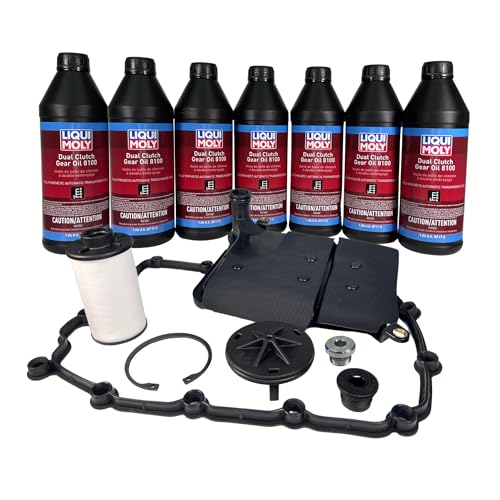
Dual Clutch Transmission DCT Service Kit 7L Fluid + Filters for BMW F80 F82 F83 F87
Dual Clutch Transmission (DCT) Service Kit
As an affiliate, we earn on qualifying purchases.
As an affiliate, we earn on qualifying purchases.
Conclusion
By paying close attention to fluid quality and color, you can catch clutch wear before it becomes a costly nightmare. Think of your transmission fluid as the lifeblood of your wet DCT—it keeps everything running smoothly. When it shows signs of wear, don’t ignore the warning signs; addressing issues early is like tending to a delicate garden before weeds take over. Stay vigilant, and your transmission will thank you for the care.

Transmission Fluid Tester Kit Gasoline & Diesel Gearbox Oil Diagnostic Tool High-Precision Diagnostic Analysis Tool with 31.5in Probe Transmittance/Temperature Testing, 2.8in Display (4 Batteries)
【WHY NEED IT】Our transmission fluid tester features an advanced optical probe that measures light transmittance within the transmission…
As an affiliate, we earn on qualifying purchases.
As an affiliate, we earn on qualifying purchases.
Transmission Fluid Tester Kit Gasoline & Diesel Gearbox Oil Diagnostic Tool High-Precision Diagnostic Analysis Tool with 31.5in Probe Transmittance/Temperature Testing, 2.8in Display (4 Batteries)
【WHY NEED IT】Our transmission fluid tester features an advanced optical probe that measures light transmittance within the transmission…
As an affiliate, we earn on qualifying purchases.
As an affiliate, we earn on qualifying purchases.