For race drivers comparing a cool suit system for racing, my two picks split cleanly by capacity and portability. The F.A.S.T. FA1217 is the compact choice, with a 13-quart cooler, pump, and hose in a lighter package. The FA1253 19QT system is my endurance pick: it supplies more cooler capacity and includes plumbing, accessories, and a timer. That extra room and equipment come with added size and weight. Both are described as racing-oriented systems, but neither is recommended for dry-ice use. I’d choose based on how much cooling capacity and included equipment I need to carry, not on the assumption that a bigger cooler automatically suits every car or race.

Get business pricing on garage and car supplies
- Business-only prices and quantity discounts
- Tax-exempt purchasing
- Multiple users, one account, clear invoices
Complete the kit


Key Takeaways
- The FA1217 is the more portable option at 3.5 pounds and 13 quarts, with its pump and insulated hose included.
- The FA1253 adds six quarts of capacity and includes a timer, plumbing, and accessories, but weighs 5.5 pounds and occupies more space.
- For longer events where greater capacity matters, the FA1253 is the stronger fit; for a tighter installation, the FA1217 has the advantage.
- Neither listed system is recommended for use with dry ice, so I would not choose either for that cooling method.
- Confirm cooler dimensions, electrical draw, and the complete installation requirements against the car before choosing.
| 19QT Cool Suit System FA1253 |  | Best for Endurance Events | Capacity: 19 quarts | Internal dimensions: 13.5 × 8 × 10 inches | External dimensions: 16.6 × 11 × 13 inches | VIEW ON AMAZON | See Our Full Breakdown |
| F.A.S.T. FA1217 Cooler with Pump and Hose | 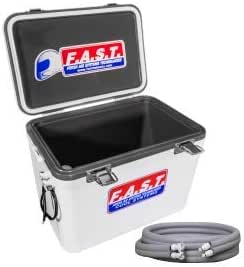 | Best Compact System | Capacity: 13 quarts | Internal dimensions: 12 × 7 × 8.5 inches | External dimensions: 15 × 10 × 11 inches | VIEW ON AMAZON | See Our Full Breakdown |
| cool suit system for racing | Capacity | Internal dimensions | External dimensions | Weight |
|---|---|---|---|---|
| 19QT Cool Suit System FA1253 | 19 quarts | 13.5 × 8 × 10 inches | 16.6 × 11 × 13 inches | 5.5 pounds |
| F.A.S.T. FA1217 Cooler with Pu | 13 quarts | 12 × 7 × 8.5 inches | 15 × 10 × 11 inches | 3.5 pounds |
More Details on Our Top Picks
19QT Cool Suit System FA1253
The FA1253 19QT system earns my top position for drivers who want more capacity and a broad set of included components. Its 19-quart cooler holds six quarts more than the FA1217, and the described package includes a marine-grade pump, plumbing, accessories, and timer. That makes it the more complete starting point for an endurance-oriented installation, where having the listed system components together can simplify sourcing. The details do not establish a particular cooling duration, though, so I would not treat its larger capacity as a guarantee of a specific run time.
The extra capacity comes with a tangible packaging cost. At 5.5 pounds and 16.6 by 11 by 13 inches externally, it is heavier and larger than the 3.5-pound FA1217. That may be a fair exchange in a car with room for it, but it makes this a less appealing choice when the installation space is limited or the cooler must be moved frequently. Its aluminum and molded polystyrene foam construction, airtight gasket, recessed handles, self-stopping hinge, and stainless steel latches point toward a purpose-built cooler package, but those features do not remove the bulk tradeoff.
Compared with the FA1217, I’d pick the FA1253 when extra cooler volume and included equipment take priority over a compact footprint. I’d skip it if the smaller model already meets the planned setup or if the listed external dimensions will be awkward in the car. The product description identifies it for endurance racing and automotive events, so it is a specialized purchase rather than a general-purpose cooling system. It is also not recommended for dry ice; buyers intending that method should choose neither of these two products without different manufacturer guidance.
Pros:- 19-quart capacity provides six more quarts than the FA1217.
- Includes a marine-grade pump, plumbing, accessories, and timer.
- Airtight gasket and molded polystyrene foam insulation.
- Recessed handles, self-stopping hinge, and stainless steel latches.
Cons:- At 5.5 pounds, it weighs two pounds more than the FA1217.
- Larger exterior dimensions may complicate placement in a confined car.
- Not recommended for use with dry ice.
Best for: Drivers planning endurance events who have room for a larger cooler and want a listed package that includes the pump, plumbing, accessories, and timer.
Not ideal for: Drivers with restricted installation space, those prioritizing minimum weight, or anyone intending to use dry ice.
- Capacity:19 quarts
- Internal dimensions:13.5 × 8 × 10 inches
- External dimensions:16.6 × 11 × 13 inches
- Weight:5.5 pounds
- Materials:Aluminum and polystyrene foam
- Insulation:High-grade molded polystyrene foam
- Included equipment:Marine-grade pump, plumbing, accessories, and timer
- Construction details:Airtight gasket, recessed handles, self-stopping hinge, and stainless steel latches
- Dry-ice guidance:Not recommended for use with dry ice
Our verdict“I’d choose the FA1253 for an endurance-focused setup that can accommodate its larger size and benefits from its added capacity and included timer.”
F.A.S.T. FA1217 Cooler with Pump and Hose
The F.A.S.T. FA1217 is my pick when portability and a smaller installation footprint matter more than maximum capacity. Its 13-quart cooler includes a marine-grade pump and lightweight insulated hose, so the core pieces described for the setup are supplied without stepping up to the larger FA1253 package. At 3.5 pounds, it is two pounds lighter than the 19-quart model, and its 15 by 10 by 11-inch exterior is smaller in every listed dimension. That makes the FA1217 the more plausible choice for a car where cooler placement is constrained.
Its compactness also sets its limit: it has six fewer quarts of capacity than the FA1253. Drivers who put a premium on capacity for longer events may prefer the bigger system, which also lists a timer, plumbing, and accessories in its package. The FA1217 product details do not list a timer, so I would check whether one is needed and whether it must be sourced separately. Its stated 2.7-amp draw at 12 volts gives a useful electrical planning figure; the FA1253 listing does not provide a comparable amp-draw specification.
Construction details add practical appeal without changing its role. The description lists medical-grade fittings, stainless steel screws, polystyrene foam insulation, an airtight gasket, and ergonomic handles. Those are relevant to a portable racing cooler, but buyers still need to verify the complete plumbing arrangement and compatibility with their suit and vehicle. Compared with the FA1253, the FA1217 is the lighter, smaller package—not the capacity leader. I would also rule it out for dry-ice use, which the product details do not recommend.
Pros:- Lighter at 3.5 pounds than the 5.5-pound FA1253.
- Smaller external dimensions can suit tighter installation spaces.
- Includes a marine-grade pump and lightweight insulated hose.
- Lists a 2.7-amp draw at 12 volts for electrical planning.
Cons:- 13-quart capacity is six quarts less than the FA1253.
- A timer is not listed among the included items.
- Not recommended for use with chemical dry ice.
Best for: Drivers who need a lighter, smaller cooler package for a racing installation and whose planned use fits a 13-quart capacity.
Not ideal for: Endurance-focused buyers who want the largest listed capacity or a package explicitly including a timer and accessories, and anyone planning dry-ice use.
- Capacity:13 quarts
- Internal dimensions:12 × 7 × 8.5 inches
- External dimensions:15 × 10 × 11 inches
- Weight:3.5 pounds
- Amp draw:2.7 amps at 12 volts
- Insulation:Polystyrene foam
- Included equipment:Marine-grade pump and lightweight insulated hose
- Fittings and fasteners:Medical-grade fittings and stainless steel screws
- Dry-ice guidance:Not recommended for use with chemical dry ice
Our verdict“I’d choose the FA1217 when a compact, lighter system with a pump and hose matters more than the FA1253’s extra capacity and listed timer.”

How We Picked
I ranked these two systems by the decisions that matter most to a racing buyer: capacity, portability, and what arrives in the package. The FA1253 takes the lead for drivers who want more cooler volume and an equipment set described as complete, including a timer, plumbing, and accessories. The FA1217 ranks as my compact pick because it weighs less, takes up less space, and includes its pump and insulated hose.
I also weighed the tradeoffs rather than treating larger capacity as an automatic win. A cooler measuring 16.6 by 11 by 13 inches can be harder to place than the FA1217’s 15 by 10 by 11-inch exterior, and the 19-quart system weighs two pounds more. For a tight cockpit or a driver prioritizing a manageable package, those differences can matter more than the extra volume. The FA1217 lists a 2.7-amp draw at 12 volts; the supplied details do not give the FA1253’s amp draw, so I would verify its electrical requirements before installation.
Finally, I used the stated use limitations as part of the ranking. Both systems are aimed at racing or automotive cooling applications, and neither is recommended for dry ice. I have not inferred cooling duration, suit compatibility, or fitment beyond the information provided. Buyers should check those points with the manufacturer and their own vehicle setup before purchase.
| cool suit system for racing | Insulation | Included equipment | Dry-ice guidance |
|---|---|---|---|
| 19QT Cool Suit System FA1253 | High-grade molded polystyrene foam | Marine-grade pump, plumbing, accessories, and timer | Not recommended for use with dry ice |
| F.A.S.T. FA1217 Cooler with Pu | Polystyrene foam | Marine-grade pump and lightweight insulated hose | Not recommended for use with chemical dry ice |
Factors to Consider When Choosing Cool Suit System For Racing
I’d make this choice by matching the system to the car and the event, rather than treating these coolers as interchangeable. The main differences are capacity, package contents, footprint, and electrical information. Before ordering, check the measurements against the intended mounting location and confirm the complete cooling setup works with the suit and installation plan.
Match capacity to the event
The FA1253 provides 19 quarts, while the FA1217 provides 13. That six-quart difference is the clearest reason to choose the larger system, especially for a driver planning endurance events and wanting more cooler volume. Capacity alone does not tell me how long either system will cool or what operating conditions it supports. I would ask the manufacturer about expected use conditions and system compatibility rather than assuming a particular runtime from the quart figure.
If your event demands do not call for the larger capacity, the FA1217 may be the more manageable match. Choosing the smaller unit avoids carrying the FA1253’s added bulk, though it leaves less volume for the cooling setup. The right decision depends on the event plan and installation, not just a preference for the biggest specification.
Measure the car before choosing
The FA1217 measures 15 × 10 × 11 inches externally; the FA1253 measures 16.6 × 11 × 13 inches. The larger model adds room for its higher capacity, but even modest dimension changes can affect where a cooler can sit in a race car. Measure the available space, account for access to handles and fittings, and check that hose routing will not be obstructed.
Weight adds another practical difference. The FA1217 is listed at 3.5 pounds, compared with 5.5 pounds for the FA1253. These figures describe the cooler system as given, not a filled operating weight. I would check what each figure includes and plan for the full installed load before deciding that the lighter model will suit a particular mounting arrangement.
Compare what comes in each package
The FA1217 description specifically lists a marine-grade pump and insulated hose. The FA1253 description lists a pump, plumbing, accessories, and timer alongside its cooler. That makes the larger system sound more complete on the supplied information, but the listings do not give an item-by-item inventory for every fitting or connection. I would confirm what is included before buying, particularly if you need a timer or have an existing system to connect.
Do not assume that a package described as complete will match every suit, vehicle, or plumbing layout. Check connection types, hose needs, and any components required for your installation. The FA1217’s listed medical-grade fittings and the FA1253’s stated plumbing may help with planning, but the product details alone do not establish universal compatibility.
Check electrical and cooling-method requirements
The FA1217 lists a 2.7-amp draw at 12 volts, a useful detail for checking the planned electrical supply. The information supplied for the FA1253 does not state its amp draw. I would request that figure and follow the manufacturer’s installation guidance before wiring either system. A listed voltage and amp draw do not replace checking the vehicle’s circuit capacity and the correct installation method.
Both products have a stated dry-ice restriction: neither is recommended for that use. If dry ice is central to your planned setup, these are not the right pair to choose from based on the supplied guidance. Confirm approved cooling media and operating instructions with the manufacturer instead of improvising a method.
Choose for the tradeoff you can accept
My ranking favors the FA1253 for endurance-oriented buyers because it combines more capacity with a timer and listed accessories. Its drawback is clear: the package is larger and heavier. The FA1217 is the better match for drivers who need a compact cooler, value its lower listed weight, or have a 12-volt electrical plan that benefits from its stated amp draw. It gives up capacity, and its supplied details do not list a timer.
Before making the final call, verify dimensions, included parts, electrical requirements, and suit compatibility. These checks matter more than choosing by product name alone: a larger system only helps if it fits the car and its package suits the intended installation.
Frequently Asked Questions
Which of these cool suit systems is better for endurance racing?
The FA1253 19QT system is the stronger match for buyers who prioritize greater capacity and a package that lists a pump, plumbing, accessories, and timer. It has six more quarts than the FA1217. The product details do not state a specific cooling duration, so I would confirm expected performance and operating guidance with the manufacturer rather than using capacity alone to predict runtime.
Which system is easier to fit in a compact car?
The FA1217 is smaller in each listed external dimension: 15 × 10 × 11 inches versus 16.6 × 11 × 13 inches for the FA1253. It is also listed at 3.5 pounds rather than 5.5 pounds. I would still measure the actual mounting space and allow room for hoses, fittings, and access before deciding it will fit.
Does the FA1253 include more equipment than the FA1217?
The FA1253 description names a marine-grade pump, plumbing, accessories, and timer. The FA1217 description names a marine-grade pump and lightweight insulated hose. Based on those listings, the FA1253 has more types of included equipment specified, but I would check the seller or manufacturer for a full package inventory and confirm which fittings are needed for your setup.
Can I use dry ice with either system?
The provided product information says the FA1253 is not recommended for dry ice and the FA1217 is not recommended for chemical dry ice. I would not select either model for that cooling method without explicit manufacturer approval. Ask about approved cooling materials and follow the system’s operating instructions rather than adapting it for an unlisted use.
What should I verify before installing a cool suit system?
Check the cooler’s external dimensions against the car, verify the included pump, hose, fittings, and any timer requirements, and confirm that the system is compatible with your suit and planned plumbing. For the FA1217, the listed electrical draw is 2.7 amps at 12 volts; the FA1253 details provided here do not give an amp draw. I would request the missing electrical information and follow the manufacturer’s installation directions.
Conclusion
My recommendation depends on the installation and event. Choose the FA1253 19QT if you are planning endurance racing, have room for its larger footprint, and want the system whose listing includes a timer, plumbing, and accessories. Choose the FA1217 if you value a lighter, smaller package with a listed pump and insulated hose, and 13 quarts suits your plan. If dry ice is part of your intended setup, neither is the right choice based on the stated guidance. Before ordering, I’d confirm fit, electrical needs, included components, and compatibility with the racing suit and vehicle.