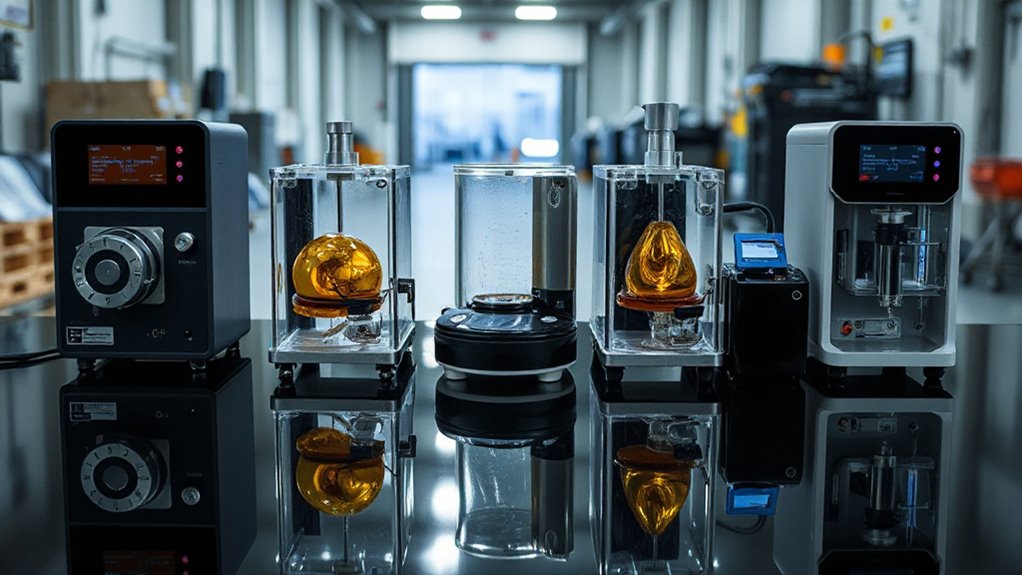

Oil cleanliness monitoring can mean a fast check of frying oil, a reading from an engine dipstick, or a lab report on wear metals and contamination. I rank these five kits by how well each matches its intended job, how much useful condition information it returns, and how practical its sampling process is. The Basic Oil Analysis Kit is my pick for broad routine monitoring across machinery, while the 50-inch Engine Oil Quality Tester suits buyers who want an on-the-spot engine oil reading without mailing a sample. For deep fryers, the FryOilSaver visual kit is the relevant choice because it is built for cooking oil rather than engine lubricant.

Get garage and car supplies delivered free — and shop member deals
- Fast, free delivery on millions of items
- Access to Prime Big Deal Days deals on October 6–7
- Prime Video, Amazon Music and more included
These options are not interchangeable: a visual fryer-oil check cannot diagnose engine wear, and a laboratory engine report does not offer a quick kitchen-side reading. I favor the lab kits when contamination and equipment wear are the concern, but they require sample handling and waiting. The probe tester gives immediate readings, though its description does not specify a lab-style breakdown of test parameters. My ranking reflects those different jobs instead of treating every kit as a universal oil tester.
Complete the kit


Key Takeaways
- Best broad routine lab coverage: The Basic Oil Analysis Kit checks wear metals, contamination, viscosity, oxidation, nitration, sulfation, and fuel dilution when applicable; it does not include TBN or TAN.
- Best immediate engine check: The 50-inch probe tester reads light transmittance and oil temperature on site, making it more convenient than either mailed laboratory kit.
- Best for cooking oil: FryOilSaver uses visual color comparison for fryer oil and should not be treated as an engine-oil diagnostic tool.
- Best kit with a stated fast lab turnaround: Aviation Laboratories Metal Check reports 12 wear metals and lists a 24-hour turnaround after the lab receives the sample.
- Choose testing depth over convenience: Lab analysis provides specific condition indicators, while a handheld optical reading is quicker but is not described as a multi-parameter wear analysis.
| Engine Oil Quality Tester with 50-Inch Extended Probe and 2.8″ LCD Display |  | Best Overall for Fast Engine-Oil Checks | Measurement method: Optical light-transmittance analysis | Probe length: 50.4 inches (1280 mm), flexible | Display: 2.8-inch backlit LCD with bar graphs | VIEW ON AMAZON | See Our Full Breakdown |
| Basic Oil Analysis Kit, Return Shipping Included, Oil Test Kit for Engines, Transmissions, Gearboxes and Hydraulic Systems |  | Best for Broad Routine Laboratory Monitoring | Test format: Laboratory oil analysis | Wear and contamination: Wear metals and contaminants | Other listed measurements: Additive elements, viscosity, oxidation, nitration, sulfation, and applicable fuel dilution | VIEW ON AMAZON | See Our Full Breakdown |
| FryOilSaver Co. Deep Fryer Oil Test Kit, Visual Two Color Analysis Kit |  | Best for Fryer Oil Cleanliness | Intended oil: Deep-fryer cooking oil | Analysis method: Visual two-color comparison | Sampling tool: Eyedropper | VIEW ON AMAZON | See Our Full Breakdown |
| Oil Analysis Kit – Oil Test Kit for Gasoline & Diesel Engines |  | Best Complete Mail-In Kit for Vehicle Owners | Test format: Laboratory oil analysis | Listed analysis: Wear metals, contamination, and lubricant condition | Intended engines: Gasoline and diesel | VIEW ON AMAZON | See Our Full Breakdown |
| Aviation Laboratories Metal Check Oil Analysis Test Kit GA-001 | 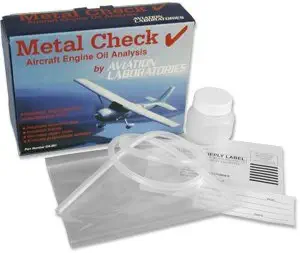 | Best for Aviation Wear-Metal Monitoring | Product model: GA-001-NO | Manufacturer: Aviation Laboratories | Analysis focus: Abnormal engine wear | VIEW ON AMAZON | See Our Full Breakdown |
More Details on Our Top Picks
Engine Oil Quality Tester with 50-Inch Extended Probe and 2.8″ LCD Display
This handheld tester is my lead pick for buyers who need an immediate engine-oil condition check rather than a mailed laboratory report. Its optical sensor measures light transmittance to estimate oil aging, and the backlit display presents the result with bar graphs. The 50.4-inch flexible probe is the standout practical difference: it can reach deep dipstick tubes and larger vehicles where a short probe may be awkward. It also displays oil temperature, allowing a quick field reading without a separate thermometer.
Compared with the Basic Oil Analysis Kit and the general engine lab kit, this tester favors speed and repeatable access over diagnostic breadth. It is specified for gasoline and diesel engine oils, but the description does not list wear metals, viscosity, fuel dilution, or other individual lab measurements. I would use it as a screening aid, not as a replacement for laboratory analysis when I need to investigate a developing mechanical problem. The long probe may also be more reach than owners of small, easily accessed engines need.
The ergonomic handle, one-handed operation, and stated operating range from -10°C to 60°C make it better suited to regular workshop or fleet checks than a basic sample-and-mail routine. Its three-year warranty is a useful listed support detail, though buyers should still confirm what the warranty covers. For someone choosing among this group, it offers the quickest engine-focused workflow; for someone who needs a full chemical and wear report, the Basic Oil Analysis Kit is a stronger fit.
Pros:- 50.4-inch flexible probe reaches deep dipstick tubes and larger vehicles.
- Optical light-transmittance reading provides an on-site indication of engine oil aging.
- Backlit 2.8-inch display shows bar graphs and oil temperature.
- One-handed ergonomic design and a stated three-year warranty.
Cons:- The described test does not provide the multi-parameter measurements listed for the Basic Oil Analysis Kit.
- Its long probe may be cumbersome for compact engines with easy dipstick access.
- The stated compatibility is limited to gasoline and diesel engine oils.
Best for: Mechanics, fleet operators, and hands-on vehicle owners who want a quick on-site oil-aging reading and need a long probe for deep access.
Not ideal for: Buyers who need wear-metal identification, a multi-parameter laboratory report, or testing for fryer and hydraulic oils.
- Measurement method:Optical light-transmittance analysis
- Probe length:50.4 inches (1280 mm), flexible
- Display:2.8-inch backlit LCD with bar graphs
- Oil temperature:Displayed by the device
- Compatibility:Gasoline and diesel engine oils
- Weight:0.44 lb
- Operating temperature:-10°C to 60°C
- Warranty:3 years
Our verdict“I would choose this tester for rapid engine-oil screening, but rely on a laboratory kit when I need specific wear and contamination data.”
Basic Oil Analysis Kit, Return Shipping Included, Oil Test Kit for Engines, Transmissions, Gearboxes and Hydraulic Systems
For buyers who want a report that covers more than whether engine oil appears aged, the Basic Oil Analysis Kit offers the broadest listed routine test panel in this group. It includes wear metals, contaminants, additive elements, viscosity, oxidation, nitration, sulfation, and fuel dilution when applicable. Its stated range extends beyond automotive engines to transmissions, gearboxes, differentials, hydraulic equipment, compressors, generators, and other lubricated machinery. That versatility gives it a clear advantage over the handheld tester, which is described for gasoline and diesel engine oils.
The tradeoff is time and process. I have to collect a sample with the included bottle and sampling tube, provide system details, and return it for laboratory analysis. That is slower than the tester’s on-the-spot reading and less suited to a quick check before a vehicle leaves the workshop. The payoff is a structured lab report with multiple condition indicators that can support routine monitoring across different equipment. The kit does not include TBN or TAN, so buyers who require either measurement should confirm that another test service is available before choosing it.
Compared with the Oil Analysis Kit for gasoline and diesel engines, this option states more of its test scope and names more equipment types. Compared with Aviation Laboratories Metal Check, it covers more condition categories than wear metals alone, but the supplied description does not state a specific turnaround time. I would choose it for planned maintenance and ongoing records, not urgent diagnosis. Its lack of a smartphone requirement is convenient: a QR code is optional, and sample details can also be sent by email.
Pros:- Lists wear metals, contamination, additive elements, viscosity, oxidation, nitration, sulfation, and applicable fuel dilution.
- Supports engines, transmissions, gearboxes, differentials, hydraulic systems, compressors, and generators.
- Includes a sample bottle and tube with return shipping described as included.
- Report submission can be handled without a smartphone.
Cons:- Laboratory analysis requires sampling, return shipping, and waiting for the report.
- TBN and TAN testing are not included in the described basic kit.
- No specific lab turnaround time is provided in the product information.
Best for: Owners and maintenance teams monitoring several types of oil-lubricated equipment who want a stated multi-parameter lab report for routine condition checks.
Not ideal for: Anyone needing an immediate result, a stated TBN or TAN measurement, or a clearly listed turnaround time before ordering.
- Test format:Laboratory oil analysis
- Wear and contamination:Wear metals and contaminants
- Other listed measurements:Additive elements, viscosity, oxidation, nitration, sulfation, and applicable fuel dilution
- Supported equipment:Engines, transmissions, gearboxes, differentials, hydraulics, compressors, generators, and more
- Collection supplies:Sample bottle and sampling tube
- Return process:Return shipping included, as described
- Report submission:QR code or email
- Excluded tests:TBN and TAN
Our verdict“I rank this first for broad routine machinery monitoring because its listed lab panel gives more condition detail than the quick-reading and wear-metal-focused alternatives.”
FryOilSaver Co. Deep Fryer Oil Test Kit, Visual Two Color Analysis Kit
This kit belongs in the roundup because “oil cleanliness” also matters in kitchens, but its job is sharply different from the engine kits. FryOilSaver uses a visual two-color analysis to help judge the condition of deep-fryer oil. A supplied eyedropper makes sampling more controlled, and the color guide is intended to help users decide whether to filter or replace cooking oil. It is described for common frying oils such as canola, peanut, walnut, and vegetable oil, across home fryers, food trucks, and commercial kitchens.
Compared with the engine probe tester, this kit does not require a display, probe insertion, or a power source; its straightforward visual process may be easier to incorporate into a kitchen routine. But the method is not described as a laboratory chemical analysis, and it does not supply the wear-metal, viscosity, or contamination measurements that matter for mechanical systems. I would not use it for motor oil, hydraulic fluid, or any lubricant outside its fryer-oil purpose. Nor would I treat a color comparison as a full diagnosis of every factor affecting oil quality.
Its main appeal is kitchen-side decision support: regular checks may help operators avoid replacing oil solely by guesswork and can help maintain consistent frying results. The description also mentions use alongside filter paper and filter aids, though buyers should follow their own fryer and filtration procedures. Unlike the lab kits, it offers no mailed report or stated numerical measurement panel. I rank it as the clear fryer pick, not as a general-purpose oil monitor; for engine wear trends, either the Basic Oil Analysis Kit or the Aviation Laboratories kit is a better match.
Pros:- Designed specifically for deep-fryer cooking oil rather than engine lubricant.
- Two-color visual guide supports quick condition checks.
- Eyedropper provides a controlled way to collect an oil sample.
- Described for home, food-truck, and commercial fryer settings.
Cons:- Not suited to engine, transmission, hydraulic, or other machinery oils.
- Visual color analysis is less detailed than the listed laboratory panels.
- The product information supplies no detailed measurement range or report format.
Best for: Home cooks, food trucks, and restaurant teams who need a visual way to monitor deep-fryer cooking oil and guide filtering or replacement.
Not ideal for: Vehicle owners, industrial maintenance teams, or anyone seeking lab measurements of engine wear metals and lubricant condition.
- Intended oil:Deep-fryer cooking oil
- Analysis method:Visual two-color comparison
- Sampling tool:Eyedropper
- Oil types described:Canola, peanut, walnut, vegetable, and other frying oils
- Use settings:Home kitchens, food trucks, and commercial kitchens
- Decision support:Helps assess when to filter or replace fryer oil
- Analysis format:On-site visual guide; no lab report described
Our verdict“I recommend it for fryer operators who want a simple visual oil check, while engine and equipment owners should choose one of the laboratory kits instead.”
Oil Analysis Kit – Oil Test Kit for Gasoline & Diesel Engines
This kit is a practical choice for vehicle owners who want a traditional laboratory oil analysis and a ready-to-send sampling package. It includes a sample bottle with a leak-resistant cap, an information card, a resealable bag, a prepaid return mailer, and collection instructions. The described laboratory work looks for wear metals, contamination, and lubricant condition in gasoline and diesel engines, with listed applications spanning cars, trucks, generators, marine engines, motorcycles, ATVs, and other equipment.
Compared with the Basic Oil Analysis Kit, this option is more explicitly presented as a complete collection-and-mail package for vehicle and engine users, while the Basic kit names a broader list of laboratory measurements and industrial systems. The product information does not specify the same individual panel details, so I would check what the resulting report includes if I need a particular measurement such as viscosity or fuel dilution. Compared with the 50-inch tester, this kit takes longer but is better aligned with investigating wear metals and contamination through a lab rather than relying on an optical aging reading.
Its strongest use case is trend tracking: repeat samples can help an owner compare results over time and watch for changes in equipment condition. It is not suitable for aircraft engines, a significant exclusion for aviation users; the Aviation Laboratories kit is the more relevant specialist option there. The mail-in workflow also means it cannot answer an immediate maintenance question. I would put it ahead of the handheld tester when a documented lab report matters, but behind the Basic kit for buyers who need the broadest stated test scope.
Pros:- Includes bottle, leak-resistant cap, information card, sample bag, prepaid return mailer, and instructions.
- Laboratory analysis is described for wear metals, contamination, and lubricant condition.
- Supports trend tracking through repeated oil samples.
- Lists a wide range of gasoline and diesel engine applications.
Cons:- Requires sample collection and mailing, so it is not an immediate check.
- Not suitable for aircraft engines.
- The product description does not list individual measurements or a turnaround time.
Best for: Car, truck, motorcycle, generator, and equipment owners who want a complete mail-in sampling package and lab checks for wear metals and contamination.
Not ideal for: Aircraft engine owners, buyers needing an immediate result, or anyone who requires a specific test panel that is not confirmed before purchase.
- Test format:Laboratory oil analysis
- Listed analysis:Wear metals, contamination, and lubricant condition
- Intended engines:Gasoline and diesel
- Applications:Automobiles, trucks, construction and agricultural equipment, generators, marine engines, motorcycles, ATVs, and UTVs
- Sample bottle:Included with leak-resistant cap
- Other kit contents:Information card, resealable bag, prepaid return mailer, and instructions
- Trend monitoring:Repeated results can be compared over time
- Exclusion:Not suitable for aircraft engines
Our verdict“I would choose this for a straightforward vehicle-focused mail-in analysis, but the Basic kit offers a more explicit test panel for broader maintenance monitoring.”
Aviation Laboratories Metal Check Oil Analysis Test Kit GA-001
Aviation Laboratories Metal Check is the most specialized pick here. It focuses on detecting abnormal engine wear through 12 wear metals, with results intended to help owners spot changes and build a trend over repeated samples. The kit suits aviation-minded buyers who value an engine-focused lab result more than the immediate convenience of a handheld instrument. Its stated 24-hour turnaround begins after the laboratory receives the sample, so it is faster to quantify than the other lab-kit descriptions but still requires mailing and processing time.
Compared with the vehicle-oriented Oil Analysis Kit, Metal Check gives a specific count of wear metals and is positioned for aviation use. That makes it a more natural fit for aircraft-related monitoring, while the other kit explicitly excludes aircraft engines. The Basic Oil Analysis Kit is broader in its named measurements, including viscosity, oxidation, and contamination indicators; Metal Check is more focused on wear-metal trending. I would choose based on the question I need answered: component wear signals, or a wider picture of oil condition.
The main limitation is scope. The product description emphasizes wear metals and does not list a broad set of measurements such as viscosity, fuel dilution, or oxidation. It also cannot provide a same-session answer; the sample must be extracted and mailed, and the stated turnaround applies after receipt at the lab. For buyers maintaining equipment outside aviation, the Basic kit or general engine kit may be more appropriate. For an aviation owner trying to follow wear trends, this specialist analysis earns its distinct role in the ranking.
Pros:- Analyzes 12 wear metals to help identify abnormal engine wear.
- Supports trend tracking across repeated oil samples.
- Lists a 24-hour turnaround after the laboratory receives the sample.
- Specialist positioning makes it more relevant to aviation users than the general vehicle kit.
Cons:- Requires collecting and mailing an oil sample.
- The turnaround clock starts after the lab receives the sample, not when it is sent.
- The description focuses on wear metals and does not list a broader condition panel.
Best for: Aviation owners and maintenance-minded users who want a focused lab check of engine wear metals and a stated post-receipt turnaround.
Not ideal for: Buyers who need an instant reading, broad lubricant chemistry measurements, or a kit explicitly tailored to non-aviation machinery.
- Product model:GA-001-NO
- Manufacturer:Aviation Laboratories
- Analysis focus:Abnormal engine wear
- Wear metals detected:12
- Sample process:Extract and mail a few ounces of oil
- Listed turnaround:24 hours after the lab receives the sample
- Monitoring use:Wear trend tracking over time
- Part number:GA-001-NP
Our verdict“I recommend Metal Check for aviation-focused wear-metal trends, while buyers seeking broader routine oil-condition measurements should compare it with the Basic Oil Analysis Kit.”
How We Picked
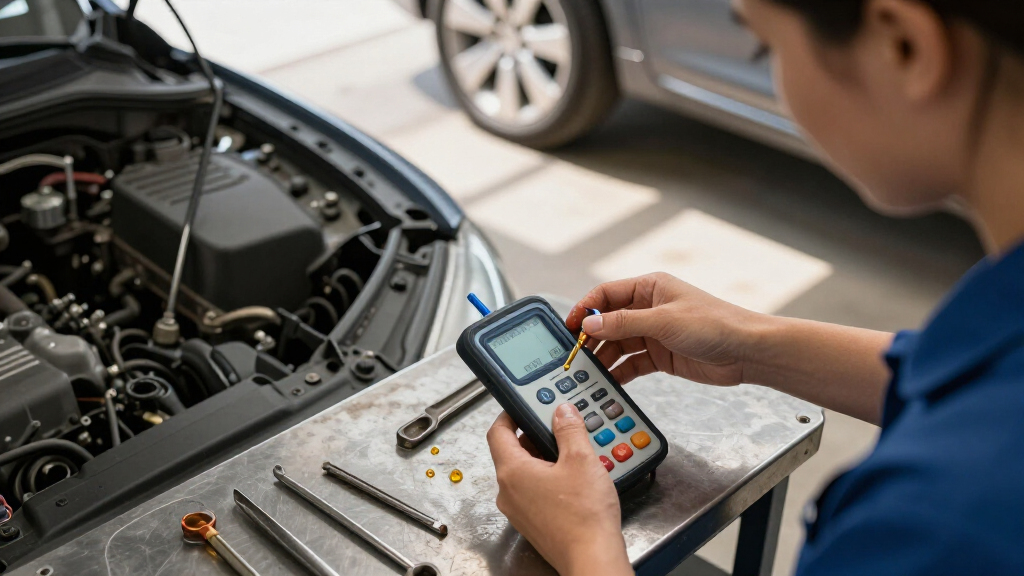
I ranked the kits by fit for oil cleanliness monitoring, not by a single definition of “oil quality.” The lineup spans cooking oil, engine oil, and industrial lubricant, so my first question was whether each option gives a meaningful signal for the fluid and equipment it targets. A fryer color guide earns a place for kitchen use, but it cannot compete with an engine laboratory kit on wear-metal detection.
Next, I compared the kind of evidence each kit provides. The Basic Oil Analysis Kit lists several laboratory measurements, including viscosity and contamination indicators. The aviation kit focuses on 12 wear metals and provides a stated turnaround. The general engine lab kit describes wear-metal and contamination testing, with a collection-and-return package. By contrast, the handheld tester uses light transmittance to estimate engine oil aging, while FryOilSaver provides a visual two-color assessment for frying oil.
I also weighed sampling effort and decision usefulness. On-site instruments can support quick checks, but a rapid result is not automatically a detailed diagnosis. Mailed tests involve collecting and returning a sample, then waiting for a report; in return, they offer laboratory measurements that can support maintenance decisions and trend tracking. Where product details are not supplied, I avoid assuming a test panel or performance level. That is why each pick is assigned a distinct role, and why buyers should match the kit to their fluid, equipment, and desired level of detail.
Factors to Consider When Choosing Oil Cleanliness Monitoring Kit
I would start by identifying the fluid and the decision the result needs to support. These products span fryer oil, engine oil, and machine lubricants, so the right choice depends less on a general label like “oil tester” and more on whether you need a quick screen, a lab diagnosis, or a kitchen maintenance cue.
Match the kit to the oil
For deep-fryer oil, the FryOilSaver visual kit is the only option in this lineup designed for cooking oil. For gasoline or diesel engines, the handheld tester and two engine-focused laboratory kits are more relevant. The Basic Oil Analysis Kit has the broadest stated equipment range, including hydraulic systems and gearboxes. Aviation users should look closely at the Metal Check kit, while also checking that its wear-metal focus matches the monitoring plan. A test intended for one fluid type should not be assumed to work for another simply because both are called oil.
Choose between instant readings and lab analysis
The long-probe tester offers an on-site optical reading in seconds, which favors routine checks when time and easy access matter. Its reading estimates aging through light transmittance, but the supplied details do not describe an individual wear-metal panel. A mailed kit takes more effort and adds a wait, yet it can provide laboratory results on the indicators that the specific kit measures. I would use the handheld option for quick screening and a lab kit when I need specific evidence about wear or contamination.
Check the test panel before ordering
Product titles can sound similar while the reported information differs. The Basic kit lists wear metals, contaminants, additive elements, viscosity, oxidation, nitration, sulfation, and applicable fuel dilution, but excludes TBN and TAN. The aviation kit specifies 12 wear metals, while the general engine kit describes wear metals, contamination, and lubricant condition without listing each measurement. If a maintenance program calls for a particular value, I would confirm that it is included rather than treating “oil analysis” as a complete description of the report.
Account for sampling and turnaround
A lab kit depends on a representative sample, accurate equipment information, and return shipping. Follow the included collection instructions and use a consistent sampling method when comparing reports over time. Aviation Laboratories lists a 24-hour turnaround after receipt, not after dispatch. The other lab descriptions do not give a specific turnaround, so I would not plan urgent repairs around an assumed delivery window. For decisions needed during the same service visit, the handheld tester has a practical speed advantage, with less diagnostic detail.
Use trends, not one result alone
A single sample can provide a snapshot, while repeated testing can show whether a reading is stable or changing. The vehicle laboratory kit and Aviation Laboratories kit both describe trend monitoring, and the Basic kit’s structured report can support routine records. Keep notes on operating hours, oil type, equipment, and sampling conditions so that results are easier to compare. I would treat unusual findings as a reason to review the equipment and seek appropriate maintenance guidance, not as a stand-alone diagnosis of a failed part.
Frequently Asked Questions
Are these five kits interchangeable?
No. FryOilSaver is made for deep-fryer cooking oil, while the engine and laboratory options address machinery lubricants. Even among the engine kits, their methods differ: the handheld tester estimates aging through light transmittance, while mailed kits analyze oil in a laboratory. I would select by fluid type and the information needed, not by the shared idea of checking oil quality.
Which kit gives the broadest stated engine-oil test panel?
The Basic Oil Analysis Kit lists the widest set of routine measurements in the supplied details: wear metals, contaminants, additive elements, viscosity, oxidation, nitration, sulfation, and fuel dilution when applicable. It does not include TBN or TAN. The other lab kits may suit narrower needs, but their descriptions do not state an equally broad set of measurements.
Can the handheld tester replace a laboratory oil analysis?
Not for every purpose. The handheld tester provides an on-site optical reading related to engine-oil aging and also displays temperature, but its listed functions do not include the multi-parameter lab measurements named for the Basic kit. I would use it for quick screening and choose laboratory analysis when I need wear-metal, contamination, viscosity, or other report data.
Which kit is suited to monitoring deep-fryer oil?
The FryOilSaver Co. kit is the only product here specifically described for cooking oil in home and commercial fryers. Its eyedropper and two-color visual guide support a kitchen-side check that can help inform filtering or replacement decisions. It is not an engine-oil test, and it does not produce the laboratory wear-metal results used for machinery monitoring.
When does the Aviation Laboratories turnaround begin?
The stated 24-hour turnaround begins after the laboratory receives the oil sample. Mailing time happens before that period, so the full time from collection to results will be longer. If timing matters to maintenance planning, I would account for shipping as well as the lab’s stated processing window.
Conclusion
My recommendation depends on the fluid and the level of detail you need. For broad routine monitoring across engines and industrial equipment, I would start with the Basic Oil Analysis Kit, while remembering that it excludes TBN and TAN. For a fast on-site engine check, the 50-inch probe tester is the most convenient option, but it does not replace a detailed lab report. Fryer operators should choose FryOilSaver because it is designed for cooking oil. Vehicle owners who want a complete mail-in package can consider the general Oil Analysis Kit, while aviation users focused on wear-metal trends have the specialist Metal Check option. Match the test to the oil, confirm the measurements you need, and use repeat results to follow changes over time.
Halloween Picks
halloween
As an affiliate, we earn on qualifying purchases.