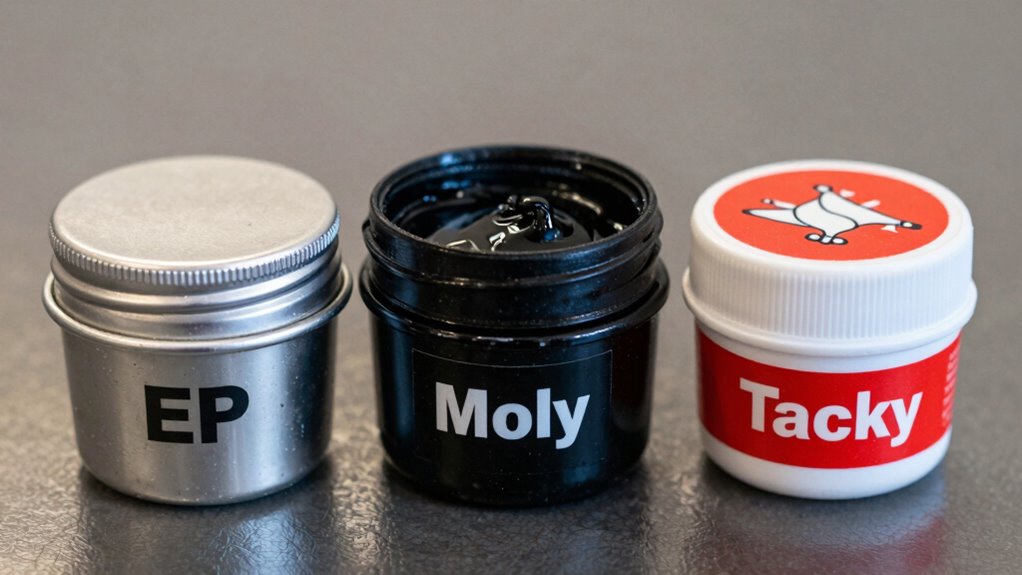
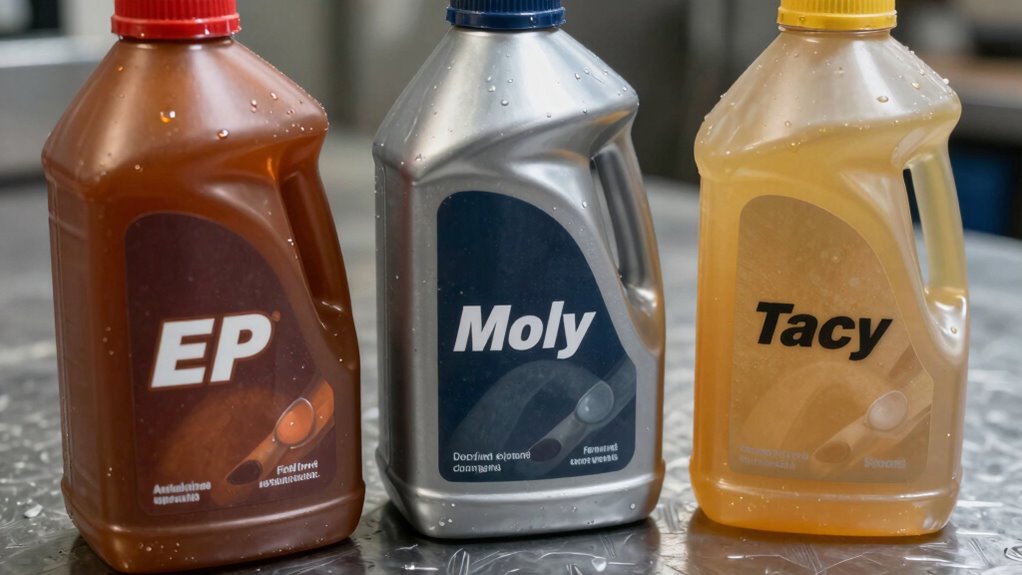
To choose between EP, moly, and tacky grease, focus on your specific needs: use EP grease for heavy loads and high pressure, moly grease for boundary conditions with slow or shock loads, and tacky grease for water resistance and adhesion in wet or vibrating environments. Avoid hype by understanding their compositions and applications. Stay tuned to learn how to match these options precisely to your equipment’s demands for prime performance.

Get garage and car supplies delivered free — and shop member deals
- Fast, free delivery on millions of items
- Access to Prime Big Deal Days deals on October 6–7
- Prime Video, Amazon Music and more included
Key Takeaways
- Match EP grease for heavy loads and high-pressure environments, moly grease for boundary lubrication and wear resistance, and tacky grease for water resistance and adhesion.
- Consider operating temperature, with moly and tacky greases suitable for higher temperatures than standard EP types.
- Avoid mixing different grease types to prevent chemical incompatibility and performance degradation.
- Choose NLGI Grade 2 for most vehicle and machinery applications, balancing consistency and ease of use.
- Select based on environmental exposure, load conditions, and specific equipment needs rather than hype or marketing claims.
As an affiliate, we earn on qualifying purchases.
What Are EP, Moly, and Tacky Greases?
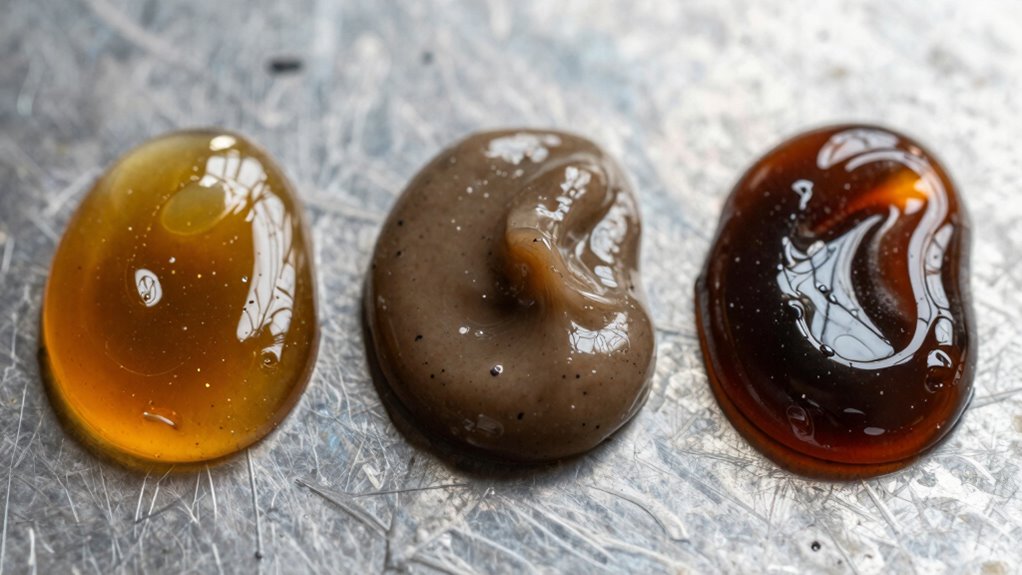
EP, Moly, and Tacky greases are specialized lubricants designed for different applications and operating conditions. EP grease, or Extreme Pressure grease, contains additives that handle heavy loads and high pressure, making it suitable for bearings and chassis. Moly grease is fortified with molybdenum disulfide, providing excellent anti-wear properties during high-pressure, slow-moving, or shock-loaded tasks like wheel bearings and bushings. Tacky grease features a lithium complex thickener with tackifiers, giving it superior adhesion and water resistance, ideal for heavy-duty equipment exposed to wet environments. Each type’s unique formulation targets specific operational needs—EP for general heavy loads, moly for boundary lubrication under high pressure, and tacky for sticking power and protection in extreme conditions. Understanding these basics helps you pick the right grease for your equipment.
moly disulfide grease for wheel bearings
As an affiliate, we earn on qualifying purchases.
As an affiliate, we earn on qualifying purchases.
How Do These Greases Differ in Composition and Performance?
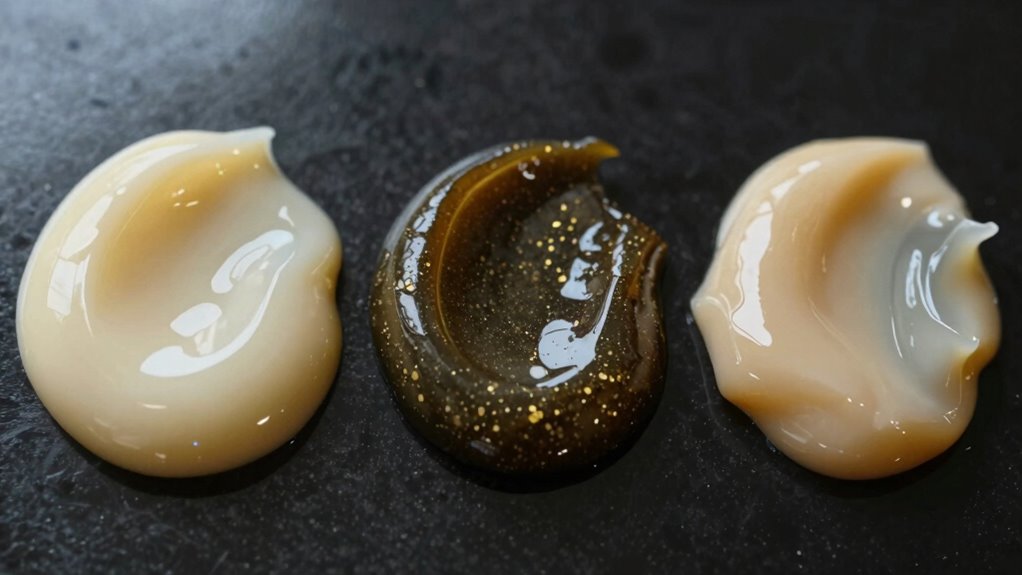
Understanding how these greases differ starts with their base oils and thickeners, which influence their temperature range and water resistance. Additives like moly or tackifiers enhance specific performance features, such as wear protection or adhesion. By examining these composition details, you can better choose the right grease for your application’s demands. Additionally, selecting a grease with an appropriate cycling-specific formulation can improve overall performance and longevity.
Base Oil and Thickeners
Greases differ considerably in their base oils and thickeners, which directly influence their performance and suitability for various applications. The base oil provides lubrication, while the thickener gives the grease its structure and consistency. EP greases typically use mineral or synthetic oils with lithium or calcium thickeners, offering good load capacity and temperature stability. Moly greases incorporate molybdenum disulfide in mineral or synthetic oils, enhancing boundary lubrication and reducing wear under heavy loads. Tacky greases often use lithium complex thickeners with high-temperature synthetic oils for adhesion and durability. These differences affect factors like temperature range, water resistance, and load capacity. Understanding how each component impacts performance helps you choose the right grease for specific conditions. Additionally, the temperature tolerance of a grease is heavily influenced by its base oil type, which determines its effectiveness across different environments.
Additives and Performance Features
The key differences among EP, moly, and tacky greases stem from their unique additives that enhance performance under specific conditions. EP grease contains extreme pressure additives like sulfur-phosphorus compounds, providing excellent load-carrying capacity. Moly grease is fortified with molybdenum disulfide, reducing sliding friction and offering boundary lubrication. Tacky grease relies on lithium complex thickeners and tackifiers for superior adhesion and water resistance. These additives influence temperature limits, wear protection, and application suitability. Additionally, the choice of lubrication technology can significantly impact the longevity and efficiency of mechanical components.
As an affiliate, we earn on qualifying purchases.
Which Grease Is Best for Heavy Loads and Sliding Parts?
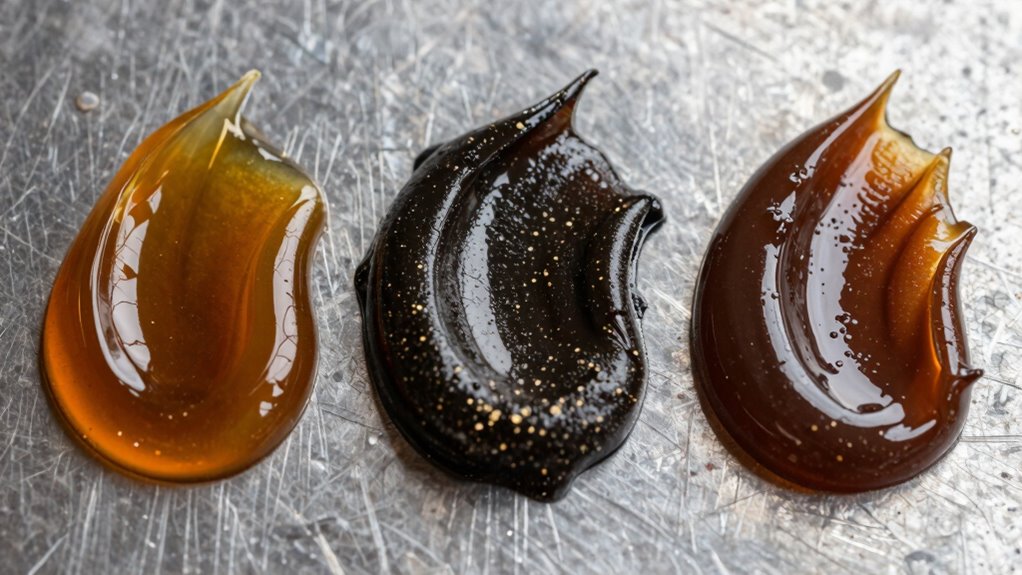
When it comes to heavy loads and sliding parts, selecting the right grease is essential for ensuring durability and performance. You want a grease that can handle high pressure while reducing wear and friction. Moly grease stands out here because of its molybdenum disulfide content, which provides excellent boundary lubrication and protects against shock loading. EP grease offers good load capacity with EP additives for moderate to heavy loads, making it versatile. Tacky grease excels in adhesion, resisting washout in wet environments, but isn’t ideal for high-slide or impact scenarios. Consider these factors:
- Moly grease for high-pressure, slow-moving, heavily loaded parts
- EP grease for moderate to heavy loads with pressure additives
- Tacky grease for adhesion in wet or extreme conditions
- Compatibility with your equipment’s load and operating environment
Additionally, understanding the types of grease suitable for different applications can help you make informed choices for optimal performance.
high temperature lithium complex grease
As an affiliate, we earn on qualifying purchases.
As an affiliate, we earn on qualifying purchases.
When Should You Use Moly Grease for High-Pressure Applications?
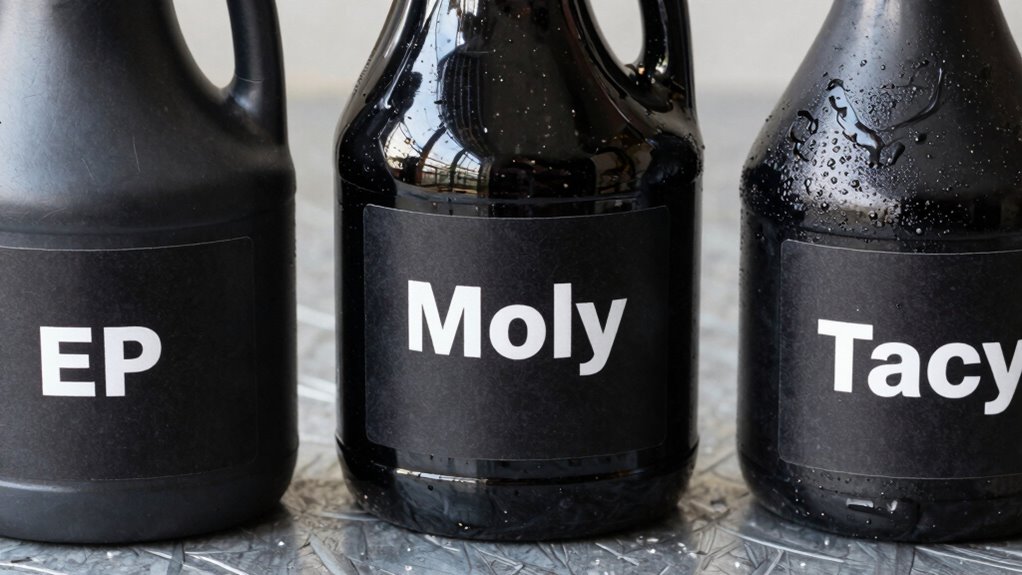
Moly grease is ideal for high-pressure applications where boundary lubrication is critical. You should consider using moly grease when dealing with heavily loaded, slow-moving parts like bushings, pins, and heavy-duty joints. Its molybdenum disulfide content forms a solid lubricant film that reduces metal-to-metal contact under extreme pressure, preventing wear and galling. If your equipment experiences shock loading or impacts, moly grease provides superior protection by resisting breakdown and maintaining a lubricating film. It’s especially effective in environments with high loads, moderate to high temperatures, and moderate water exposure. Use moly grease when standard lubricants aren’t sufficient, and you need a durable, anti-wear solution that can handle the stresses of high-pressure, slow-turning components. Exploring new concepts in lubricant technology can help optimize performance in demanding conditions.
Why Choose Tacky Grease for Wet and Vibration-Prone Environments?
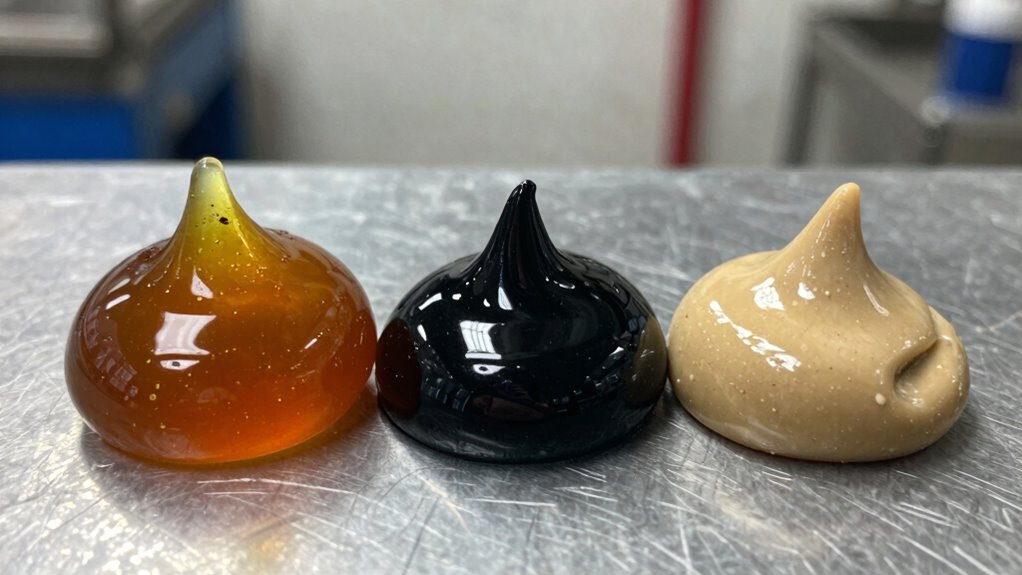
If you’re working in wet or vibration-heavy conditions, tacky grease offers clear advantages. Its superior water resistance keeps it in place, preventing washout and corrosion. Plus, its strong adhesion guarantees it stays where you need it, even under constant movement or moisture. Additionally, its compatibility with various pool components ensures reliable performance across different applications.
Superior Water Resistance
Tacky grease stands out in wet and vibration-prone environments because of its exceptional water resistance and strong adhesion properties. Its lithium complex thickener creates a barrier that resists washout, keeping lubrication intact even when exposed to water, rain, or mud. This ensures your components stay protected and functioning smoothly without frequent reapplication. Its tacky additives help the grease cling tightly to surfaces, preventing washout and reducing the risk of corrosion. Plus, the high-temperature stability of tacky grease maintains its water-resistant qualities under extreme conditions. Ergonomic design also benefits from using tacky grease, as it helps ensure machinery operates smoothly and reduces strain on operators.
- Resists washout in wet conditions
- Keeps lubrication where it’s needed
- Prevents corrosion from water exposure
- Maintains performance during heavy vibration
Strong Adhesion Properties
Strong adhesion is what sets tacky grease apart in demanding environments. When moisture, vibration, or centrifugal forces threaten to dislodge lubricants, tacky grease stays put. Its high-viscosity lithium complex base, combined with tackifying additives, creates a sticky film that clings tightly to metal surfaces. This attachment ensures continuous lubrication even under wet conditions, reducing the risk of metal-to-metal contact. Unlike EP or moly greases, which focus on pressure resistance or boundary lubrication, tacky grease’s primary strength is its ability to remain firmly in place. This makes it ideal for applications exposed to constant vibration or water ingress, such as wheel bearings, chassis components, and heavy-duty equipment. You get reliable, long-lasting lubrication, preventing wear and minimizing maintenance needs in tough, vibrating, or wet environments.
Resists Washout Effect
Why is tacky grease a top choice for wet and vibration-heavy conditions? Its lithium complex base and tackifier additives create a thick, adhesive film that stays firmly in place. Unlike standard greases, tacky grease resists being washed out by water and remains on surfaces even when exposed to constant vibration or spray. This makes it ideal for environments where fluids and movement threaten lubrication integrity.
- Excellent water resistance, minimizing washout
- Strong adhesion prevents grease loss during vibration
- High melting point ensures stability under heat
- Durable film maintains lubrication in harsh conditions
How to Pick the Right Grease Based on Temperature, Load, and Water Resistance?
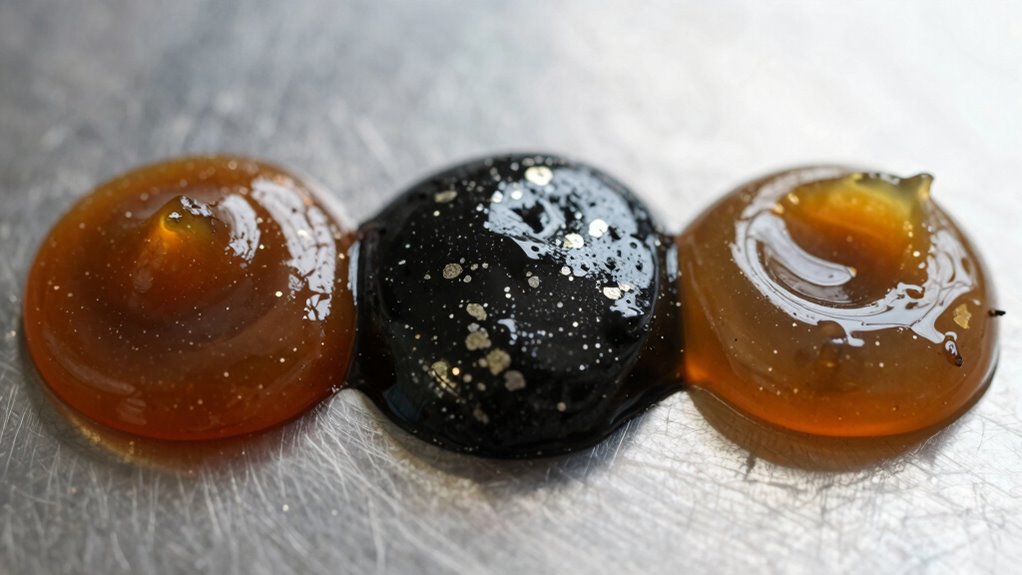
Choosing the right grease depends heavily on your equipment’s operating temperature, the load it will carry, and exposure to water. For higher temperatures, select greases like moly or tacky that can handle up to 150°C or more, guaranteeing they won’t soften or break down. If your equipment endures heavy loads or shock, EP grease provides excellent pressure resistance, especially with NLGI Grade 2 for moderate to heavy duty. Water resistance matters if your machinery operates in wet conditions; tacky grease excels here with superior water washout resistance, while EP offers moderate protection. Assess your environment and operational demands carefully—if water exposure is frequent, prioritize tacky or water-resistant moly grease. Matching these factors ensures ideal lubrication, longevity, and performance.
Can You Mix Different Types of Greases Safely?
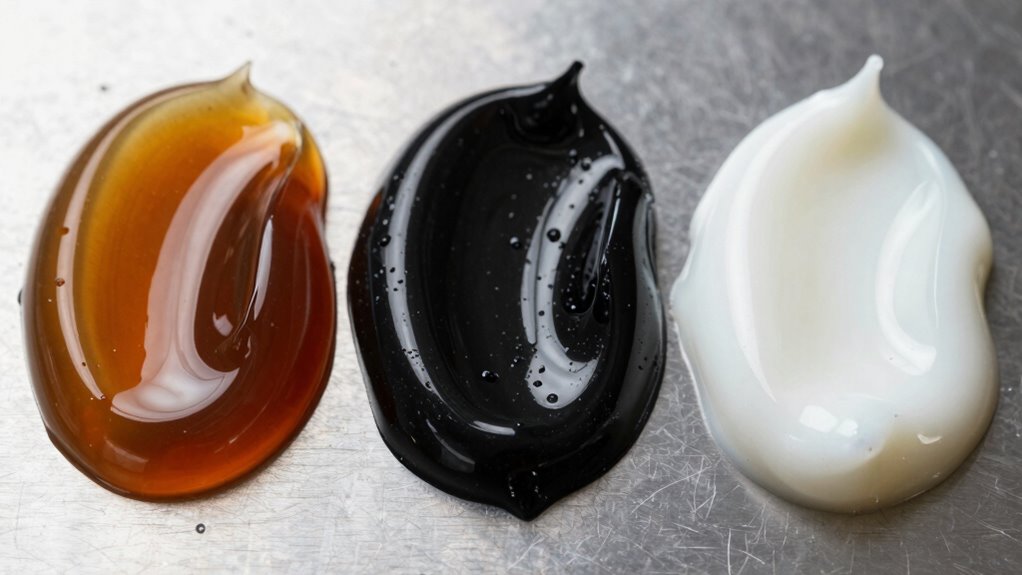
Mixing different types of grease might seem like a quick fix in a pinch, but it can cause more problems than it solves. Combining greases with different thickeners, additives, or base oils can lead to chemical incompatibilities, reduced lubrication, or breakdown of the grease. This can compromise protection, cause wear, or even damage parts. For example, lithium-based grease may not mix well with polyurea types, leading to separation or reduced performance. To avoid issues:
Mixing different greases can cause incompatibilities and damage; stick to the same type for best performance.
- Always check compatibility charts before mixing.
- Stick to the same type and brand when possible.
- Avoid combining high-temperature and extreme-pressure greases.
- Purge old grease thoroughly before introducing a different kind.
Sticking to compatible greases guarantees maximum performance and longevity of your equipment.
Key Factors to Consider When Selecting the Best Grease for Your Vehicle
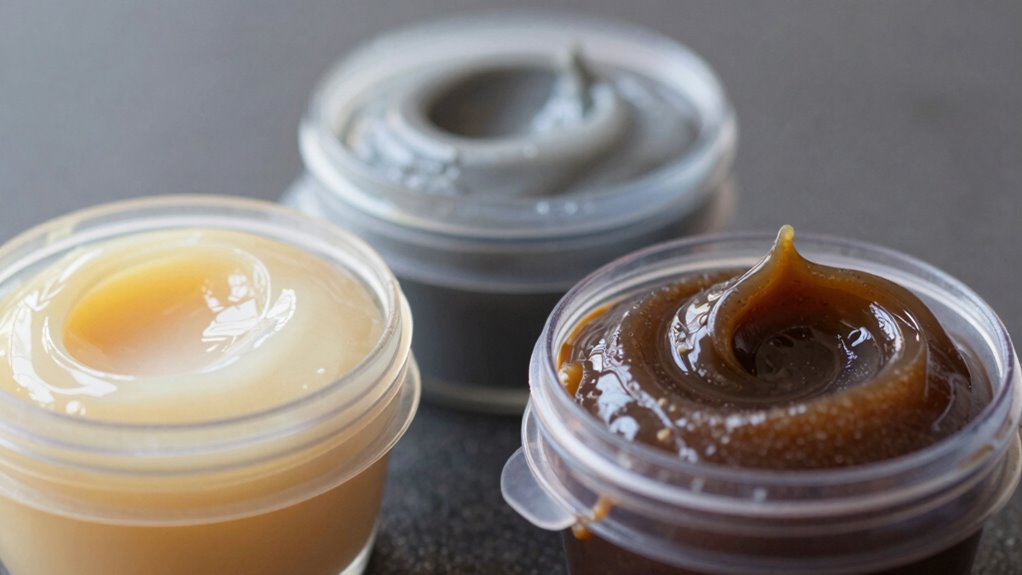
Selecting the right grease for your vehicle involves evaluating several critical factors to guarantee ideal performance and protection. First, consider the load conditions—heavy loads require greases with EP additives or moly, which improve boundary lubrication. Check the operating temperature range; for high temperatures, lithium complex or tacky greases are better suited, while moderate temps suit standard lithium-based EP or moly greases. Water resistance is essential if your vehicle operates in wet environments; tacky greases excel here, resisting washout. The NLGI grade indicates consistency—Grade 2 is common for most applications. Also, verify compatibility with existing lubricants, especially when switching types. Prioritize specifications like drop point, wear resistance, and load capacity to ensure your choice matches your vehicle’s demands and operating conditions. Additionally, understanding cybersecurity tactics can help protect your vehicle’s electronic systems from potential threats.
Tips for Properly Applying and Maintaining Your Grease
Applying grease correctly guarantees your vehicle’s components stay protected and perform reliably. Start by cleaning the area thoroughly to remove old grease, dirt, and debris. Use the right applicator—brush, spatula, or grease gun—to ensure precise placement. Apply a consistent, even layer, avoiding over- or under-greasing, which can cause damage or leaks. Regularly inspect the grease points and reapply as needed based on manufacturer recommendations or operating conditions. Proper maintenance prevents contamination and guarantees ideal lubrication. Incorporating visual and auditory cues can also aid in precise application and monitoring.
Frequently Asked Questions
Can EP, Moly, and Tacky Greases Be Used Together Safely?
You shouldn’t mix EP, moly, and tacky greases, as they have different thickeners and additives that can react negatively. Combining these can cause compatibility issues, reducing lubrication effectiveness and possibly damaging your equipment. Stick to one type that matches your application’s needs. If you need to switch, thoroughly clean and purge the old grease first. Always check manufacturer recommendations to avoid unintended consequences.
Is One Type of Grease Suitable for Both Wheel Bearings and Chassis?
Yes, you can choose one grease for both wheel bearings and chassis if it meets the required specifications. Look for a lithium-based grease with an NLGI Grade 2 rating, suitable for high-pressure, moderate water resistance, and capable of handling moderate to heavy loads. make certain it has the proper temperature range and EP or anti-wear additives. This way, you get a versatile, effective lubricant without switching between different types.
How Does Water Resistance Influence Grease Selection for Outdoor Applications?
Water resistance is vital for outdoor grease because it prevents washout and corrosion. When selecting grease, look for products with good water resistance ratings, like tacky grease or high-quality EP types. These greases stay in place, protect against moisture, and reduce rust. If your application involves frequent exposure to water, choose a grease specifically designed for wet environments to guarantee long-lasting lubrication and protection.
Are There Specific NLGI Grades Preferred for Heavy-Duty Versus Light-Duty Use?
For heavy-duty use, you should choose greases with NLGI Grade 2 or higher, as they provide better load-carrying capacity and durability under stress. Light-duty applications often work well with lower grades like Grade 0 or 1, which are softer and easier to apply but less robust for demanding conditions. Always match the NLGI grade to your application’s load, speed, and environmental demands for ideal performance.
Does Switching Grease Types Require Complete Cleaning of the Old Grease First?
Oh, sure, just slap new grease over the old—what could possibly go wrong? In reality, you should thoroughly clean the old grease first. Residual gunk can cause compatibility issues, reduce lubrication effectiveness, and possibly damage your equipment. Use a degreaser or solvent, scrub thoroughly, then dry completely before applying fresh grease. This guarantees your new grease performs as intended, rather than mixing a cocktail of incompatible lubricants that invite chaos.
Conclusion
Choosing the right grease is like selecting a sturdy shield for your vehicle’s essential gear—each type offers unique protection against heavy loads, moisture, or vibration. By understanding their differences, you can envision your parts smoothly gliding through time’s wear and tear, like a well-oiled machine whispering silent assurance. Make informed choices, apply with care, and let your vehicle’s heartbeat stay steady, confident, and resilient on every journey ahead.
Halloween Picks
halloween
As an affiliate, we earn on qualifying purchases.