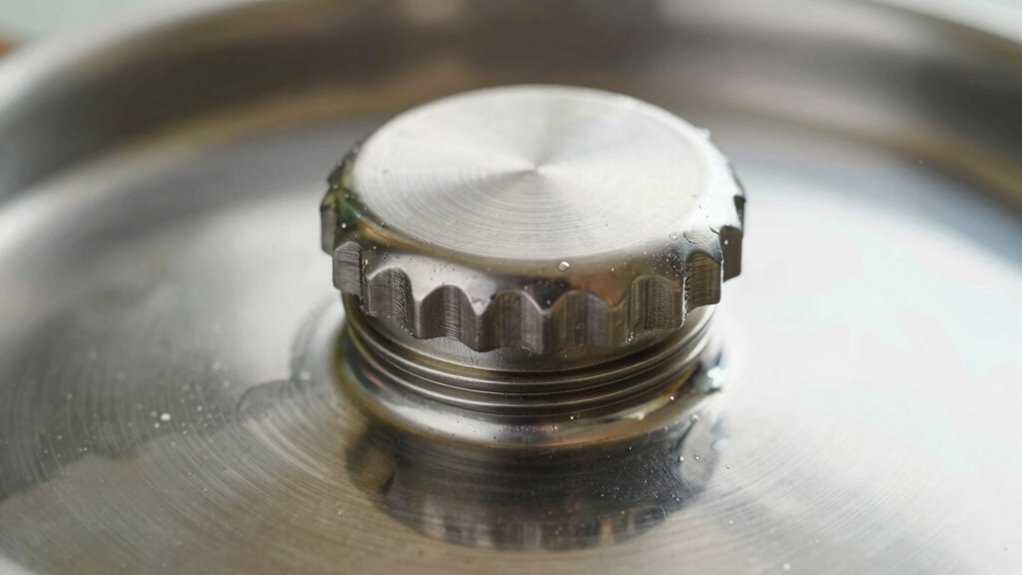

A radiator cap is a small but essential part that seals your cooling system and maintains pressure. By controlling the pressure, it directly raises the coolant’s boiling point, preventing overheating. Choosing the right cap with the proper pressure rating guarantees your engine stays cool and runs efficiently. If you want to understand how this inexpensive part impacts your engine’s performance and safety, keep going to learn more about choosing and maintaining it.

Get business pricing on garage and car supplies
- Business-only prices and quantity discounts
- Tax-exempt purchasing
- Multiple users, one account, clear invoices
Key Takeaways
- The radiator cap is an inexpensive part that seals the cooling system and maintains pressure to prevent coolant boiling.
- It features a spring-loaded valve that releases excess pressure, raising the coolant’s boiling point.
- Proper pressure ratings ensure the system operates efficiently and avoids overheating or coolant loss.
- Higher pressure caps increase boiling point, allowing the engine to run hotter without vaporizing coolant.
- Regular inspection and correct fitment of the cap are essential for optimal cooling system performance.
As an affiliate, we earn on qualifying purchases.
What Is a Radiator Cap and How Does It Work?
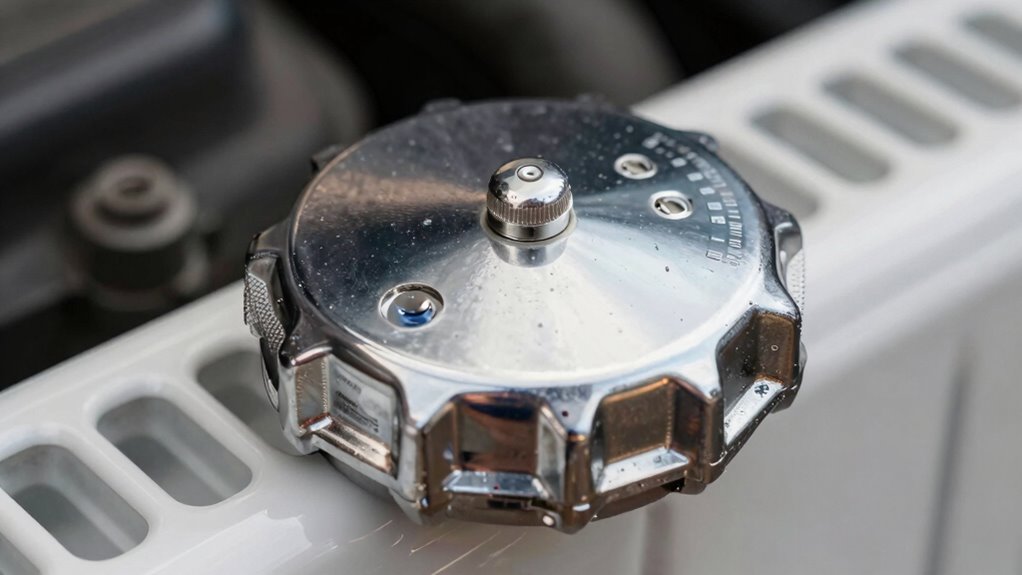
A radiator cap is a essential component of your vehicle’s cooling system that helps maintain the proper pressure to prevent overheating. It seals the radiator and pressurizes the system, allowing coolant to expand without escaping. The cap features a spring-loaded valve that opens at a specific pressure—usually between 13 and 16 psi—releasing excess coolant into the overflow tank. This regulation keeps the coolant in a pressurized state, which raises its boiling point. The upper seal ensures the system remains airtight, preventing air from entering and coolant loss. When the engine cools, a vacuum valve draws coolant back from the overflow. Overall, the radiator cap plays a critical role in controlling pressure, coolant flow, and temperature, safeguarding your engine from overheating and damage. Proper pressure regulation is vital for maintaining optimal engine performance and avoiding costly repairs.
As an affiliate, we earn on qualifying purchases.
Why Is a Higher Boiling Point Important for Engine Cooling?
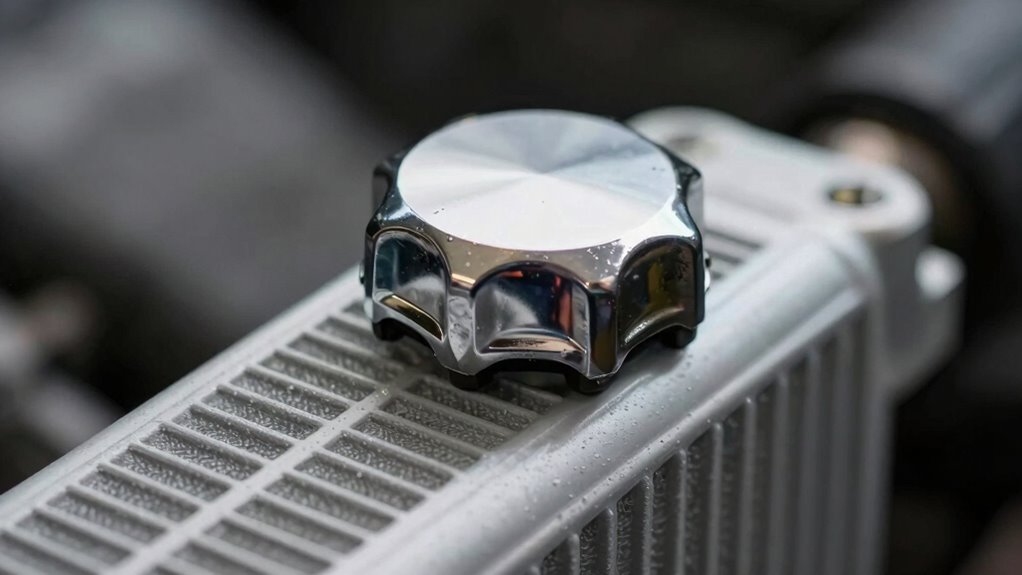
Since coolant absorbs heat from the engine, having a higher boiling point prevents it from vaporizing under extreme temperatures. When coolant vaporizes, it creates steam pockets that reduce heat transfer efficiency, risking engine overheating. A higher boiling point means the coolant stays liquid longer, even under intense engine conditions. This is especially important as coolant composition influences the boiling point and overall cooling performance. It allows the cooling system to operate at higher temperatures safely, improving heat dissipation. It also reduces the likelihood of coolant boil-over, which can lead to loss of fluid and engine damage. By maintaining liquid coolant at elevated temperatures, your engine runs more efficiently and reliably, especially during heavy loads or hot weather. Essentially, a higher boiling point enhances the cooling system’s capacity to keep your engine cool under stress.
As an affiliate, we earn on qualifying purchases.
How Do Pressure Ratings Impact Your Radiator Cap’s Performance?
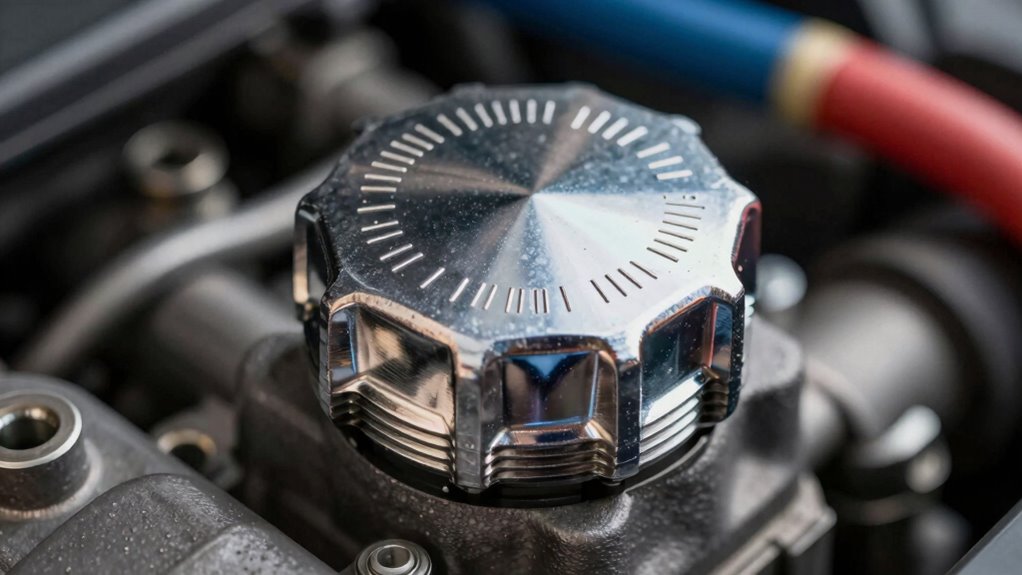
The pressure rating of your radiator cap directly affects how effectively your cooling system manages heat and prevents overheating. When you choose a higher-pressure cap, it allows the system to build more pressure, raising the coolant’s boiling point. This means your engine can operate at higher temperatures without coolant vaporization, improving heat transfer and reducing the risk of boil-over. Conversely, a lower-pressure cap won’t hold as much pressure, limiting the coolant’s boiling point and increasing the chance of overheating under heavy loads or hot conditions. The pressure rating must match your engine’s design to ensure maximum performance. If the cap’s pressure is too high or too low, it can cause system failure, overheating, or coolant loss. Proper pressure ratings keep your engine running cooler and more efficiently. Frühwarnzeichen Für Brustkrebs Entdecken can help prevent serious damage by alerting you early to potential issues.
vehicle radiator pressure cap replacement
As an affiliate, we earn on qualifying purchases.
As an affiliate, we earn on qualifying purchases.
Why Higher-Pressure Caps Help Keep Your Engine Cooler
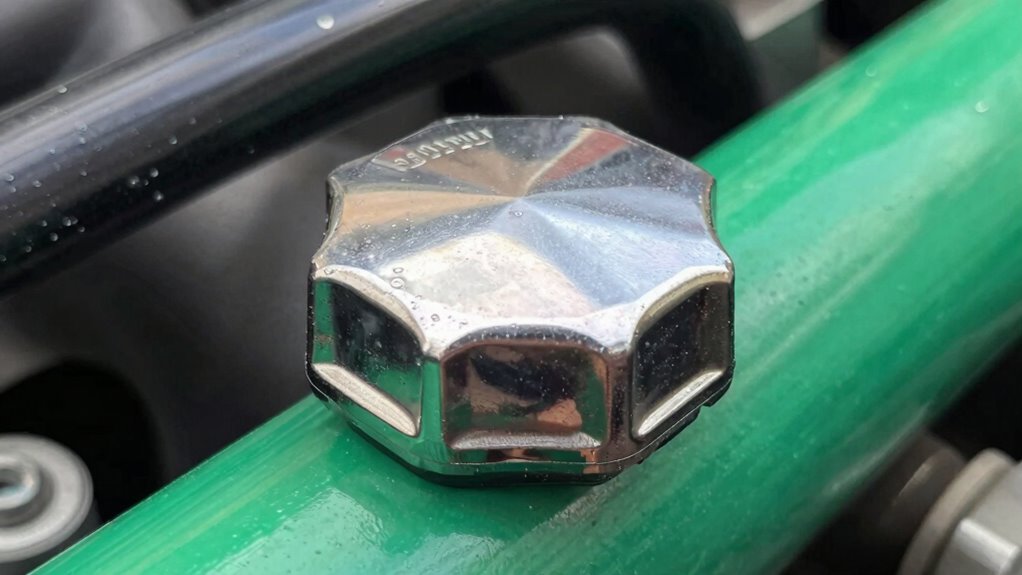
Higher-pressure caps help keep your engine cooler by raising the boiling point of the coolant, which allows it to absorb and transfer more heat without vaporizing. When the system is pressurized, water and coolant can operate at higher temperatures safely. This increased boiling point prevents the coolant from turning into vapor under hot conditions, enhancing heat transfer efficiency. Cooler coolant means your engine runs at a more ideal temperature, reducing the risk of overheating. It also minimizes the formation of vapor bubbles that can cause cavitation and hot spots. By maintaining higher pressures, your cooling system stays more stable and effective, especially during demanding driving or hot weather. Additionally, coolant properties are crucial in understanding how pressure impacts their ability to transfer heat. Ultimately, higher-pressure caps help your engine stay cooler and perform more reliably.
How Does Altitude Affect Cooling System Pressure and Boiling Point?

At higher altitudes, the atmospheric pressure drops, which means water boils at lower temperatures. This affects your cooling system because the reduced pressure lowers the coolant’s boiling point, risking overheating. Understanding this relationship helps you adjust your system to maintain proper engine performance. Additionally, natural light and wellness touches can improve your workspace efficiency, ensuring you monitor these adjustments effectively.
Reduced Atmospheric Pressure
As you ascend to higher altitudes, the atmospheric pressure drops, directly impacting your vehicle’s cooling system. Lower air pressure means the boiling point of coolant decreases because there’s less external pressure holding vapor in check. This makes it easier for coolant to boil at lower temperatures, risking overheating even if your system is properly pressurized at sea level. Your radiator cap’s pressure rating becomes less effective because the reduced atmospheric pressure offsets its ability to elevate the coolant’s boiling point. As a result, you might notice engine overheating or loss of coolant efficiency at high altitudes. To compensate, some vehicles require caps with adjusted pressure ratings, or additional cooling measures to prevent boiling and maintain ideal engine temperature. Understanding pressure regulation is crucial for maintaining optimal engine performance in varying altitudes.
Lower Boiling Point
When you drive to higher altitudes, the drop in atmospheric pressure directly lowers your cooling system’s boiling point. This means coolant can vaporize at lower temperatures, risking overheating. To visualize this, consider the following:
| Altitude | Atmospheric Pressure | Boiling Point of Water |
|---|---|---|
| Sea level | 14.7 psi | 212°F |
| 5,000 ft | 12 psi | ~206°F |
| 10,000 ft | 10 psi | ~200°F |
| 15,000 ft | 8 psi | ~194°F |
| 20,000 ft | 6 psi | ~188°F |
Lower pressure reduces the boiling point, making your radiator cap’s pressure regulation even more critical to prevent overheating at high elevations. Additionally, pressure caps are essential for maintaining the correct pressure and ensuring coolant stays within the system.
Signs Your Radiator Cap Is Failing and Needs Replacement
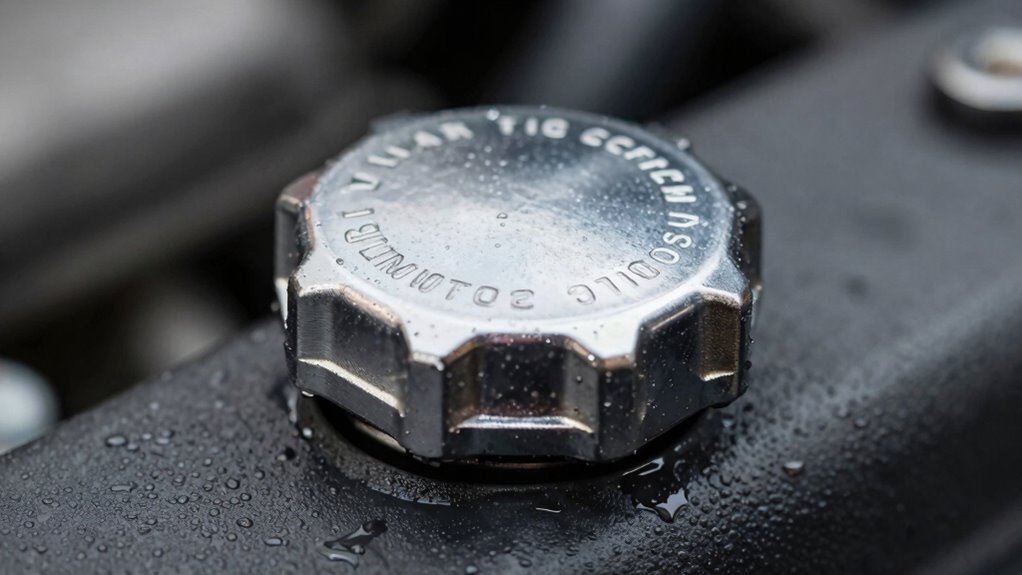
A failing radiator cap can lead to a range of issues that compromise your engine’s cooling system. If you notice coolant leaks or frequent overheating, it’s a sign the cap isn’t maintaining proper pressure. You might also experience coolant loss without visible leaks, indicating the seal isn’t holding. A sudden drop in system pressure can cause the engine to run hotter. Other signs include:
- Coolant bubbling or overflowing from the reservoir
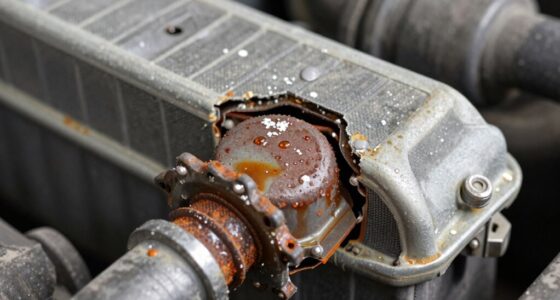
- Visible cracks or corrosion on the cap
- Difficulty in removing or tightening the cap
- Unusual hissing sounds when the engine is hot
If you notice these warning signs, it’s time to replace your radiator cap. Ignoring them can lead to overheating, engine damage, or costly repairs. Regular inspection keeps your cooling system running smoothly and proper pressure is essential for optimal performance.
How to Choose the Right Radiator Cap for Your Vehicle
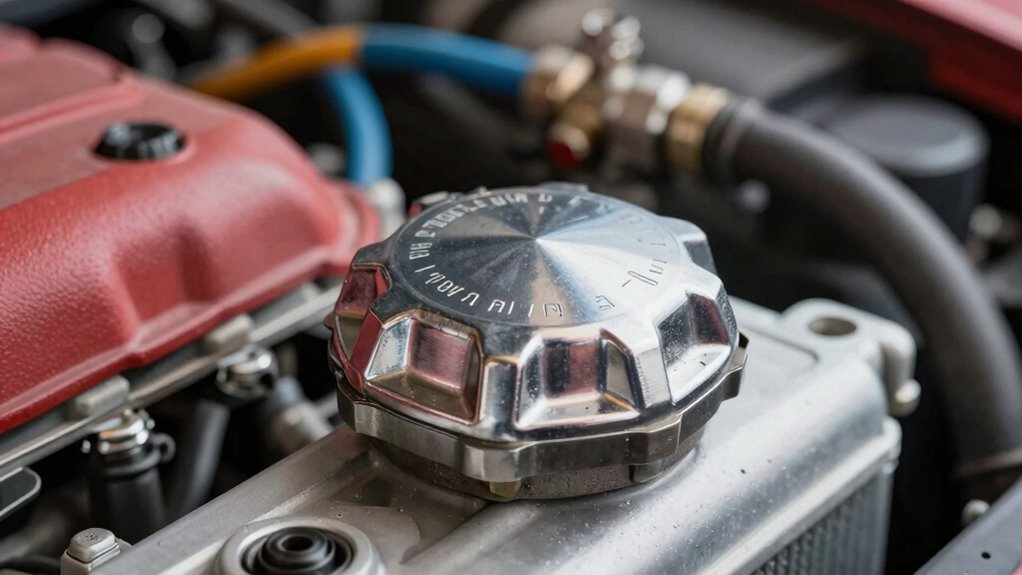
Choosing the right radiator cap for your vehicle starts with understanding your engine’s specific cooling system requirements. Check your owner’s manual or existing cap for the recommended pressure rating, usually between 13-16 psi. Select a cap with the correct pressure to prevent overheating or system failure. Consider cap material and fit; a proper seal prevents leaks and maintains pressure. High-performance engines may need caps rated above 16 psi. Use the following guide to match your needs:
| Engine Type | Recommended Pressure | Special Features |
|---|---|---|
| Standard Gasoline | 13-16 psi | Reliable, OEM standards |
| High-Performance | 19-25 psi | Higher boiling points |
| Heavy-Duty | 20-32 psi | Extra durability, safety |
Always verify compatibility before installation. Understanding pressure ratings is essential for ensuring your cooling system functions properly and safely.
What Can Go Wrong With a Faulty or Wrong Radiator Cap?
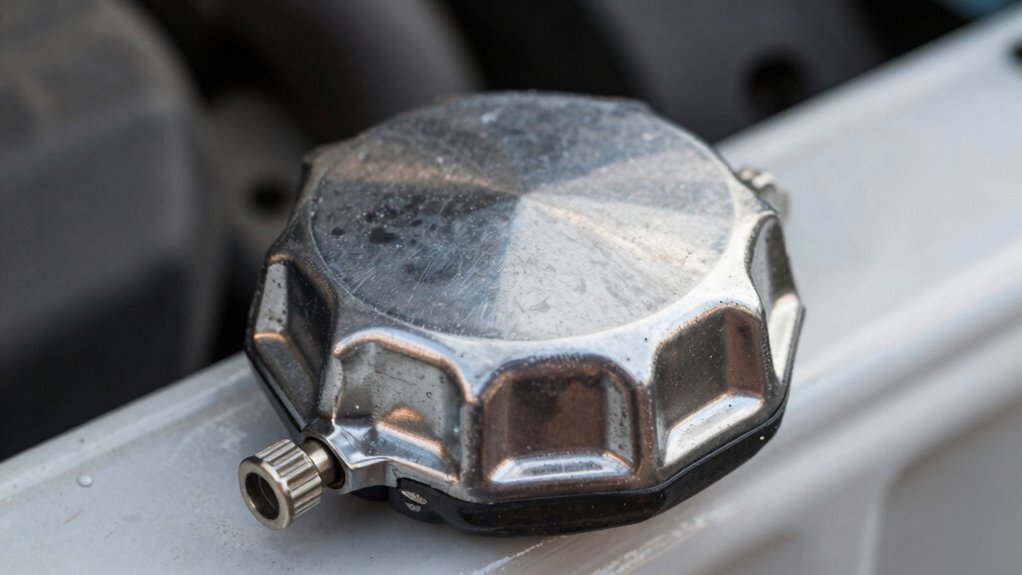
A faulty or incorrect radiator cap can cause your cooling system to lose pressure, making your engine prone to overheating. Without proper pressure control, coolant can boil over, risking engine damage and creating dangerous hot spots. If the cap doesn’t seal correctly, it increases the likelihood of coolant loss and overheating issues. Additionally, a malfunctioning cap can lead to pressure imbalances that reduce the efficiency of the cooling system.
Loss of Pressure Control
Have you ever wondered what happens when a radiator cap fails or isn’t the right fit? Loss of pressure control can cause serious issues. When the cap doesn’t hold the correct pressure, coolant can boil over at lower temperatures, leading to engine overheating. It also risks air entering the system, which hampers heat transfer. You might notice:
- Coolant boiling at lower temperatures
- Increased engine temperature fluctuations
- Loss of coolant through overflow
- Reduced cooling system efficiency
- Sudden pressure surges when removing the cap
Without proper pressure regulation, your engine’s cooling process becomes unreliable. The system can’t reach or maintain ideal temperatures, risking damage and costly repairs. Ensuring your radiator cap is correct and functioning maintains pressure, safeguards your engine, and keeps everything running smoothly. Contrast ratio plays a key role in how well the cooling system performs under different conditions.
Overheating Risks Increase
When a radiator cap fails or isn’t the correct type, your engine becomes vulnerable to overheating. A faulty cap can’t maintain proper pressure, causing coolant to boil at lower temperatures. This leads to vapor bubbles forming earlier, reducing heat transfer efficiency. Without the right pressure, the coolant’s boiling point drops, increasing the risk of hot spots and engine damage. If the cap releases pressure prematurely or fails to hold pressure, coolant can escape or vaporize sooner. Removing or installing the wrong cap can also disrupt system balance, causing rapid temperature spikes. Over time, these issues may result in overheating, warped components, or head gasket failure. Ensuring your radiator cap is correct and in good condition is crucial to prevent these overheating risks and keep your engine running safely. Supporting caregivers’ emotional well-being
Coolant Boil-Over Potential
A faulty or incorrect radiator cap can substantially increase the risk of coolant boil-over by preventing proper pressure regulation. Without the right pressure, coolant can reach its boiling point prematurely, risking sudden overflow or vapor formation. This can lead to engine overheating, loss of coolant, and potential damage. Glycolic acid is known for its ability to improve skin texture and clarity, which underscores the importance of maintaining proper engine conditions to avoid overheating issues that could analogously affect sensitive systems. Some risks include: – Coolant boiling over at lower temperatures – Sudden loss of coolant from overflow – Increased engine temperature fluctuations – Vapor pockets forming in the cooling system – Damage to hoses and radiator components These issues not only compromise engine efficiency but also pose safety hazards from hot coolant spills. Ensuring your radiator cap is rated correctly and functioning properly keeps the system sealed and maintains ideal pressure, preventing boil-over and safeguarding your engine.
How Proper Maintenance Extends Your Cooling System’s Life
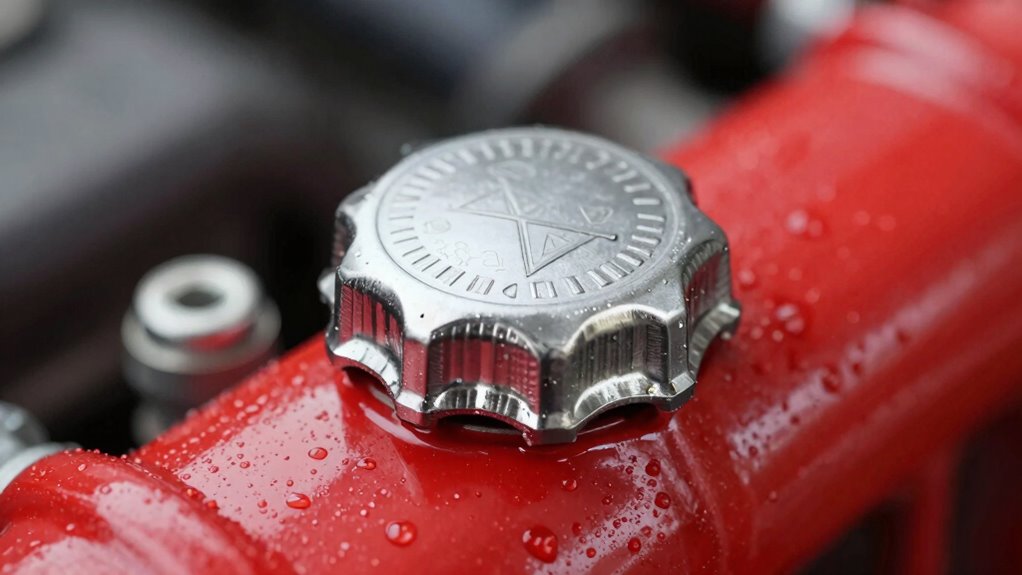
Regularly inspecting and maintaining your cooling system guarantees it operates efficiently and prevents costly failures. When you keep an eye on coolant levels, check for leaks, and replace worn caps, you protect your engine from overheating and damage. Proper maintenance ensures the pressure cap functions correctly, maintaining optimal pressure and boiling point. Additionally, using quality replacement parts can further enhance the longevity of your cooling system.
Frequently Asked Questions
Can a Radiator Cap Be Reused After Removal?
Yes, you can reuse a radiator cap after removal if it’s still in good condition. Inspect it for cracks, corrosion, or a worn seal. Make sure the spring is functioning properly and that the gasket seals tightly. If the cap shows any signs of damage or wear, it’s best to replace it to maintain proper pressure and prevent overheating. Regularly check your cap to guarantee peak engine performance and safety.
How Do I Test if My Radiator Cap Is Functioning Properly?
Imagine your radiator cap as a vigilant gatekeeper, holding back a flood of heat and pressure. To test it, fill a container with water, screw on the cap, and bring it to a boil. If it releases steam at its rated pressure, it’s working. If not, or if it leaks, it’s time for a replacement. A properly functioning cap keeps your engine cool and your journey smooth.
What Is the Typical Lifespan of a Radiator Cap?
You can expect your radiator cap to last around 5 to 7 years, but it varies based on driving conditions and maintenance. Regularly inspect for corrosion, cracks, or leaks, and replace it if you notice any issues. Over time, the spring weakens, reducing pressure control. Replacing the cap when it shows signs of wear guarantees your cooling system stays sealed and functions properly, preventing overheating and engine damage.
Are High-Pressure Caps Suitable for All Engine Types?
High-pressure caps aren’t suitable for all engine types because they’re designed for specific cooling systems. Only engines built to handle higher pressures, like performance or heavy-duty models, can safely use caps rated above 16 psi. Using a high-pressure cap on a standard engine risks damage or failure. Always check your vehicle’s specifications or consult a mechanic before upgrading to guarantee safety and maximum performance.
How Does a Radiator Cap Prevent Coolant From Boiling Over?
You prevent coolant from boiling over by using a radiator cap that maintains the right pressure in your cooling system. When the coolant heats up and expands, the cap’s pressure-release valve opens at a set psi, allowing excess coolant to flow into the overflow tank. This keeps the system sealed, raises the coolant’s boiling point, and prevents it from vaporizing and spilling over, especially during high engine temperatures.
Conclusion
Understanding how pressure caps work helps you see their vital role in engine cooling. Think of the cap as a safety valve, maintaining the right pressure to prevent boiling over. When you choose the right cap and keep it in good condition, you’re effectively controlling the boiling point, much like a thermostat. This simple, inexpensive part can save you from costly repairs, proving that sometimes, the smallest parts make the biggest difference.
Fall Picks
fall essentials
As an affiliate, we earn on qualifying purchases.