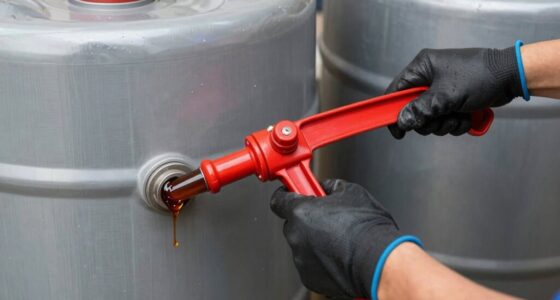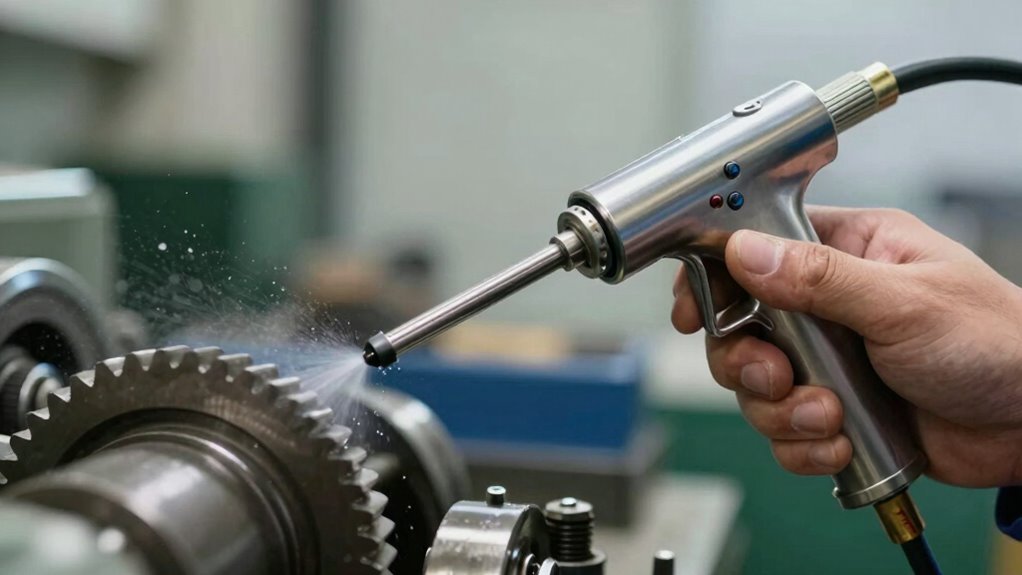
To prevent over-greasing with pneumatic grease guns, use metering devices or automatic shut-off tools that give you precise control over lubricant amounts. Regularly calibrate your equipment and follow a consistent lubrication schedule. Training on proper application techniques helps make sure you avoid excess. If you still experience over-greasing, you can take quick corrective steps, but learning about reliable tools and best practices will keep your equipment healthy and safe over time.
Key Takeaways
- Use calibrated pneumatic grease guns with automatic shut-off features to control lubricant volume precisely.
- Regularly check and maintain grease gun pressure settings to prevent over-application.
- Implement metering valves or digital grease meters to regulate flow and ensure consistent lubrication.
- Follow a strict, scheduled lubrication plan based on equipment specifications to avoid guesswork.
- Train operators on proper greasing techniques and utilize visual indicators to detect over-greasing early.
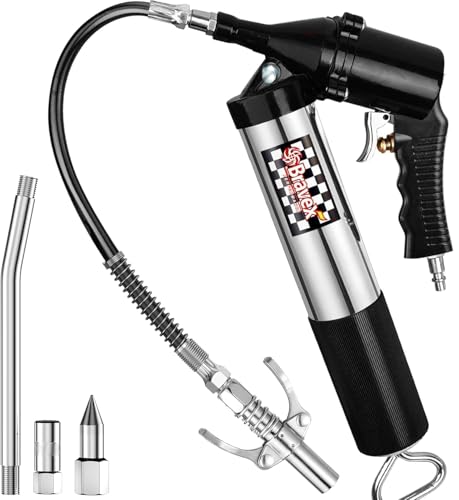
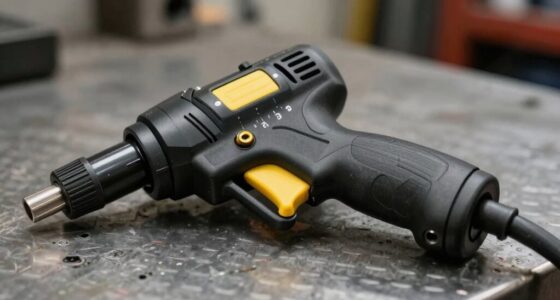
Pneumatic Grease Gun Automatic W/Quick Release Coupler, Continuous Cycle Heavy Duty 6000 PSI Air Compressor Grease Gun with Flex Hose 18 Inch
Continuous cycle provides easier operation for user. 2-Way Grease Loading:Standard 14 oz. Cartridge;Bulk Suction Fill
As an affiliate, we earn on qualifying purchases.
As an affiliate, we earn on qualifying purchases.
Why Over-Greasing Happens and How to Prevent It
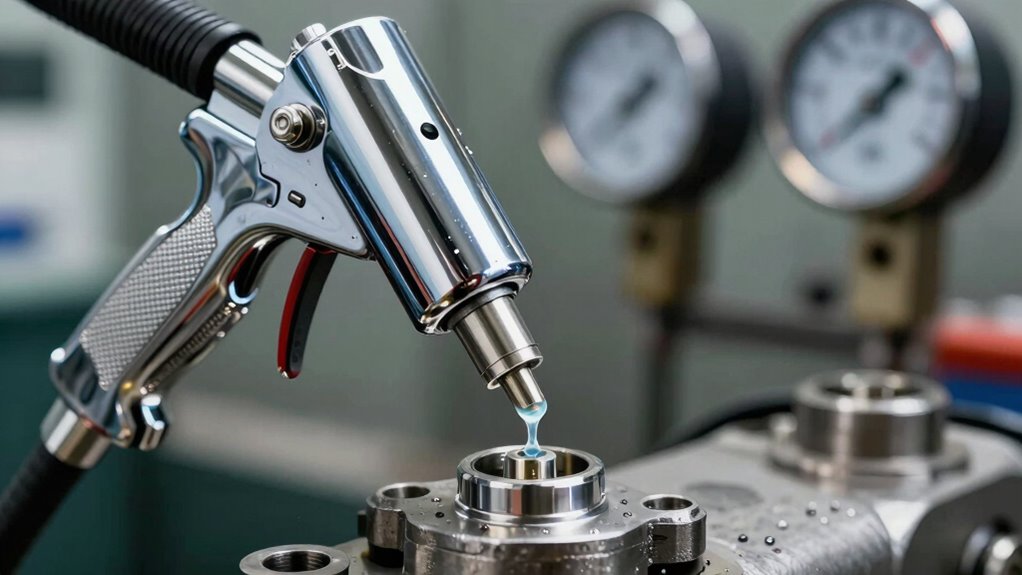
Over-greasing occurs when too much lubricant is forced into a fitting, often because of misjudging the amount needed or using a malfunctioning grease gun. To prevent this, you should focus on proper grease selection, choosing the right type and consistency for your equipment. Using the wrong grease can lead to over-application and damage. Additionally, operator training plays a crucial role; ensure you understand how much grease to apply and how to operate your pneumatic grease gun correctly. Regularly check equipment and grease gun settings to avoid over-application. Ensuring correct equipment maintenance and calibration can help maintain optimal grease flow and prevent over-greasing. Proper understanding of grease flow rates and the equipment’s requirements helps you apply the correct amount of lubricant, reducing the risk of over-greasing and prolonging your equipment’s lifespan. Being aware of lubrication best practices can further assist in preventing excess application and ensuring efficient operation. Monitoring grease gun performance regularly can also identify issues before they lead to over-lubrication. Additionally, maintaining awareness of pneumatic system pressure can influence the consistency and flow rate of grease, helping to prevent over-greasing.

Digital Gas Flow Meter, Nitrogen Flow Meter, Portable Gas Mass Air Flow Meter, Compressed Air and Oxygen Flow Rate Meter Tester, Range 0-20L/min (MF5706)
MEMS-based gas flow meter boasts a high sensitivity, allowing a very small start flow, used for instantaneous flow…
As an affiliate, we earn on qualifying purchases.
As an affiliate, we earn on qualifying purchases.
What Are the Risks of Over-Greasing Your Equipment?
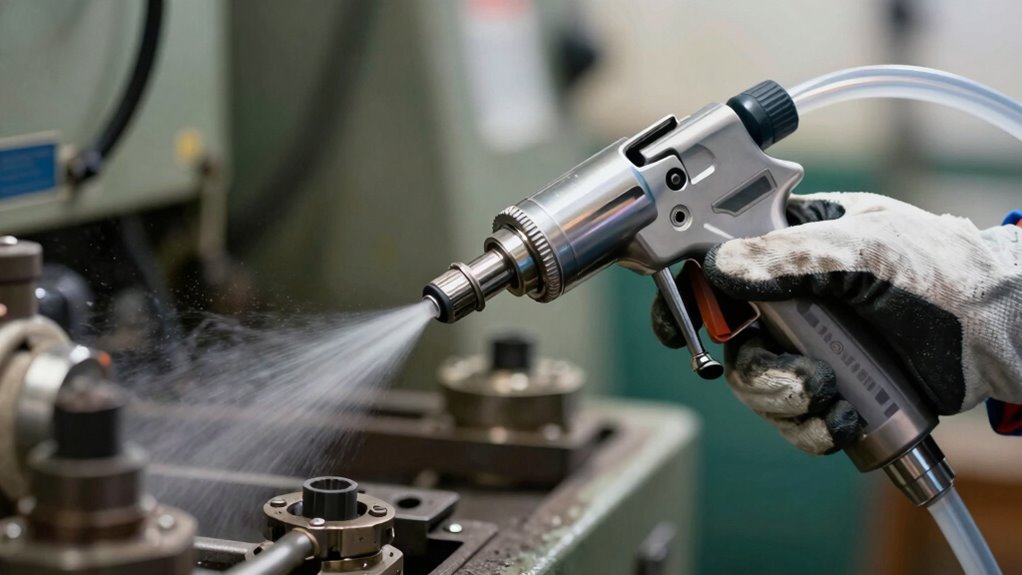
Over-greasing your equipment can lead to serious problems. It can cause damage to parts, increase your maintenance costs, and shorten the lifespan of your machinery. Understanding these risks helps you avoid costly mistakes and keep your equipment running smoothly. Additionally, applying excess lubricant can create unintended consequences, such as attracting dirt and debris that may impair performance. Properly managing lubrication also involves understanding water damage and rug cleaning techniques to prevent moisture buildup that could affect machinery components. Being aware of early warning signs for mechanical failure can help you identify issues before they become costly repairs. Incorporating regular lubrication inspection protocols can further prevent over-greasing and ensure optimal functioning of your equipment. Recognizing correct lubrication practices helps maintain equipment health and prolongs its service life.
Equipment Damage Risks
While adding too much grease might seem harmless, it can actually cause significant damage to your equipment. Over-greasing can lead to seals blowing out, causing lubricant leaks and contamination. Excess grease can also cause overheating by trapping heat and increasing friction. Poor lubrication techniques may result in uneven distribution, leading to premature wear. Additionally, understanding free floating systems can help you better manage lubrication to prevent these problems. Proper lubrication techniques, including correct application methods, can further reduce the risks associated with over-greasing. Implementing proper maintenance procedures ensures that lubrication is applied accurately, minimizing potential damage. Recognizing the importance of lubrication control can greatly enhance your maintenance routine and prevent over-greasing issues. Here’s what can happen:
| Damage Type | Consequences |
|---|---|
| Seal Damage | Leaks, contamination, costly repairs |
| Increased Heat | Overheating, reduced efficiency |
| Bearing Wear | Premature failure |
| Contamination | Damage to internal components |
| Energy Loss | Reduced performance and higher operational costs |
Increased Maintenance Costs
Excessive lubrication not only risks damaging your equipment but also leads to higher maintenance costs over time. When you over-grease, you can cause grease compatibility issues, which may result in hardened deposits or chemical reactions that impair component performance. Frequent over-lubrication increases the need for repairs and part replacements, as excessive grease can clog seals or attract dirt and debris. It also disrupts proper lubrication frequency, making maintenance more complicated and costly. You might find yourself spending more on additional grease, labor, and downtime to fix problems caused by over-greasing. Additionally, understanding prairie scenery and local industry practices can help inform better maintenance routines. By ensuring correct grease compatibility and adhering to ideal lubrication schedules, you reduce unnecessary maintenance expenses and keep your equipment running smoothly longer. Implementing holistic SEO strategies that include proper maintenance practices can also help in optimizing operational efficiency and minimizing costs. Proper lubrication techniques are essential to prevent over-greasing and extend the lifespan of your equipment. Being aware of industry standards can further guide you toward best practices in lubrication and maintenance protocols.
Reduced Machinery Lifespan
When you apply too much grease to your machinery, you increase the risk of damaging essential components and shortening their operational lifespan. Over-greasing can cause seals to leak, bearings to wear prematurely, and dirt to become trapped, leading to increased friction and corrosion. Ignoring proper lubrication schedules and choosing the wrong grease types can exacerbate these issues. Additionally, free crypto opportunities can provide resources to invest in better maintenance tools or training. To prevent reduced machinery lifespan, consider these points: 1. Follow recommended lubrication schedules to avoid excess grease. 2. Use the correct grease type suited for your equipment. 3. Avoid over-application during routine maintenance. 4. Recognize signs of over-greasing to adjust your approach promptly. Proper lubrication ensures longevity, efficiency, and fewer costly repairs, and understanding proper lubrication techniques is essential to achieving these goals. Regularly inspecting equipment can help identify early signs of Over-greasing, preventing more significant damage and ensuring optimal performance through AI-driven maintenance insights. Additionally, implementing effective lubrication practices can significantly extend machinery life and reduce operational costs.

Bravex Heavy Duty Professional Pistol Grip Grease Gun 6000 PSI – 18 inch Flex Hose …
Bravex pistol grip grease gun, is highly recognized in lubrication equipment market, the choice of millions of grease…
As an affiliate, we earn on qualifying purchases.
As an affiliate, we earn on qualifying purchases.
How Can You Tell if You’re Over-Greasing?
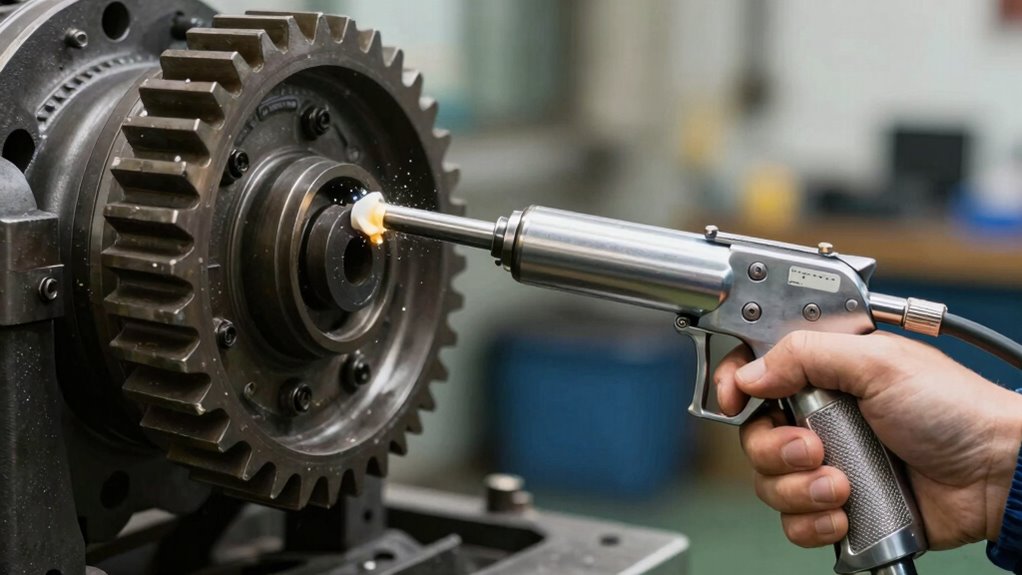
If you notice grease leaking from seals or accumulating around fittings, it’s a clear sign you’re over-greasing. Excess grease pushes past seals, leading to grease leakage and potential damage. Pay attention to lubrication indicators such as uneven application or excess buildup. These signs suggest you’re applying more grease than necessary. To help spot over-greasing, consider this quick reference:
| Sign | Cause | Effect |
|---|---|---|
| Grease leakage | Over-application | Seal damage, contamination |
| Excess buildup | Too frequent lubrication | Reduced machine efficiency |
| Visible residue | Improper lubrication | Increased wear and tear |
Monitoring these indicators keeps your equipment running smoothly and prevents costly repairs. Regularly checking for proper lubrication can help prevent over-greasing and extend the lifespan of your machinery. Being aware of lubrication best practices ensures optimal performance and reduces the risk of damage caused by over-greasing. Additionally, understanding the correct amount of grease to apply is essential for maintaining equipment longevity and efficiency.
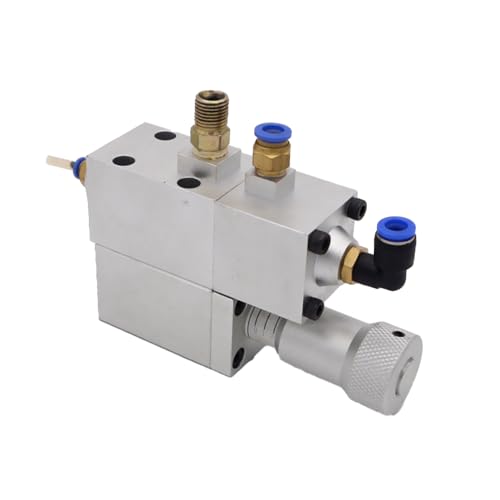
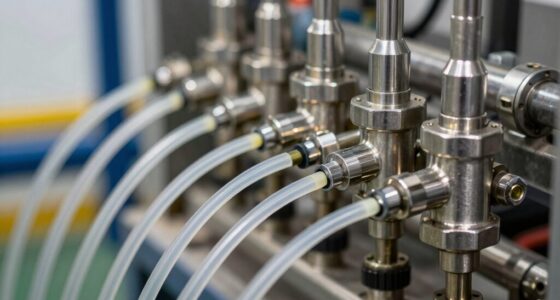
Precision Pneumatic Grease Metering Valve, Grease Gun Control Valve for Industrial Lubrication Systems & Machinery Maintenance (0.1-5G)
Accurate, stable, and easy to operate, with backflow, no stringing or oil leakage
As an affiliate, we earn on qualifying purchases.
As an affiliate, we earn on qualifying purchases.
Smart Tools and Devices to Stop Over-Greasing
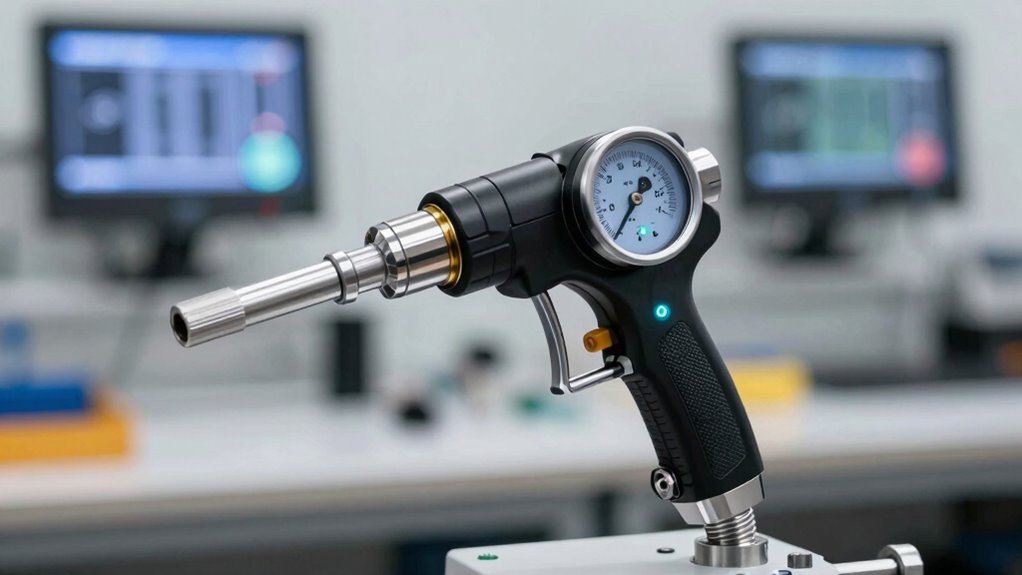
To prevent over-greasing from damaging your equipment, smart tools and devices now offer precise control and real-time feedback. These innovations enhance lubrication safety and guarantee grease compatibility, reducing guesswork. Here are four options to contemplate:
- Digital grease meters that monitor the amount of grease dispensed, stopping automatically when the correct amount is reached.
- Wireless sensors that track lubrication pressure and alert you to potential over-greasing issues.
- Automated grease guns with preset volume controls, ensuring consistent application and preventing excess.
- Compatibility check devices that verify if the selected grease suits your equipment, minimizing risks related to improper lubrication.
These tools help you maintain ideal lubrication safety, avoid over-greasing, and extend equipment life without guesswork.
How to Set Up Your Greasing Routine Accurately
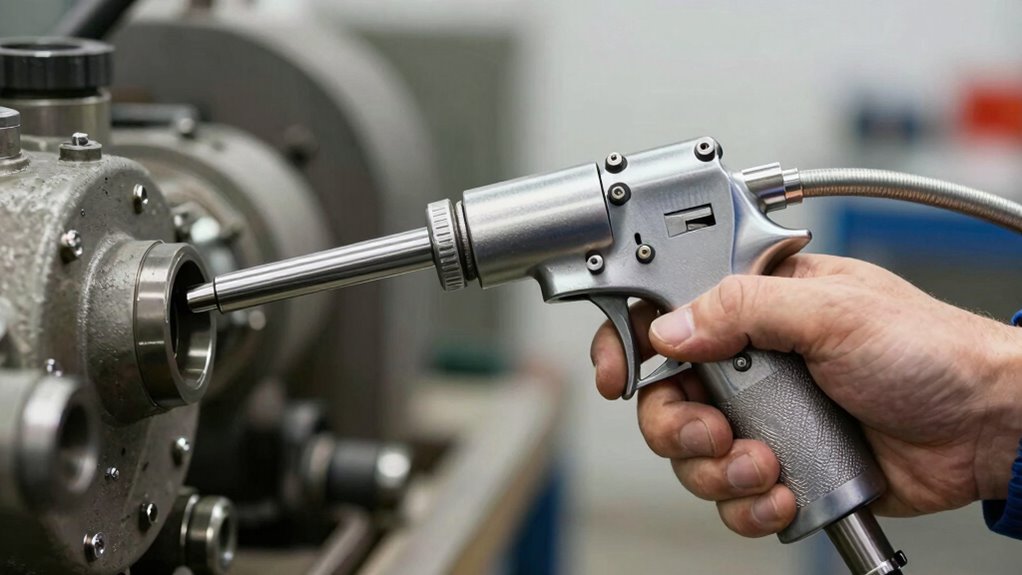
Establishing an accurate greasing routine begins with understanding your equipment’s specific lubrication requirements and setting clear schedules. To do this effectively, use calibration techniques to determine the precise amount of grease needed for each component. Regularly check and calibrate your pneumatic grease gun to ensure it dispenses the correct volume, avoiding over- or under-lubrication. Develop a routine scheduling plan based on manufacturer recommendations and operational demands. Consistently adhering to this schedule helps prevent guesswork and maintains ideal equipment performance. Keep detailed records of each lubrication event, including calibration adjustments and timing, to refine your routine over time. Accurate setup and disciplined routine scheduling are essential to stopping over-greasing and extending the lifespan of your machinery.
Using Metering Devices and Auto Shut-Offs to Prevent Over-Greasing
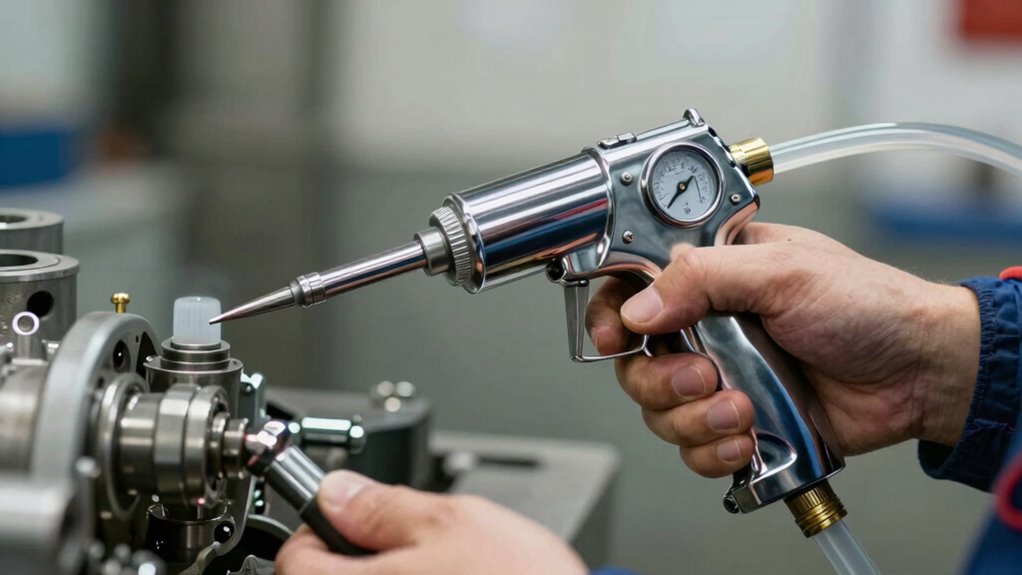
Metering devices and auto shut-off features play a crucial role in preventing over-greasing by controlling the amount of lubricant delivered during each cycle. They guarantee you follow proper lubrication techniques and adhere to your greasing schedules without guesswork. To maximize effectiveness:
- Use metering valves to regulate the lubricant flow precisely.
- Select grease guns equipped with auto shut-off to stop dispensing once the correct amount is reached.
- Regularly calibrate your metering devices for consistency.
- Combine these tools with clear lubrication schedules to avoid unnecessary greasing.
Best Practices for Training and Consistent Greasing
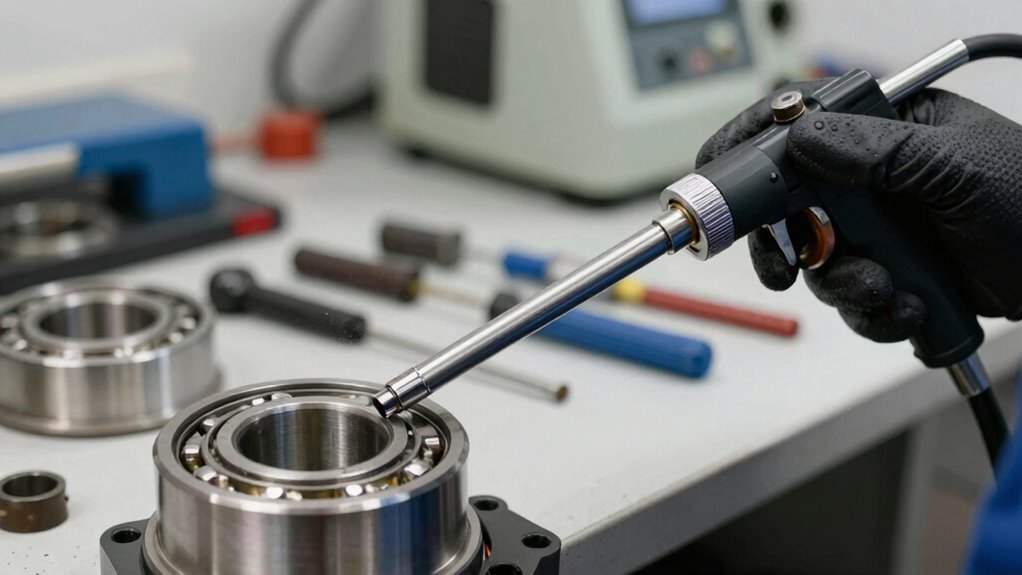
Proper training guarantees everyone understands how to use grease guns effectively and consistently. To achieve this, prioritize regular training sessions focused on proper greasing techniques and the importance of training consistency. Consistent practices reduce errors and over-greasing. Use visual aids and hands-on demonstrations to reinforce correct methods.
| Tip | Benefit |
|---|---|
| Regular refresher courses | Keeps skills sharp and techniques consistent |
| Clear instructions | Ensures everyone follows the same procedures |
| Use of metering devices | Prevents over-greasing and maintains consistency |
| Supervised practice | Builds confidence and reinforces training |
What to Do If You Over-Greased Your Machinery
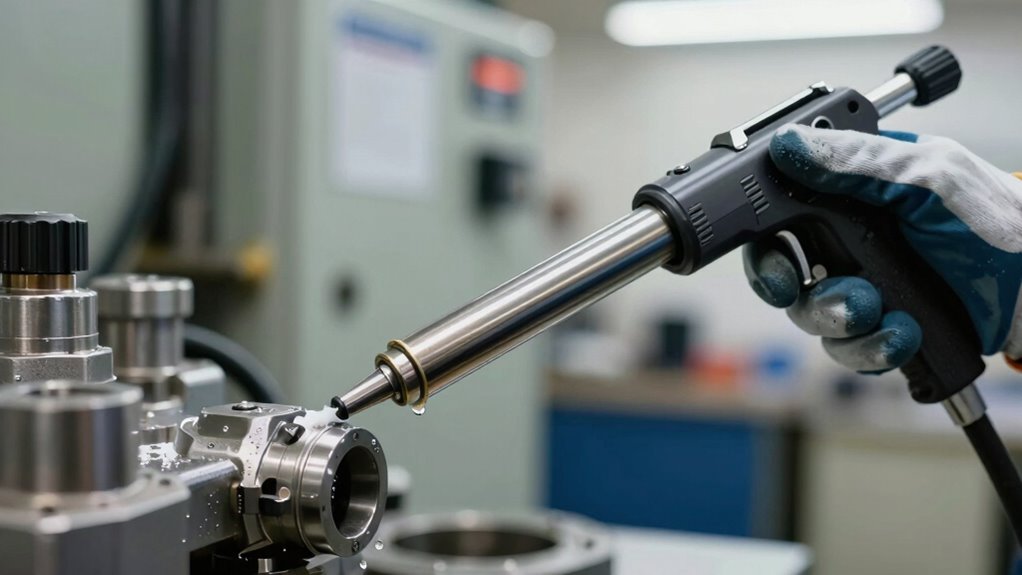
If you realize you’ve over-greased your machinery, the first step is to stop further greasing immediately to prevent additional damage or leaks. Next, assess the area for excess lubricant and clean it carefully to avoid contamination. Then, consult your lubrication schedules to determine if the over-greasing has affected other parts. If needed, use a syringe or pump to remove excess grease from accessible fittings. Finally, review your technician training to reinforce proper greasing techniques and prevent recurrence. Regularly updating your lubrication schedules and ensuring proper training helps avoid over-greasing in the future. Remember, over-greasing can cause seal damage and leaks, so acting swiftly and following these steps minimizes risks and maintains equipment health.
Frequently Asked Questions
Can Over-Greasing Cause Permanent Equipment Damage?
Yes, over-greasing can cause permanent equipment damage. When you add too much grease, it can push out seals or cause excessive heat due to high grease viscosity, leading to wear and tear. Ignoring proper lubrication intervals worsens this risk, as parts don’t get the right amount of grease at the right time. Always monitor grease levels and follow recommended lubrication intervals to prevent lasting damage.
What Types of Grease Are Best for Pneumatic Guns?
You should choose high-quality, multi-purpose grease that’s compatible with your equipment. Look for grease with the right viscosity considerations—too thick can strain your pneumatic gun, while too thin may not provide sufficient lubrication. Always check grease compatibility with your machinery to avoid damage. Using the proper grease guarantees smooth operation, reduces wear, and prevents over-greasing issues, making maintenance safer and more effective.
How Often Should Equipment Be Checked for Over-Greasing?
You should check your equipment for over-greasing during regular inspection frequency, ideally every few weeks or as recommended by the manufacturer. Incorporate this into your maintenance scheduling to prevent over-greasing issues. Consistent inspections help you catch excess grease early, reducing waste and equipment damage. Make it a routine part of your maintenance process so you can maintain peak lubrication without guesswork, ensuring machinery stays in top condition.
Are There Specific Indicators for Over-Greasing in Machinery?
Yes, there are specific indicators for over-greasing your machinery. You should look for visual indicators like excessive grease buildup around seals or joints, which suggests too much grease has been applied. Lubrication leaks are also common signs, as over-greasing can cause grease to escape or seep out. Keep an eye on these indicators regularly to prevent damage, and adjust your greasing schedule accordingly to maintain ideal equipment performance.
How Does Temperature Affect Over-Greasing Risks?
Did you know that temperature fluctuations can increase over-greasing risks by 30%? When temperatures rise or fall, grease viscosity changes, making it harder to control lubrication. If grease becomes too thin in heat, it may flow excessively, leading to over-greasing. Conversely, cold temperatures thicken grease, risking under-lubrication. Always monitor temperature conditions and adjust your greasing schedule accordingly to prevent over-greasing caused by these fluctuations.
Conclusion
By understanding the risks and using smart tools, you can prevent over-greasing before it happens. Remember, accuracy isn’t just a goal—it’s your safeguard against costly damage. With a consistent routine and the right devices, you hold the power to keep your equipment running smoothly. Don’t let guesswork be the thief of your machinery’s lifespan—take control today, because in greasing, precision isn’t just a choice; it’s your best defense.