
If your engine oil’s viscosity drops, it could be due to shear, fuel contamination, or using the wrong oil. Shear causes polymer molecules to break down under mechanical stress, leading to temporary thinning. Fuel dilution mixes gasoline or solvents, darkening the oil and weakening it permanently. Using incompatible or low-quality oil results in immediate viscosity loss. To tell which, check oil color, odor, and perform viscosity tests—continuing will reveal detailed ways to diagnose and address the issue.
Key Takeaways
- Fuel dilution darkens oil and causes a sudden drop in viscosity, often with a gasoline smell.
- Shear-induced viscosity loss is temporary and improves after engine rest, indicating polymer breakdown.
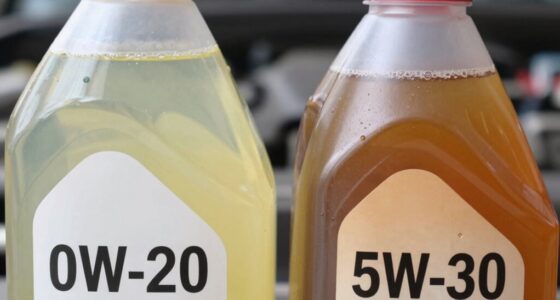
- Using incompatible or wrong oil leads to immediate viscosity issues and may cause chemical contamination.
- Oil analysis revealing low viscosity with high contamination levels suggests chemical or fuel-related problems.
- Mechanical shear typically results in gradual viscosity decline, while fuel or wrong oil causes more abrupt changes.

MOLUCKFU Engine Oil Comparator Tool and Transmission Oil Viscosity Tester Acrylic Stand for Accurate Car Maintenance and Quality Testing
- Versatile Oil Testing: Tests engine and transmission oil viscosity
- Accurate Oil Comparison: Provides precise quality assessment
- Easy to Use: Simple insertion for quick testing
As an affiliate, we earn on qualifying purchases.
As an affiliate, we earn on qualifying purchases.
What Causes Viscosity Loss in Engine Oil? Shear, Fuel, and Oil Mismatch Explained
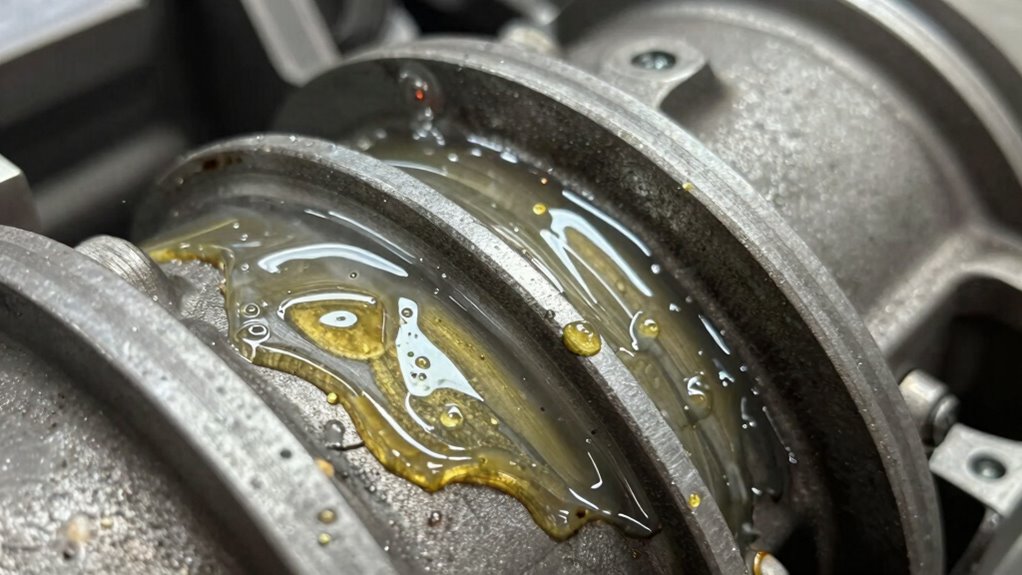
Viscosity loss in engine oil occurs primarily due to three factors: shear, fuel contamination, and oil mismatch. Shear happens when mechanical forces in the engine deform the oil’s polymers, especially in multi-grade oils with viscosity index improvers. High shear stress breaks down these polymers, causing temporary or permanent viscosity reductions. Fuel contamination occurs when diesel, solvents, or other chemicals mix with the oil, thinning it suddenly and reducing its protective film. Oil mismatch, such as adding a lower viscosity oil or incompatible lubricant, instantly dilutes the oil’s viscosity. These issues can compromise lubrication, leading to increased wear and engine damage. Recognizing these causes helps you determine the root of viscosity problems and take appropriate action to maintain ideal engine performance. Additionally, using luxury-grade products like high-quality oils and filters can help mitigate some of these issues and extend engine life.

Under My Hood Oil Analysis Kit – Oil Test Kit for Gasoline & Diesel Engines
- Aircraft Use Warning: Not for aircraft engine testing
- Monitor Equipment Health: Detects wear metals and contamination
- Universal Compatibility: Suitable for gasoline and diesel engines
As an affiliate, we earn on qualifying purchases.
As an affiliate, we earn on qualifying purchases.
How Do Mechanical Shear and Heat Break Down Oil Viscosity?
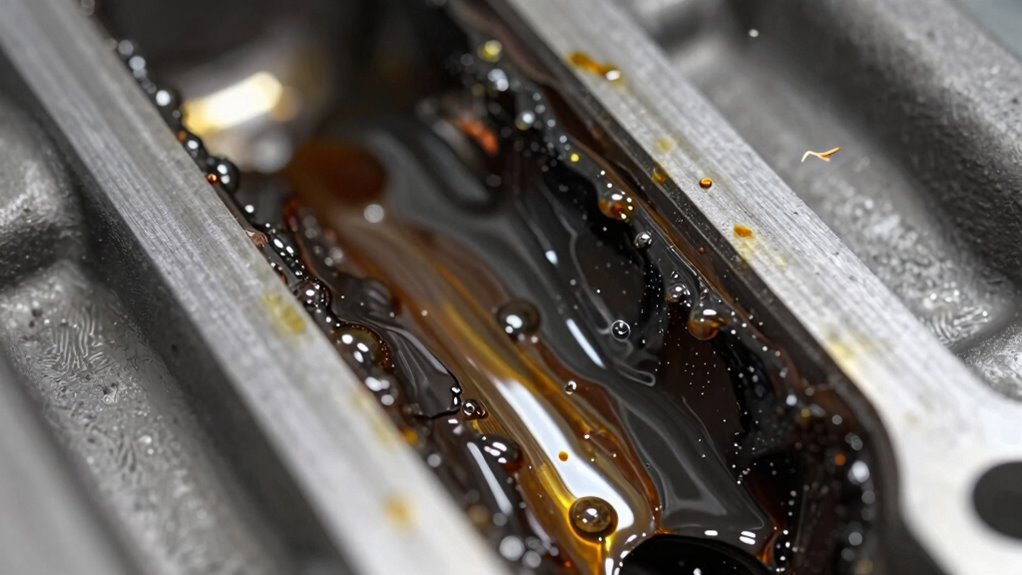
Mechanical shear and heat work together to degrade oil viscosity by breaking down the oil’s molecular structure. When the engine experiences high shear forces, such as in piston rings, valvetrain components, or crankshaft bearings, polymers in multi-grade oils stretch and deform. Over time, this causes permanent damage to viscosity index improvers, reducing their ability to maintain proper viscosity. Heat accelerates this process by weakening the molecular bonds, causing the oil’s molecules to fragment into smaller pieces. High temperatures, especially in hot spots or during severe operation, cause thermal cracking, which further lowers viscosity. As molecules break down, the oil becomes thinner and less capable of forming protective films, increasing engine wear and reducing lubrication efficiency. Molecular breakdown is a key factor in how viscosity loss occurs under these conditions.
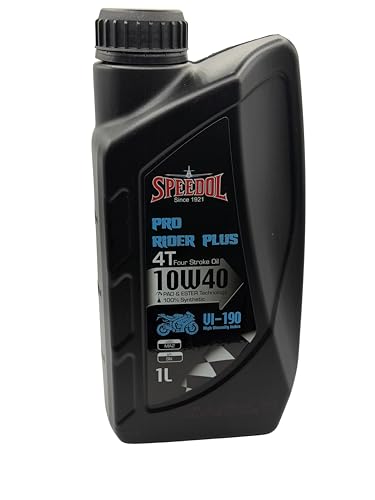
Speedol Pro Rider Plus 4T Four Stroke Engine Oil, 10W40, 100% Synthetic, PAO & Ester Technology, High Viscosity Index, 1L
- Full Synthetic Formula: PAO & Ester technology for protection
- Designed for 4-Stroke Engines: Optimized for sports motorcycles
- High Viscosity Index: VI-190 for temperature stability
As an affiliate, we earn on qualifying purchases.
As an affiliate, we earn on qualifying purchases.
Signs of Fuel Dilution and Oil Contamination : How to Detect Them
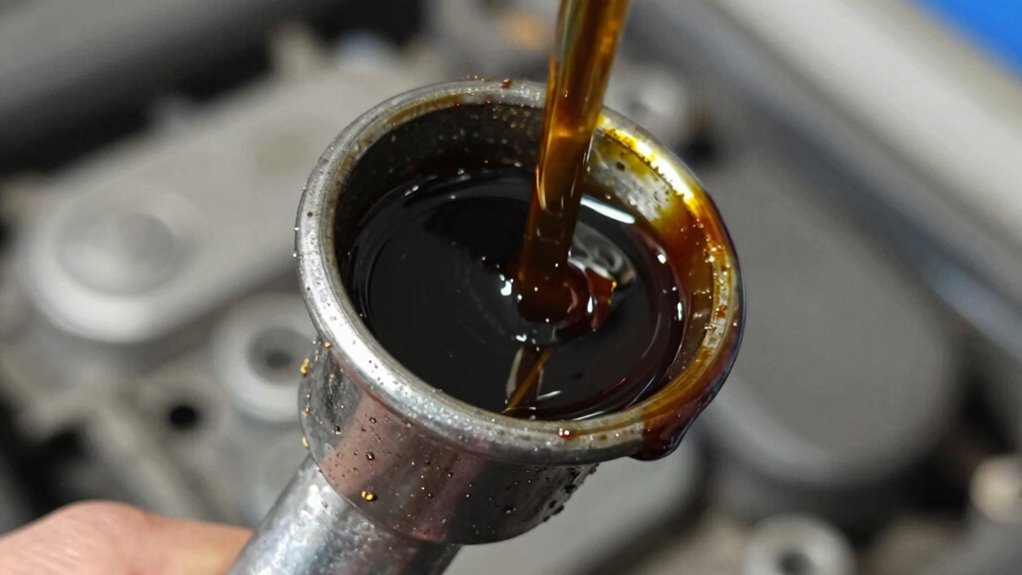
Detecting fuel dilution and oil contamination is essential for maintaining engine health, as these issues can considerably impair lubrication and cause damage. You should look for key signs indicating contamination.
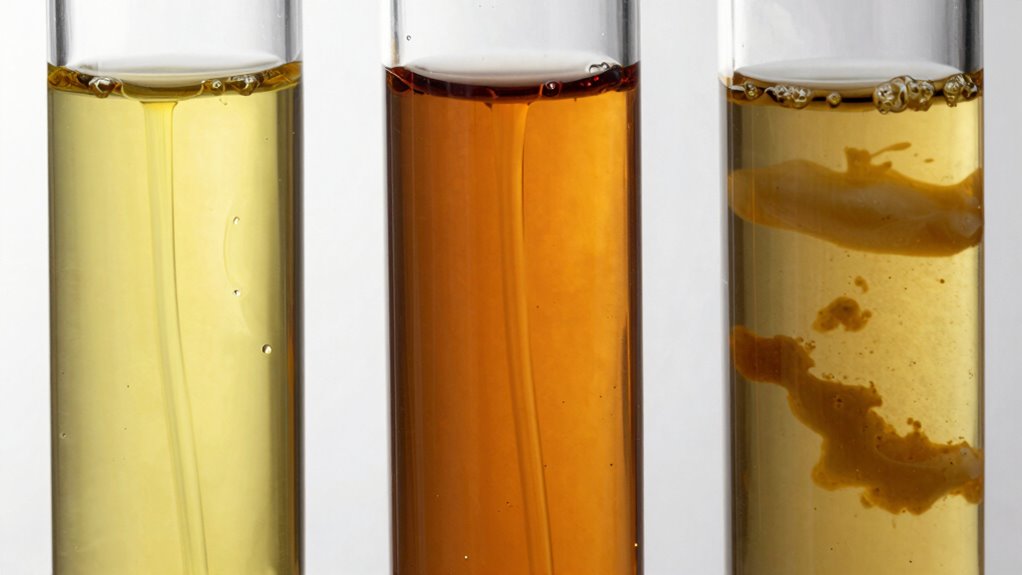
- Unusual Oil Color or Smell: Fuel contamination often darkens oil and gives it a distinct gasoline or solvent odor.
- Lower Oil Viscosity: A sudden drop in viscosity, observed through testing, suggests fuel or solvent dilution.
- Increased Oil Consumption: Higher-than-normal oil usage may point to oil thinning from contamination.
- Engine Performance Issues: Rough running, misfires, or increased wear can result from contaminated oil impairing lubrication.
- Impact of Color Accuracy technology and calibration on oil analysis results can help identify subtle changes in oil quality due to contamination.
Regular oil analysis and visual inspections help catch contamination early, preventing costly engine damage.
Under My Hood Oil Analysis Kit – Oil Test Kit for Gasoline & Diesel Engines
- Aircraft Use Warning: Not for aircraft engine testing
- Monitor Equipment Health: Detects wear metals and contamination
- Universal Compatibility: Suitable for gasoline and diesel engines
As an affiliate, we earn on qualifying purchases.
As an affiliate, we earn on qualifying purchases.
How Can You Tell If Viscosity Loss Is Temporary or Permanent?

Understanding whether viscosity loss is temporary or permanent is essential for proper engine maintenance. To determine this, start by testing your oil’s viscosity after a run or shutdown. If it recovers quickly, the loss is likely temporary, caused by shear thinning from high stress, especially in multi-grade oils. This shear-induced thinning often improves after engine rest, indicating the polymers recover their structure. Conversely, if viscosity remains low despite cooling and settling, it suggests permanent damage, such as polymer breakdown or contamination. Laboratory analysis can confirm this. Additionally, consider your engine’s operating conditions: high shear environments point to temporary shear loss, while signs of fuel dilution or chemical contamination hint at a more lasting issue. Proper diagnosis helps you decide if an oil change or further inspection is needed. Monitoring cookie categories and understanding your vehicle’s specific needs can also aid in preventing viscosity issues.
Practical Steps to Diagnose and Prevent Viscosity Loss in Your Engine Oil
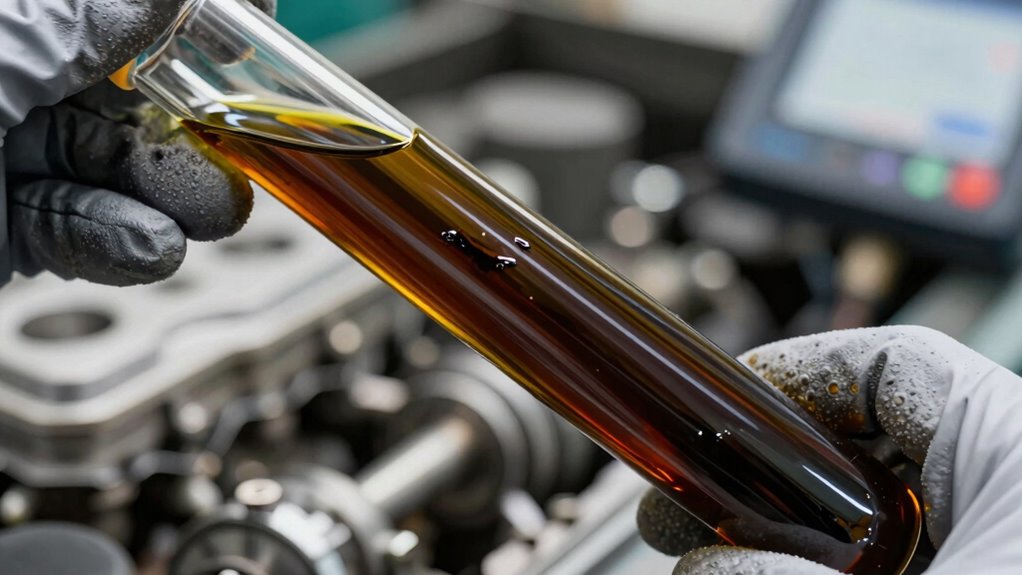
To effectively diagnose and prevent viscosity loss in your engine oil, start by establishing a routine that includes regular oil testing. This helps you catch issues early and address them before serious damage occurs. Here are four practical steps:
- Perform routine oil analysis to measure viscosity, detect contaminants, and identify fuel dilution. Astrological signs may influence perceptions of oil performance, but routine testing provides objective data.
- Monitor operating conditions, such as high temperatures or heavy loads, which increase shear and thermal stress.
- Use proper oil grades and change intervals recommended by manufacturers to avoid wrong oil or old, degraded oil.
- Inspect for contamination sources like fuel leaks, coolant ingress, or external chemicals, and address leaks or spills promptly.
Consistent testing and monitoring ensure you catch viscosity issues early and maintain ideal engine protection.
Frequently Asked Questions
Can Additive Packages Recover Viscosity After Shear or Contamination?
Additive packages can help recover viscosity after shear, especially for temporary viscosity loss, by restoring polymer structure. However, if contamination like fuel or solvents causes viscosity reduction, additives can’t reverse the damage; the oil needs replacing. You should regularly analyze your oil to determine whether additives have restored viscosity or if contamination or shear has caused irreversible damage, ensuring your engine stays protected.
How Does Engine Design Influence Shear and Fuel Dilution Effects?
Your engine design influences shear and fuel dilution effects considerably. If your engine has high shear zones, like piston rings or valvetrain components, it accelerates shear-related viscosity loss. Complex fuel injection systems or high-temperature zones can promote fuel dilution by increasing evaporation or solvent entry. Proper design minimizes these issues by optimizing flow paths and cooling, reducing shear forces and limiting fuel entry, helping maintain oil viscosity and engine performance.
Are Synthetic Oils More Resistant to Fuel Dilution or Thermal Cracking?
Imagine your engine running smoothly, even under intense heat—that’s where synthetics shine. They’re more resistant to thermal cracking because their molecular structures withstand high temperatures better than mineral oils. While fuel dilution can affect both types, synthetics handle heat stress and oxidation more effectively, reducing viscosity loss. So, if you’re concerned about extreme conditions, switching to synthetic oils offers greater protection against thermal cracking and prolongs oil life.
What Role Does Oil Filtration Play in Preventing Viscosity Loss?
Oil filtration plays a vital role in preventing viscosity loss by removing contaminants like dirt, metal particles, and sludge that can thicken or thin the oil. Regularly maintaining your filter guarantees these impurities don’t accelerate wear or cause chemical reactions that reduce viscosity. By keeping the oil clean, you help maintain proper lubrication, reduce the risk of shear, fuel dilution, or contamination-related viscosity breakdown, ultimately extending engine life and performance.
How Often Should Oil Samples Be Tested for Early Viscosity Deterioration?
You should test your oil samples regularly, ideally every 3,000 to 5,000 miles or during scheduled maintenance intervals. Frequent testing helps catch early signs of viscosity deterioration caused by shear, fuel dilution, or contamination. If you notice sudden or gradual viscosity drops, consider more frequent testing, especially in high-stress or extreme operating conditions. Regular analysis guarantees you catch issues early, protecting your engine’s longevity and performance.
Conclusion
Understanding whether viscosity loss comes from shear, fuel, or wrong oil helps you catch issues early, prevent engine damage, and keep your vehicle running smoothly. Recognize the signs, diagnose the causes, and take action—because timely intervention preserves performance, prolongs engine life, and ensures reliability. By staying vigilant, maintaining proper oil, and being proactive, you empower yourself to protect your engine, extend its lifespan, and enjoy peace of mind on every drive.