
TL;DR
Cycling Weekly’s report says failures described as TPU tubes “melting” may instead involve heat deforming the bond between the tube and its valve. Experts recommend using a hose or valve extender, or inflating in short bursts with pauses; the report also describes manufacturers’ moves toward metal-valve designs.
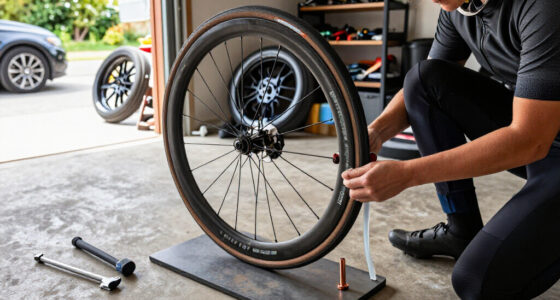
Electric bike pumps may damage some TPU inner tubes by heating and deforming the small joint between the plastic tube and its valve, rather than melting the TPU film itself, according to a Cycling Weekly report. The distinction matters to riders using lightweight TPU tubes, because experts cited by the publication say pump technique and valve design can affect the risk of a failure that leaves a tire unusable.

Get business pricing on garage and car supplies
- Business-only prices and quantity discounts
- Tax-exempt purchasing
- Multiple users, one account, clear invoices
Cycling Weekly investigated accounts of TPU tubes failing after riders used electric pumps, following reports of valve damage during its testing of the tubes. The publication said expert Tyler Boucher had cracked several valves by applying too much force with a manual pump. Those incidents involved a different possible cause, while the electric-pump reports prompted the examination of heat and the valve connection.
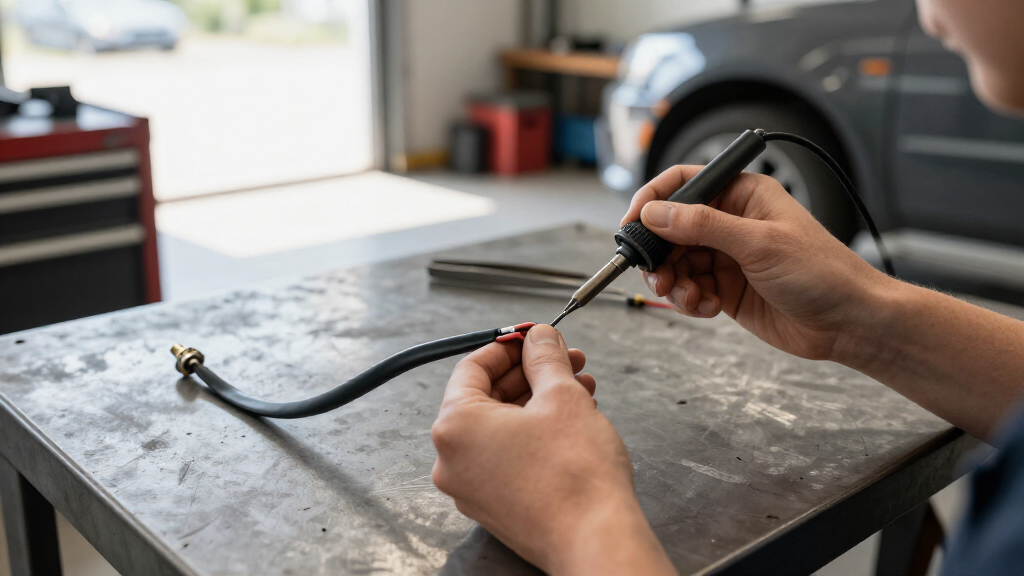
In the report, tyre expert Jan Heine and Christian Thill of Aeron described how heat from compact electric pumps can reach the valve. The pumps’ small, high-speed compressors generate heat during operation, and their compact cases have limited surface area for shedding it. Heine said heat can travel down the valve stem and contribute to failure of the bond between the valve and TPU.
The report says this bond is a vulnerable point because a plastic valve stem must be joined to the TPU tube. Heine described differential thermal expansion as a factor that can cause the adhesive connection between metal valve components and TPU to break. Thill said the bonding process is complicated and not foolproof. The experts’ explanation is about the joint under thermal stress, not evidence that all TPU tubes or electric pumps will fail.
Heat Can Threaten the Valve Joint
TPU tubes are marketed as a lightweight alternative to butyl tubes, and the report describes them as an option for riders seeking a simple spare or an alternative to tubeless setups. If the connection at the valve fails, the tube may no longer hold air, creating a practical problem during a ride. That makes the issue relevant to riders who carry compact electric pumps and rely on TPU tubes for roadside repairs.
The report also cautions against treating the issue as a simple comparison of melting points. It cites approximate melting points of 180 degrees Celsius for TPU and 150 degrees Celsius for butyl, while explaining that the construction and bonding method differ. The numbers alone do not establish how hot a particular pump or valve becomes, or predict whether a given tube will fail.
For riders, the most immediately useful advice is procedural: reduce prolonged heat at the valve and avoid continuous inflation when using an electric pump. The report does not provide a failure rate, controlled test results, or a universal safe operating time, so the recommended steps should be understood as precautions rather than a guarantee against damage.
Products Worth Considering

NOCO Boost Air AX65 2000A 12V Jump Starter with Air Compressor and Tire Inflator

DEWALT 20V MAX XR Hammer Drill and Impact Driver Combo Kit with Two 4Ah Batteries and Charger (DCK250QQ2)

DEWALT 20V MAX XR Brushless Hammer Drill and Impact Driver Combo Kit
As an affiliate, we earn on qualifying purchases.
How TPU Meets the Valve
TPU stands for thermoplastic polyurethane. The report describes TPU inner tubes as a relatively recent alternative to conventional butyl rubber tubes, with low weight and ease of installation among their attractions. In the cases under discussion, the tube material is joined to a valve assembly; that interface differs from the vulcanised connection used to join rubber and metal in butyl tubes.
Heine and Thill told Cycling Weekly that manufacturers have faced a design challenge in attaching TPU to metal. Heine said TPU cannot simply be glued to metal, while Thill cited potential cost and manufacturing advantages to using a plastic section that can be bonded to TPU. The report notes that some factories making TPU products have expertise outside the traditional bicycle supply chain, adding complexity to product development.
The companies cited are pursuing different valve approaches. Rene Herse has developed a design that traps TPU between a valve and a ring, which Heine said was developed with a supplier. Aeron has adopted metal stems for some tubes while retaining plastic stems for its ultra-light models, Thill said. These are manufacturer descriptions reported by Cycling Weekly, not independent comparative test findings.
“Differential thermal expansion can cause the glue bond to break between the metal valve core and the TPU material.”
— Jan Heine, tyre expert and Rene Herse owner, as quoted by Cycling Weekly
Failure Rates Remain Unreported
The report does not establish how often electric pumps cause TPU valve failures, which pump models or tube designs are most affected, or what temperatures are reached during typical use. It refers to reports of failures and expert explanations, but supplies no controlled test data or quantified comparison between brands.
It is also unclear whether the suggested precautions prevent damage in every case. Cycling Weekly’s account does not specify a maximum continuous pumping time or establish that all plastic-stem TPU tubes share the same construction. The cited melting-point figures do not answer those questions because the proposed failure concerns a bonded joint and heat transfer through the valve assembly.
Safer Inflation and New Designs
For current users, the experts cited by Cycling Weekly recommend attaching a flexible hose extender or an aluminium valve extender where possible. These can separate the pump from the tube’s valve connection and provide more opportunity for heat to dissipate. Without an extender, Heine advises pumping in 20 psi increments, then waiting about a minute before continuing.
Manufacturers are also working on alternative valve connections. Cycling Weekly reports that Aeron uses metal stems on some models and plastic stems on its ultra-light tubes, while Rene Herse’s design holds the TPU between a valve and a ring. The report does not give a timetable for wider adoption or independent test results comparing these designs. Riders and manufacturers will need more product-specific evidence to determine how well different approaches perform under repeated electric-pump use.
Key Questions
Is the TPU tube film actually melting?
The report’s experts say the suspected failure is deformation or separation at the valve-to-tube bond, not melting of the TPU film itself. The account does not include laboratory testing confirming the cause in every reported failure.
Can I use an electric pump with a TPU tube?
The report does not say riders must avoid electric pumps. It recommends reducing heat exposure with a hose or valve extender, or inflating in short bursts with pauses. It does not establish a universally safe pumping duration.
What should I do if I do not have an extender?
Heine’s advice, as reported by Cycling Weekly, is to inflate in 20 psi bursts and wait about a minute between bursts. The publication presents this as a precaution, not a guarantee that damage cannot occur.
Are metal-valve TPU tubes available?
The report says Rene Herse has a metal-stem design, while Aeron uses metal stems on some tubes and retains plastic stems for its ultra-light models. It does not provide a complete market list or comparative reliability data.
Source: rss