Electrolysis in coolant is real and can cause serious corrosion inside your vehicle’s cooling system, mainly through electrical currents passing through the coolant and attacking metal parts like radiators and water pumps. While certain myths suggest it’s harmless or easily solved, improper maintenance and stray electrical currents can accelerate damage. To truly understand how to prevent and fix electrolysis, keep exploring the facts behind this common but often misunderstood issue.
Key Takeaways
- Electrolysis occurs when electrical current passes through coolant, causing corrosion, especially in aluminum parts like radiators.
- Stray electrical currents from faulty wiring or grounding issues are primary causes of electrolysis in coolant systems.
- Using incompatible coolants or tap water increases coolant acidity, promoting electrochemical reactions and metal corrosion.
- Detect electrolysis with a multimeter (voltage above 0.5V) and monitor coolant pH; signs include black residue and internal corrosion.
- Proper maintenance, compatible materials, and regular system flushes prevent electrolysis and extend component lifespan.
Top picks for "electrolysi coolant real"
Open Amazon search results for this keyword.
As an affiliate, we earn on qualifying purchases.
What Is Electrolysis in Your Car’s Coolant?
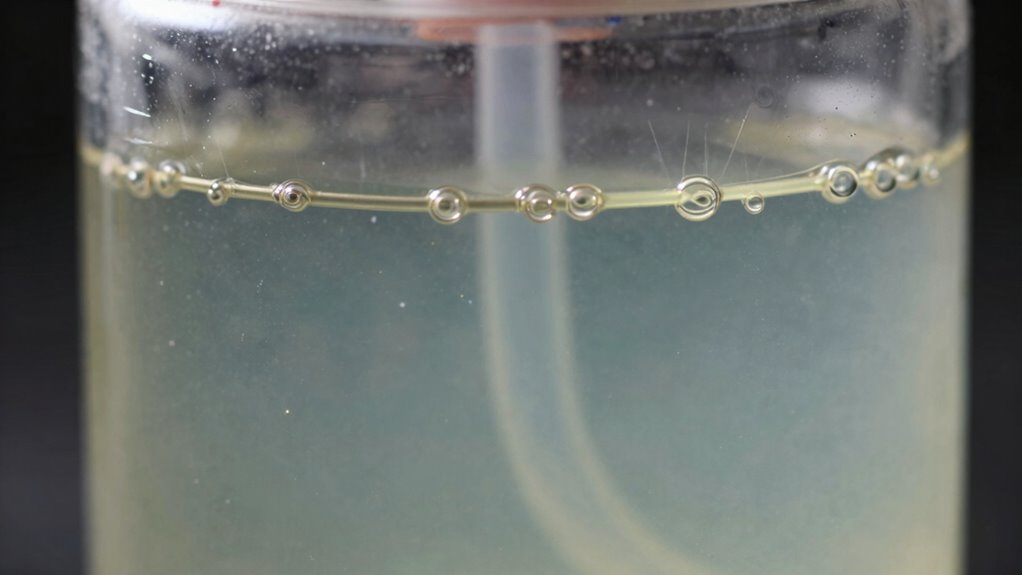
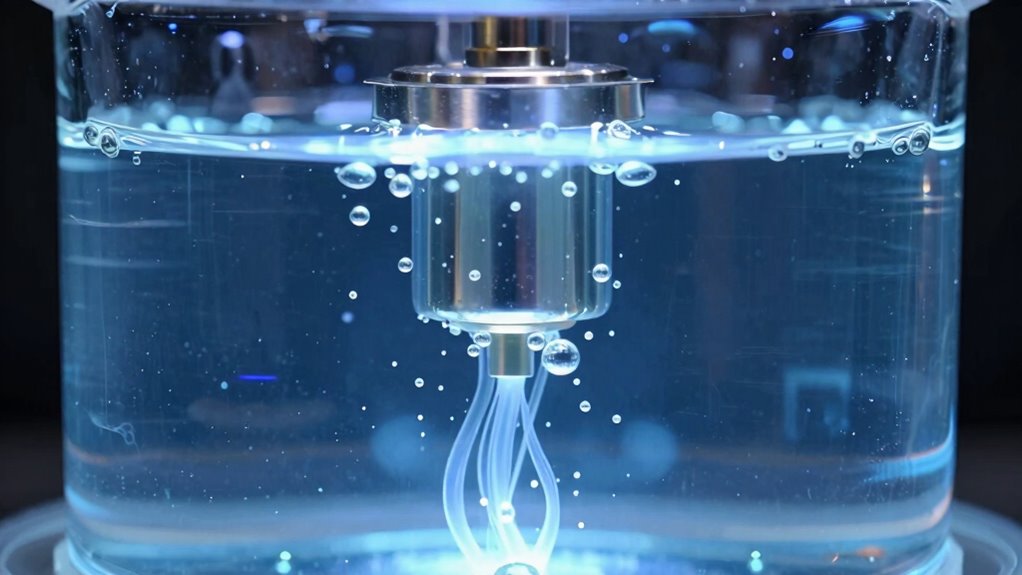
Ever wonder what causes your car’s coolant to deteriorate prematurely? Electrolysis happens when an electrical current passes through your coolant, triggering chemical reactions that corrode metal parts. This process turns the coolant into a low-grade battery, attacking aluminum components like the radiator and water pump. It involves anode and cathode reactions in the electrolyte solution, which contains free ions from salts and minerals. When electrical voltage is present, it breaks down the salts, making the coolant more acidic and conductive. This acidity accelerates corrosion, especially in systems with dissimilar metals. The result is internal damage, leaks, and system failure. Understanding electrolysis helps you identify early signs and take steps to prevent it from damaging your vehicle’s cooling system. Recognizing metal corrosion as a key indicator can help you catch issues before they become severe.
What Causes Electrolysis in Automotive Cooling Systems?
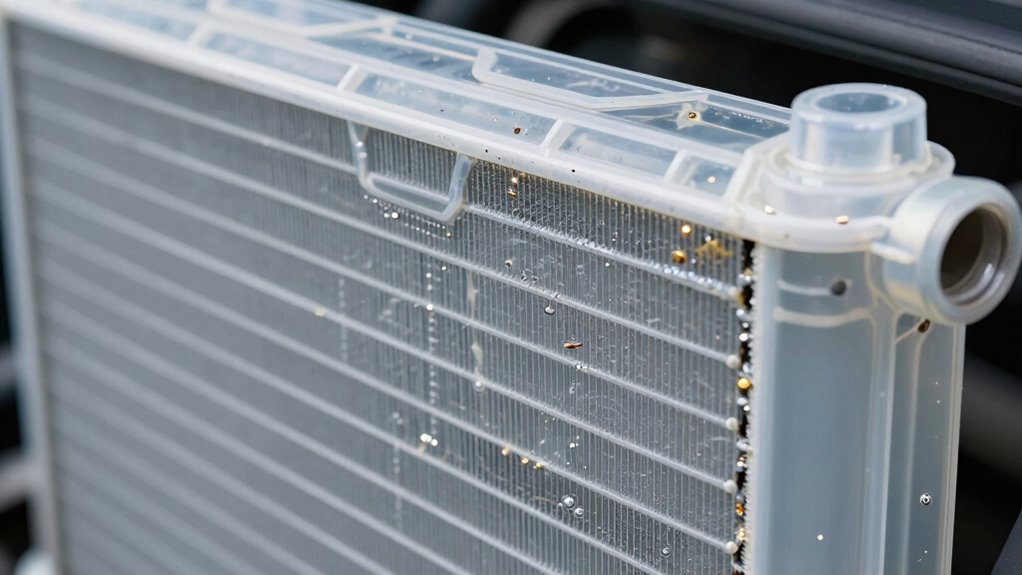
Electrolysis in your cooling system mainly happens when stray electrical currents find a path through the coolant, often due to poor wiring or high alternator output. Changes in water chemistry, like using tap water or mixing different coolants, can turn the coolant acidic and more conductive. Additionally, the presence of dissimilar metals, such as aluminum and cast iron, accelerates corrosion and increases the risk of electrolysis. Awareness of regional environmental factors can also help prevent electrolysis by influencing corrosion rates and coolant stability.
Stray Electrical Currents
Stray electrical currents can cause electrolysis in your vehicle’s cooling system by creating unintended pathways for electrical flow. Poor wiring, faulty alternator connections, or grounding issues allow current to bypass normal circuits and pass through the coolant. This unintended current seeks a ground through metal components, especially aluminum, leading to corrosion. High electrical loads or electrical faults increase the likelihood of stray currents. Even small leaks in insulation or damaged wiring can introduce enough current to cause damage over time. Dissimilar metals in the system can also facilitate current flow if not properly isolated. Essentially, any electrical fault that allows current to flow through the coolant creates a perfect environment for electrolysis, damaging your radiator, water pump, and other aluminum parts. Proper grounding and electrical maintenance are crucial in preventing stray currents and protecting your cooling components.
Water Chemistry Changes
Water chemistry changes cause electrolysis in your cooling system by transforming the coolant into a conductive, acidic solution. Over time, salts, minerals, and corrosion byproducts break down, lowering the pH and increasing acidity. This process creates free ions that enhance the coolant’s conductivity, making it more prone to electrical current flow. When coolant becomes acidic, it weakens the protective film on metal surfaces, especially aluminum, allowing electrochemical reactions to occur more easily. Using tap water or mixing incompatible coolants can dilute corrosion inhibitors, accelerating chemical breakdown. As the coolant’s chemistry shifts, it becomes more of a low-grade electrolyte, enabling electrolysis and corrosion. Regular maintenance, proper coolant ratios, and system flushes help prevent these chemical changes that fuel electrolysis. Additionally, understanding the importance of high-quality projectors for home theaters can enhance your viewing experience while also protecting your system from potential electrical issues caused by electrolysis.
Dissimilar Metal Reactions
Dissimilar metals in your cooling system can set the stage for electrochemical reactions that lead to corrosion. When metals like aluminum, cast iron, and steel come into contact, they create a galvanic cell, especially if the coolant becomes conductive due to breakdown. The more reactive metal acts as the anode and corrodes faster, while the less reactive one acts as the cathode. This process accelerates metal deterioration, forming rust, pitting, and leaks. Dissimilar metals also promote uneven corrosion, weakening components like radiators, water pumps, and heater cores. Plus, the electrochemical reactions can generate electrical currents that further damage the system. Proper design, compatible metals, and corrosion inhibitors help prevent these reactions, reducing the risk of electrolysis-driven damage. Using metal compatibility is essential for maintaining a healthy cooling system and preventing galvanic corrosion.
How to Detect Electrolysis Damage in Your Coolant System?
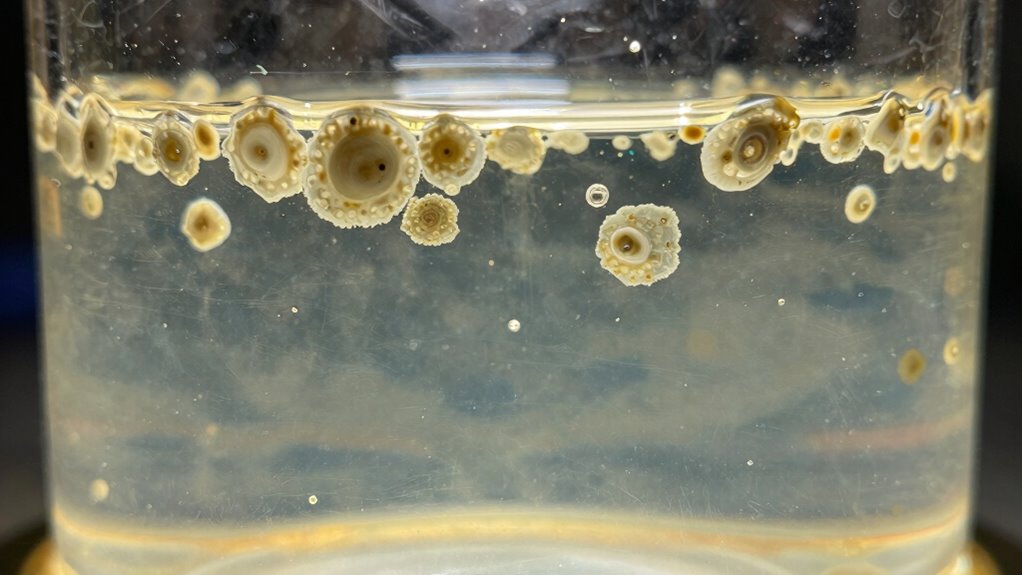
Detecting electrolysis damage in your coolant system requires careful inspection and testing. First, use a digital multimeter to check the coolant’s voltage; readings above 0.5V indicate electrical current flow, suggesting electrolysis. Next, test the coolant’s pH with a dedicated test kit—acidic coolant signals breakdown and potential corrosion. Visually examine metal components like the radiator, water pump, and heater core for internal corrosion, leaks, or flaking. Look for black lines, holes, or residue inside the radiator or hoses. If you notice these signs or suspect issues, flush the system and retest. Regular testing helps catch early damage before it worsens. Combining these methods gives you a clear picture of electrolysis activity and potential system deterioration. Additionally, monitoring coolant pH levels regularly can help detect chemical changes that contribute to electrolysis-related damage.
Signs That Your Vehicle Is Suffering From Electrolysis?
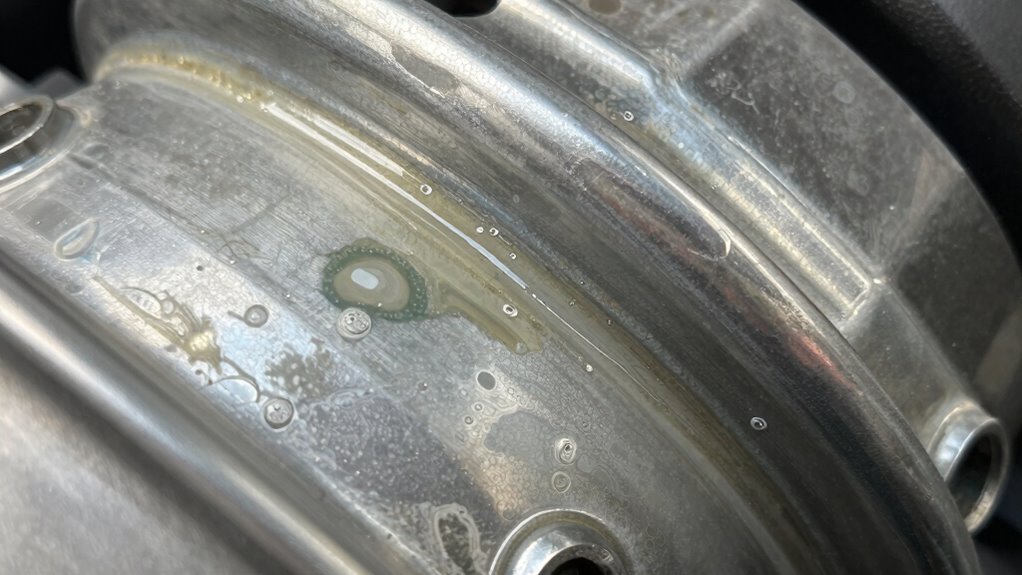
If you notice corrosion or flaking on your radiator, heater core, or water pump, your vehicle might be suffering from electrolysis. Unusual cooling symptoms like overheating, coolant leaks, or unexplained loss can also be signs of internal damage. Keep an eye out for black residue or holes in the system—these visual clues point to electrolysis-related issues. Implementing holistic SEO strategies can help ensure your vehicle’s maintenance information reaches the right audience.
Visual Metal Damage Signs
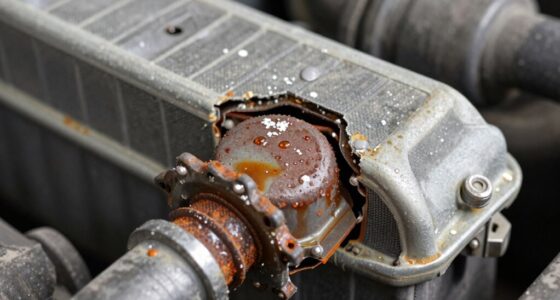
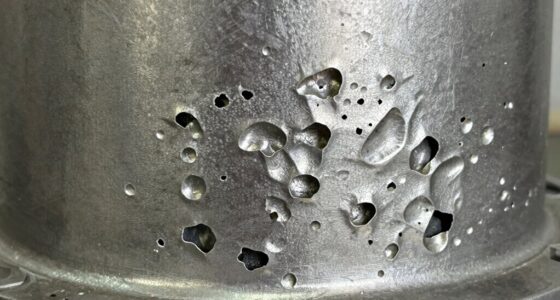
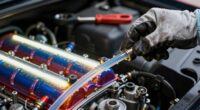
You can often spot signs of electrolysis damage by inspecting your vehicle’s cooling system for telltale marks. Look for black lines or streaks on the inside surfaces of your radiator or heater core—these are caused by metal erosion. Pinhole leaks or tiny holes in metal components like the radiator or water pump indicate corrosion from electrochemical reactions. Flaking or peeling on metal surfaces suggests internal deterioration. You might also notice residue or deposits resembling rust or aluminum oxide buildup inside the coolant passages. These signs often accompany unexplained coolant loss or overheating. Visually inspecting for corrosion, discoloration, or unusual deposits helps you catch early damage caused by electrolysis before it leads to more severe system failure. Additionally, indoor air quality can be affected by dust and microplastics, which may contribute to overall vehicle and environmental health concerns.
Unusual Cooling Symptoms
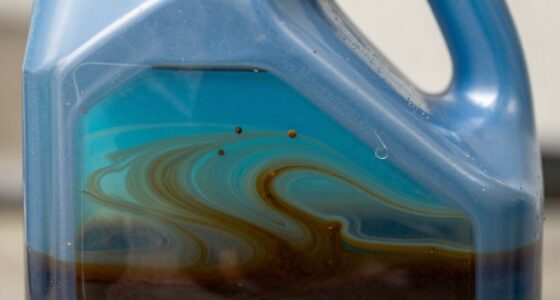
Unusual cooling symptoms often signal electrolysis issues within your vehicle’s cooling system. You might notice your engine running hotter than usual or frequent overheating despite a full radiator. Coolant loss without visible leaks can also be a warning sign, as corrosion causes internal damage and leaks. Discolored or contaminated coolant that appears rusty or black indicates metal erosion from electrolysis. You may experience inconsistent heater performance or strange noises coming from the radiator area. Additionally, your radiator might develop black lines, pinhole leaks, or residue inside, which suggest internal corrosion. These symptoms stem from the electrochemical reactions, damaging metal components and compromising cooling efficiency. Addressing these signs early can prevent costly repairs and guarantee your cooling system stays in prime condition. Using proper DIY tools and following safety tips can help you inspect and address electrolysis issues safely and effectively.
How to Prevent Electrolysis in Your Cooling System?

Preventing electrolysis in your cooling system begins with ensuring proper electrical grounding and using high-quality materials. Start by confirming all electrical connections are secure and properly grounded to eliminate stray currents that can pass through coolant. Install a sacrificial anode made of a compatible metal, like zinc or magnesium, to protect vulnerable aluminum components. Use OEM-grade antifreeze mixed with distilled water to maintain the correct pH balance and inhibit corrosion. Adding electrolysis arrester additives can neutralize acids that form over time. Regularly flush your system with non-acidic cleaners to remove deposits and maintain cleanliness. Avoid mixing different coolant brands or using tap water, which contain minerals that promote conductivity. Maintaining optimal coolant pH levels is essential because pH balance directly affects corrosion rates. Consistent maintenance and attention to electrical integrity are your best defenses against electrolysis damage.
What Are the Best Ways to Repair Electrolysis Damage?
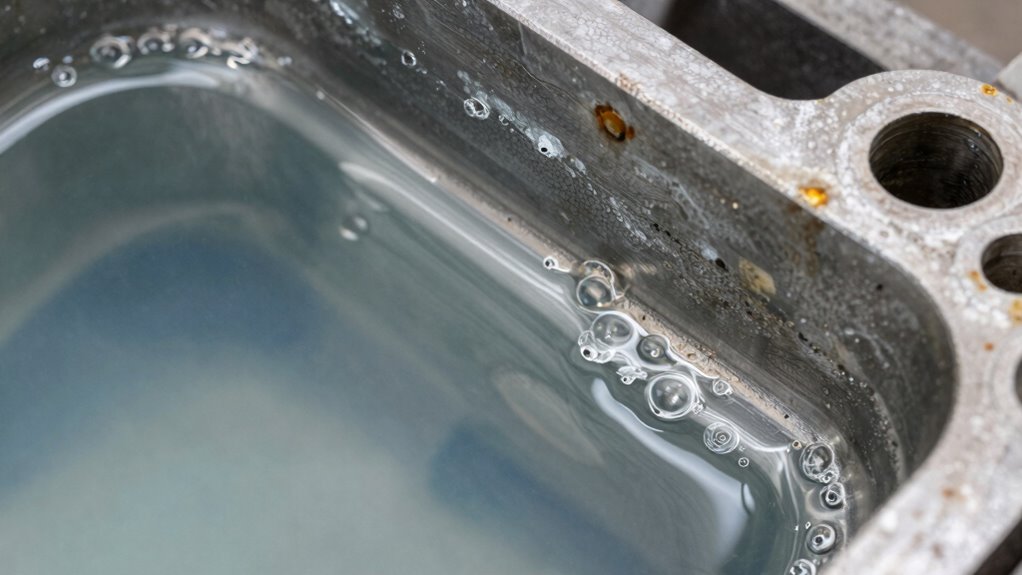
When electrolysis damage occurs in your cooling system, prompt and effective repairs are essential to prevent further deterioration. First, fully drain and flush the system with a non-acid cleaner to remove corrosion and deposits. Then, replace damaged components like radiators, water pumps, or heater cores. Installing a sacrificial anode or electrolysis arrester can protect vulnerable parts from future damage. Regularly testing coolant voltage and pH helps catch issues early. Consider adding electrolysis inhibitors to neutralize acids. If corrosion is severe, professional assessment and component replacement are critical. Additionally, maintaining proper gear care and ensuring your cycling equipment is protected from environmental factors can help prevent similar issues.
Common Myths About Electrolysis and Coolant Explained?
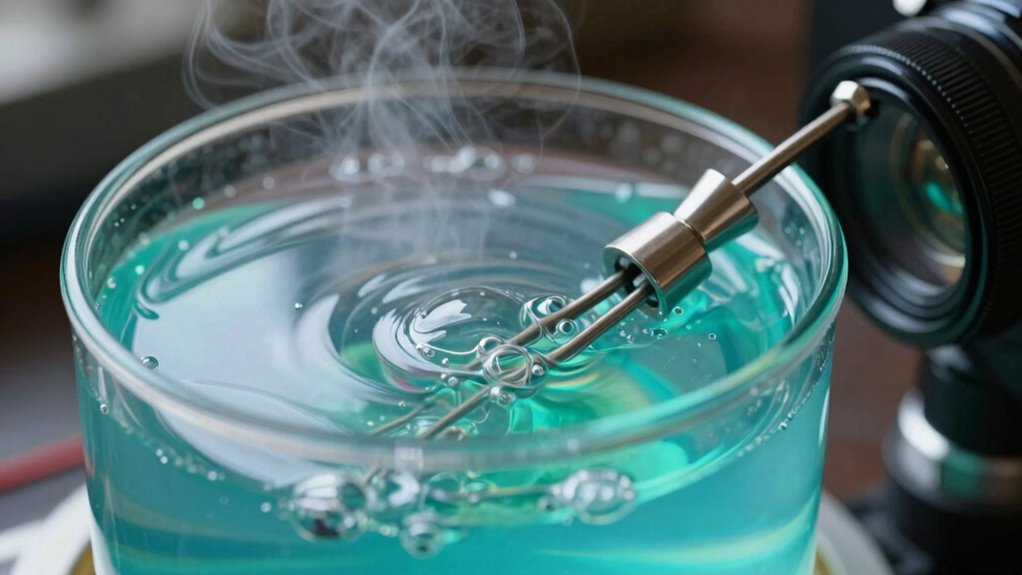
Many common misconceptions about electrolysis and coolant safety persist despite the facts. You might think that using pure distilled water prevents conductivity, but salts and minerals in the coolant still enable electrochemical reactions. Some believe voltage dissipates naturally, so frequent coolant changes aren’t needed; in reality, voltage persists until you fully drain and replace the coolant. Others assume that acidic coolant is harmless without current, but when combined, acidity accelerates corrosion. There’s also a myth that electrolysis is similar to fuel cell technology, but automotive electrolysis is destructive, not beneficial. finally, many think that particles and erosion are separate issues, but debris from corrosion worsens the damage caused by electrolysis. Knowing these truths helps you better prevent and address coolant system problems. Regular coolant maintenance is essential to prevent buildup and corrosion that can exacerbate electrolysis effects.
Frequently Asked Questions
Can Electrolysis Occur Without Any Electrical Current in the System?
No, electrolysis can’t happen without electrical current in your system. It requires a flow of electricity to cause the electrochemical reactions that lead to corrosion. If there’s no current, the process simply won’t occur, so your coolant won’t become acidic or attack your metal parts. To prevent electrolysis, guarantee proper grounding, use the right coolant mix, and install sacrificial anodes, but without electrical flow, the damage won’t happen.
Does Using Distilled Water Completely Eliminate Electrolysis Risk?
Using distilled water is like trying to keep a fire alive with just air—it’s not enough to prevent electrolysis. Without salts and minerals, the coolant’s conductivity drops markedly, but tiny impurities or corrosion inhibitors can still spark electrical currents. So, while it reduces the risk, it doesn’t eliminate electrolysis entirely. Regular system maintenance and adding proper additives are your best defenses against unseen damage lurking in your cooling system.
How Often Should I Flush My Cooling System to Prevent Electrolysis?
You should flush your cooling system every 30,000 miles or every 2-3 years, whichever comes first, to prevent electrolysis. Regular flushing removes accumulated salts, minerals, and corrosion byproducts that contribute to acidity and conductivity. Use a non-acid cleaner and follow manufacturer recommendations. This maintenance helps maintain proper pH balance, reduces the risk of electrolysis, and prolongs the lifespan of your cooling system components.
Are Certain Coolant Brands More Resistant to Electrolysis?
Think of coolant brands as armor for your engine—some shields are stronger than others. While no brand is completely immune, OEM-quality coolants with added inhibitors offer better resistance to electrolysis. They act like a protective barrier, reducing the risk of corrosion. To keep your system safe, choose reputable brands, follow recommended maintenance, and add electrolysis arrester additives. This way, you’re fortifying your engine’s defenses against unseen battles.
Can Electrolysis Damage Be Reversed Without Replacing the Entire Coolant?
Yes, electrolysis damage can often be reversed without replacing all the coolant. You should first test the coolant’s voltage and pH level. If they’re elevated, flush the system thoroughly with a non-acidic cleaner, then refill with fresh, properly mixed coolant. Adding electrolysis inhibitors or sacrificial anodes can also neutralize current effects. Keep up with regular maintenance to prevent future damage and guarantee your system stays protected.
Conclusion
Now you know the truth about electrolysis in your coolant—no need to be like a knight guarding a dragon’s lair, fearing every spark. Stay vigilant, maintain your cooling system, and catch issues early. With a little TLC, you can keep your ride running smoothly, just like a well-oiled machine. Remember, even in this modern age, prevention is your best armor against costly repairs—so don’t let electrolysis turn your car into a pawn in its own game.