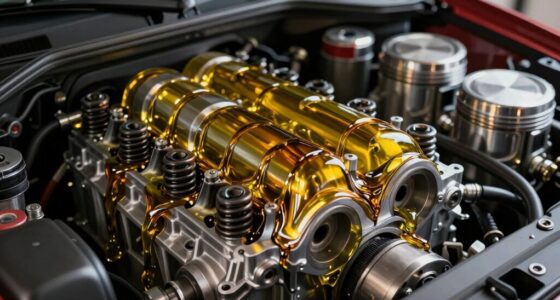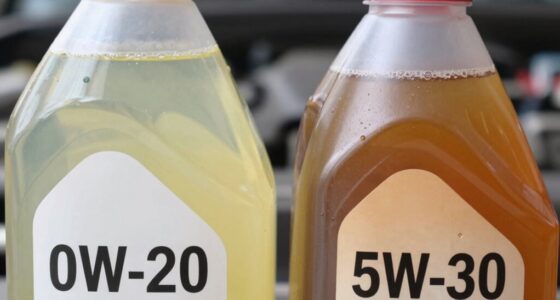

Oil film strength refers to how well a lubricant layer can withstand pressure and shear forces without breaking down, which is essential for stopping metal-to-metal contact. It’s about the film’s ability to stay intact under heavy loads, preventing damage and wear. A stronger film supports smoother operation and longer machinery life. If you want to understand how to maintain or improve this strength, there’s more to discover about the factors involved.
Key Takeaways
- Oil film strength refers to the lubricant layer’s ability to withstand pressure, shear forces, and prevent surface contact.
- It is commonly discussed in terms of film thickness, robustness, and capacity to resist breakdown under load.
- A strong oil film maintains separation between surfaces, reducing friction, wear, and heat generation.
- Factors influencing film strength include oil viscosity, temperature, surface roughness, and operating conditions.
- Proper lubrication management ensures optimal oil film strength, prolonging machinery life and preventing damage.
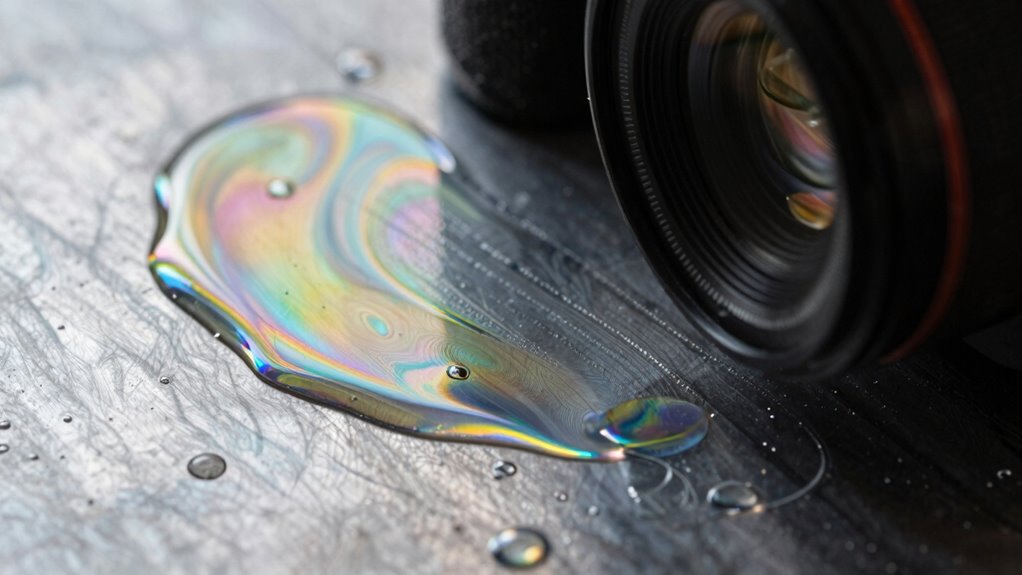
Have you ever wondered what keeps two metal surfaces from grinding directly against each other under heavy loads? It’s all about lubrication mechanisms. When two surfaces slide past each other, they generate friction that can quickly lead to wear, heat, and eventual failure. To prevent this, a film of lubricant—usually oil—is maintained between them. This oil film acts as a barrier, reducing direct metal-to-metal contact and considerably lowering wear. But it’s not just about having some oil there; the strength of this oil film is what truly determines how well the surfaces are protected.
Oil film strength refers to the ability of the lubricant layer to withstand pressure and shear forces without breaking down. Think of it as the thickness or robustness of a cushion that separates the surfaces. When the load increases, the oil must sustain the pressure without being squeezed out or ruptured. If the film is too weak, it can collapse under heavy loads, causing metal surfaces to contact directly. This contact accelerates wear, damages components, and shortens the machinery’s lifespan. Conversely, a sturdy oil film maintains its integrity, guaranteeing continuous separation and peak performance.
Understanding oil film strength involves looking at how lubrication mechanisms operate under different conditions. In hydrodynamic lubrication, for example, the oil film forms dynamically as the surfaces move relative to each other, generating pressure that supports the load. In elastohydrodynamic or boundary lubrication regimes, the film might be thinner, but still essential in preventing direct contact. The key is that, regardless of the regime, the oil’s ability to sustain pressure without breaking down is central to wear prevention. Proper lubrication not only reduces friction but also minimizes surface fatigue and prevents microscopic damage that can lead to larger failures over time.
Additionally, regular appliance maintenance plans can help ensure that lubrication and other critical components are properly checked, preventing premature breakdowns of the oil film. When evaluating oil film strength, consider factors like viscosity, temperature, and surface roughness. Higher viscosity oils tend to form thicker, more durable films, but they also require more energy to move. Temperature fluctuations can thin or break down the oil film, so choosing the right lubricant for specific operating conditions is imperative. Surface roughness impacts how well the oil can spread and fill gaps, influencing the film’s effectiveness. Ultimately, maintaining an ideal oil film strength means selecting the right lubricant and monitoring operating conditions to prevent breakdowns, wear, and costly repairs. It’s a critical aspect of machinery maintenance that ensures smooth operation and longevity.
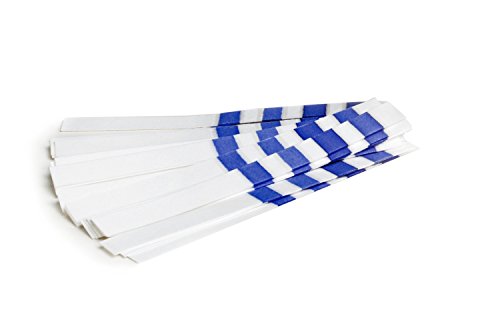
3M 26416 3M Low Range Oil Quality Test Strips 1005, 40 Strips/Bottle, 0.3" Width
When a more precise reading of early degradation of oil is desired, try the 3M low range oil…
As an affiliate, we earn on qualifying purchases.
As an affiliate, we earn on qualifying purchases.
Frequently Asked Questions
How Is Oil Film Strength Measured in Real-World Applications?
You measure oil film strength in real-world applications by evaluating lubrication quality and wear resistance under operational conditions. Techniques like tribological testing, where you simulate loads and speeds, help determine how well the oil maintains its film. You can also monitor performance through equipment vibration, temperature, and wear patterns, which indicate the oil’s ability to prevent metal-to-metal contact and ensure durability during prolonged use.
What Factors Most Significantly Impact Oil Film Longevity?
You’ll find that oil viscosity and surface roughness most considerably impact oil film longevity. Higher viscosity oils create thicker, more durable films, reducing wear, while rougher surfaces break down the film faster. To maximize longevity, choose an oil with suitable viscosity for your operating conditions and guarantee surfaces are smooth. Regular maintenance and proper lubrication practices also help maintain the integrity of the oil film over time.
Can Oil Film Strength Vary Between Different Types of Oils?
Yes, oil film strength can vary between different types of oils. You’ll notice differences due to oil composition, such as viscosity and base oil type, which influence film formation. Additive effects also play a role, as additives like anti-wear agents enhance film strength. Choosing the right oil depends on understanding these factors, ensuring ideal protection and performance for your machinery.
How Does Temperature Affect Oil Film Strength?
When you heat oil, its viscosity effects become evident; it thins like syrup warmed by the sun, weakening the oil film strength. As temperature rises, thermal degradation accelerates, breaking down the oil’s molecular structure and further reducing its protective barrier. You’ll notice less cushion between moving parts, increasing wear. Keep temperatures in check to maintain ideal oil film strength, preventing damage and ensuring smooth operation.
Are There Standardized Tests for Comparing Oil Film Strength?
Yes, standardized testing exists for comparing oil film strength. You can rely on comparison metrics like Timken OK load and four-ball wear tests, which provide consistent benchmarks. These tests measure how well the oil film resists breakdown under stress, helping you evaluate different oils. By using these standardized methods, you guarantee your comparisons are accurate and reproducible, making it easier to select the best oil for your specific application.

HOPPE'S No. 9 Lubricating Oil, 2.25 oz. Bottle
High-viscosity oil refined to perfection
As an affiliate, we earn on qualifying purchases.
As an affiliate, we earn on qualifying purchases.
Conclusion
Now that you understand what oil film strength truly means, you can see how vital it is for machinery’s longevity. It’s not just about thick oil but about how well that film can withstand stress and prevent wear. So next time you think about lubrication, ask yourself: are you providing the kind of protection that keeps things running smoothly, even under pressure? After all, isn’t it worth ensuring that your equipment’s invisible shield never gives way?
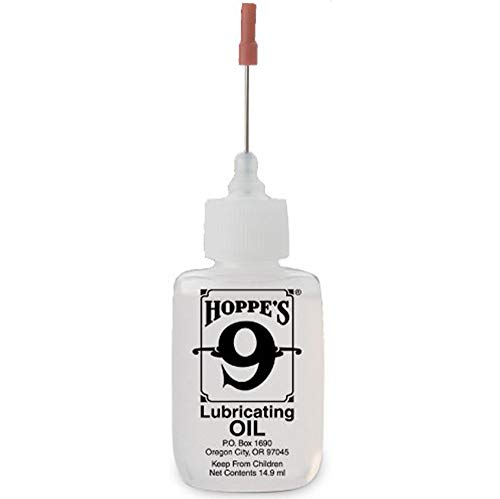
Hoppe's No. 9 Lubricating Oil, 14.9 ml Precision Bottle
Country Of Origin : United States
As an affiliate, we earn on qualifying purchases.
As an affiliate, we earn on qualifying purchases.

Fluid Film Rust & Corrosion Protection, Metal Surface Penetrant & Lubricant, Marine, Automotive, Industrial, Home, 11.75 Oz Aerosol Spray (Pack of 6)
Long-lasting lanolin based protection: Creates a durable barrier that prevents corrosion, stops rust and penetrates deep into metal,…
As an affiliate, we earn on qualifying purchases.
As an affiliate, we earn on qualifying purchases.