If your oil cooler thermostat malfunctions and causes overcooling, it can increase engine wear. Overcooling thickens the oil, making it less effective at lubricating engine parts, especially during startup. This extra viscosity can lead to higher friction and accelerated wear over time. Continuous overcooling can also affect engine temperature regulation, risking more serious damage. Staying aware of these issues helps you understand how keeping your cooling system in check protects your engine’s longevity; more details are ahead.
Key Takeaways
- Overcooling causes oil viscosity to increase, reducing lubrication efficiency and leading to engine component wear.
- Excessively cooled oil thickens, increasing friction and stress on engine parts during startup and operation.
- Overcooling can prevent oil from circulating properly, resulting in uneven lubrication and accelerated engine wear.
- Stuck-open thermostats keep oil too cold, impairing heat transfer and causing long-term damage to engine components.
- Maintaining proper oil temperature prevents excessive wear caused by overly thick, inefficiently circulated oil.
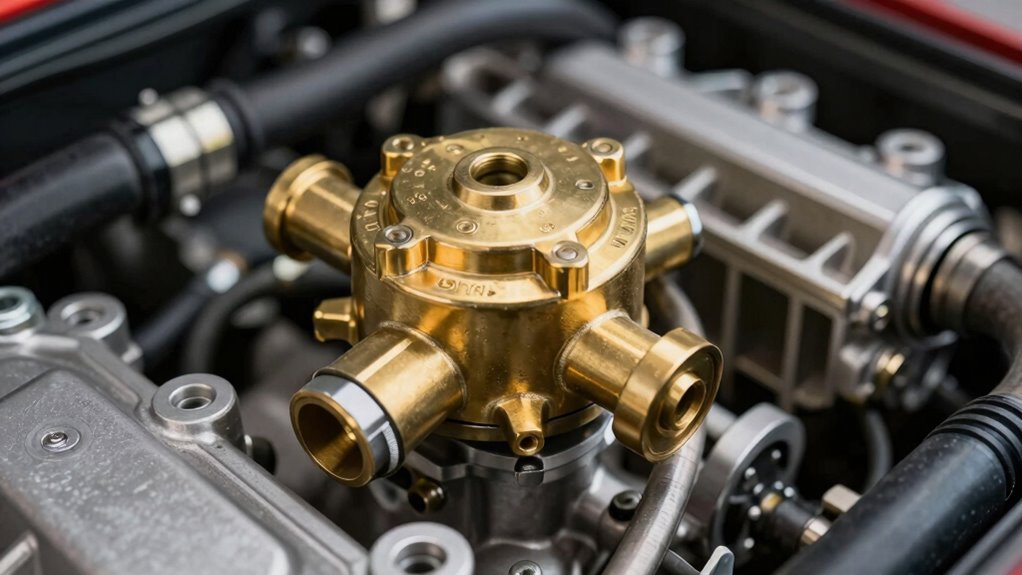
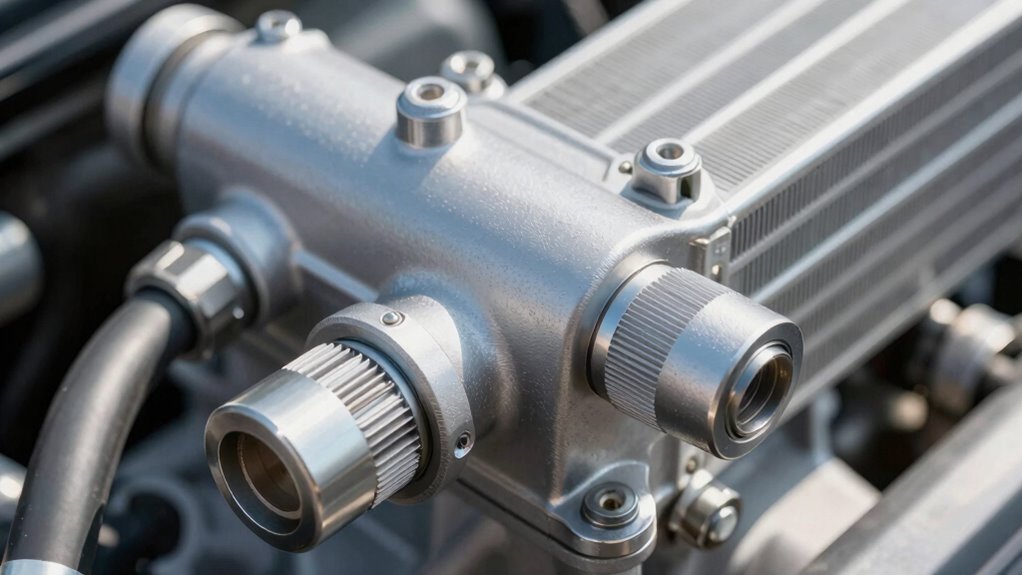
Oil cooler thermostats play a essential role in maintaining the ideal temperature of your engine’s oil. They help regulate oil flow through the cooler, guaranteeing your engine stays within the perfect temperature range. Proper cooling system maintenance is critical because neglecting it can lead to thermostat failure symptoms, such as inconsistent oil temperature or overheating. When the thermostat malfunctions, it can stay stuck open or closed, disrupting the balance and potentially causing more harm than good. An open thermostat allows excess cooling, leading to overcooling, which can increase wear on engine components.
Overcooling your engine oil might seem beneficial at first glance—after all, cooler oil helps reduce thermal breakdown—but it can actually be detrimental. When your oil is too cold, it doesn’t circulate properly, becoming thicker and less effective at lubricating. This increased viscosity causes more friction and wear on engine parts, especially during startup when the oil hasn’t warmed up enough. Over time, this wear can accelerate, leading to early engine failure. The thermostat’s failure to maintain the right temperature can also cause uneven heating and cooling cycles, stressing engine seals and gaskets, which further impacts engine longevity.
Additionally, cooling system components must work in harmony to prevent temperature extremes that can harm engine parts. If you notice symptoms like frequent temperature fluctuations, unusual noises during startup, or a sudden drop in oil temperature readings, these are signs that your thermostat might be failing. Addressing these thermostat failure symptoms promptly is critical because ignoring them can lead to more severe cooling system issues. Additionally, a malfunctioning thermostat may trigger the check engine light or cause your vehicle to run inefficiently, impacting fuel economy and performance. Regular cooling system maintenance, including inspecting and replacing the thermostat when necessary, helps prevent these issues.
Understanding that overcooling can be just as damaging as overheating underscores the importance of a properly functioning thermostat. When it fails, your engine’s oil may never reach the perfect temperature, leading to inadequate lubrication and increased wear. Conversely, if it sticks closed, overheating becomes a risk, which also damages engine components. The key is maintaining a balanced cooling system that keeps oil within its ideal temperature range. By paying attention to thermostat failure symptoms and performing routine cooling system maintenance, you can safeguard your engine from unnecessary wear and ensure it runs smoothly for miles to come.

NOVAPARTS 17111437362 Oil Cooler Radiator Expansion Tank Thermostat for BMW E46 323i 323ci 328i 328ci 325i 325ci 330i 330ci 330xi X3 X5 Z4 17 11 1 437 362
Transmission Thermostat Mounted in Expansion Tank for BMW E46 323i 323ci 328i 328ci 325i 325ci 325xi 330i 330ci…
As an affiliate, we earn on qualifying purchases.
As an affiliate, we earn on qualifying purchases.
Frequently Asked Questions
How Do Oil Cooler Thermostats Affect Engine Efficiency?
Oil cooler thermostats regulate oil flow, ensuring essential engine temperature. By maintaining proper temperature control systems, they improve engine efficiency, reducing wear and tear. If the thermostat overcools, oil becomes too viscous, impairing flow and heat transfer. This can cause increased engine friction and decreased efficiency. Thus, proper thermostat function is vital; it helps you keep the engine running smoothly, protecting components and extending the engine’s lifespan.
Can a Faulty Thermostat Cause Engine Overheating?
Imagine your engine as a busy river, with oil flow like water keeping everything cool. A faulty thermostat is like a dam that can’t regulate this flow, causing uneven temperature regulation. This malfunction can lead to engine overheating because the oil isn’t flowing properly to dissipate heat. Without proper regulation, excessive heat builds up, risking damage and potentially causing your engine to overheat.
What Are Signs of an Overcooling Oil System?
You notice your oil temperature stays unusually low even after running the engine for a while, indicating overcooling. This can happen if the cooling system isn’t functioning properly or the thermostat sticks open. Signs include poor lubrication, increased engine wear, and reduced efficiency. When your cooling system overcools the oil, it can’t reach ideal temperature, leading to increased friction and accelerated wear on engine components.
How Often Should Oil Cooler Thermostats Be Replaced?
Your oil cooler thermostat needs replacement at regular intervals, typically every 50,000 to 100,000 miles or as recommended by your vehicle manufacturer. Regular thermostat maintenance is vital because neglect can cause severe engine wear—think of it as risking your engine’s life! Always follow the replacement intervals advised in your owner’s manual to prevent overcooling or overheating problems, ensuring your engine runs smoothly for years to come.
Are There Different Types of Oil Cooler Thermostats?
Yes, there are different types and variations of oil cooler thermostats. You’ll find variations like manual and automatic thermostats, each with distinct installation differences. Manual thermostats require you to set temperatures, while automatic ones adjust themselves for maximum cooling. The installation process also varies depending on the type, so it’s important to choose the right one for your vehicle and guarantee proper setup to prevent issues like overcooling.

Bosch SP0F000045 Style Line 2" Mechanical Water/Oil Temperature Gauge (White Dial Face, Chrome Bezel)
Standard 2" white dial for 2-1/16" openings
As an affiliate, we earn on qualifying purchases.
As an affiliate, we earn on qualifying purchases.
Conclusion
Remember, an overcooling oil cooler thermostat is like a merciless gatekeeper, trapping your engine in the icy grip of unnecessary wear. When you let your thermostat run too cold, you risk more than just discomfort—you invite increased friction and damage. Keep it balanced, and you’ll see your engine running smoother, longer. Don’t let overcooling be the silent thief of your engine’s lifespan—strike the right temperature, and let your engine thrive like a well-tuned symphony.

cycwer 1set Cooling System Kit Engine Coolant Thermostat Kit 06E121018B 06E121111M 06E121168B for A5 A4 Quattro Cabriolet Q5
😎【REPLACE PART】:06E121018B, 06E121111M, 06E121168B, 06E121045J Cooling System Kit
As an affiliate, we earn on qualifying purchases.
As an affiliate, we earn on qualifying purchases.

MOLUCKFU Engine Oil Comparator Tool and Transmission Oil Viscosity Tester Acrylic Stand for Accurate Car Maintenance and Quality Testing
Versatile functionality: not only compares engine oil but also tests the viscosity of transmission oil, providing comprehensive oil…
As an affiliate, we earn on qualifying purchases.
As an affiliate, we earn on qualifying purchases.