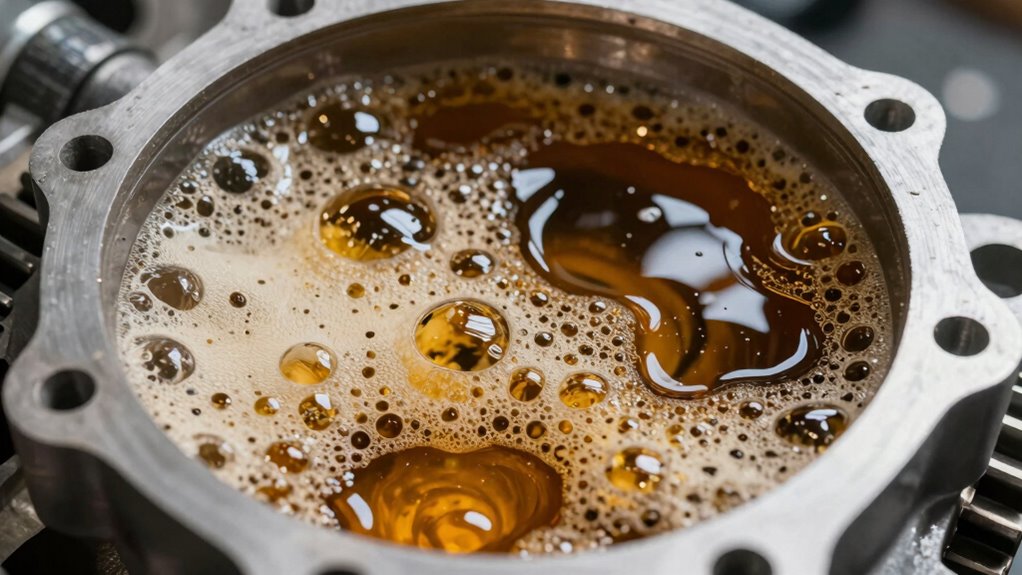
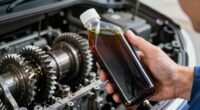
If your gearbox is foaming, the most common cause is an incorrect oil fill level, either over or under. Overfilling traps air and causes churning, while underfilling introduces air into the system, disrupting lubrication. Properly maintaining the correct oil level as recommended helps prevent foam buildup. Additionally, issues like poor reservoir baffling or contaminated oil can worsen foaming. Keep exploring to learn how to identify and fix these issues effectively.
Key Takeaways
- Overfilling or underfilling the gearbox oil causes air entrapment, leading to foam formation.
- Correct oil level management ensures proper lubrication and minimizes foam-related aeration.
- Improper fill levels disrupt oil flow and trap air, increasing foaming risks.
- Regularly checking and maintaining manufacturer-recommended oil levels prevents foaming issues.
- Fill-level errors are a common, simple cause of gearbox foaming that can be easily avoided with proper maintenance.
Boltigen 1/2 NPT Hex Head Domed Oil Sight Glass, Brass Bulls Eye Sight Glass Liquid Level Gauge Oil Indicator Window for Air Compressor Gearbox Tank
【Temperature & Pressure】1/2 NPT Air compressor dome oil sight glass gauge can work under 725 PSI (50 bar)…
As an affiliate, we earn on qualifying purchases.
As an affiliate, we earn on qualifying purchases.
Why Oil Fill Levels Cause Foaming and How to Fix Them
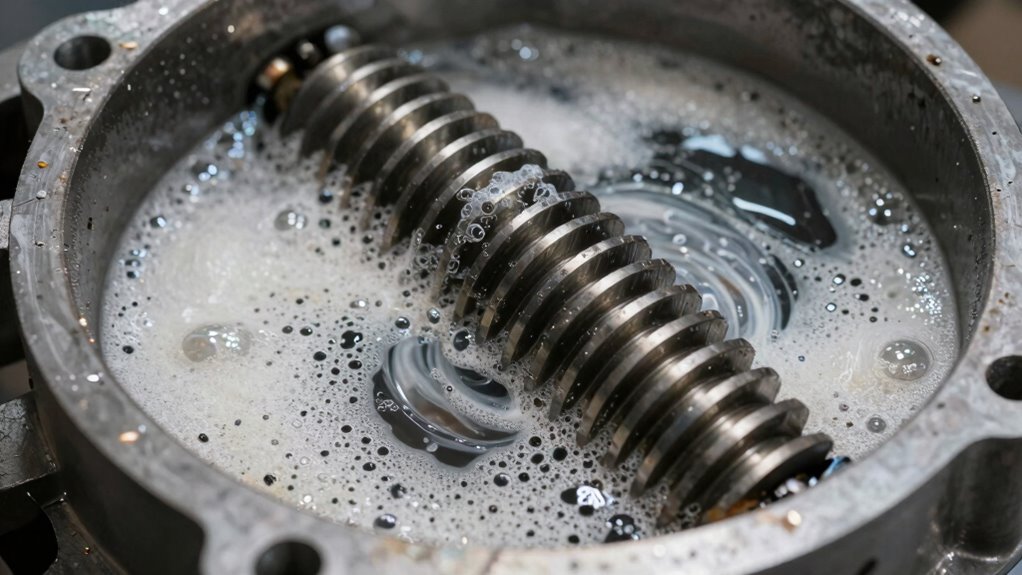
Incorrect oil fill levels are a common but often overlooked cause of foaming in gearboxes. Overfilling creates excess oil that gears churn, trapping air and causing foam. Underfilling, on the other hand, allows air to enter the system more easily, disrupting proper lubrication and encouraging bubble formation. High-speed operation amplifies these issues, making foaming worse in both cases. To fix this, start by checking the manufacturer’s recommended oil level and adjust accordingly. If the oil is overfilled, drain the excess to reach the correct level. If it’s underfilled, add oil gradually until you hit the mark. Regularly monitor the oil level to prevent future problems, especially during temperature fluctuations or after maintenance. Proper oil levels ensure smooth operation and minimize foaming risks, as oil fill levels directly impact the system’s ability to maintain proper lubrication and prevent air entrapment.

16-Piece Portal Plug Kit – 8 Magnetic Drain & 8 Fill Plugs w/O-Rings – GDP Compatible – Shop & Bulk Pack
16-Piece Kit – Includes (8) magnetic drain plugs and (8) non-magnetic fill plugs with O-ring seals.
As an affiliate, we earn on qualifying purchases.
As an affiliate, we earn on qualifying purchases.
Common Causes of Oil Foaming in Gearboxes
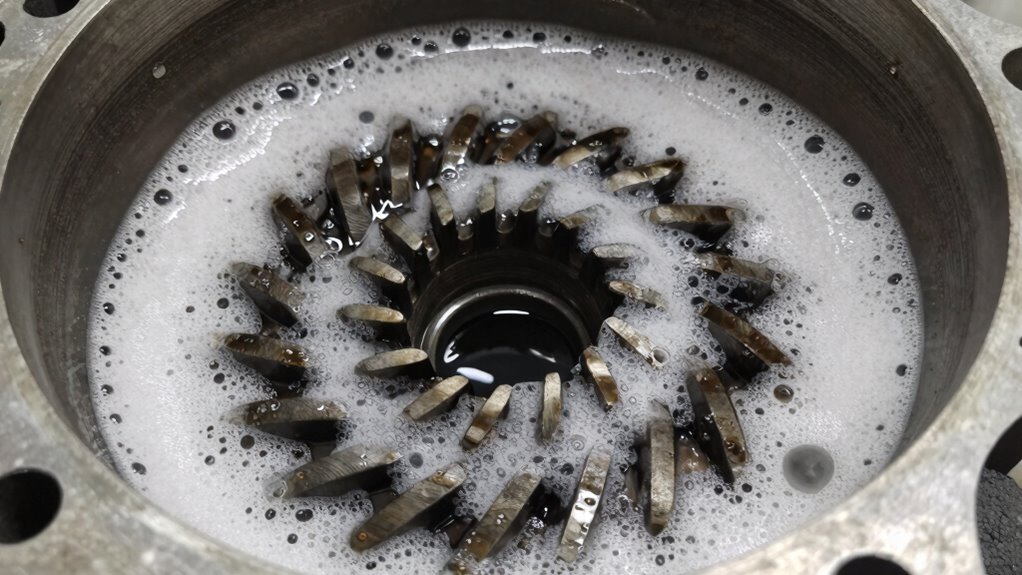
Oil foaming in gearboxes often results from multiple mechanical and operational factors that disrupt proper lubrication. Common causes include incorrect oil levels, which lead to excessive aeration or insufficient lubrication. Mechanical agitation from high-speed gears, pumps, or seal leaks also introduces air into the oil. Contamination, especially water or solids, destabilizes the lubricant and promotes foam. Additionally, poor reservoir baffling or return line placement causes splashing and aeration. Ensuring proper oil quality and system design can significantly reduce foaming issues.
gearbox reservoir baffling plates
As an affiliate, we earn on qualifying purchases.
As an affiliate, we earn on qualifying purchases.
Reservoir Design Issues That Lead to Foam Formation
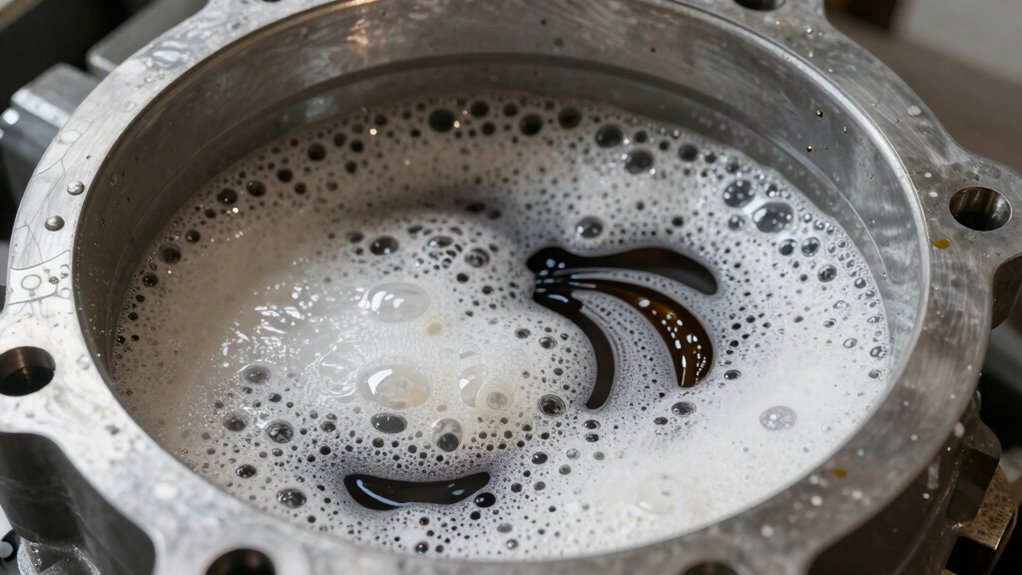
Reservoir baffling plays a vital role in separating air from the oil, but poor design can allow foam to form. Proper placement of return lines is essential; if they’re above the oil surface, splashing introduces air and worsens foaming. Addressing these design issues helps minimize foam buildup and maintains efficient lubrication. Additionally, incorporating baffle plates can improve separation and reduce foam formation.
Reservoir Baffling Efficiency
Poor baffling design within the gearbox reservoir allows air to become trapped and circulate with the lubricant, increasing the risk of foam formation. When the baffling isn’t effective, air pockets stay suspended, disrupting oil flow and promoting foam. Proper baffling directs oil and air separation, giving bubbles time to escape. To assess baffling efficiency, consider this table:
| Baffle Type | Function | Common Issue |
|---|---|---|
| Vertical baffles | Prevent oil splash, guide flow | Insufficient baffling length |
| Horizontal baffles | Promote air separation | Poor placement or gaps |
| Baffle plates | Enhance oil-air separation | Incorrect angles, gaps |
| Baffle screens | Trap debris, improve flow | Clogging or improper fit |
| Flow deflectors | Redirect oil, minimize turbulence | Misaligned or missing parts |
Inadequate baffling hampers air release, causing foam buildup and operational issues. Effective baffling design ensures proper separation and minimizes foam formation.
Return Line Placement Effects
Have you considered how the placement of return lines influences foam formation in gearboxes? If return lines are positioned above the oil surface, they splash and introduce air into the lubricant, creating bubbles that lead to foam. Poorly designed return paths can cause turbulence, preventing air from escaping naturally and increasing aeration. Insufficient residence time in the reservoir means these entrained air bubbles don’t have enough time to dissipate before the oil circulates back into the gearbox. Additionally, return lines that direct oil into zones of high agitation or near the surface promote foaming. Proper placement guarantees gentle oil return, minimizes splashing, and allows trapped air to escape, ultimately reducing foam formation and improving gearbox performance. Proper reservoir design plays a crucial role in managing foam and ensuring smooth gear operation.

Transmission Fluid Tester Kit Gasoline & Diesel Gearbox Oil Diagnostic Tool High-Precision Diagnostic Analysis Tool with 31.5in Probe Transmittance/Temperature Testing, 2.8in Display (4 Batteries)
【WHY NEED IT】Our transmission fluid tester features an advanced optical probe that measures light transmittance within the transmission…
As an affiliate, we earn on qualifying purchases.
As an affiliate, we earn on qualifying purchases.
How Water and Solids Contaminate Gear Oil and Cause Foam
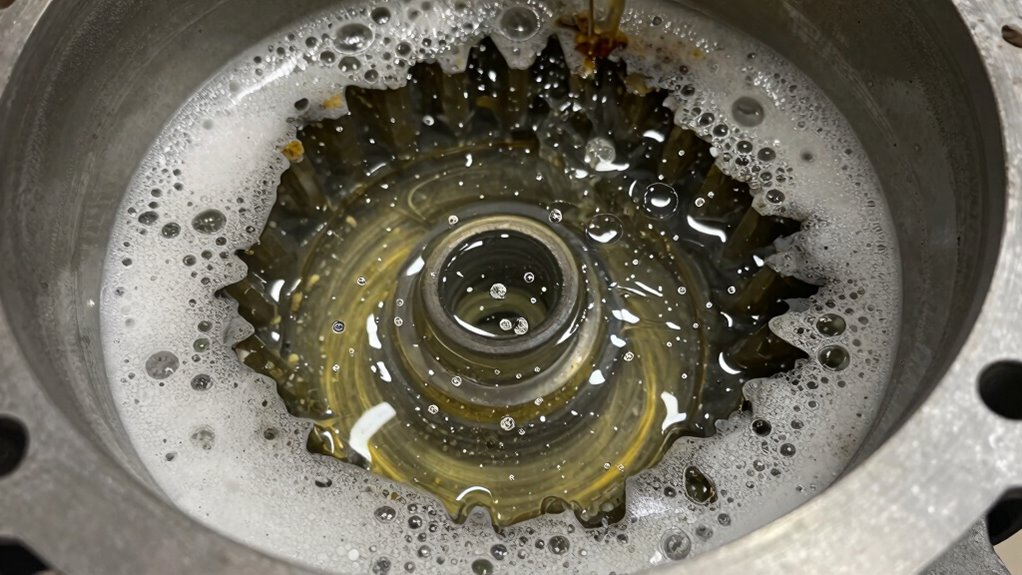
Water and solids in your gear oil can substantially increase foam formation by destabilizing the lubricant. Water creates bubbles that trap air, while solids disrupt the oil’s stability, making foam more likely to persist. Recognizing and controlling these contaminants is essential to prevent foaming and protect your gearbox. Additionally, maintaining proper fill levels is crucial, as overfilling or underfilling can exacerbate foaming issues.
Water’s Impact on Oil
Contamination by water is one of the most common and damaging issues affecting gear oil, as it directly destabilizes the lubricant’s structure and promotes foam formation. Water reduces the oil’s viscosity and separation properties, making it harder for bubbles to escape. When water mixes with oil, it creates unstable emulsions that trap air, increasing foam. This foam can prevent proper lubrication and cooling, leading to overheating and increased wear. Water also facilitates corrosion and accelerates additive depletion, further compromising oil performance. Even small amounts of water can markedly impair the lubricant’s ability to release trapped air, resulting in persistent foaming issues. Regular monitoring and prompt removal of water contamination are essential to maintaining effective lubrication and preventing foam-related problems. Monitoring techniques can help detect water presence early, ensuring timely maintenance and avoiding costly downtime.
Solids Accelerate Foam
Solids like dust, dirt, and debris often enter gearboxes through leaks, poor sealing, or contaminated handling, and their presence can especially worsen foaming issues. These particles destabilize the oil’s natural film, trapping air bubbles and promoting foam formation. As solids accumulate, they interfere with oil’s ability to release trapped air efficiently, leading to persistent foaming problems. Here’s how solids impact different components:
| Contaminant Type | Effect on Foam Formation |
|---|---|
| Dust & Dirt | Disrupts oil film stability |
| Metal Debris | Causes localized agitation |
| Fine Particles | Accelerates additive depletion |
Contamination control is especially important for AI Ethicist Jobs and other roles focused on maintaining safety standards, emphasizing the need to prevent solids ingress to keep foam under control and ensure smooth gearbox operation.
Operational Conditions That Stir Up Foam in Your Gearbox
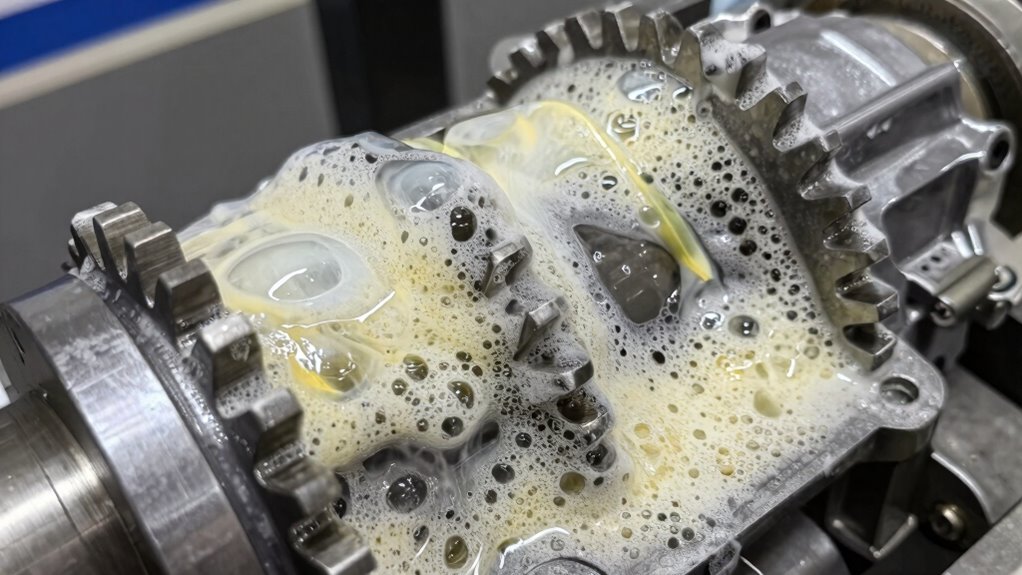
Operational conditions that involve high-speed movement and rapid fluid flow are primary factors that stir up foam in your gearbox. When gears turn quickly, they create turbulence and mechanical agitation that trap air in the lubricant. This trapped air forms bubbles that can’t escape easily, especially if the oil isn’t flowing properly or if the fill level is incorrect. High-speed operation also increases the likelihood of splashing, splattering lubricant and introducing additional air. Pumping action can further entrain air, especially if the system’s design doesn’t facilitate proper air release. Dusty, dirty environments combined with rapid movement intensify foam formation. These conditions combine to promote aeration, leading to foam buildup that hampers lubrication and heat dissipation, risking gear damage and reduced efficiency. Proper fill level management is essential to minimize air entrapment and maintain optimal gear operation.
Signs and Consequences of Gearbox Foaming
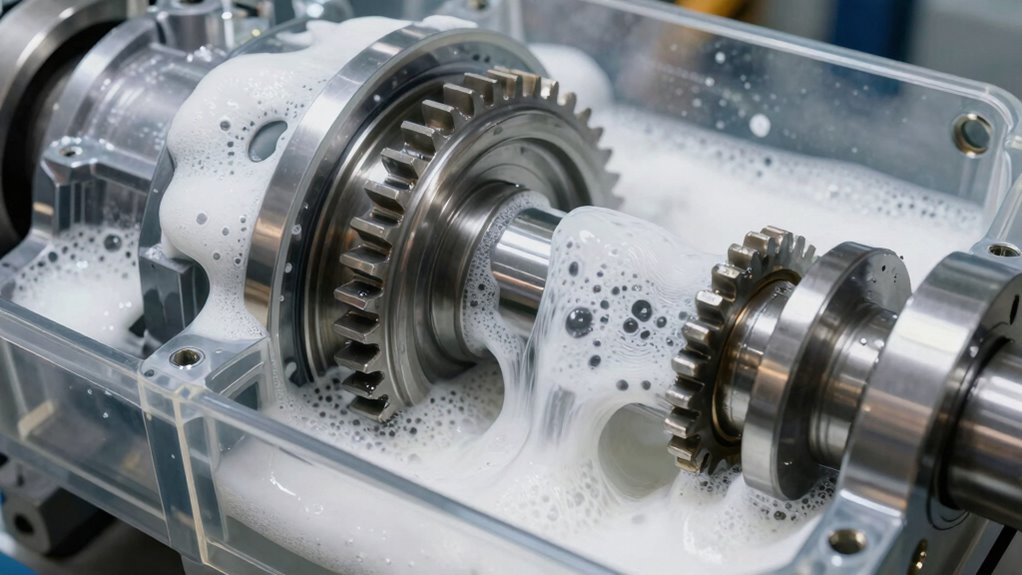
Foaming in your gearbox can quickly become apparent through a range of noticeable signs that indicate trouble beneath the surface. You might see excessive oil splashing, irregular gearbox noises, or oil leaks around vents and seals. These signs point to aeration and foam buildup, which impair lubrication. Proper water damage and rug cleaning techniques can help prevent moisture intrusion that might contribute to such issues. Here are three critical consequences: 1. Reduced cooling efficiency, causing overheating and potential component damage. 2. Decreased lubricant film strength, leading to increased gear wear and possible failure. 3. Oil venting or spillage, which results in environmental hazards and lubricant loss. Ignoring these signs can accelerate wear, damage seals, and escalate repair costs. Recognizing these symptoms early helps prevent severe failures and keeps your gearbox running smoothly.
How to Diagnose Gearbox Foam With Oil Tests and Inspections
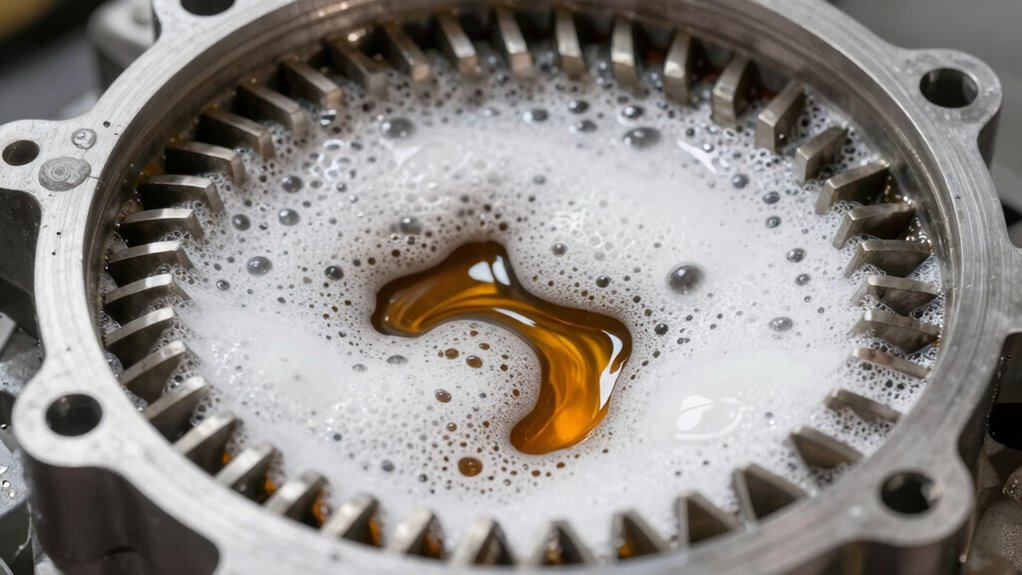
To accurately diagnose foam in your gearbox, start with targeted oil tests and thorough inspections. Begin by analyzing the oil’s physical condition—look for visible foam, froth, or bubbles on the surface. Perform laboratory tests like infrared spectroscopy or particle counting to detect contamination, water ingress, or additive depletion. Check for water presence using a quick test strip or Karl Fischer titration; water is a common foam catalyst. Inspect the oil level and reservoir design, ensuring the oil isn’t overfilled or underfilled, and verify that return lines and baffling are functioning correctly. Examine for signs of mechanical agitation, such as unusual noise or vibration, which can indicate excessive aeration. Understanding aeration mechanisms can help prevent foam formation and improve gearbox longevity. Combining these tests and inspections helps pinpoint whether foam results from levels, contamination, or mechanical issues.
Practical Steps to Prevent Oil Level Errors and Reduce Foam
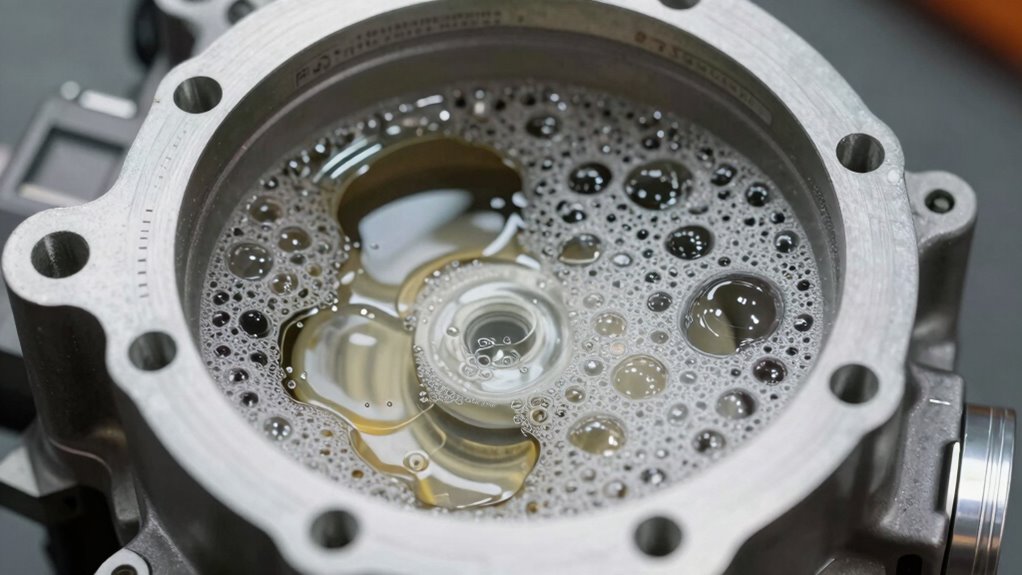
Maintaining the correct oil level is one of the most straightforward yet effective ways to prevent foam formation in gearboxes. To achieve this, you should:
Keeping gearbox oil levels correct prevents foam and maintains optimal performance.
- Regularly check the oil level with the gearbox off and on a level surface.
- Follow manufacturer-recommended fill levels precisely, avoiding overfilling or underfilling.
- Use the right type and grade of lubricant, ensuring it’s free from contamination and additives are intact.
- Consider understanding gearbox maintenance practices to extend the lifespan and efficiency of your gear system.
These steps help prevent excessive aeration caused by overfilling and reduce the risk of inadequate lubrication from low levels. Consistent monitoring and proper topping-up ensure the oil remains at ideal levels, reducing foam formation and maintaining gearbox efficiency. Remember, proper oil management is key to avoiding foam-related issues.
Best Practices for Maintaining Gearbox Oil and Avoiding Foam
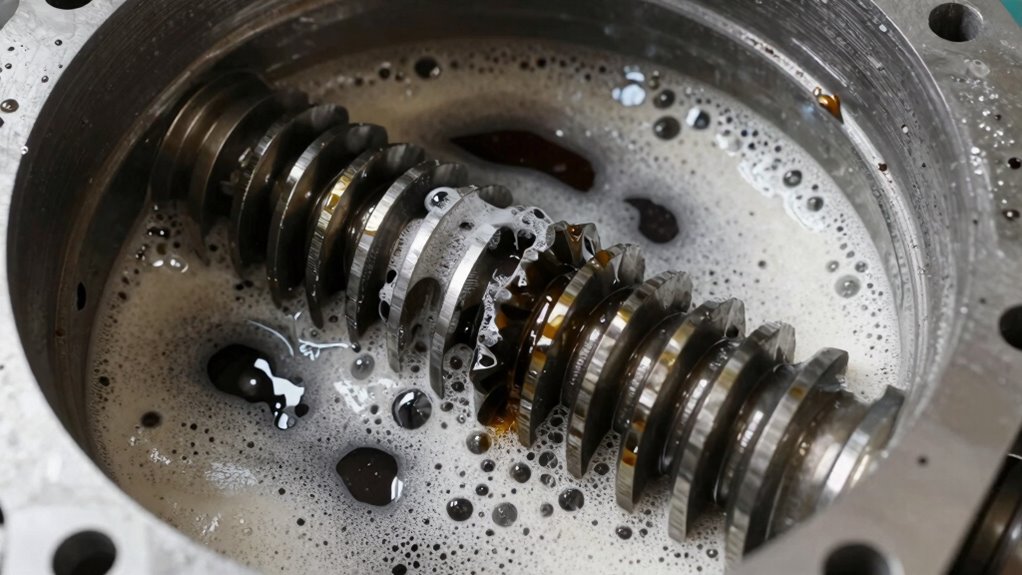
Properly maintaining gearbox oil is essential for preventing foam and ensuring reliable operation. Start by regularly checking and maintaining the correct oil level, avoiding overfill or underfill. Use the proper lubricant specified by the manufacturer, and ensure it’s clean and free of water or debris. Conduct routine oil analysis to detect contamination or additive depletion early. Keep reservoir baffles and return lines in good condition to minimize aeration and improve air separation. Maintain a clean environment to reduce dust and debris ingress. Avoid rapid flow rates and excessive mechanical agitation by controlling operating speeds and using appropriate pumps. Finally, schedule timely oil changes and address any leaks or seal issues promptly to prevent contamination and foam formation.
Frequently Asked Questions
Can Foam Form Even With Correct Oil Levels in a Gearbox?
Yes, foam can form even with correct oil levels. Mechanical agitation from high-speed operation, gear interactions, or pump activity introduces air into the oil. Contaminants like water or solids, poor reservoir design, or inadequate residence time also cause foaming. To prevent this, you should regularly check for contamination, guarantee proper reservoir design and maintenance, and monitor operational conditions. Addressing these factors helps minimize foam formation despite correct oil levels.
How Does Temperature Fluctuation Influence Foam Formation?
Temperature fluctuations considerably influence foam formation because they change oil viscosity and vapor pressure. When temperatures rise, oil becomes thinner, enabling air bubbles to enter and be trapped more easily, increasing foam. Conversely, cold temperatures thicken the oil, impeding air release. You need to monitor temperature changes carefully, ensuring proper lubrication and avoiding conditions that promote aeration, which can lead to foam buildup and operational issues.
Are Certain Oil Types More Prone to Foaming Than Others?
Yes, certain oil types are more prone to foaming. Synthetic oils often foam less due to their stable chemical structure, but some mineral oils with high additive content can foam more easily. Oils with poor demulsibility or those contaminated with water or solids also increase foam risk. You should choose oils formulated with anti-foam additives and guarantee proper maintenance to minimize foaming issues and protect your gearbox.
What Role Do Gearbox Design Features Play in Foam Buildup?
Gearbox design features greatly influence foam buildup by affecting oil circulation and air separation. If your gearbox has poor baffling or return paths positioned above the lubricant surface, it’ll trap and splash air into the oil, causing foam. Inadequate reservoir design and insufficient residence time also prevent air from naturally dissipating, leading to foam accumulation. Ensuring proper tank geometry and baffling helps promote effective air separation and reduces foam formation.
How Often Should Oil Be Tested for Foam-Related Issues?
You should test your gearbox oil regularly, ideally every 3 to 6 months, especially if you notice signs of foaming or suspect contamination. Frequent testing helps catch issues early, like water ingress, debris, or additive depletion that can lead to foaming. If your equipment runs in harsh environments or high-speed conditions, consider testing more often. Consistent monitoring guarantees you can address problems before they cause significant damage.
Conclusion
Properly maintaining your gearbox oil level is essential—did you know that incorrect fill levels can cause foaming, leading to equipment failure? By following best practices, you can reduce foam formation and extend your gearbox’s lifespan. Remember, over 60% of gearbox issues stem from simple fill-level errors. Staying vigilant with regular inspections and proper maintenance isn’t just smart—it saves you time and money in the long run. Keep your gearboxes running smoothly!