
Using regular gear oil in your transfer case isn’t always the right choice because it lacks the specialized additives needed for modern four-wheel-drive components. Gear oil is designed for different gears and may not provide the proper lubrication, friction control, or heat protection your transfer case requires. Choosing the correct fluid guarantees smooth operation and longer component life. To learn more about why specific transfer case fluids are essential, keep exploring the details below.

Get business pricing on garage and car supplies
- Business-only prices and quantity discounts
- Tax-exempt purchasing
- Multiple users, one account, clear invoices
Key Takeaways
- Transfer case fluid is specially formulated for four-wheel-drive components, unlike standard gear oil.
- Gear oil lacks friction modifiers needed for modern transfer case wet clutches.
- Transfer case fluids contain additives to manage heat and prevent corrosion specific to transfer case parts.
- Using gear oil instead of transfer case fluid can cause poor clutch engagement and increased wear.
- Proper fluid selection ensures optimal lubrication, reduces damage, and extends transfer case lifespan.
transfer case fluid replacement kit
As an affiliate, we earn on qualifying purchases.
As an affiliate, we earn on qualifying purchases.
Do I Need to Change My Transfer Case Fluid?
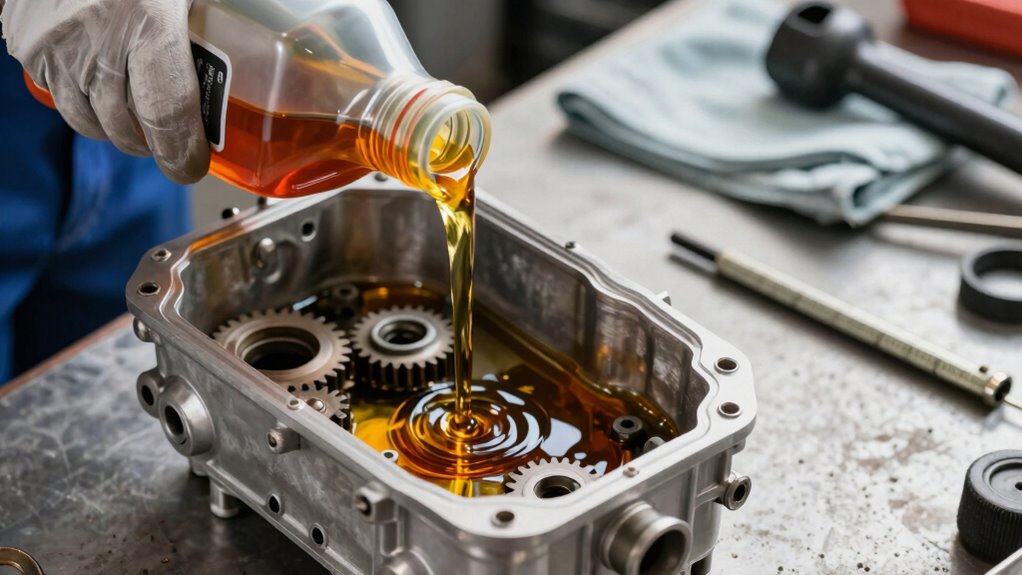
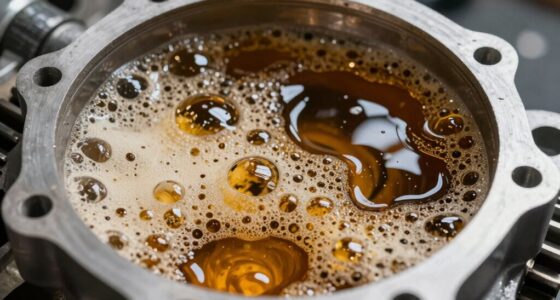
You might wonder if it’s time to change your transfer case fluid. The answer depends on your vehicle’s age, driving conditions, and manufacturer recommendations. Generally, transfer case fluid should be replaced every 30,000 to 60,000 miles, but some vehicles have specific intervals listed in the owner’s manual. Signs that you need a change include unusual noises like clunking or grinding, increased driveline vibrations, or fluid leaks. If you notice a burnt smell or dark, contaminated fluid when checked, it’s a clear sign to change it. Regular maintenance helps prevent internal component wear, maintains smooth operation, and extends the life of your transfer case. Always use the fluid type specified by your vehicle manufacturer to guarantee ideal performance. Proper fluid selection and timely replacement are essential for maintaining optimal projector performance.
As an affiliate, we earn on qualifying purchases.
Transfer Case Fluid vs. Gear Oil: What’s the Difference?
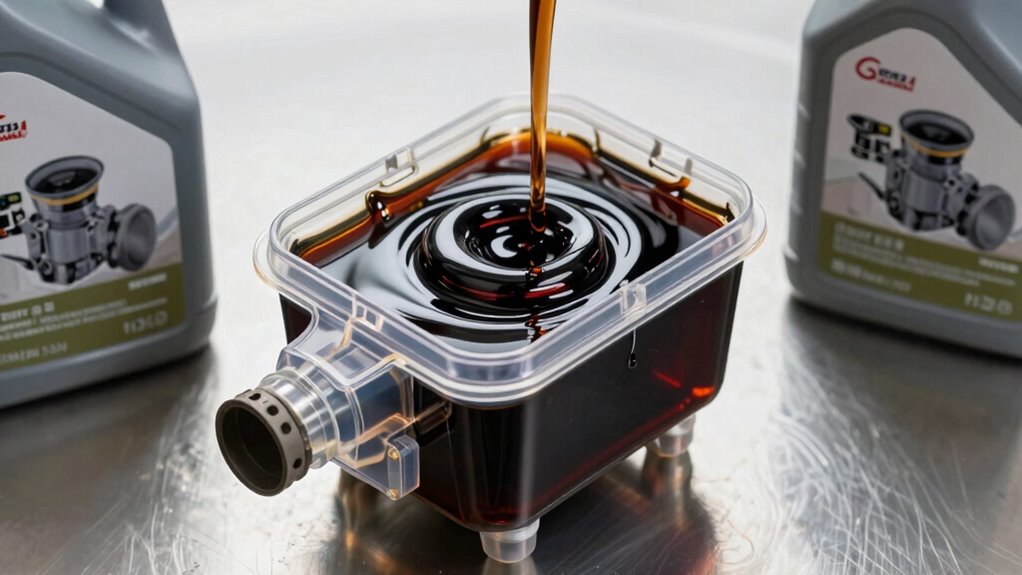
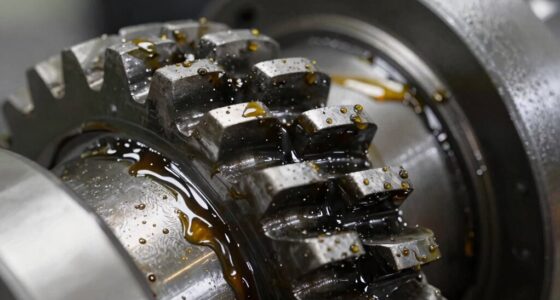
Transfer case fluid and gear oil may seem similar at a glance, but they are formulated for different purposes within your vehicle’s drivetrain. Transfer case fluid is specifically engineered to handle the unique demands of four-wheel drive systems, including wet clutches, planetary gearsets, and heat management. It often contains additives that improve friction control, wear protection, and temperature stability. Proper formulation is essential to ensure that the transfer case functions correctly and maintains longevity. Gear oil, typically SAE 90 mineral oil, is designed for gear reduction units and lacks the specialized additives needed for transfer cases. Using gear oil in a transfer case can lead to insufficient lubrication, clutch slippage, and increased wear. Conversely, standard transfer case fluid provides the necessary friction characteristics and durability for ideal performance and longevity of your four-wheel-drive system.
As an affiliate, we earn on qualifying purchases.
Why Modern Transfer Cases Need Special Fluids
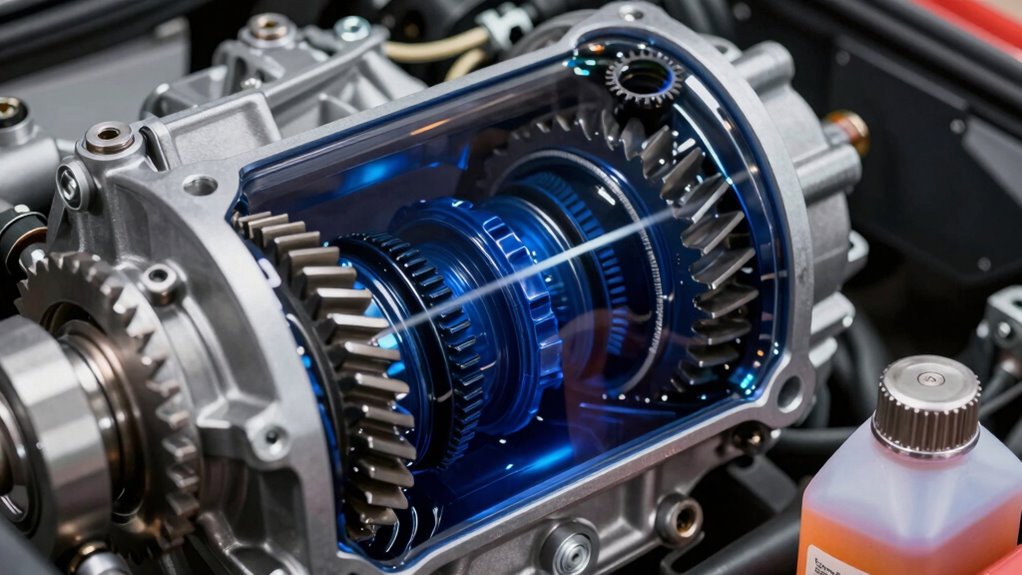
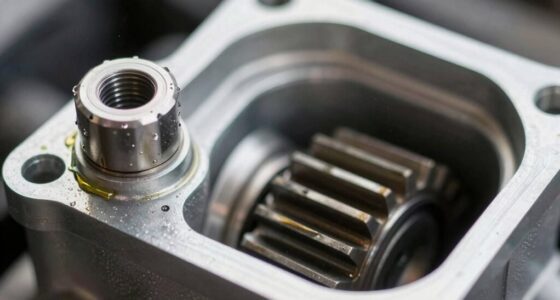
Modern transfer cases incorporate advanced components like wet clutches, planetary gearsets, and integrated oil pumps that demand specialized lubrication. Regular gear oil or engine oil can’t meet these needs because they lack specific additives for friction control, heat resistance, and component compatibility. Using the wrong fluid results in poor clutch engagement, increased wear, and driveline noise. To keep your transfer case functioning properly, you need fluids formulated for its complexity. Here’s a quick comparison:
| Feature | Transfer Case Fluid | Gear Oil |
|---|---|---|
| Friction Modifiers | Yes, for wet clutches | No |
| Heat Resistance | High | Moderate |
| Compatibility with Components | Designed for planetary gears, wet clutches | Not optimized |
Choosing the right fluid ensures smooth operation and longevity. Proper lubricant selection is essential for maintaining transfer case health and avoiding costly repairs.
best transfer case fluid for four-wheel drive
As an affiliate, we earn on qualifying purchases.
As an affiliate, we earn on qualifying purchases.
How Transfer Case Fluids Are Engineered for Complex Components
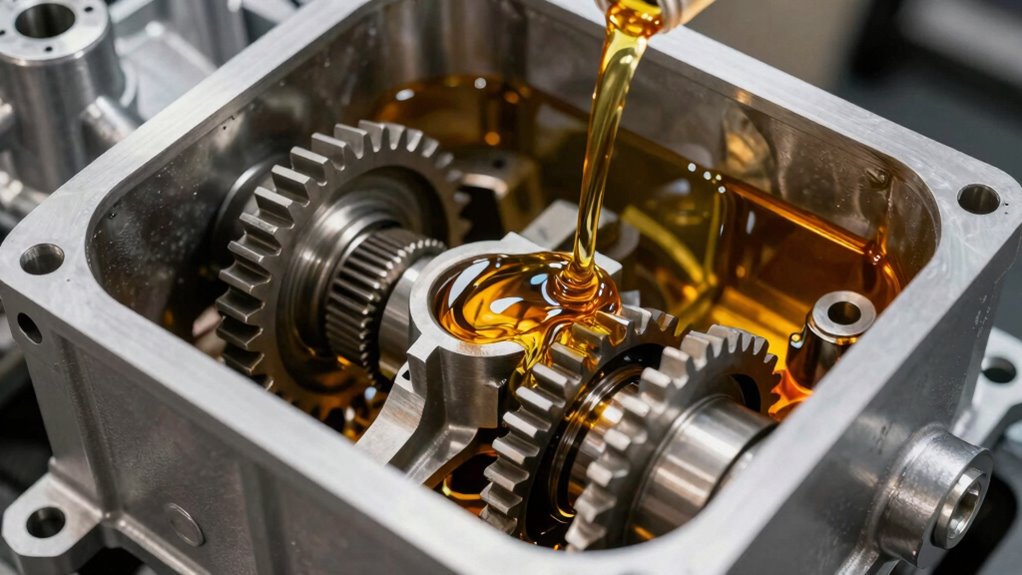
Because transfer case fluids must lubricate a variety of complex components simultaneously, they are carefully engineered with a precise balance of additives. These additives provide anti-wear protection for bearings, chains, sprockets, and planetary gearsets that generate high heat and friction. They also include friction modifiers to ensure proper engagement of wet clutches and reduce driveline clunk. Special dispersants keep particles suspended, preventing deposits that can impair performance. Viscosity modifiers ensure consistent flow across temperature ranges, while corrosion inhibitors protect internal metals. The formulation must balance lubrication, friction control, and thermal stability. Additionally, the development of advanced additive technology enhances the performance and longevity of transfer case fluids. This intricate engineering ensures the fluid performs reliably under demanding conditions, safeguarding your transfer case’s intricate system and extending its lifespan.
How to Choose the Right Transfer Case Fluid for Your Vehicle
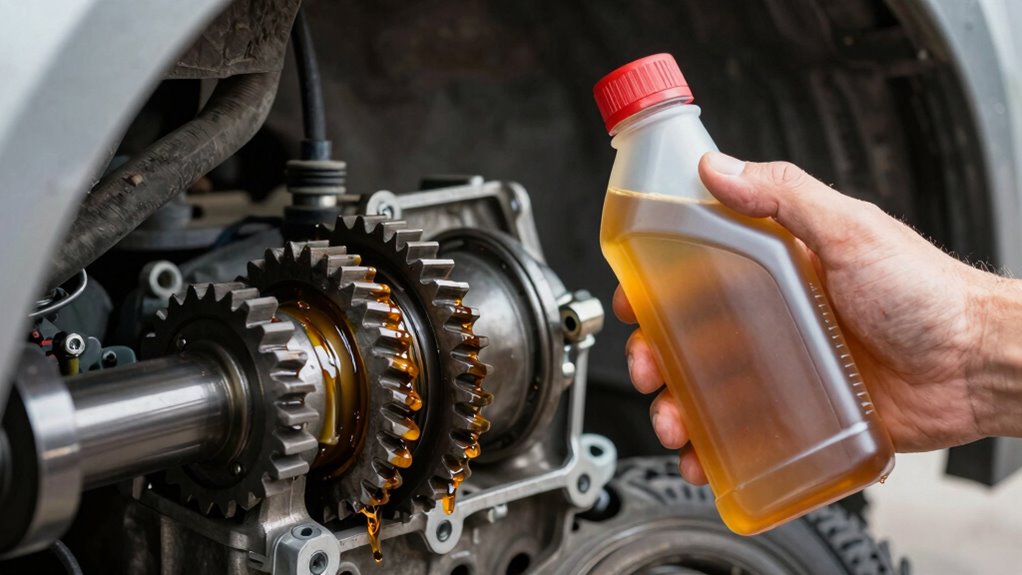
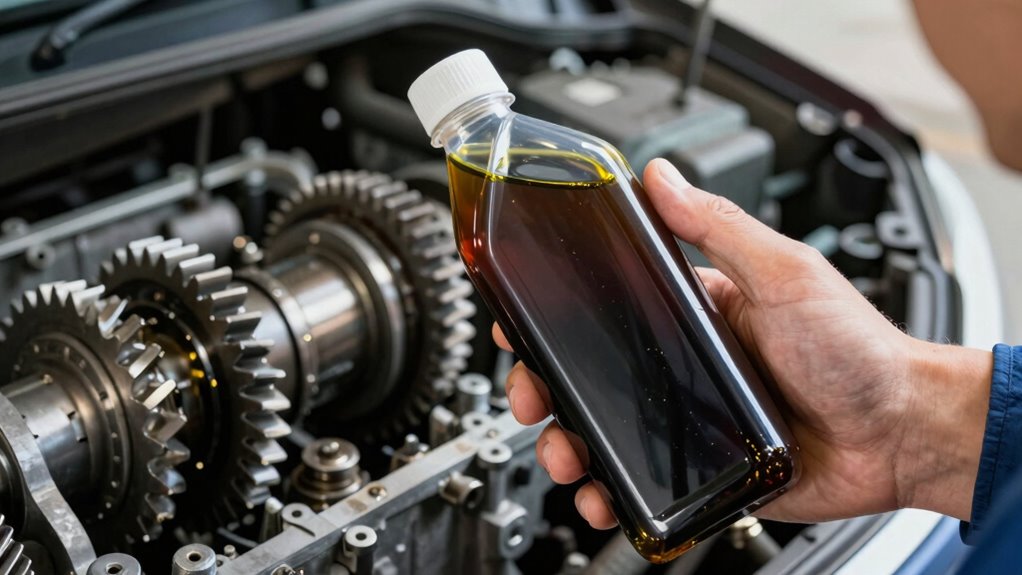
Choosing the right transfer case fluid begins with consulting your vehicle’s owner’s manual or manufacturer’s specifications. These documents specify the correct fluid type and viscosity, ensuring peak performance. Pay attention to whether your vehicle requires transfer case fluid, ATF, or gear oil. Some modern vehicles can use synthetic transfer case fluids for better protection, while older models may need mineral-based oils. Use the table below to identify suitable options based on your vehicle:
| Vehicle Type | Recommended Fluid |
|---|---|
| GM heavy-duty trucks | ATF or Auto Trak II |
| Ford, Chrysler, Dodge | Performance transfer case fluid |
| Older vehicles | SAE 90 mineral gear oil |
| Vehicles with wet clutches | Specialized transfer case fluid |
| Modern models | Fully synthetic transfer case fluid |
Always follow manufacturer specs to prevent damage. Understanding fluid compatibility is essential for maintaining optimal transfer case performance.
Frequently Asked Questions
Can I Use Transmission Fluid in My Transfer Case?
You can use transmission fluid in your transfer case only if your vehicle’s manufacturer specifically recommends it. Many modern transfer cases are designed to work with certain types of ATF, which provide the right friction and lubrication properties. However, if your owner’s manual advises a dedicated transfer case fluid, stick to that to avoid potential damage, noise, or premature wear. Always check your vehicle’s specifications before switching fluids.
What Are Signs of Transfer Case Fluid Failure?
You might notice your transfer case whispering for help through unusual noises like clunking or whining, especially during shifts. You could feel a subtle hesitation or roughness in your drivetrain, and the fluid may appear dark, cloudy, or have a burnt smell. These signs hint that your fluid isn’t doing its job anymore, risking wear and damage to internal parts. Addressing it early helps keep your four-wheel drive smooth and reliable.
How Often Should I Check Transfer Case Fluid Levels?
You should check your transfer case fluid levels at least every 30,000 miles or if you notice unusual noises, driveline clunk, or difficulty shifting into four-wheel drive. Regular inspections can prevent damage and guarantee proper lubrication. If you frequently tow or drive off-road, consider more frequent checks. Always consult your vehicle’s owner manual for specific intervals, and do a fluid level check when the vehicle is on a level surface.
Are Synthetic Transfer Case Fluids Worth the Extra Cost?
Absolutely, synthetic transfer case fluids are worth the extra cash—think of them as the premium latte for your truck’s drivetrain. They offer better lubrication, reduce driveline clunk, and handle heat like a champ. Sure, conventional fluids might save you a buck now, but your transfer case will thank you with longer life and smoother operation. Invest a little more, and your ride stays happier, quieter, and more reliable.
Can Using the Wrong Fluid Damage Transfer Case Components?
Yes, using the wrong fluid can damage your transfer case components. If you put engine oil or gear oil where transfer case fluid should be, it won’t lubricate bearings, chains, and gears properly, causing increased wear and overheating. Incorrect fluids can also cause wet clutch slipping and driveline noise. Over time, these issues lead to premature component failure, reducing your transfer case’s lifespan and risking costly repairs.
Conclusion
Understanding the differences between transfer case fluids and gear oils helps you choose the right product for your vehicle. Did you know that using the wrong fluid can lead to component failures within just 50,000 miles? Staying informed guarantees your transfer case stays lubricated properly, preventing costly repairs. Regular fluid checks and using the correct fluid type keep your vehicle running smoothly and extend its lifespan. Don’t overlook this small detail—your vehicle’s performance depends on it.
Fall Picks
fall essentials
As an affiliate, we earn on qualifying purchases.