
Using the wrong gear oil, like GL-5 instead of GL-4, can quickly damage your syncros because GL-5’s high EP additives react with bronze and copper parts, causing corrosion, wear, and surface fatigue. GL-4 offers better compatibility for sensitive components and reduces the risk of damage. Understanding how these oils differ helps prevent costly repairs. Stay tuned to learn how to choose the right gear oil and avoid common mistakes.
Key Takeaways
- Using GL-5 instead of GL-4 can cause chemical reactions that damage bronze and copper syncros.
- GL-5’s higher EP additive levels may lead to corrosion and accelerated wear of syncros and gear components.
- Mixing gear oils or choosing the wrong type risks incompatibility, surface fatigue, and micro-welding of syncros.
- GL-4 is suitable for moderate loads, reducing the risk of chemical damage to sensitive syncro and gear materials.
- Proper oil selection based on manufacturer specs prevents syncro destruction and extends gear longevity.

Yokoma 220V Filtering Machine Portable Hydraulic Oil Filter Cart Single Cylinder Mobile Oil Filtration Purification System 3um Fine Size with 78.74in/2m PVC Hose
【Efficiency】- Effectively maintain the performance of the oil, with high purification accuracy. Old oil can be regularly filtered...
As an affiliate, we earn on qualifying purchases.
GL-4 vs. GL-5: What’s the Difference and Which Is Better?
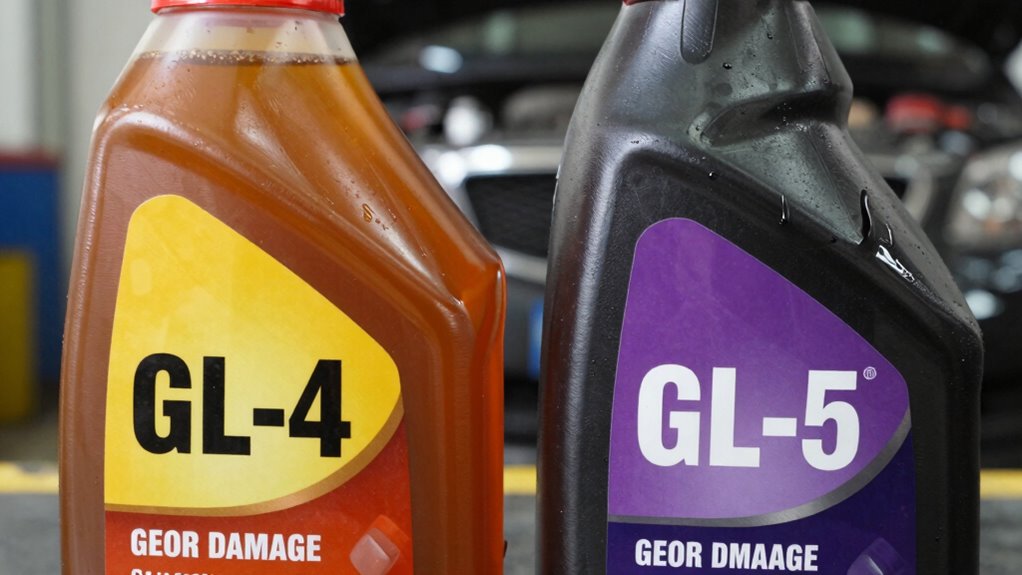
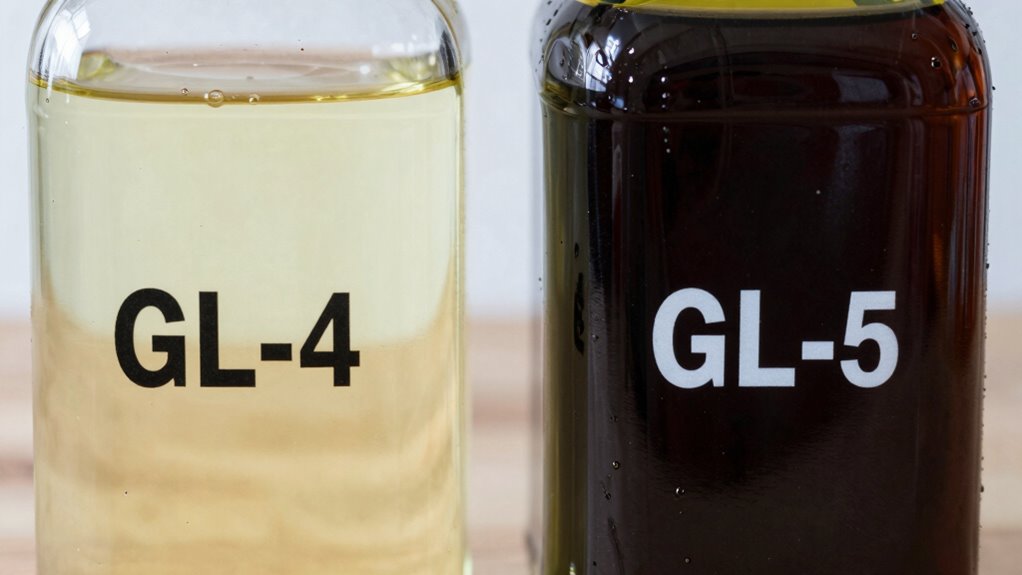
Have you ever wondered what sets GL-4 and GL-5 gear oils apart? The main difference lies in their extreme pressure (EP) additive levels. GL-4 contains about 50% of the EP additives found in GL-5, which are sulfur and phosphorus compounds that form a sacrificial layer on gear surfaces. GL-5 offers roughly twice the EP protection, making it suitable for high-pressure applications like hypoid gears in axles. However, this higher additive concentration can react aggressively with bronze and copper components, risking damage to synchromesh rings. GL-4 is better for moderate loads and speeds, especially in manual transmissions and transaxles. Choosing the right gear oil depends on your equipment’s specific needs and manufacturer recommendations. Using the wrong type can cause significant gear and component damage. Understanding gear oil properties and their impact on different materials is essential for maintaining drivetrain longevity.

JARYANNIX 220V Portable Filtering Machine, Hydraulic Oil Filter Cart with Single Barrel, Oil Filtration Purification System with 78.74in/2m PVC Hose, 63 L/min
Excellent Purification Performance: Filter elements ranging from 3μm to 40μm are available on demand. Equipped with a dual...
As an affiliate, we earn on qualifying purchases.
Can Using the Wrong Gear Oil Damage Your Synchromesh and Gears?
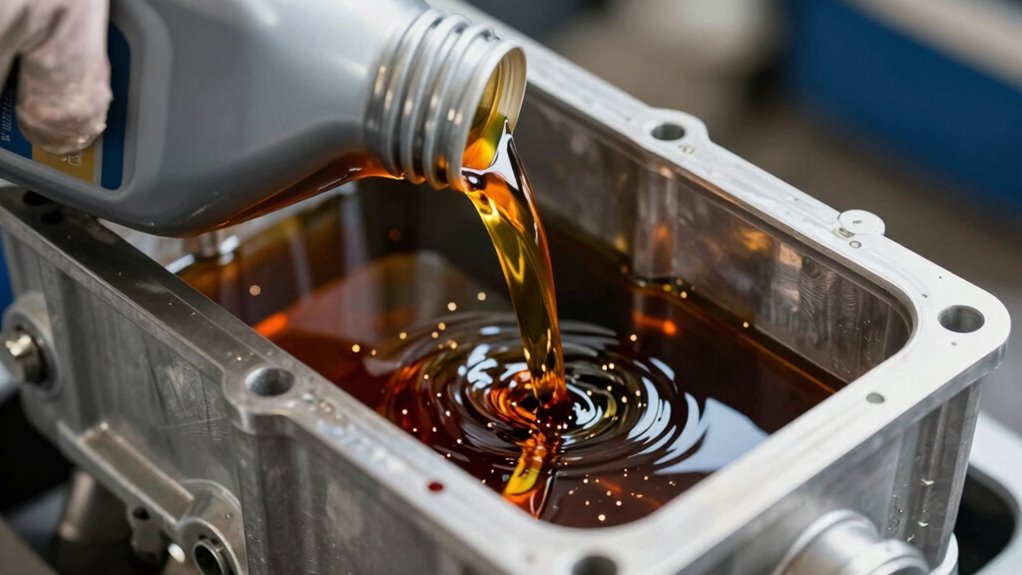
Using the wrong gear oil can cause chemical reactions that damage your synchromesh rings, especially if you use GL-5 in applications meant for GL-4. This mismatch can accelerate wear and lead to costly repairs. Always check your manufacturer’s recommendations to avoid unnecessary damage to gears and synchromesh components. Additionally, choosing the appropriate gear oil type ensures optimal performance and longevity of your transmission components.
Chemical Reactions With Syncros
When gear oils contain high levels of extreme pressure (EP) additives, they can react aggressively with bronze and copper components in your synchromesh rings. These additives, mainly sulfur and phosphorus compounds, form a sacrificial layer to protect gear surfaces under high stress. However, in syncros, they can cause corrosion and deterioration of bronze and copper parts. These chemical reactions can be accelerated by certain additives, leading to faster wear and damage. This chemical reaction weakens the material, leading to pitting, cracking, or loss of integrity. Over time, this damage hampers the syncros’ ability to smoothly engage gears, causing grinding and shifting issues. Using a GL-5 oil with excessive EP additives in systems designed for GL-4 can accelerate these reactions, ultimately destroying your syncros and compromising gear operation. Always match your gear oil to manufacturer specifications to avoid such chemical reactions.
Excessive Wear Risks
Applying the wrong gear oil can lead to significant wear on both your synchromesh components and gears. Using GL-5 instead of GL-4 can cause rapid deterioration of syncros due to incompatible additives. This mismatch accelerates pitting, scoring, and micro-welding on gear surfaces. Additionally, aggressive EP additives react with bronze and copper syncro rings, weakening their integrity. The increased friction and wear reduce gear engagement smoothness and can cause costly failures. Furthermore, oil compatibility plays a crucial role in maintaining transmission health and preventing premature component failure.
Compatibility Considerations
Choosing the wrong gear oil can cause serious damage to your transmission components, especially the synchromesh rings and gears. GL-5 contains high levels of extreme pressure additives that can react aggressively with bronze and copper parts found in synchromesh systems. This chemical reaction can lead to corrosion, pitting, and ultimately, failure of the synchromesh rings. Using GL-5 in a transmission designed for GL-4 can accelerate wear and damage these delicate components. Conversely, GL-4 oils are formulated to protect gears without harming softer metals. Always check your vehicle’s manual to confirm compatibility. Ignoring manufacturer recommendations and mixing incompatible oils can result in costly repairs or decreased transmission longevity. Proper oil selection is essential for preserving both synchros and gears. Additionally, understanding gear oil specifications is crucial to ensure you choose the correct lubricant for your specific application.

220V Filtering Machine Portable Hydraulic Oil Filter Oil Filtration Purification System for Hydraulic, Lubricating, Industrial Purification 600L/h Flow, 5um Fineness
High-Efficiency Filtration: This portable oil filter delivers 5um filtration fineness with a 600L/h flow rate, ensuring rapid removal...
As an affiliate, we earn on qualifying purchases.
How Do EP Additives Affect Gear Protection and Compatibility?
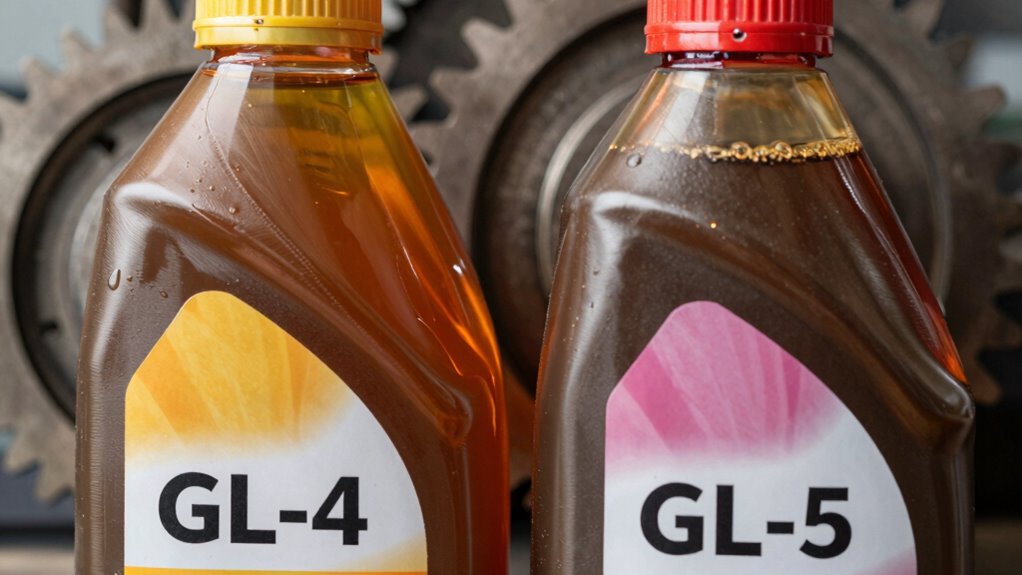
EP additives create a sacrificial layer on gear surfaces, preventing metal-to-metal contact under high pressure. However, this layer can cause compatibility issues with certain materials like bronze or copper, risking damage to components like synchromesh rings. While these additives boost pressure protection, you should consider material compatibility to avoid unintended wear or damage. Additionally, understanding regional flavor profiles and the use of additives in different gear oils can help optimize performance and longevity.
Sacrificial Layer Formation
Extreme pressure (EP) additives work by forming a sacrificial layer on gear surfaces, protecting them from damage under high load conditions. This layer absorbs and distributes pressure, preventing micro-welds and surface wear. The effectiveness depends on additive concentration and compatibility with gear materials. Higher EP levels, like in GL-5, create a thicker sacrificial layer, offering better protection during severe conditions. However, this layer can interfere with gear metal contact if incompatible materials are involved. You should consider these factors:
- Thicker layers in GL-5 provide enhanced protection but risk chemical reactions with certain metals.
- Excessive EP additive buildup may lead to surface fatigue or incompatibility with softer metals.
- Proper formulation ensures the sacrificial layer effectively prevents micro-welding without damaging gear components.
- Understanding Free Floating concepts helps in evaluating the longevity and performance of gear oils under different conditions.
Understanding these dynamics helps you select the right gear oil for your specific application.
Material Compatibility Risks
Higher concentrations of EP additives in gear oils like GL-5 create a robust sacrificial layer that protects gear surfaces under heavy loads. However, these additives can react aggressively with bronze and copper components in synchromesh rings. This chemical interaction can cause corrosion, pitting, and accelerated wear, ultimately damaging the synchronization system. Using GL-5 where GL-4 is recommended increases the risk of incompatible reactions, especially in manual transmissions with sensitive brass or copper parts. While GL-5 offers superior extreme pressure protection, it may compromise material integrity, leading to costly repairs or gearbox failure. Always check your manufacturer’s specifications before choosing a gear oil. Selecting the wrong type can undermine gear protection and cause material incompatibility issues that threaten your vehicle’s longevity. Additionally, understanding the material compatibility of gear oils with transmission components is essential to prevent damage and ensure smooth operation.
Enhanced Pressure Protection
Additive elements in gear oils play a essential role in protecting gears under heavy loads, especially by forming a sacrificial film that prevents metal-to-metal contact. Enhanced Pressure (EP) additives, primarily sulfur and phosphorus compounds, create a protective layer that prevents micro-welds at high temperatures. This layer absorbs pressure peaks and reduces wear during extreme conditions. To understand their impact:
- Higher EP levels in GL-5 provide better protection under severe loads but can react adversely with bronze and copper components, damaging synchromesh rings.
- EP additives help prevent gear surface welding at temperatures exceeding 800°C, crucial in hypoid gears under shock loads.
- Excessive EP additive presence may cause compatibility issues, leading to equipment failure or increased wear if used improperly.
- Proper formulation ensures that EP additives deliver effective pressure protection without compromising gear material compatibility.
Always match EP levels to your gear’s operational demands for ideal protection.
TECHTONGDA Hydraulic Oil Filter Cart, 3 Stage Filtration Mobile Oil Filtration System, 63 L/min Flow, 220V Cart Filtering Machine with 78.74in/2m PVC Hose, Portable Filter Device
Efficient Filtration System: The voltage is 220v, and the power is 1500w. Adopting a single tube and three-stage...
As an affiliate, we earn on qualifying purchases.
When Should You Use GL-4 or GL-5 Gear Oil?
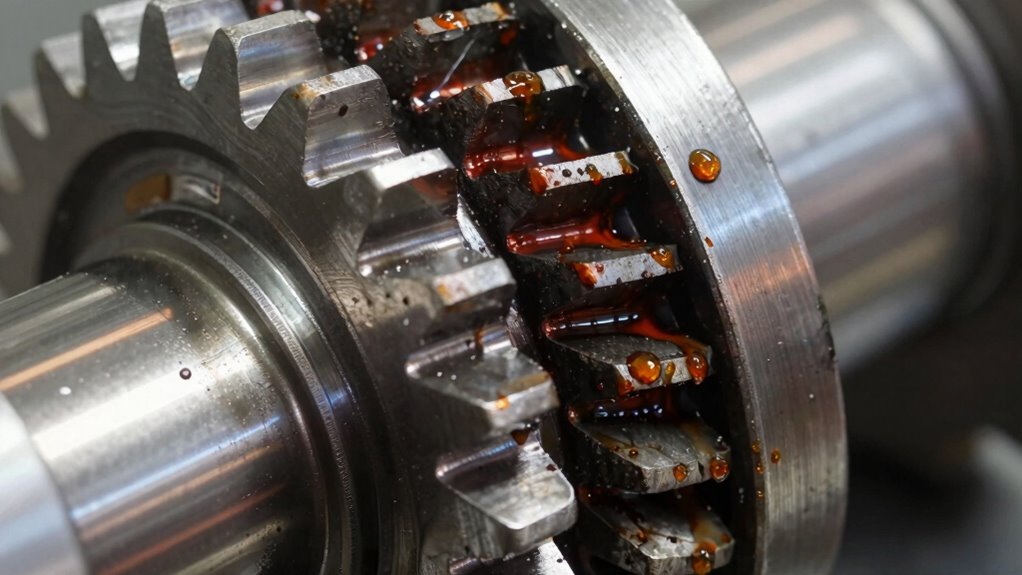
Choosing between GL-4 and GL-5 gear oil depends on the specific requirements of your vehicle or equipment. If your gearbox involves moderate loads and uses spur or helical gears, GL-4 is suitable. For high-speed, high-load hypoid gears, especially in differentials, GL-5 is recommended. Use GL-4 when synchromesh components react poorly to aggressive additives, and opt for GL-5 when extreme pressure protection is essential. Always follow the manufacturer’s guidelines to avoid damage.
| Gear Type | Suitable Oil | Load/Speed Conditions |
|---|---|---|
| Spur & Helical Gears | GL-4 | Moderate speeds & loads |
| Hypoid Gears | GL-5 | High-speed, high-load |
| Synchromesh Parts | GL-4 | Sensitive to EP additives |
| Severe Service | GL-5 | Shock loads, extreme pressure |
| General Use | Check manual | Manufacturer’s recommendation |
Key Factors to Consider When Choosing the Right Gear Oil
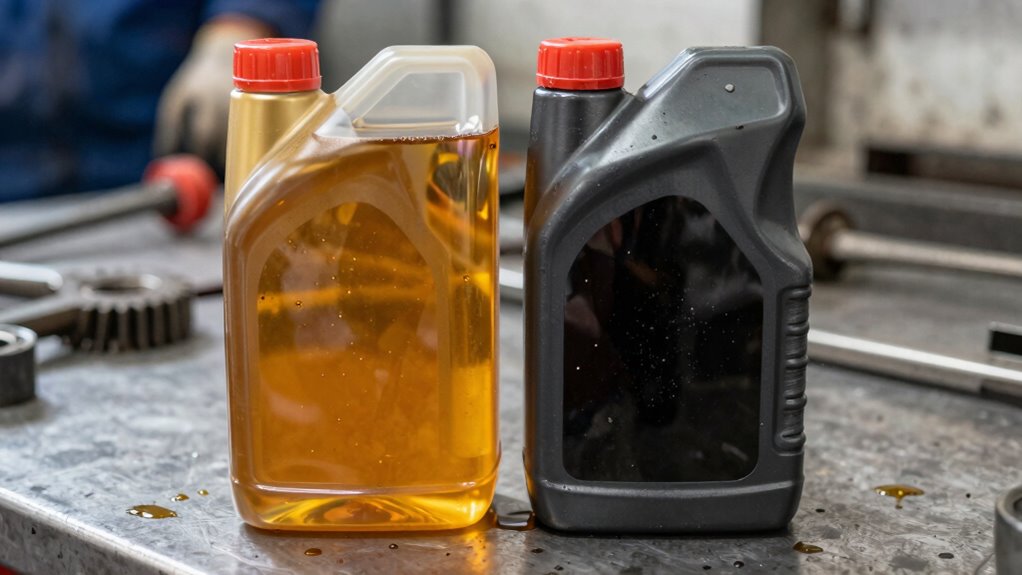
Selecting the right gear oil involves evaluating several critical factors to guarantee ideal performance and equipment longevity. First, consider the gear type and operating conditions, such as load, speed, and temperature. Different gear sets demand different additive packages; for example, hypoid gears require higher EP additive levels found in GL-5. Second, check compatibility with materials like bronze or copper components, as GL-5 can cause corrosion and damage synchromesh rings. Finally, always follow manufacturer specifications for viscosity and API ratings, as using the wrong oil can lead to premature wear or failure. To conclude:
- Gear type, load, and temperature
- Material compatibility and component protection
- Manufacturer guidelines and specifications
Prioritize these factors for peak gear performance.
Common Mistakes to Avoid When Selecting or Mixing Gear Oils
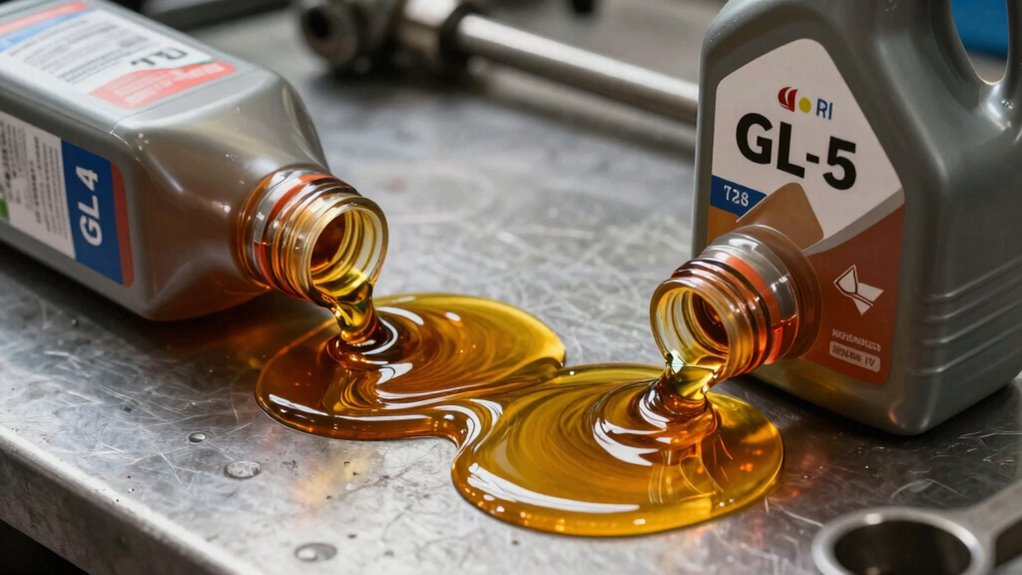
One common mistake is mixing different types of gear oils, which can lead to chemical incompatibilities and equipment damage. For example, combining GL-4 and GL-5 oils may cause adverse reactions with synchromesh components or bronze parts. To avoid this, always check your manufacturer’s specifications before choosing an oil. Additionally, using appropriate gear oil ensures optimal performance and longevity of your transmission components.
Frequently Asked Questions
Can Gear Oils Be Mixed Without Causing Damage?
You shouldn’t mix gear oils without checking compatibility first. Combining different types, especially GL-4 and GL-5, can cause chemical reactions that damage synchromesh rings or reduce lubrication effectiveness. Always consult your vehicle’s manual or manufacturer before mixing oils. If you’re unsure, it’s safer to drain the old fluid completely and refill with the recommended gear oil to prevent costly damage and guarantee maximum gear performance.
Are There Synthetic Versions of GL-4 and GL-5?
Think of synthetic gear oils as tailored suits for your transmission—designed to fit perfectly. Yes, there are synthetic versions of both GL-4 and GL-5. They offer superior protection, better temperature stability, and longer-lasting performance compared to conventional oils. Just make sure to choose a synthetic that meets your vehicle manufacturer’s specifications, as using the wrong type could lead to gear wear or damage, especially in high-stress conditions.
How Often Should Gear Oil Be Changed for Optimal Protection?
You should change your gear oil every 30,000 to 60,000 miles for peak protection, depending on your driving conditions. If you often drive in severe conditions like heavy loads, stop-and-go traffic, or off-road, consider changing it closer to the 30,000-mile mark. Regularly check the oil’s condition and level, and follow your vehicle manufacturer’s recommendations for specific intervals to keep your transmission running smoothly.
Does Climate Influence the Choice Between GL-4 and GL-5?
Climate drastically influences your gear oil choice, and ignoring it could mean catastrophic damage to your vehicle. If you live in a cold climate, you’ll want GL-4 for better flow at low temperatures, preventing gear sluggishness. In hot environments, GL-5 offers superior protection against extreme heat and pressure, extending gear life. Always follow your manufacturer’s recommendations, because choosing the wrong oil based on climate can turn your transmission into a ticking time bomb.
Are There Any Additives That Improve Compatibility Between GL-4 and GL-5?
Yes, some additive packages can improve compatibility between GL-4 and GL-5 oils. These additives often include anti-wear agents, anti-corrosion compounds, and friction modifiers that help blend different formulations smoothly. However, you should always check your vehicle’s manufacturer recommendations before adding anything. Using compatible additives can help prevent gear wear and reduce potential reactions, but improper use might still cause damage, so proceed with caution.
Conclusion
Choosing the right gear oil is essential to prevent costly damage. Did you know that using the wrong oil can reduce your transmission’s lifespan by up to 50%? Mixing GL-4 and GL-5 can destroy your syncros and gears, so always stick to the manufacturer’s recommendations. Staying informed and careful with your oil choices can save you money and avoid breakdowns—protect your ride by making smart, informed decisions today.