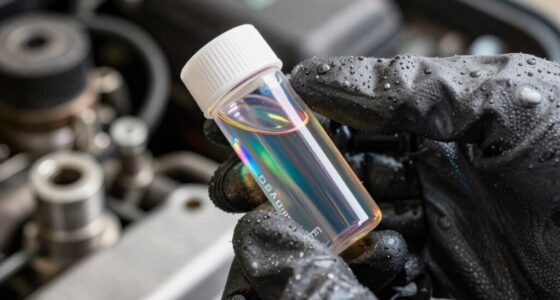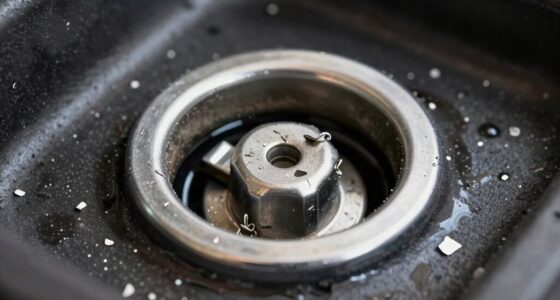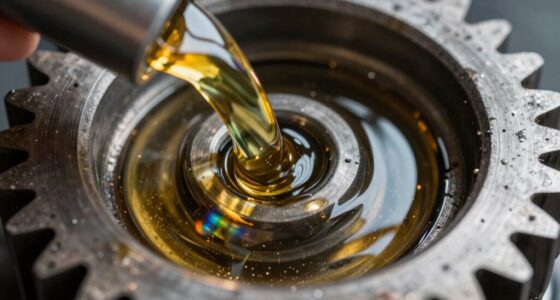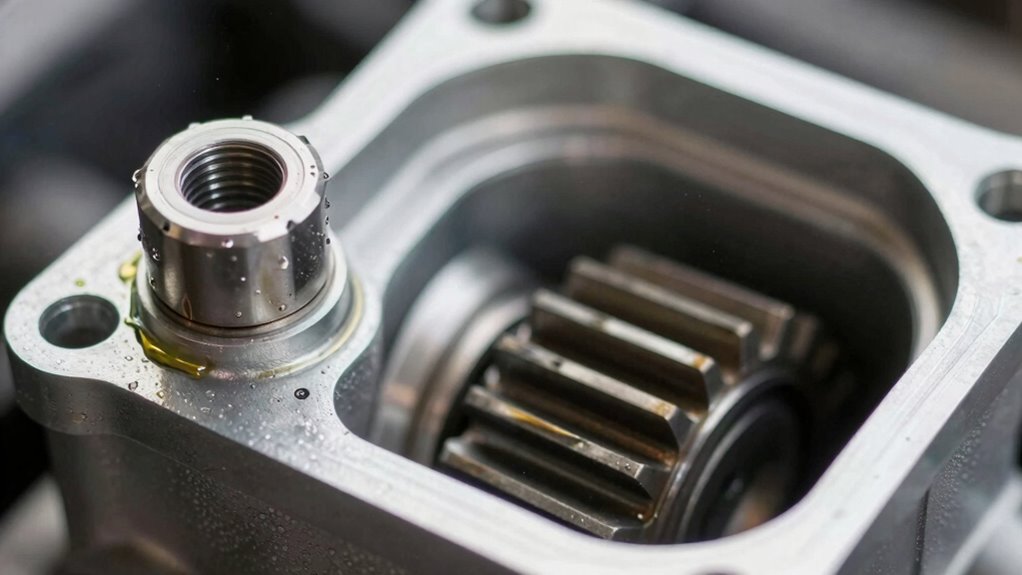
Overfilling your differential causes excess lubricant that traps air and foam, creating turbulence as gears churn the oil. This aeration reduces effective lubrication and can produce noise similar to worn bearings, which might lead you to misdiagnose the issue. The excess oil can also lead to increased internal pressure and leaks, potentially damaging seals and components. To prevent these problems, it’s essential to maintain the correct fill level—continue exploring to learn how proper maintenance can avoid these hidden issues.
Key Takeaways
- Overfilling introduces excess oil that traps air, causing aeration and foam formation in the differential fluid.
- Aerated oil reduces lubrication effectiveness, leading to noise that resembles bearing issues.
- Turbulence from too much lubricant promotes air bubbles, increasing the risk of false bearing noise diagnosis.
- Excess lubricant can create internal pressure, causing leaks and potential damage to seals and components.
- Proper fill levels prevent aeration, ensuring accurate diagnosis and optimal differential performance.
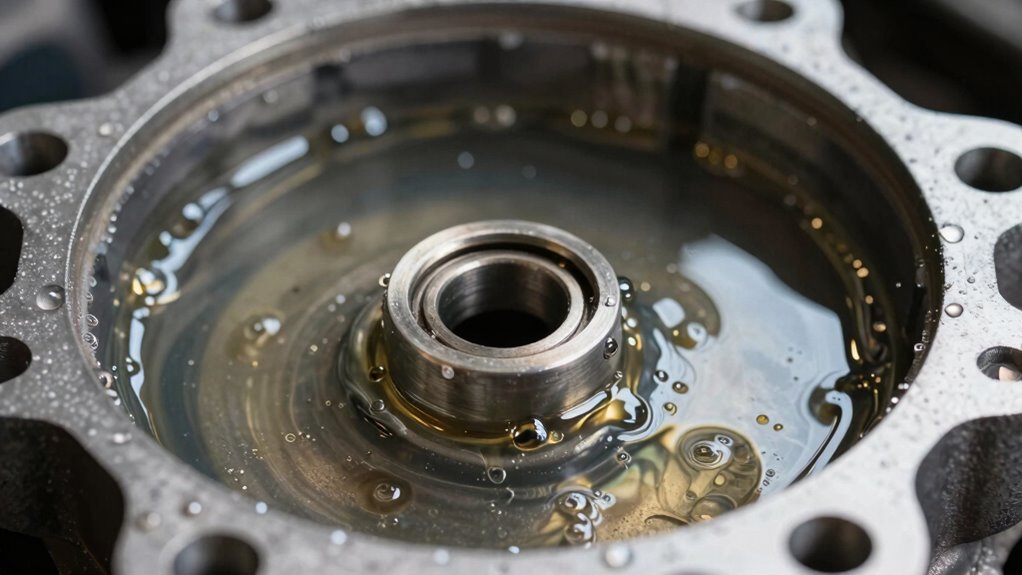
Overfilling a differential might seem harmless, but it can cause serious problems for your vehicle. When you add too much lubricant, you’re not just wasting fluid; you’re risking aeration, which can lead to noise and damage that mimic bearing issues. The key to avoiding these problems lies in understanding how lubricant viscosity and differential design play vital roles in maintaining proper function. Lubricant viscosity determines how thick the oil is at different temperatures, and using the wrong viscosity can impair lubrication, especially when overfilled. Too much fluid can cause foaming as the gear motion agitates the excess oil, trapping air bubbles that disrupt the fluid’s ability to lubricate effectively. This aeration reduces the oil’s capacity to coat moving parts, leading to increased friction and wear that can be mistaken for bearing noise.
Your differential’s design influences how much lubricant it can handle without issues. Most differentials are engineered with a specific fill level in mind—typically marked on the fill plug or specified in the owner’s manual. Overfilling pushes the oil beyond its intended level, increasing the likelihood of aeration and foaming. This extra fluid can also create excessive pressure within the housing, which might force lubricant into seals or other unintended areas, potentially causing leaks or component damage. The design of the differential, particularly the shape of the housing and the placement of the fill plug, plays a role in how much lubricant it can safely contain and how well it dissipates heat and air bubbles. Proper understanding of differential capacity is essential to prevent overfilling issues.
When you overfill, the excess lubricant gets churned by the gears, which creates turbulence and introduces air into the oil. This aerated oil can mimic the noise of worn bearings, leading you to suspect a problem that isn’t really there. The consequence is often unnecessary repairs or misdiagnosis. To prevent this, always check the manufacturer’s specifications for the correct lubricant viscosity and the precise fill level. Use a clean, calibrated tool to measure the oil and ensure you don’t add more than recommended. Remember, the goal is to maintain the right balance—enough lubricant to protect your gears, but not so much that it causes aeration and noise issues. Proper maintenance and understanding your differential’s design are essential in avoiding these common pitfalls.
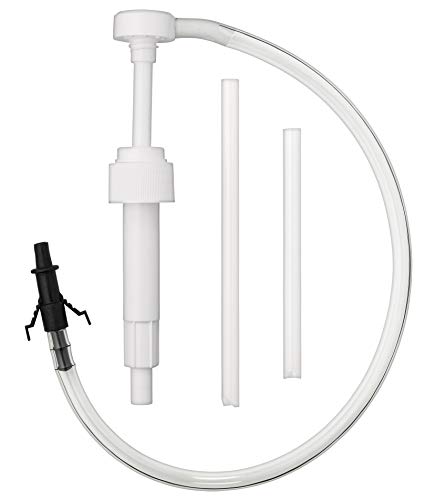
Slippery Pete – Fluid Pump for Standard Quart Bottles – 8cc per Pump Stroke and 3rd Hand Adapter, Transfer Gear Oil, Transmission and Differential Fluid (28mm)
🚗Fits Standard Quart Bottles with 28mm Bottle Cap
As an affiliate, we earn on qualifying purchases.
As an affiliate, we earn on qualifying purchases.
Frequently Asked Questions
Can Overfilling Damage the Differential Permanently?
Yes, overfilling a differential can cause permanent damage. Fluid overfill leads to increased pressure and aeration, which can harm gears and bearings. This excess fluid can create foaming, reducing lubrication efficiency and causing premature wear. If ignored, it may result in costly repairs or complete differential failure. To avoid differential damage, always maintain the proper fluid level and check for signs of overfilling regularly.
How Often Should I Check Differential Fluid Levels?
You should check your differential fluid levels at least every 30,000 miles or during routine differential maintenance. Regularly inspecting guarantees you maintain proper fluid capacity, preventing issues like aeration that can mimic bearing noise. If you notice any unusual sounds or leaks, check the fluid immediately. Staying proactive helps avoid overfilling or underfilling, both of which can damage your differential over time.
What Are the Signs of Overfilled Differential Fluid?
You’re barking up the wrong tree if you ignore differential aeration and fluid overfill symptoms. Signs include foaming or bubbling sounds, a strong smell of burnt fluid, and inconsistent gear performance. You might also notice excessive heat or gear noise that mimics bearing issues. These symptoms point to overfilled differential fluid, which can cause aeration, leading to noise and potential damage if not addressed promptly.
Is Overfilling More Common Than Underfilling?
Overfilling is generally less common than underfilling because maintenance routines often focus on checking fluid levels. However, overfilling can occur due to fluid expansion from heat, leading to aeration and noise issues. You might overfill if you don’t follow proper procedures during maintenance. Regularly check your differential fluid level, especially after driving in extreme conditions, to prevent overfilling and guarantee peak performance.
Can Overfilling Cause Other Vehicle Issues?
Yes, overfilling your differential can cause issues like fluid expansion and venting problems, which might surprise you. Instead of protecting your vehicle, too much fluid creates aeration, leading to foaming and inconsistent lubrication. This can cause overheating, increased wear, and even seal damage. So, ironically, more fluid isn’t better—it can actually harm your vehicle’s health, making you wish you’d checked the level more carefully.

MOLUCKFU Engine Oil Comparator Tool and Transmission Oil Viscosity Tester Acrylic Stand for Accurate Car Maintenance and Quality Testing
Versatile functionality: not only compares engine oil but also tests the viscosity of transmission oil, providing comprehensive oil…
As an affiliate, we earn on qualifying purchases.
As an affiliate, we earn on qualifying purchases.
Conclusion
So, next time your differential sounds off, remember it might just be overfilled, mimicking bearing noise. Don’t let the noise deceive you; check that fluid level before diving into costly repairs. Like a false friend, overfilling can hide the real issue, leading you down the wrong path. Stay vigilant, keep it simple, and listen carefully—because sometimes, the solution is as straightforward as letting some air out to restore harmony and silence to your ride.

Motorcycle Fork Oil Level Tool,High Precision Motorcycle Fork Oil Kit to Add or Remove Oils,Professional Motorcycles Forks Tool Kit with 60ml Syringe,Adjustable Ring,Hose,Clamps
Precision Measurement: Motorcycle fork oil tool allows for precise measurements, the syringe has a capacity of 60ml with…
As an affiliate, we earn on qualifying purchases.
As an affiliate, we earn on qualifying purchases.
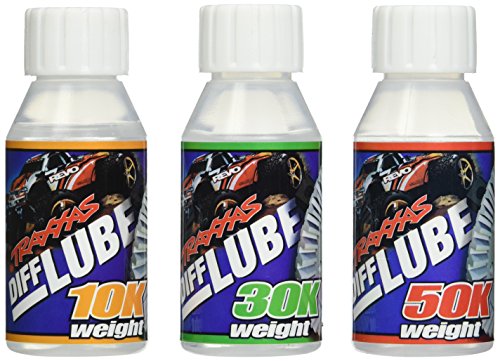
Traxxas 5136X Differential Oil Kit (10,000, 30,000, 50,000 Weights)
Differential oil kit contains 1 each: 10,000, 30,000, 50,000
As an affiliate, we earn on qualifying purchases.
As an affiliate, we earn on qualifying purchases.