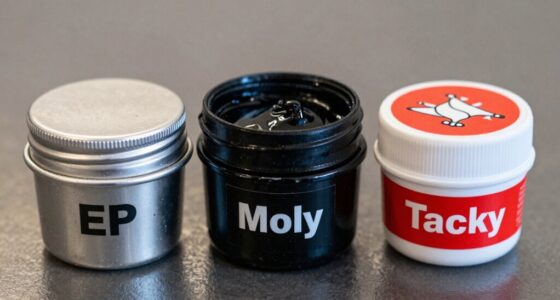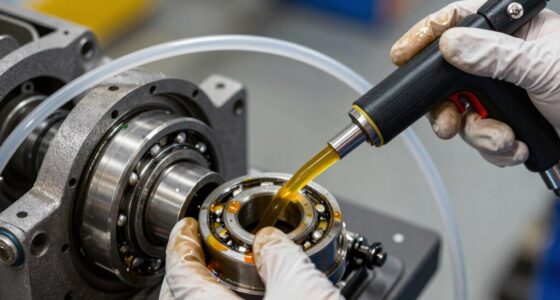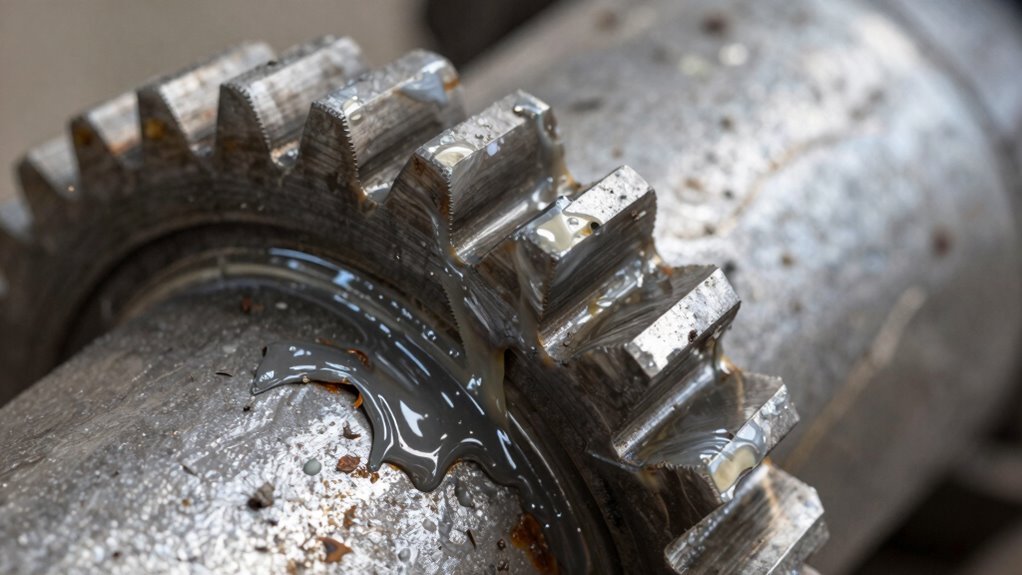
Grease can fail without ever getting hot due to chemical breakdown and shear forces that silently weaken its cohesive and lubricating qualities. Contamination or continuous shear stress can cause the lubricant to lose viscosity and stickiness, reducing its ability to stay in place and support loads. This hidden degradation can lead to increased friction, wear, and potential system failure. If you keep exploring, you’ll discover how to identify and prevent these silent issues effectively.
Key Takeaways
- Grease can degrade silently due to chemical breakdown or contamination, independent of temperature increases.
- Shear forces during operation can break down grease’s cohesive properties without heat involvement.
- Mechanical stresses and vibrations cause physical breakdown of grease, reducing its load-supporting ability.
- Lack of proper maintenance and checks may allow unnoticed grease degradation to compromise stability.
- Chemical reactions or contamination can cause grease to lose viscosity and cohesion, impairing mechanical stability even without heating.
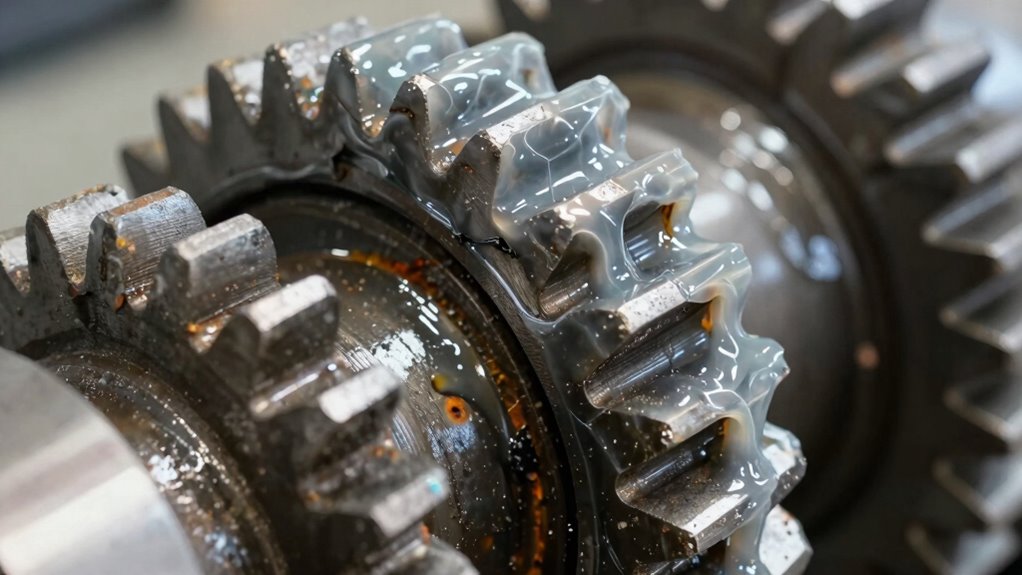
Mechanical stability refers to a structure’s ability to maintain its shape and position under various forces without collapsing or deforming excessively. In machinery, this stability depends heavily on the integrity of lubricants, especially grease, which serves as a vital component for load bearing and friction reduction. When grease degrades, its ability to support loads diminishes, directly threatening the mechanical stability of the system. You might not notice it immediately, but lubricant degradation can silently undermine your equipment’s performance, leading to unexpected failures.
Grease is designed to stay stable over time, but it’s not invincible. Despite operating at normal temperatures, factors like contamination, chemical breakdown, and shear forces can cause lubricant degradation. Over time, the thick, cohesive properties of grease break down, reducing its capacity to evenly distribute loads. This means your machinery’s load-bearing ability weakens, risking uneven stress distribution that can deform or damage components. When lubricant degradation occurs without significant heat, it often goes unnoticed because the typical signs—like overheating or burning smell—are absent. Yet, the effects are just as damaging, if not more so, because they can escalate slowly and insidiously.
Lubricant degradation can silently weaken machinery without heat or obvious signs.
Your equipment depends on lubricants to maintain mechanical stability by minimizing metal-to-metal contact. When grease starts to degrade, it loses its viscosity and cohesiveness, impairing its ability to stay in place under load. This decrease in load-bearing capacity leads to increased friction, wear, and potential misalignment of parts. Over time, these issues compromise the entire system’s integrity, risking catastrophic failure. Without proper lubrication, vibrations and shocks can cause parts to shift or deform, making the machinery unstable. The key is recognizing the early signs of lubricant degradation—such as increased noise, vibration, or a change in grease consistency—so you can intervene before structural damage occurs.
Your proactive maintenance approach should include regular checks on grease condition, especially in environments where heat isn’t a factor but chemical or shear stresses are present. Even without hot temperatures, grease can degrade due to contamination or mechanical shear, which erodes its load-bearing capacity. When this happens, the stability of the entire system is compromised, risking misalignment and eventual breakdown. By understanding that lubricant degradation can happen silently, you guarantee that your machinery remains resilient. Proper lubrication maintenance not only prolongs the lifespan of your equipment but also preserves its mechanical stability, ensuring it stays functional under various forces and conditions, even when heat isn’t involved.

Super Lube Multi-Purpose Synthetic Grease w/ Syncolon – High Temperature, Water & Corrosion Resistant Grease – Workshop & Industrial Use – Food Grade – Translucent White – Tube – 3 oz (21030)
Versatile Use: Super Lube Multi-Purpose Synthetic Grease with Syncolon is perfect as a tool grease, automotive grease, gear…
As an affiliate, we earn on qualifying purchases.
As an affiliate, we earn on qualifying purchases.
Frequently Asked Questions
How Does Grease Composition Affect Its Stability Over Time?
Your grease’s composition directly impacts its stability over time. The right lubricant additives improve chemical and physical resilience, preventing breakdown. Base oil stability guarantees the grease remains effective without degrading or separating. If either component isn’t properly chosen, your grease can lose its lubricating properties, become less stable, and fail prematurely, even without heating. Regularly check and select high-quality additives and base oils to extend its lifespan and maintain performance.
Can Environmental Factors Cause Grease Failure Without Heat?
Yes, environmental factors like corrosive environments and chemical exposure can cause grease failure without heat. You might notice grease breaking down or losing its lubricating properties as chemicals degrade its structure or cause corrosion. These conditions can lead to increased wear or even equipment failure, even if the grease doesn’t get hot. Regular inspection and choosing resistant grease types help prevent failures caused by these environmental factors.
What Signs Indicate Grease Is Losing Mechanical Stability?
Like a crumbling fortress, your grease shows signs of losing mechanical stability through changes in lubricant consistency—becoming runnier or more brittle. You might also notice contamination detection issues, where dirt or water seep in, weakening the barrier. These signs indicate the grease can’t hold its shape or protect machinery effectively, risking wear and failure. Keep an eye on these clues to maintain the integrity of your equipment.
Are There Specific Applications More Prone to Grease Failure?
Certain applications are more prone to grease failure, especially those with poor lubrication compatibility or exposure to contamination. If your equipment involves frequent water or dirt exposure, contamination control becomes critical, and grease may lose its stability faster. Also, incompatible lubricants can break down the grease’s structure. Focus on selecting the right grease for your specific environment and guarantee proper lubrication compatibility to prevent early failure.
How Can Maintenance Prevent Grease From Failing Prematurely?
To prevent grease from failing prematurely, you should regularly inspect and replace it as needed, ensuring proper lubricant additives are used for your application. Maintain contamination control by keeping the environment clean, sealing equipment properly, and avoiding dirt or water ingress. Consistent maintenance and monitoring help preserve grease’s mechanical stability, even without overheating, ensuring long-lasting performance and reducing the risk of early failure.

LockNLube Grease Fitting Thread Tester, Includes SAE, Metric, BSPT, and UNF Threads, Solid Anodized Aluminum
VERSATILE COMPATIBILITY: Features Metric sizes (6×1, 8×1, 10×1), SAE-LT (1/4"-28 Taper), UNF (5/16"-24), BSPT (1/8"-28, 1/4"-19), and NPT…
As an affiliate, we earn on qualifying purchases.
As an affiliate, we earn on qualifying purchases.
Conclusion
If you think grease is invincible, think again. Without proper mechanical stability, it can fail silently, like a ticking time bomb waiting to explode your machinery’s lifespan. You might never see the warning signs until it’s too late, risking catastrophic damage. Remember, even the toughest grease can crumble without stability. Stay vigilant, maintain your lubricants, and protect your equipment from the unseen menace lurking within—because ignoring it could be the biggest mistake of your engineering career.
shear force resistant grease
As an affiliate, we earn on qualifying purchases.
As an affiliate, we earn on qualifying purchases.
lubricant condition monitoring kit
As an affiliate, we earn on qualifying purchases.
As an affiliate, we earn on qualifying purchases.