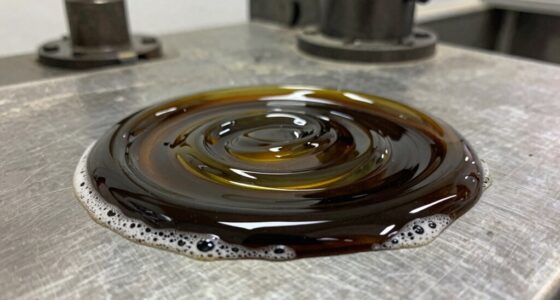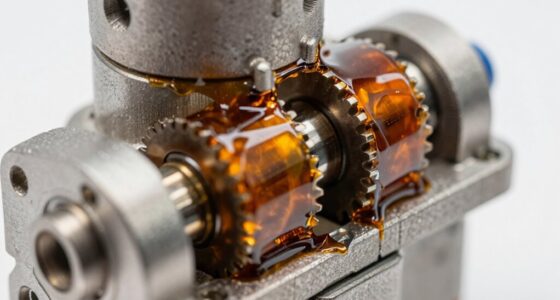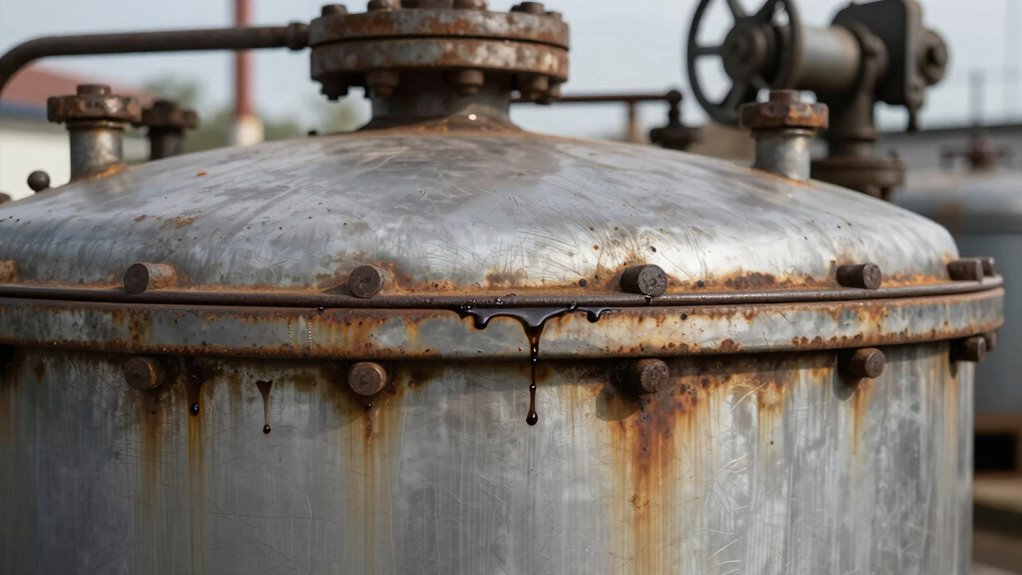

Your hydraulic oil’s lifespan depends more on contamination control, filtration efficiency, and temperature management than on calendar time. Dirt, water, and debris entering through seals or during maintenance speed up oil breakdown. Ineffective filters allow particles to circulate, while high temperatures accelerate oxidation. Neglecting these factors can shorten oil life faster than just the passage of time. Keep an eye on these critical drivers to extend your hydraulic oil’s effectiveness—more insights await if you continue.
Key Takeaways
- Contamination from dirt, water, and debris accelerates oil degradation by promoting oxidation and acid formation.
- Filtration efficiency declines over time, allowing more contaminants to circulate and shorten oil life.
- Elevated temperatures speed up oxidation, leading to thickening, sludge, and reduced oil effectiveness.
- Poor system maintenance and seal integrity increase contaminant entry, worsening oil aging.
- Regular monitoring of contamination levels, temperature, and filter condition is essential to extend hydraulic oil lifespan.
Ever wondered how long your hydraulic oil stays effective? Many people assume that after a certain number of months or hours, the oil needs changing. But in reality, the aging process isn’t solely about calendar time; it’s driven by several factors, primarily contamination control and filtration efficiency. These elements play a more significant role in determining the oil’s lifespan than you might think. If you neglect them, even fresh-looking oil can become compromised, leading to equipment failures and costly downtime.
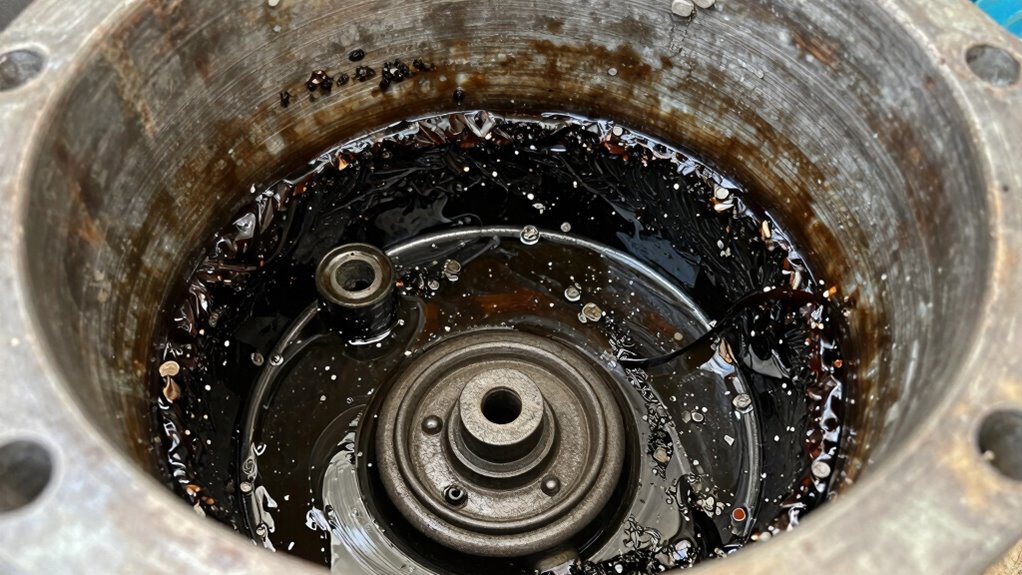
Contamination is one of the biggest enemies of hydraulic oil. Dirt, water, metal particles, and other debris can infiltrate your system through seals, fittings, or during maintenance. Once inside, these contaminants accelerate oxidation and produce acids that degrade the oil’s lubricating properties. Regularly monitoring contamination levels and controlling their entry through proper seals and clean procedures is essential to extend your oil’s effective life. Even small amounts of contamination can cause the oil to break down faster, so maintaining a clean system is critical.
Filtration efficiency directly impacts how well your hydraulic system resists contamination. High-quality filters trap dirt and particles before they circulate through your machinery. Over time, filters can clog or become less effective, allowing contaminants to bypass and enter the oil. That’s why routine inspection and timely replacement of filters are crucial. The more efficient your filtration system, the longer your hydraulic oil can perform effectively. When filtration efficiency drops, even if the oil appears clean, its ability to resist contamination diminishes, shortening its service life. Using proper filtration equipment and ensuring it remains operational is a proactive way to preserve your oil’s quality.
Temperature management also influences oil aging, but even the best oil will degrade faster if contamination control isn’t maintained. Elevated temperatures speed up oxidation, causing the oil to thicken or form sludge. Combining high temperature with poor filtration efficiency and contamination control accelerates this process. It’s a cycle where neglecting one aspect can compound the effects of others. Proper system design, regular maintenance, and vigilant monitoring are your best defenses. Additionally, understanding the oil’s aging drivers can help you implement more effective maintenance strategies to extend its lifespan.

WIX 51553 Spin-On Hydraulic Filter Replacement
- Designed for Heavy Duty Use: Suitable for rugged environments and off-road vehicles
- Protects Hydraulic Components: Safeguards pumps, valves, and cylinders
- Ensures Peak Efficiency: Filters particles to maintain machine performance
As an affiliate, we earn on qualifying purchases.
As an affiliate, we earn on qualifying purchases.
Frequently Asked Questions
How Does Hydraulic Oil Color Indicate Its Age or Condition?
You can tell hydraulic oil’s age or condition by observing its color indicators. As the oil ages, discoloration often occurs, turning darker or murkier, which signals contamination or breakdown. Oil discoloration is a clear sign that the oil may need changing or filtering. Keep an eye on these color indicators regularly, as they help you maintain peak performance and prevent equipment damage caused by degraded hydraulic oil.
Can Hydraulic Oil Be Effectively Recycled or Reused?
Yes, hydraulic oil can be effectively recycled or reused. You should focus on proper oil filtration to remove contaminants and degradation products. Recycling methods like vacuum distillation or centrifugation help restore oil quality, extending its life. By implementing these techniques, you reduce waste and save costs, ensuring your hydraulic system operates smoothly. Regular testing also helps determine if the recycled oil maintains the necessary performance standards for your equipment.
What Are the Signs of Hydraulic Oil Contamination?
You’ll notice hydraulic oil contamination when your equipment shows signs like reduced efficiency or unusual noises. Check your oil filter regularly, as it catches particulate matter indicating contamination. If you see dark, cloudy oil or debris, it’s a sign the oil is polluted. Contaminants like dirt, water, or metal particles can cause wear and damage, so timely inspection and filter replacement help keep your hydraulic system running smoothly.
How Do Different Operating Environments Affect Oil Longevity?
Environmental factors and operational conditions directly impact your hydraulic oil’s longevity. Harsh environments like extreme temperatures, moisture, and dirt accelerate oil degradation. Heavy or irregular usage, high pressures, and contamination from debris or water also shorten oil life. By monitoring these conditions and performing regular maintenance, you can extend your hydraulic oil’s effectiveness, preventing costly breakdowns and ensuring your equipment runs smoothly and efficiently over time.
Are There Specific Additives That Extend Hydraulic Oil Life?
You might be surprised, but specific additive packages and oil stabilizers can substantially extend hydraulic oil life. These additives protect against oxidation, wear, and contamination, especially in demanding environments. When chosen wisely, they work in tandem with your hydraulic system, reducing the need for frequent changes. By selecting oils with advanced additive packages, you guarantee better lubrication, stability, and longer service intervals, keeping your equipment running smoothly and efficiently.
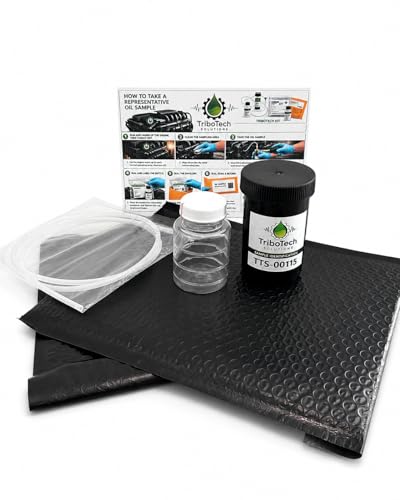
TriboTech Basic Oil Analysis Kit, Return Shipping Included, Oil Test Kit for Engines, Transmissions, Gearboxes and Hydraulic Systems
- Basic Oil Analysis Kit: Monitors oil condition and contamination
- Multi-Parameter Testing: Analyzes wear metals, contaminants, and additives
- Universal Compatibility: Suitable for engines, transmissions, gearboxes, and hydraulics
As an affiliate, we earn on qualifying purchases.
As an affiliate, we earn on qualifying purchases.
Conclusion
Remember, hydraulic oil isn’t just about the calendar—it’s like a racing car’s fuel, aging faster with use and conditions. Keep an eye on contamination, temperature, and operating hours, not just the date. By doing so, you’ll prevent costly breakdowns and keep your system running smoothly. Think of your hydraulic oil as the silent hero; when maintained properly, it’ll keep your machinery humming like a well-oiled machine, ready to perform at its best whenever you need it.

ZHSYMX 3-in-1 Auto Car LCD Meter Digital Oil Pressure Voltage Water Temperature Gauge Universal Instrument 9-36V for Car/Truck/SUV/RV
- Universal Compatibility: Suitable for 12V and 24V vehicles
- Digital Display: Clear, intuitive readings with flashing alarm
- Wide Operating Range: -40°C to 50°C temperature range
As an affiliate, we earn on qualifying purchases.
As an affiliate, we earn on qualifying purchases.

HC5345 Seal Kit For SeaStar Hydraulic Steering Cylinder Seal Kit with Pin Wrench HS5157 compatible with HC5340, HC5341, HC5342, HC5343, HC5344, HC5345,HC6750, HC6751
- Compatibility: Fits multiple SeaStar models
- Application: Hydraulic steering cylinder seal kit
- Includes: Pin wrench and seal tools
As an affiliate, we earn on qualifying purchases.
As an affiliate, we earn on qualifying purchases.