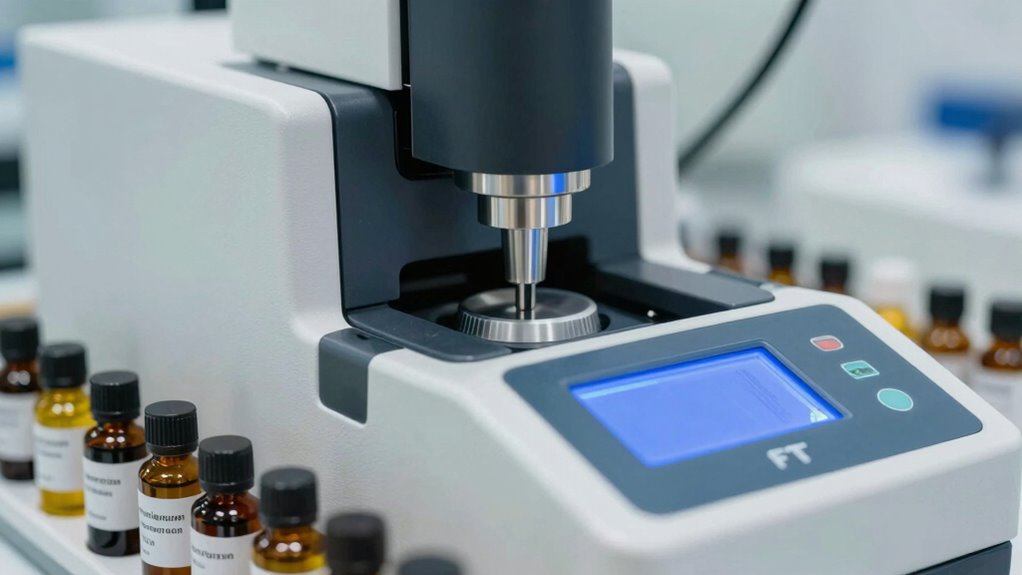

FTIR in oil reports helps you quickly identify signs of oxidation and nitration by measuring chemical changes in the oil. It detects specific absorption patterns that reveal oxidation products like acids and ketones, as well as nitrogen compounds from nitration. FTIR fundamentally measures molecular vibrations to create a chemical fingerprint of the oil, showing how its composition evolves. If you want to understand more about how this technique keeps your machinery in top shape, keep exploring.

Get business pricing on garage and car supplies
- Business-only prices and quantity discounts
- Tax-exempt purchasing
- Multiple users, one account, clear invoices
Key Takeaways
- FTIR measures molecular vibrational energies, producing spectra that reveal chemical bonds and compounds in oil samples.
- Increased absorption peaks in FTIR spectra indicate oxidation products like acids and ketones.
- Nitration is detected through characteristic N-O absorption bands, signaling nitrogen compound formation.
- FTIR provides rapid, real-time analysis of oil degradation, including oxidation and nitration levels.
- It helps monitor chemical changes over time, supporting maintenance decisions and optimizing machinery performance.
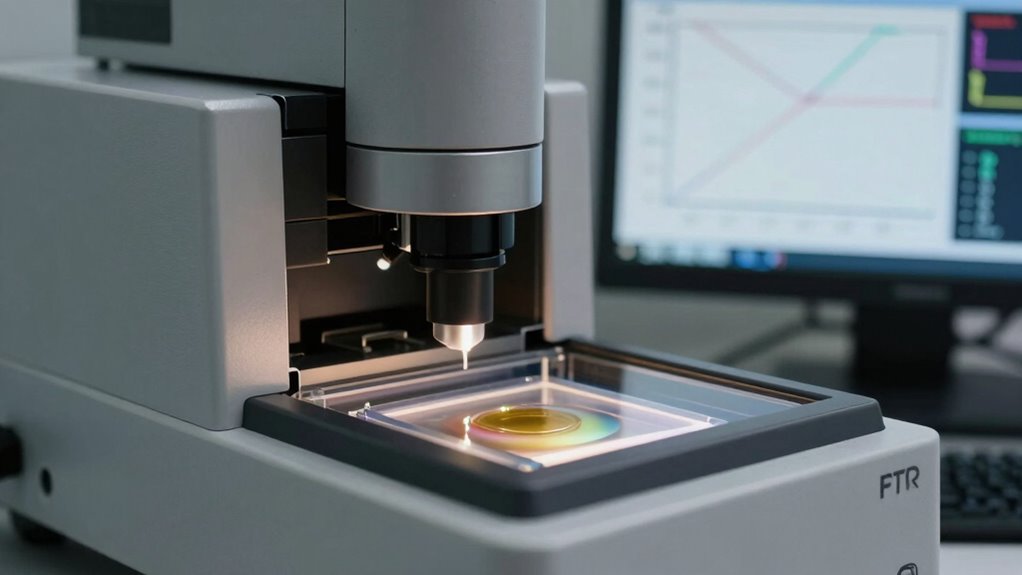
Fourier Transform Infrared (FTIR) spectroscopy has become an essential tool in analyzing oil reports, offering rapid and accurate insights into oil composition and condition. When you perform spectroscopic analysis with FTIR, you’re essentially shining infrared light through the oil sample and measuring how much light is absorbed at different wavelengths. These absorption patterns reveal the presence of specific chemical bonds, allowing you to identify various compounds and degradation products within the oil. This method provides a clear picture of the oil’s health, especially when it comes to oil degradation processes like oxidation and nitration.
Oil degradation is a key concern in machinery maintenance, and FTIR helps you detect it early. Oxidation, which occurs when oxygen reacts with the oil’s hydrocarbons, results in the formation of acids, ketones, and other oxidized compounds. These changes can compromise the oil’s lubricating properties and lead to equipment wear. By analyzing the infrared spectrum, you can see increased absorption peaks associated with oxidized species, indicating that the oil is degrading. Detecting oxidation early allows you to plan timely oil changes, preventing costly repairs and downtime.
Monitoring oxidation with FTIR enables early detection and prevents costly machinery damage.
Nitration is another form of oil degradation that FTIR can identify. It happens when nitrogen compounds, such as nitrates and nitrites, form within the oil due to high temperatures and combustion byproducts. Nitration often signals excessive thermal stress and contamination, which can accelerate oil breakdown and damage components. FTIR spectra will show characteristic absorption bands associated with nitrogen-containing groups, making it straightforward for you to recognize nitration levels. Monitoring these changes helps you assess whether the oil is still serviceable or if maintenance is needed.
What FTIR actually measures are the vibrational energies of molecular bonds within the oil. When infrared light interacts with these bonds, it causes them to vibrate at specific frequencies. Each type of bond—like C-H, C=O, or N-O—absorbs infrared radiation at a unique wavelength. The resulting spectrum is like a fingerprint that shows the presence and concentration of different chemical species. This technique’s sensitivity to subtle chemical changes makes it invaluable for tracking oil degradation over time. By comparing these spectra over time, you gain real-time insights into how the oil’s chemical makeup evolves, especially under operating conditions that promote oxidation or nitration.
As an affiliate, we earn on qualifying purchases.
Frequently Asked Questions
How Does FTIR Compare to Other Oil Analysis Techniques?
You’ll find FTIR offers rapid analysis compared to traditional methods like spectroscopy or chromatography. Its spectroscopic differences allow you to quickly identify oxidation and nitration in oils, making it ideal for real-time monitoring. While other techniques might provide more detailed chemical compositions, FTIR’s speed and simplicity give you immediate insights, helping you make faster maintenance decisions and optimize oil quality management efficiently.
Can FTIR Detect Additive Depletion in Oils?
Did you know FTIR can detect additive depletion in oils with up to 90% accuracy? It analyzes the chemical composition, identifying changes in specific additive levels. While FTIR doesn’t measure additive concentration directly, shifts in characteristic absorption bands reveal if additives are diminishing. So, by monitoring these spectral changes, you can effectively assess additive depletion and determine when oil needs replenishing or replacement.
What Are Ftir’s Limitations in Oil Oxidation Detection?
FTIR’s limitations in oil oxidation detection include its detection sensitivity, which can be insufficient for very early oxidation stages, and the need for proper sample preparation. If samples aren’t prepared correctly, results may be inaccurate or misleading. Additionally, FTIR may struggle to distinguish between different oxidation products at low concentrations, making it less effective for pinpointing the earliest oxidation signs.
How Often Should FTIR Testing Be Performed for Accurate Monitoring?
Think of your oil as a story unfolding; to catch its twists, you need regular chapters. You should perform FTIR testing at sampling frequency intervals that match your equipment’s usage, typically every 3 to 6 months. This consistent testing helps you detect early oxidation signs, preventing failures. Adjust testing intervals based on operating conditions and oil age, ensuring your monitoring stays accurate and your equipment runs smoothly.
Is FTIR Suitable for Analyzing Synthetic Versus Mineral Oils?
Yes, FTIR is suitable for analyzing synthetic versus mineral oils. It helps you perform synthetic analysis by identifying unique chemical signatures, allowing you to differentiate mineral oils from synthetics effectively. By examining specific absorbance peaks, you can detect additives and oxidation products that vary between the two types. This makes FTIR a valuable tool for routine monitoring and ensuring the proper maintenance of both synthetic and mineral oils.
As an affiliate, we earn on qualifying purchases.
Conclusion
Understanding what FTIR actually measures in oil reports helps you interpret oxidation and nitration levels more accurately. It’s a powerful tool, but are you truly leveraging its full potential? By knowing its strengths and limitations, you can make smarter decisions about oil condition and maintenance. Don’t just rely on the numbers—question what they reveal about your oil’s health and your equipment’s future. After all, isn’t staying ahead of problems better than reacting to failures?
infrared spectroscopy oil monitor
As an affiliate, we earn on qualifying purchases.
As an affiliate, we earn on qualifying purchases.
As an affiliate, we earn on qualifying purchases.
Fall Picks
fall essentials
As an affiliate, we earn on qualifying purchases.