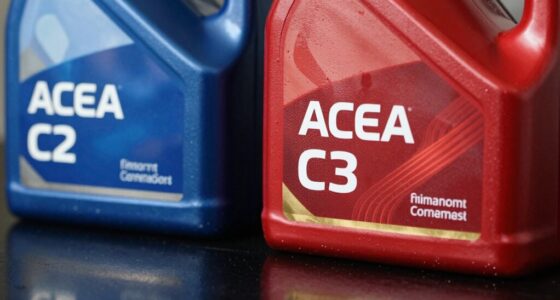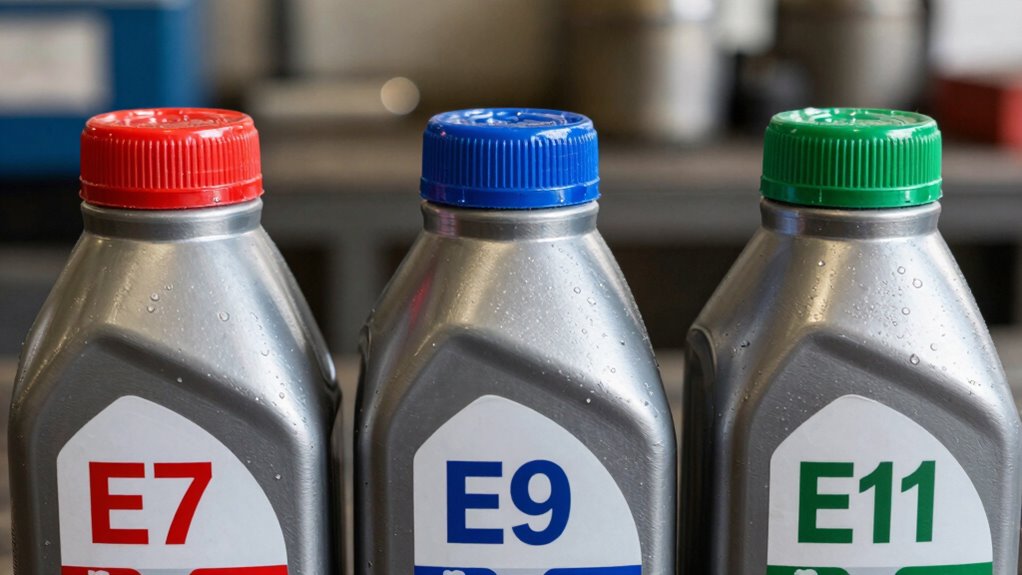

ACEA E7, E9, and E11 are heavy-duty diesel engine oil standards, each designed for different conditions. E7 is best for older engines with high loads and severe use, offering strong protection from wear and sludge. E9 suits engines in demanding, stop-and-go environments, focusing on stability and emission control. E11 supports modern engines with longer oil change intervals and fuel economy benefits. If you want to understand which fits your engine best, here’s what you need to know.
Key Takeaways
- E7 is for older, heavily loaded engines needing strong wear protection and sludge control in severe conditions.
- E9 offers better oxidation stability and is suited for engines in demanding, stop-and-go driving environments.
- E11 provides extended drain intervals, fuel economy benefits, and is designed for modern engines with advanced emission systems.
- E7 focuses on durability and environmental compliance for tough, high-mileage applications.
- E11 emphasizes longer-lasting performance, cleaner engines, and reduced fuel consumption in modern heavy-duty engines.
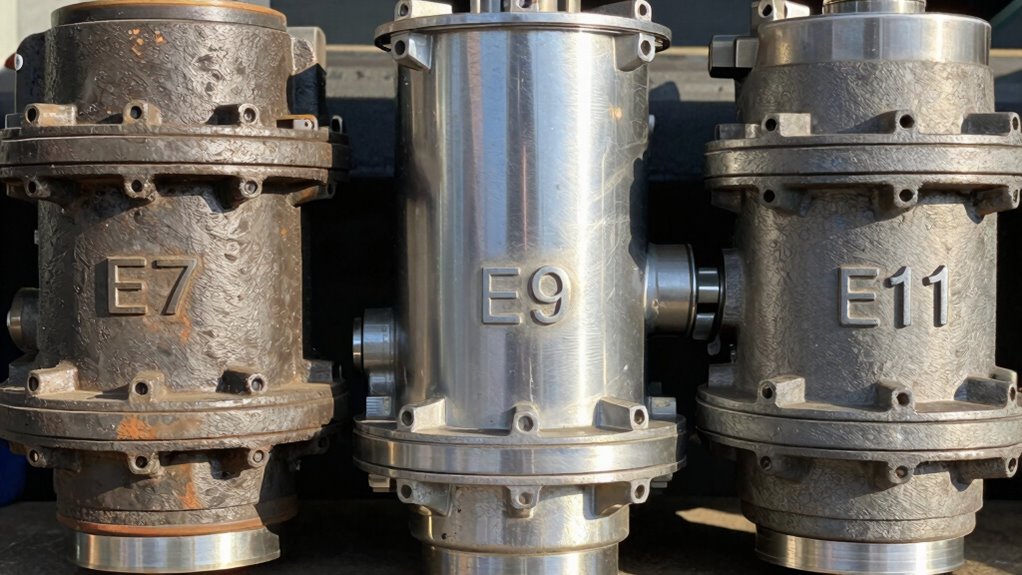
Are you trying to determine which ACEA oil classification best suits your vehicle? If so, understanding the differences between ACEA E7, E9, and E11 is essential for making the right choice. These classifications define the specifications for heavy-duty diesel engine oils, ensuring they meet specific performance and environmental standards. Your decision impacts lubricant compatibility, engine protection, and compliance with emission standards, so it’s worth getting it right.
ACEA E7 is designed primarily for high-mileage, heavy-duty diesel engines operating under severe conditions. It provides excellent wear protection, helps control sludge build-up, and maintains engine cleanliness over time. This classification emphasizes the importance of lubricant compatibility with various engine components, ensuring the oil can withstand demanding operating environments without breaking down prematurely. If your vehicle operates under high loads or extended service intervals, E7 oils deliver the durability you need. They also meet stringent emission standards, helping your engine run cleaner by minimizing harmful emissions and soot formation. This makes E7 suitable for older or heavily used engines that require robust protection and compliance with evolving environmental regulations.
ACEA E7 offers robust protection for high-mileage, heavy-duty diesel engines under severe conditions.
Moving to ACEA E9, this classification is tailored for engines working under very severe conditions, including real-world urban driving, stop-and-go traffic, and frequent idling. E9 oils prioritize superior oxidation stability and thermal breakdown resistance, which means they can handle the heat and stress typical of demanding driving patterns. This grade also emphasizes lubricant compatibility, ensuring the oil can work with advanced engine technologies and emission control systems. E9 oils are formulated to help engines meet strict emission standards by reducing particulate matter and controlling emissions related to soot and ash deposit formation. If your vehicle often faces stop-and-go traffic or operates in fluctuating conditions, choosing an E9 oil can help keep your engine cleaner, more efficient, and compliant with environmental standards. Additionally, E9 oils are often designed to support extended service intervals, promoting longer-lasting engine performance.
ACEA E11 is a more recent classification, aimed at engines that require extended drain intervals and enhanced fuel economy. It emphasizes longer-lasting lubricant performance, high oxidation resistance, and compatibility with modern emission control systems. With E11 oils, you’re choosing a lubricant that can sustain rigorous use while maintaining engine cleanliness and meeting emission standards. They also support the longevity of emission-related components like filters and catalytic converters. If your vehicle demands extended oil change intervals or if you’re focused on reducing your environmental footprint, E11 offers the advanced protection needed for modern heavy-duty diesel engines. Furthermore, E11 oils are formulated with fuel economy benefits in mind, helping reduce overall fuel consumption and emissions over the lifespan of the lubricant.

DEWALT Grease Gun 20V MAX, Cordless Electric Grease Gun 42” Hose, 10,000 PSI, Variable Speed Triggers, Tool Only (DCGG571B)
DEWALT cordless grease gun can power through clogged grease fittings with a motor that delivers up to 10,000...
As an affiliate, we earn on qualifying purchases.
Frequently Asked Questions
Can I Mix ACEA E7, E9, and E11 Oils Safely?
You shouldn’t mix ACEA E7, E9, and E11 oils because it can compromise oil compatibility and cause unpredictable additive interactions. Mixing different specifications may reduce the oil’s effectiveness, leading to engine wear or damage. Always follow your vehicle’s manufacturer recommendations and use the same oil type and grade for top-ups or oil changes. This guarantees best protection and maintains the engine’s performance.
How Often Should Each Oil Type Be Changed?
You should change ACEA E7, E9, or E11 oils based on your vehicle’s maintenance schedule, typically every 15,000 to 25,000 miles or once a year, whichever comes first. Keep an eye on oil change intervals recommended by your manufacturer, as neglecting regular maintenance can lead to engine wear. Regular oil changes guarantee peak performance, so stick to your maintenance schedule to keep your engine running smoothly.
Are There Specific Engine Types That Prefer One Oil Over Another?
You should check your engine’s compatibility and follow manufacturer recommendations to choose the right oil. Some engines, especially older or specialized models, prefer ACEA E7 for durability, while newer engines may perform better with E9 or E11 due to advanced additive technology. Always consult your vehicle’s manual to verify you select the correct oil type, as using the wrong one can affect performance and longevity.
Do These Oils Meet Current Emission Standards Worldwide?
Think of these oils as guardians, each designed to shield your engine on its journey. They meet the latest emission standards, ensuring compliance across worldwide regulations. By choosing the right oil, you guarantee your engine’s compatibility with current emission standards, helping reduce environmental impact and maintain peak performance. Rest assured, ACEA E7, E9, and E11 oils are crafted to support your engine’s needs while respecting global emission requirements.
What Are the Cost Differences Among ACEA E7, E9, and E11 Oils?
You’ll notice that the cost comparison among ACEA E7, E9, and E11 oils varies due to factors like brand, formulation, and regional price variability. Generally, E7 oils tend to be more affordable, while E11 oils might cost more because they meet stricter standards. Price variability can also influence costs, so it’s wise to compare options carefully to find the best value for your heavy-duty diesel needs.

Frantz Filter Universal Bypass Oil Filter Kit by Hot Shot's Secret
The Frantz Universal Oil Bypass Kit is a highly efficiency bypass filter; that can help increase engine life...
As an affiliate, we earn on qualifying purchases.
Conclusion
Choosing between ACEA E7, E9, and E11 is like picking the right tool for your job. Each one’s designed to handle specific demands of heavy-duty diesel engines, so picking the right oil keeps your engine running smoothly and extends its life. Think of it as giving your engine a well-deserved boost of energy—like a shot of adrenaline for your truck. Make the right choice, and your engine will thank you for it!

Frantz Filter 5.9L & 6.7L Ram Diesel Truck Bypass Oil Filter Kit by Hot Shot's Secret
Increased Engine Life
As an affiliate, we earn on qualifying purchases.

Frantz Bypass Filter Kit for 6.7 Liter Powerstroke Diesel Pickup Trucks by Hot Shot's Secret
6.7-liter Power Stroke bypass oil filter system increases engine life
As an affiliate, we earn on qualifying purchases.