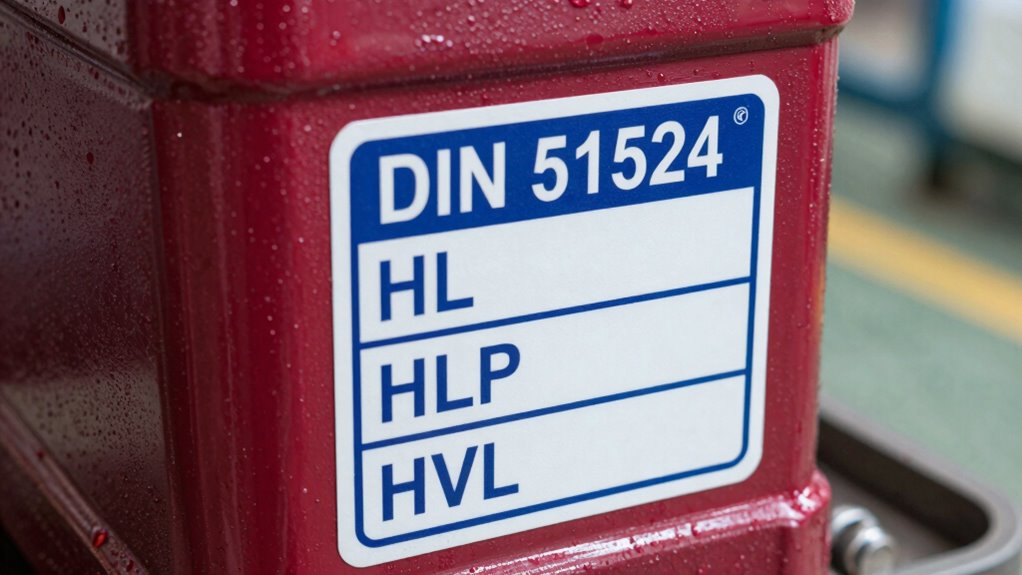
In the EU, you’ll see hydraulic spec labels based on DIN 51524, which clearly identify fluid types like HL, HLP, and HVLP. These labels inform you about the fluid’s properties, compatibility, and standards compliance, helping guarantee safe and proper operation. Knowing what these labels mean can prevent costly mistakes and equipment damage. If you keep exploring, you’ll discover how these standards enhance safety, efficiency, and equipment longevity.
Key Takeaways
- Hydraulic spec labels display fluid type (HL, HLP, HVLP) indicating compliance with DIN 51524 standards.
- Labels include viscosity grades and symbols for high-pressure or environmentally sensitive applications.
- DIN 51524 compliance ensures hydraulic fluids meet performance, compatibility, and safety criteria.
- Standardized labels help ensure correct fluid selection, reducing equipment damage and maintenance issues.
- EU hydraulic labels follow uniform symbols and coding to facilitate quick identification and regulatory compliance.
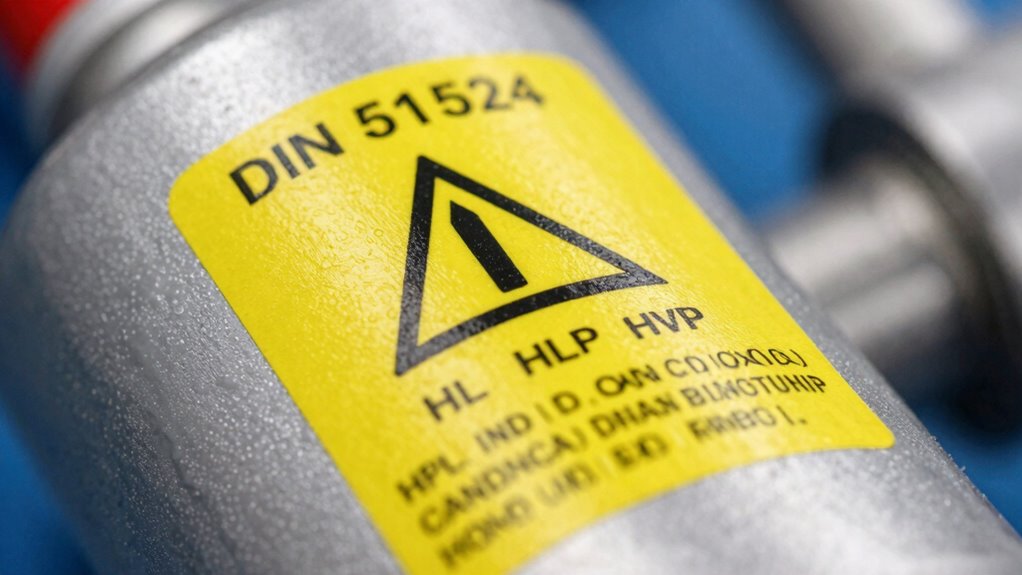
In the EU, hydraulic spec labels are essential for ensuring safety, compatibility, and compliance across machinery and equipment. These labels help you identify the correct hydraulic fluids to use, preventing costly mistakes and potential hazards. Among the most prominent standards you’ll encounter are those related to DIN 51524, which categorizes hydraulic fluids into HL, HLP, and HVLP types. Understanding these specifications is crucial to adhering to EU labeling regulations and maintaining optimal machine performance.
Hydraulic fluid standards like DIN 51524 serve as a universal language that communicates the properties and intended uses of different hydraulic oils. When you see a hydraulic spec label referencing DIN 51524, it indicates that the fluid complies with specific criteria for performance, additive content, and compatibility. For instance, HL fluids are mineral-based oils suitable for general applications, while HLP fluids meet stricter requirements for oxidation stability and corrosion protection. HVLP fluids are designed for very high-pressure systems, offering greater viscosity stability and reduced foaming. Recognizing these distinctions helps you select the right fluid for your machinery, ensuring efficiency and longevity.
EU labeling regulations mandate that these hydraulic spec labels display clear, standardized information. This includes the fluid type, viscosity grade, and compliance with relevant standards like DIN 51524. Such transparency protects you from using incompatible fluids that could damage your equipment or compromise safety. Labels often feature symbols or codes that quickly convey whether the fluid is suitable for high-pressure or environmentally sensitive applications. This standardized approach simplifies compliance checks and streamlines maintenance routines, especially when working with complex machinery or in regulated industries.
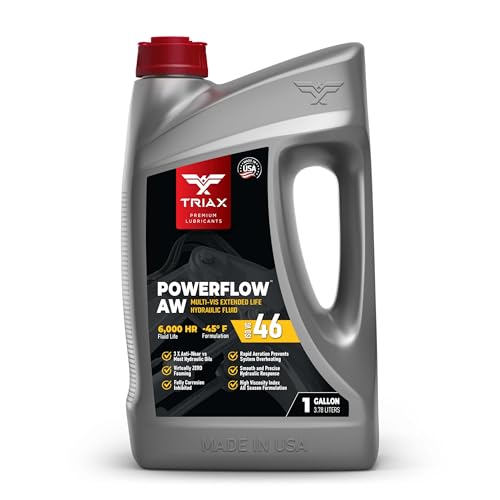
TRIAX Powerflow AW 46 Multi-Viscosity HLP Hydraulic Oil | 6,000 Hour Extended Life | Triple Anti-Wear | True All Season | Pour Point Down to -40F | Virtually Zero Foaming (1 Gallon)
Exceptionally Long Life: Designed for 6,000-hour severe service with high oxidation resistance, providing up to 3 times the…
As an affiliate, we earn on qualifying purchases.
As an affiliate, we earn on qualifying purchases.
Frequently Asked Questions
How Do I Decode the Specific Viscosity Grades on the Labels?
To decode the specific viscosity grades on the labels, you need to look at the viscosity classification codes like HL, HLP, or HVLP. These codes indicate the type of hydraulic oil and its viscosity level. Label decoding involves understanding these classifications and their numerical values, which show the oil’s viscosity at specific temperatures. This helps you select the right hydraulic fluid for your equipment’s performance and temperature conditions.
Are There Differences Between HL, HLP, and HVLP Hydraulic Fluids?
Yes, HL, HLP, and HVLP hydraulic fluids differ in hydraulic compatibility and properties. HL fluids are suitable for general purposes, while HLP fluids offer better water separation and anti-corrosion features. HVLP fluids are designed for high-pressure applications with improved stability. When choosing, consider your equipment’s fluid storage needs and confirm the fluid’s specifications match the system requirements. Always verify labels to select the right fluid type.
Can I Mix Different Hydraulic Fluids Labeled Under DIN 51524?
You shouldn’t mix hydraulic fluids labeled under DIN 51524, as it can jeopardize fluid compatibility and system performance. Different labels indicate varying additive packages and viscosity grades, which may lead to chemical reactions or reduced lubrication. Always follow labeling standards and manufacturer recommendations to guarantee safe operation. If you need to switch fluids, drain the system thoroughly and use a compatible, correctly labeled fluid to prevent damage.
What Are the Temperature Ranges for These Hydraulic Fluid Types?
You should know that different hydraulic fluid types under DIN 51524 have specific temperature ranges for ideal performance. HLP fluids maintain fluid stability from -20°C to 60°C, while HVLP fluids are stable from -30°C to 80°C. These ranges are essential for ensuring temperature stability and fluid compatibility. Operating outside these limits can compromise system performance and lead to potential damage, so always match fluids to your working temperature conditions.
How Often Should Hydraulic Fluid Labels Be Updated or Replaced?
You should update or replace hydraulic fluid labels during your maintenance schedule, ideally every 1 to 2 years, or sooner if they become worn or illegible. Ensuring label visibility is vital for safety and proper fluid identification. Regular updates help prevent mistakes and keep everyone informed. Make it part of your routine to check labels periodically, especially before major operations, so they stay clear and effective.

Kubota 1 Gallon Super UDT2 Trans-Hydraulic Fluid for Kubota Equipment Hydraulic Systems, Transmission, Differential, and Wet Brake Systems – 128 Fl Oz, 128 Ounces
Multi-Purpose Fluid: Recommended for hydraulic, final drive, transmission, differential, and wet brake systems in Kubota equipment
As an affiliate, we earn on qualifying purchases.
As an affiliate, we earn on qualifying purchases.
Conclusion
Understanding the hydraulic spec labels like DIN 51524 HL, HLP, and HVLP helps you navigate EU standards with confidence. While these labels gently guide you through compatibility and performance expectations, they also remind you to pay attention to details. Embracing these nuances guarantees smooth operations and a trusted connection with your equipment. With a keen eye and a little knowledge, you’ll find yourself effortlessly aligned with the right hydraulic solutions, making every project flow just a little easier.
Kubota 1 Gallon Super UDT2 Trans-Hydraulic Fluid for Kubota Equipment Hydraulic Systems, Transmission, Differential, and Wet Brake Systems – 128 Fl Oz, 128 Ounces
Multi-Purpose Fluid: Recommended for hydraulic, final drive, transmission, differential, and wet brake systems in Kubota equipment
As an affiliate, we earn on qualifying purchases.
As an affiliate, we earn on qualifying purchases.

ComplianceSigns.com Hydraulic Fluid English + Spanish Label Decal, 7×5 in. Vinyl for Hazmat
Permanent label makes your Fuel message clear with English + Spanish text on a white backgound
As an affiliate, we earn on qualifying purchases.
As an affiliate, we earn on qualifying purchases.