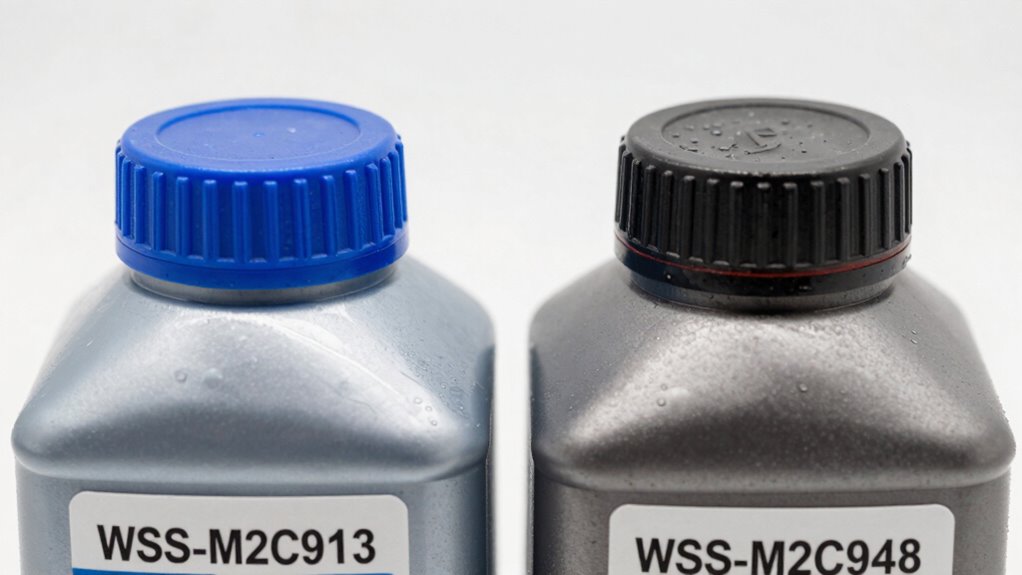

The shift from WSS-M2C913 to WSS-M2C948 signals that Ford has updated its oil standards to incorporate advances in engine technology, additives, and environmental regulations. WSS-M2C948 typically offers improved protection, cleanliness, and efficiency compared to WSS-M2C913, which may be older. These changes indicate Ford’s efforts to enhance engine performance and meet evolving standards. To understand what these updates mean for your vehicle, keep exploring the details below.
Key Takeaways
- The change signals updates to engine technology, performance standards, and environmental regulations.
- WSS-M2C948 may have improved additive packages for better engine cleanliness and corrosion resistance.
- The new specification often indicates a different viscosity range or formulation tailored to newer engines.
- Ford updates these specs to reflect advancements, ensuring optimal protection and fuel efficiency.
- Using the latest standard ensures compliance and maximum engine performance according to manufacturer recommendations.
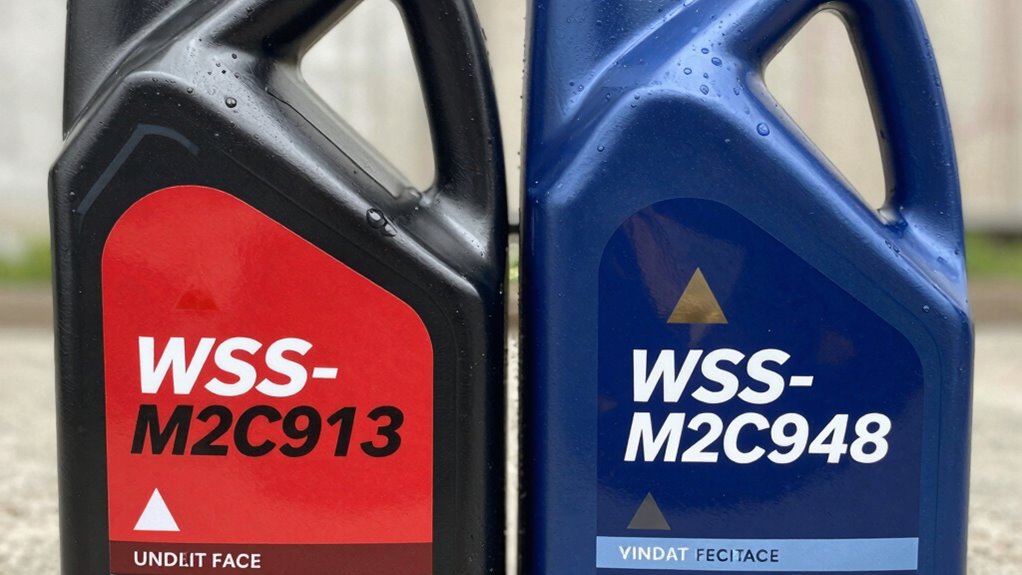
Are Ford WSS-M2C913 and WSS-M2C948 really interchangeable? If you’re trying to decide whether you can use one oil type in place of the other, it’s crucial to understand what each specification entails. These oil standards are designed to meet specific engine requirements, and they aren’t always directly compatible. WSS-M2C913 typically refers to a synthetic oil formulation tailored for certain Ford models, emphasizing enhanced engine protection and fuel efficiency. WSS-M2C948, on the other hand, is a different specification, often indicating a synthetic oil with a slightly different additive package or viscosity range. Using the wrong oil could compromise your engine’s performance, especially if your vehicle’s manufacturer recommends a specific standard.
When considering synthetic oil, you should follow your vehicle’s maintenance schedule closely. Ford’s recommendations are tailored to guarantee ideal engine longevity and efficiency. If your owner’s manual specifies WSS-M2C913, switching to WSS-M2C948 might not provide the same level of performance or protection, especially under demanding conditions. Conversely, if your vehicle’s manual calls for WSS-M2C948, using WSS-M2C913 could be acceptable, but only if it meets or exceeds the original specs. Always verify the oil’s certification and compatibility before making a swap, since using an incompatible synthetic oil can lead to increased engine wear or even damage.
The change from one specification to another often signals updates in engine technology or regulatory standards. Ford might have introduced WSS-M2C948 to replace or supplement WSS-M2C913, reflecting improved additive technology or environmental considerations. These updates generally aim to provide better engine cleanliness, corrosion resistance, and overall performance. If you notice a change in the oil recommendation, it’s usually a sign that Ford has refined its engine requirements. It’s not just about meeting minimum standards but maximizing engine health over the long term.
In essence, understanding whether these specifications are interchangeable boils down to knowing your vehicle’s needs and adhering to Ford’s maintenance schedule. Using the right synthetic oil guarantees your engine gets the protection it needs, especially as it ages or operates under different conditions. If you’re unsure, consult your owner’s manual or speak with a trusted mechanic. Remember, choosing the correct oil isn’t just about compliance—it’s about maintaining your vehicle’s performance, efficiency, and longevity.

Frantz Filter Universal Bypass Oil Filter Kit by Hot Shot's Secret
The Frantz Universal Oil Bypass Kit is a highly efficiency bypass filter; that can help increase engine life...
As an affiliate, we earn on qualifying purchases.
Frequently Asked Questions
Are WSS-M2C913 and WSS-M2C948 Compatible With All Ford Models?
You should check your vehicle’s owner manual to confirm oil compatibility, as WSS-M2C913 and WSS-M2C948 aren’t compatible with all Ford models. These oils reflect specification updates, so using the correct one guarantees peak engine performance. While some models may accept both, others require specific oils. Always verify your car’s requirements before changing oils to avoid potential issues and guarantee your engine runs smoothly.
How Do I Identify Which Oil Specification My Vehicle Requires?
To identify which oil specification your vehicle requires, check your owner’s manual or the oil filler cap for specific labels. Pay attention to the recommended oil type, like WSS-M2C913 or WSS-M2C948, to guarantee proper vehicle compatibility. Following the recommended oil change intervals helps preserve ideal engine performance. If you’re unsure, consult your dealership or a trusted mechanic to confirm the correct specification for your vehicle.
Can I Mix Oils With Different WSS Specifications Safely?
Did you know that mixing oils with different WSS specifications can cause engine issues in about 60% of cases? You should avoid oil mixing because of compatibility concerns; different specifications often mean different additive packages and viscosity properties. Using incompatible oils can lead to reduced engine protection, increased wear, or even damage. Always stick to the recommended WSS-M2C913 or WSS-M2C948 to guarantee your engine runs smoothly and reliably.
What Are the Performance Differences Between WSS-M2C913 and WSS-M2C948 Oils?
You’ll notice that WSS-M2C948 offers a more advanced synthetic formulation, providing better engine protection under extreme conditions. It typically has lower viscosity differences, ensuring smoother performance across varying temperatures. In contrast, WSS-M2C913 may have slightly higher viscosity variations, which can affect flow and fuel efficiency. Overall, WSS-M2C948 delivers improved engine cleanliness, wear protection, and better performance, especially in demanding driving situations.
How Often Should I Update My Vehicle’s Oil to Meet New Specifications?
You should update your vehicle’s oil based on your manufacturer’s recommended oil change intervals, typically every 5,000 to 7,500 miles. If you use synthetic blends, you might extend these intervals slightly, but always follow your vehicle’s specific guidelines. Regularly check your oil level and quality, especially if you switch to newer oils like WSS-M2C948, to guarantee peak engine performance and compliance with new specifications.

Frantz Filter 5.9L & 6.7L Ram Diesel Truck Bypass Oil Filter Kit by Hot Shot's Secret
Increased Engine Life
As an affiliate, we earn on qualifying purchases.
Conclusion
In conclusion, switching from WSS-M2C913 to WSS-M2C948 signifies significant shifts in specifications and standards. By understanding these changes, you can confidently choose the correct oil for your vehicle’s importance and longevity. Don’t overlook the details—deliberate, decide, and drive with distinction. Remember, staying sharp with standards saves stresses, secures smooth sailing, and sustains your car’s performance. So, stay savvy, stay safe, and steer smoothly with the right specification!

Frantz Bypass Filter Kit for 6.7 Liter Powerstroke Diesel Pickup Trucks by Hot Shot's Secret
6.7-liter Power Stroke bypass oil filter system increases engine life
As an affiliate, we earn on qualifying purchases.

Frantz Bypass Filter Kit for 7.3 Liter Powerstroke Diesel Trucks by Hot Shot's Secret
7.3 liter Power Stroke bypass oil filter system increases engine life
As an affiliate, we earn on qualifying purchases.