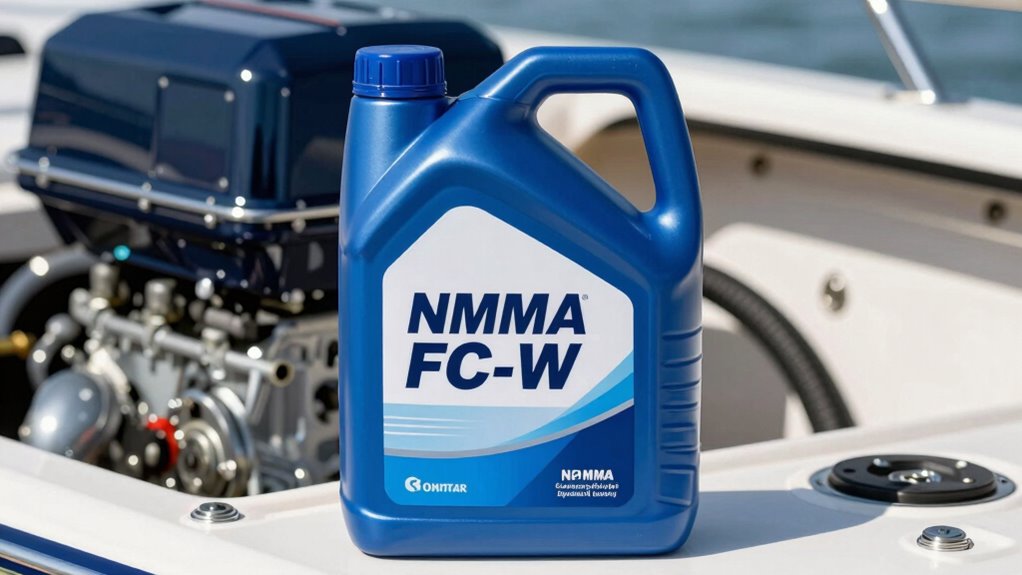

NMMA FC-W is a certification that shows the marine oil meets strict standards set by the National Marine Manufacturers Association, ensuring it’s suitable for outboard motors and harsh marine environments. Many assume all “marine oils” are certified, but that’s a common misunderstanding—only certified oils pass rigorous testing for corrosion, wear, and stability. If you want to make sure you choose the right oil, understanding what FC-W really means is key. Continue to learn more about this important standard.
Key Takeaways
- NMMA FC-W is a certification indicating marine oil meets rigorous standards for durability and corrosion resistance in marine environments.
- It ensures the oil is tested for stability, cleanliness, and resistance to breakdown under harsh saltwater and temperature conditions.
- Not all oils labeled “marine” are NMMA FC-W certified; certification guarantees suitability for outboard motors and small marine engines.
- Using non-certified oils can lead to inadequate lubrication, corrosion, and engine failure, especially in saltwater conditions.
- Choosing NMMA FC-W certified oil helps protect engine longevity, performance, and promotes environmentally friendly operation.
Are you wondering what the NMMA FC-W certification really means for your marine engine or boat? This certification is often misunderstood, but it plays a key role in guaranteeing your marine engine performs reliably and remains protected from corrosion and wear. When you see the NMMA FC-W label, it signifies that the oil meets specific standards set by the National Marine Manufacturers Association for use in outboard motors and other small marine engines. It’s not just a marketing term; it’s a guarantee that the oil has been tested and approved for marine engine environments.
Understanding oil compatibility is fundamental here. Marine engines operate differently from automotive engines—they’re exposed to water, salt, and varying temperatures. The NMMA FC-W standard ensures that the oil you choose won’t break down prematurely or cause damage. It’s designed to withstand the harsh conditions of marine use, providing lubrication that prevents corrosion and reduces friction. If your marine engine is not compatible with certain oils, you risk engine failure, costly repairs, or even safety hazards on the water. That’s why selecting an oil that carries the NMMA FC-W certification is essential for maintaining your engine’s longevity and performance.
Marine engines need specially formulated oils like NMMA FC-W to prevent damage and ensure reliable performance.
Many boat owners mistakenly assume that any oil labeled as “marine oil” is sufficient. However, not all oils meet the rigorous standards of the NMMA FC-W certification. Using non-certified oils can lead to inadequate lubrication, buildup of deposits, and corrosion, especially in saltwater environments. The certification acts as a filter, helping you identify oils that are specifically formulated for marine applications and compatible with your engine’s requirements. It’s not just about using any oil; it’s about choosing the right oil that aligns with your marine engine’s needs, assuring optimum oil compatibility.
Furthermore, the certification indicates that the oil has undergone testing for stability, cleanliness, and resistance to breakdown under marine conditions. This means your engine’s parts are better protected, and you reduce the chances of engine fouling or performance drops. It’s also worth noting that the NMMA FC-W standard is periodically reviewed and updated, reflecting the latest advancements in marine oil technology. Choosing certified oils can also contribute to a more environmentally friendly operation, as they tend to produce fewer emissions and less harmful residues.

Quicksilver 10W-40 4-Stroke Marine Engine Oil, 1 Gallon
Designed for use with all 4-stroke marine outboard motors and inboard and sterndrive engines
As an affiliate, we earn on qualifying purchases.
As an affiliate, we earn on qualifying purchases.
Frequently Asked Questions
How Does NMMA FC-W Certification Impact Engine Warranty Coverage?
Your engine warranty can be impacted by NMMA FC-W certification because using certified oils guarantees engine compatibility and adherence to manufacturer standards. If you don’t use FC-W certified oils, warranty implications may arise if the engine experiences issues linked to oil quality. Always check that your marine oil meets the FC-W standard to maintain warranty coverage and keep your engine running smoothly.
Can FC-W Oils Be Used in Non-Marine Engines Safely?
You can’t safely use FC-W oils in non-marine engines because their formulation is specifically designed for marine engines’ unique conditions. FC-W oils guarantee proper oil compatibility with marine engine components, preventing corrosion and wear. Using them in non-marine engines might lead to inadequate lubrication, damage, or reduced performance. Always choose oils recommended by your engine manufacturer to assure maximum protection and avoid voiding warranties.
What Are the Long-Term Benefits of Using FC-W Approved Oils?
By choosing FC-W approved oils, you’ll experience longer-lasting lubrication, leading to improved engine longevity and consistent performance. These oils promote fuel efficiency by reducing friction and wear, helping you save money and extend engine life. The long-term benefits include fewer repairs, less downtime, and better reliability on the water. Staying with FC-W standards guarantees your engine stays in prime condition, powering your adventures smoothly for years to come.
Is FC-W Certification Required for All Marine Engine Oils?
You don’t need FC-W certification for all marine engine oils, but it’s highly recommended for engine lubrication and marine fuel compatibility. Certified oils meet specific standards that ensure ideal performance and protection for your engine, especially in demanding marine environments. Using non-certified oils might compromise engine longevity and fuel efficiency, so always check for FC-W approval to ensure you’re choosing the best product for your marine fuel and engine needs.
How Often Should I Change Oil to Meet FC-W Standards?
You should change your marine engine oil every 100 hours of operation or at least once a year, whichever comes first, to meet FC-W standards. Stick to your boat’s maintenance schedule and follow the manufacturer’s recommended oil change intervals. Regular oil changes guarantee your engine stays protected and performs efficiently, preventing wear and tear, and maintaining compliance with FC-W certification. Staying consistent with these intervals keeps your boat running smoothly.

Quicksilver 10W-30 4-Stroke Marine Engine Oil, 1 Gallon
Designed for use with all 4-stroke marine outboard motors and inboard and sterndrive engines
As an affiliate, we earn on qualifying purchases.
As an affiliate, we earn on qualifying purchases.
Conclusion
Understanding the NMMA FC-W standard might seem complex, but once you grasp its importance, it’s clear that it’s the backbone of marine oil quality. Think of it as the secret sauce that keeps your engine running smoothly and efficiently—without it, your boat’s performance could plummet faster than a sinking ship. By choosing oils that meet this standard, you’re safeguarding your investment and ensuring your maritime adventures stay epic, not catastrophic.

Lucas Oil 11148 Marine Grease – 1 Pound Tub
For universal marine applications including trailer wheel bearings, trailer chassis and outboards
As an affiliate, we earn on qualifying purchases.
As an affiliate, we earn on qualifying purchases.

Quicksilver 25W-40 4-Stroke Marine Engine Oil, 1 Gallon
Direct replacement for Mercury Marine 8M0078628
As an affiliate, we earn on qualifying purchases.
As an affiliate, we earn on qualifying purchases.