
SAE J306 gear oil grades like 75W-90 and engine oils such as 5W-30 have different functions and testing standards, making them incompatible. 75W-90 is designed for gear systems that need high load capacity and shear stability at high temperatures, while 5W-30 focuses on engine performance, cold starts, and fuel economy. Their viscosity ratings can’t be swapped because each meets specific requirements. To understand why they aren’t interchangeable, keep exploring how their standards differ.
Key Takeaways
- 75W-90 is a gear oil grade designed for high-temperature shear stability, while 5W-30 is an engine oil optimized for cold start and fuel efficiency.
- Viscosity testing standards differ: SAE J306 evaluates gear oil viscosity at high temperatures, SAE J300 assesses engine oil flow at various temperatures.
- The viscosity ranges of 75W-90 and 5W-30 serve different operational needs, making them unsuitable substitutes.
- Gear oils like 75W-90 prioritize load-carrying capacity and shear stability; engine oils like 5W-30 focus on flowability and oxidation resistance.
- Using engine oil as gear oil can cause inadequate lubrication and potential gear failure due to incompatible viscosity and performance standards.
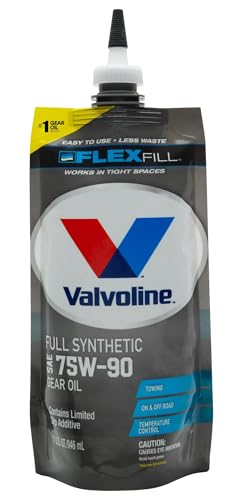
Valvoline FlexFill Advanced Full Synthetic Full Synthetic 75W-90 Gear Oil 1 QT FlexFill
FlexFill squeezable pouch releases 2X more fluid with less effort for 3X faster filling vs. traditional bottle packaging
As an affiliate, we earn on qualifying purchases.
As an affiliate, we earn on qualifying purchases.
What Are SAE J306 Gear Oil Grades and How Are They Defined?
SAE J306 gear oil grades define the viscosity characteristics required for lubricants used in automotive gears, axles, and transmissions. These grades are based on high-temperature kinematic viscosity at 100°C measured in centistokes (cSt), and low-temperature absolute viscosity in centipoise (cP). The standard categorizes oils with W grades for cold weather performance, such as 75W or 70W, indicating their flow at low temperatures. Non-W grades, like 90 or 140, specify viscosity at operating temperatures. Multi-grade oils combine these ratings, for example, SAE 75W-90, balancing cold-start flow and high-temperature protection. These grades help you select the right lubricant for your vehicle’s specific operating conditions, ensuring proper gear function, wear protection, and efficiency. Additionally, understanding the differences in viscosity grades can help optimize your vehicle’s performance in various climates and driving conditions.
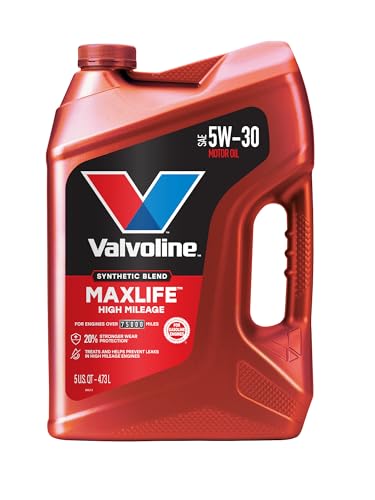
Valvoline MaxLife High Mileage 5W-30 Synthetic Blend Motor Oil 5 Quart
Formulated for engines with 75,000 miles or more, Valvoline MaxLife High Mileage synthetic blend is formulated with seal…
As an affiliate, we earn on qualifying purchases.
As an affiliate, we earn on qualifying purchases.
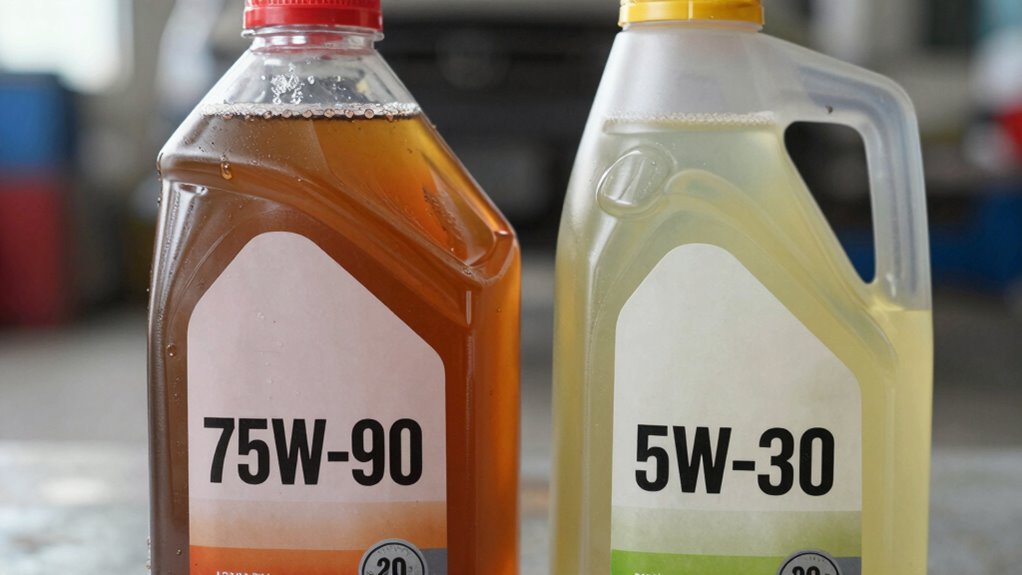
How Do Viscosity Grades Like 75W-90 and 5W-30 Differ in Function?
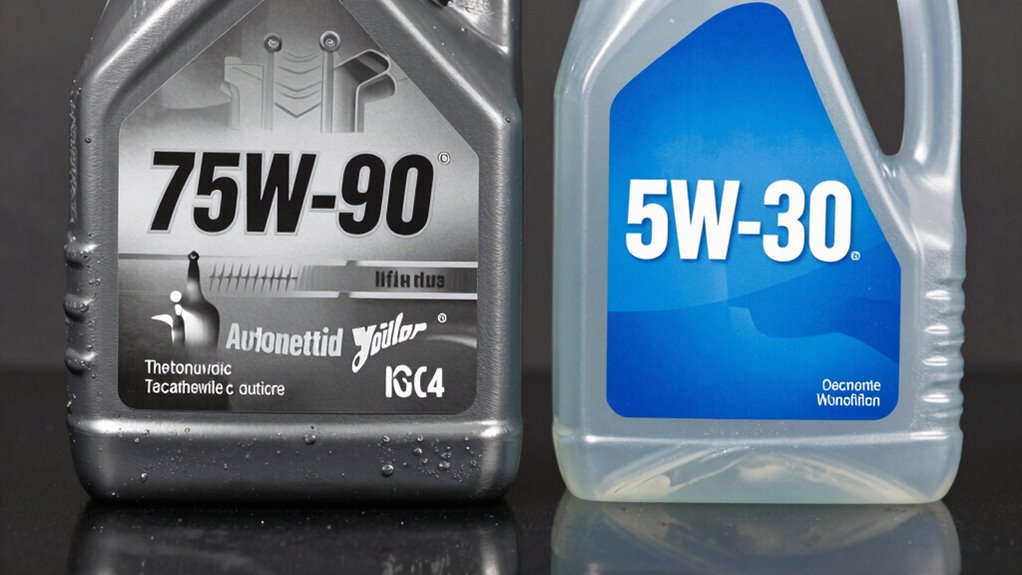
You’ll notice that 75W-90 and 5W-30 have different viscosity requirements tailored to their functions. These grades are designed for distinct operating conditions—gear versus engine—using different test methods and classifications. Understanding these differences helps you choose the right oil for peak performance and protection. Additionally, content formats play a crucial role in how information is presented and understood, especially in the context of exploring digital concepts.
Viscosity Requirements Differ Significantly
Different viscosity grades like 75W-90 and 5W-30 serve distinct functions because they are engineered for different operating conditions and machinery. 75W-90 is designed for gear systems operating under high pressures and loads, requiring thicker oil that maintains a film under intense shear forces. It has a higher high-temperature viscosity, typically between 13.5 and 18.5 cSt at 100°C, ensuring proper lubrication in hypoid and other heavy-duty gears. Conversely, 5W-30 is formulated for engines, with a lower high-temperature viscosity around 9.3 to 12.5 cSt, optimizing fuel economy and reducing internal friction. These differences mean each oil grade meets specific performance criteria—gear oils prioritize shear stability and load-carrying capacity, while engine oils focus on flowability and temperature resistance. Using one in place of the other can lead to inadequate lubrication and component wear. Understanding viscosity differences helps ensure the correct grade is selected for optimal machinery performance.
Designed for Different Operating Conditions
Viscosity grades like 75W-90 and 5W-30 are tailored for specific operating conditions, ensuring ideal performance in their respective systems. You need a gear oil like 75W-90 to handle high-pressure environments and extreme temperatures in gears and axles. Conversely, 5W-30, designed for engines, focuses on fuel efficiency and cold-start performance. The differences are reflected in their viscosity ranges and test methods, making each suited for distinct functions. Additionally, understanding the concept of Free Floating is essential when considering the types of lubrication needed for different mechanical systems.
Test Methods and Classifications Vary
The way viscosity grades like 75W-90 and 5W-30 are tested and classified directly influences their performance and suitability for specific applications. Different test methods and classification standards lead to notable distinctions: 1. SAE J306 measures high and low-temperature viscosities using ASTM D445 and ASTM D2983, focusing on gear oil behavior under load and shear stability. 2. SAE J300 evaluates engine oil flow properties at cranking and pumping temperatures, emphasizing fuel economy and engine protection. 3. Viscosity ranges vary: gear oils like 75W-90 require higher high-temp viscosities for load-bearing conditions, while engine oils like 5W-30 prioritize lower viscosities for fuel efficiency. 4. Testing protocols impact grade definitions, making direct comparisons misleading; each standard tailors tests to its specific application, ensuring ultimate lubrication performance. Additionally, viscosity grading standards ensure oils are optimized for their designated environments, but this can lead to confusion when comparing grades across different applications.

MOLUCKFU Engine Oil Comparator Tool and Transmission Oil Viscosity Tester Acrylic Stand for Accurate Car Maintenance and Quality Testing
Versatile functionality: not only compares engine oil but also tests the viscosity of transmission oil, providing comprehensive oil…
As an affiliate, we earn on qualifying purchases.
As an affiliate, we earn on qualifying purchases.
How Do SAE J306 Test Methods Determine Gear Oil Viscosity Ratings?
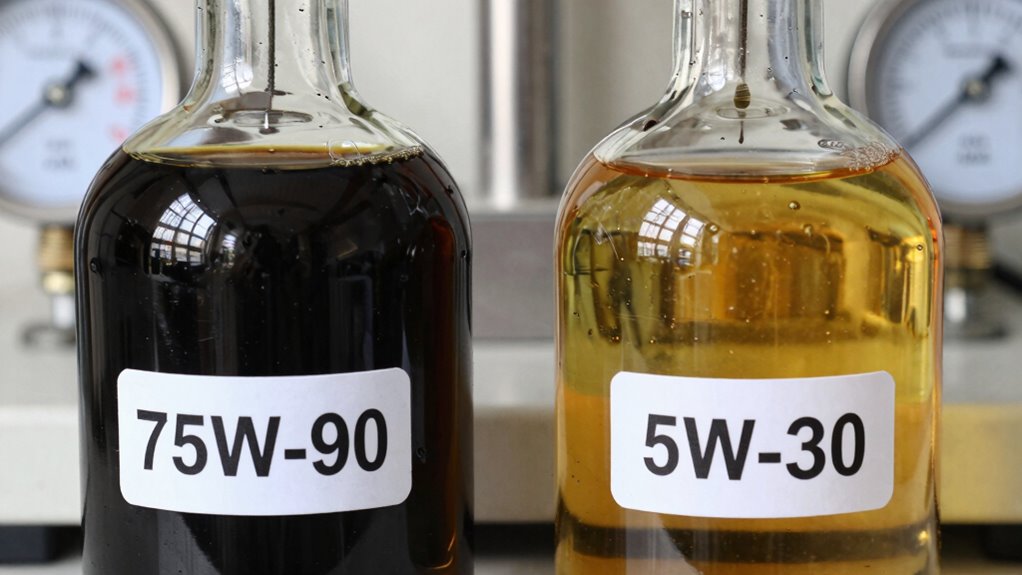
You need to understand how SAE J306 test methods assess gear oil viscosity ratings, starting with shear stability testing to see how oils perform under load. The test conditions for viscosity measurement, especially at high and low temperatures, are carefully regulated to ensure consistent results. Using the ASTM D2983 procedure, testers measure absolute viscosity at low temperatures, which helps determine the oil’s grade accurately.
Shear Stability Testing
Shear stability testing in SAE J306 involves subjecting gear oils to specific shear conditions to evaluate how their viscosity changes under load. During the test, you expose the oil to controlled shear forces, simulating real-world operating conditions. The process measures how much the oil’s viscosity drops after shear, which indicates its shear stability. To perform this test, you:
- Apply shear stress using a standardized device, like a Couette or cone-and-plate rheometer.
- Maintain a specific temperature to ensure consistent results.
- Measure the initial viscosity before shear.
- Reassess viscosity after shear to determine the change.
This method helps classify gear oils based on their ability to resist viscosity loss, ensuring they maintain proper lubrication under heavy loads.
Viscosity Measurement Conditions
SAE J306 test methods determine gear oil viscosity ratings by measuring how the lubricant flows under controlled conditions at specified temperatures. These tests replicate real-world stresses to ensure accuracy. For low-temperature testing, ASTM D2983 measures the absolute viscosity in cP at -40°C, reflecting cold-start performance. High-temperature viscosity is assessed at 100°C using a kinematic viscometer, indicating flow under operating conditions. The tests ensure oils meet specific viscosity limits for their grades. Below is a table illustrating key test conditions:
| Test Parameter | Description |
|---|---|
| Low-temperature test | ASTM D2983, -40°C, in cP |
| High-temperature test | Kinematic viscometer, 100°C, in cSt |
| Shear stability test | Simulates operational shear forces |
| Sample preparation | Consistent, controlled temperature |
| Measurement duration | Ensures repeatability |
These conditions guarantee reliable, standardized ratings for gear oils. Additionally, understanding these testing conditions helps in selecting the appropriate gear oil for specific applications.
ASTM D2983 Procedure
The ASTM D2983 procedure measures the absolute viscosity of gear oils at low temperatures, providing vital data for SAE J306 viscosity ratings. You determine the viscosity by cooling the oil to a specified low temperature, typically -40°C, then measuring the resistance to flow. The process involves four key steps:
- Heating the sample to ensure uniform temperature.
- Cooling it to -40°C using a controlled environment.
- Using a calibrated viscometer to measure flow times.
- Calculating the absolute viscosity in centipoise (cP) from the flow data.
This standardized method guarantees consistency across tests, allowing gear oils to be accurately classified based on their low-temperature flow properties. It’s essential for determining the W-grade ratings and ensuring oils meet the specified viscosity limits.

Mobil 1 Gear Oil, 75W90, Limited Slip Additive, Synthetic, 1 qt Bottle, Each
Mobil 1 Synthetic Gear Lube Ls 75W-90 Mobil 1 Synthetic Gear Lube Ls 75W-90 Is A Supreme Performance,…
As an affiliate, we earn on qualifying purchases.
As an affiliate, we earn on qualifying purchases.
What Are the Main Differences Between Gear and Engine Oil Performance?
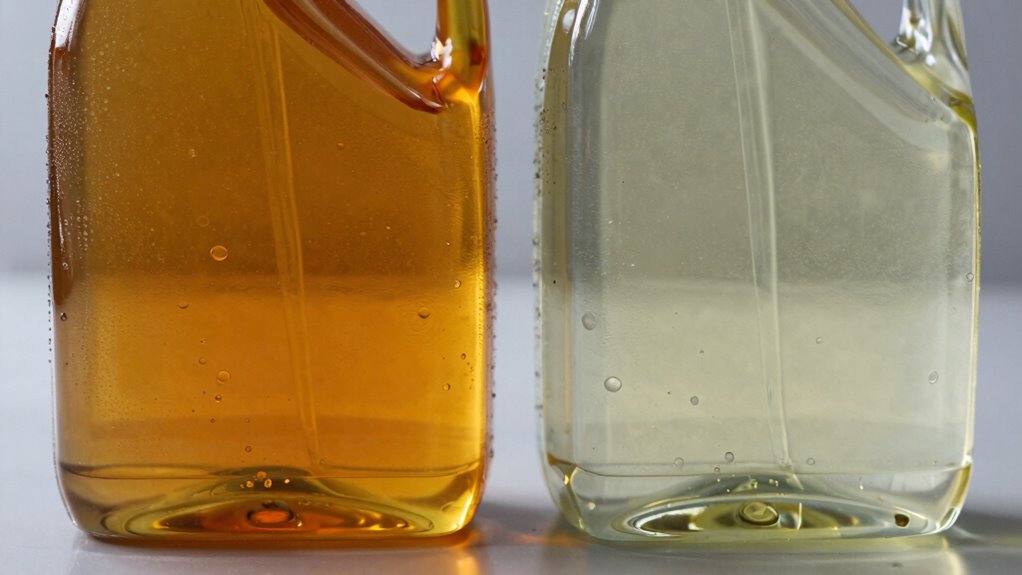
Gear oils and engine oils are designed to meet different performance needs, which makes their properties distinct. Engine oils mainly focus on lubricating engine components, reducing wear, and resisting oxidation at high temperatures. They’re formulated to flow easily at low temperatures for cold starts and provide fuel efficiency. Gear oils, however, are optimized to handle extreme pressure, shear stress, and high temperatures common in gears and axles. They maintain a stable film under heavy loads and resist shearing forces that can degrade lubrication. Unlike engine oils, gear oils often contain extreme pressure (EP) additives to protect hypoid gears from wear. The viscosity requirements differ markedly, with gear oils needing higher viscosity at operating temperatures to ensure reliable load-carrying capacity. Viscosity plays a crucial role in ensuring that gear oils can withstand the demanding conditions within different types of gear systems.
How Does SAE J306 Classification Help You Choose the Right Gear Oil?
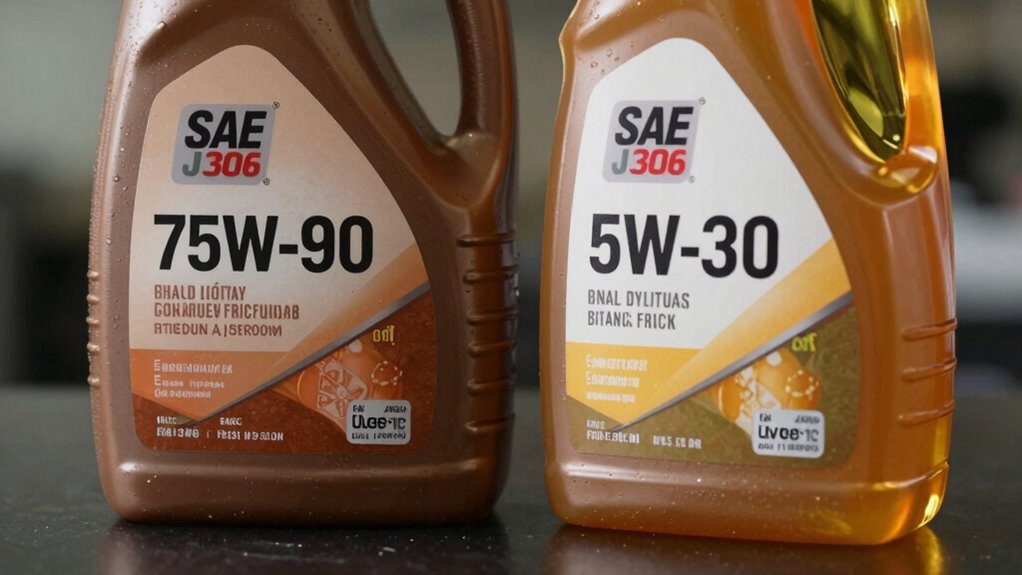
Understanding SAE J306 classification helps you select the appropriate gear oil by providing clear viscosity guidelines tailored to specific operating conditions. It simplifies decision-making by matching oil grades to your vehicle’s temperature and load requirements. You can use J306 to:
- Identify the correct low-temperature flow properties, such as 75W or 80W, ensuring smooth gear engagement in cold weather.
- Confirm high-temperature viscosity limits, like SAE 90 or 75W-90, for ideal lubrication under heavy loads.
- Ensure compatibility with manufacturer specifications, as J306 grades align with industry standards for gear and axle systems.
- Avoid mismatched oils that could cause gear wear or insufficient lubrication, by choosing lubricants that meet the precise viscosity ranges outlined in J306.
- Recognize that viscosity ratings are essential for matching gear oils to specific climate and operational demands, helping maintain optimal performance.
Why Can’t You Use 5W-30 Engine Oil Instead of 75W-90 Gear Oil?
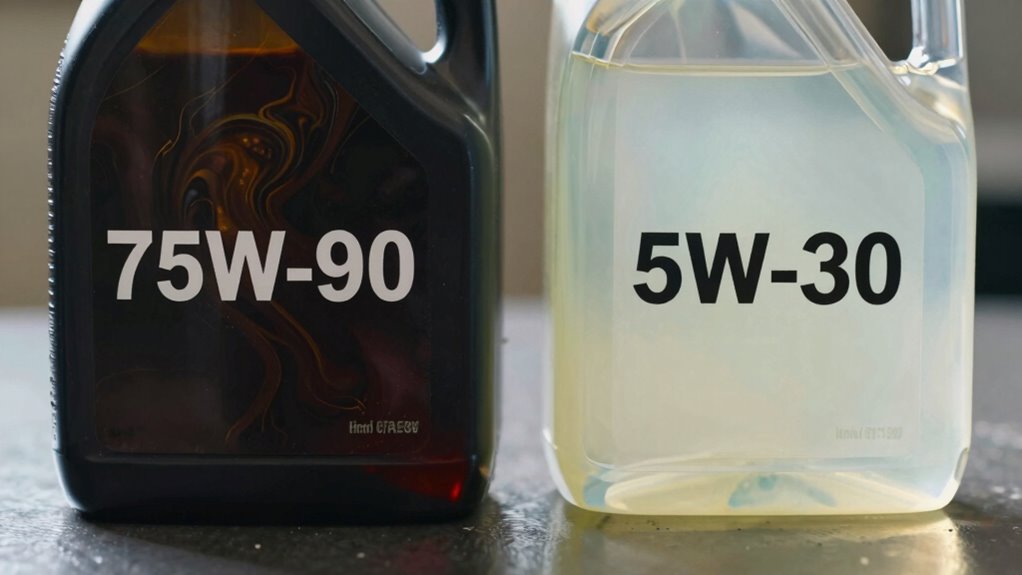
You can’t simply substitute 5W-30 engine oil for 75W-90 gear oil because they are formulated with different properties to serve distinct functions. Engine oils like 5W-30 prioritize fuel economy, oxidation resistance, and bearing protection, with lower viscosity for easier pumping through engine components. Gear oils, however, require higher viscosity for extreme pressure and gear load support. Using 5W-30 in place of 75W-90 risks insufficient lubrication, increased wear, and gear failure. Additionally, the viscosity ratings at operating temperature highlight their incompatibility for gear systems.
How Have Changes in SAE J306 Standards Affected Modern Gear Oil Grades?
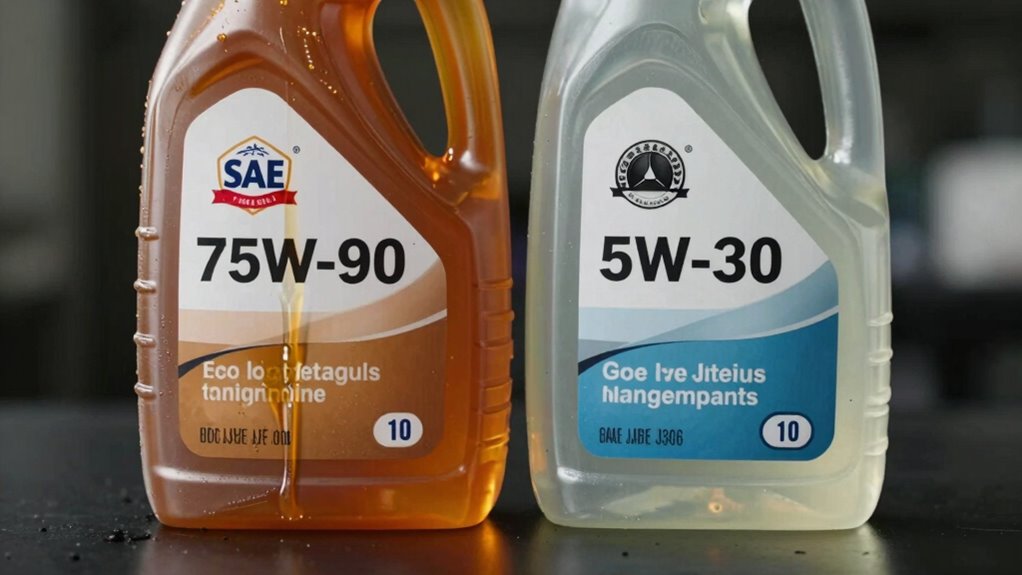
Recent updates to the SAE J306 standards have markedly influenced the classification and formulation of modern gear oils, leading to more precise viscosity ranges and performance criteria. These changes impact how you select gear oils by:
- Narrowing viscosity ranges, ensuring oils meet specific high- and low-temperature performance requirements.
- Introducing new grades like SAE 110 and SAE 190, expanding options for specialized applications.
- Refining low-temperature viscosity classifications to enhance efficiency and cold-start performance.
- Updating shear stability and testing methods, which improve oil durability under extreme loads.
- Standardization protocols have been revised to improve consistency across different manufacturers and applications.
These modifications help manufacturers develop gear oils that better withstand modern demands, reduce wear, and improve longevity while maintaining compatibility with evolving vehicle technologies.
What Are the API Service Classifications for Gear Oils and Their Compatibility?
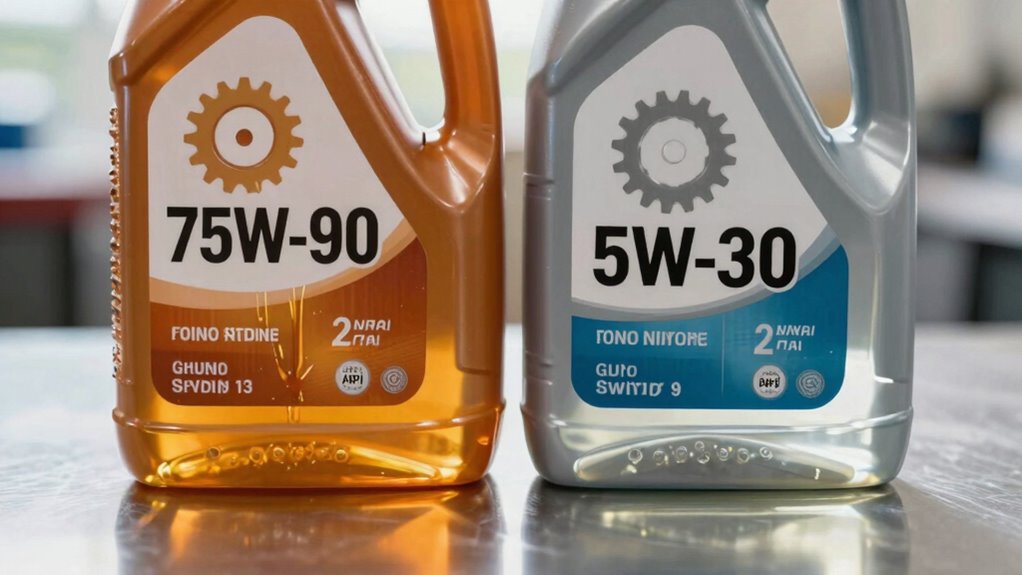
API service classifications for gear oils provide essential guidance on their performance capabilities and compatibility with different vehicle components. You’ll find classifications like GL-4, GL-5, and MT-1, each designed for specific applications. GL-4 oils offer mild extreme pressure performance suitable for manual transmissions and some hypoid gears with yellow metals. GL-5 oils provide more severe EP protection, ideal for hypoid gears subjected to high loads, but they may harm yellow metals. MT-1 oils are non-synchronized transmission lubricants that focus on stability and seal compatibility. These classifications help you match the right gear oil to your vehicle’s requirements, ensuring ideal protection and longevity. Always check your manufacturer’s recommendations to select the appropriate API service level for your gear system. Proper gear oil selection ensures optimal performance and prevents damage from incompatible oils.
How to Select the Best Gear Oil Grade for Your Vehicle’s Needs
Choosing the right gear oil grade depends on your vehicle’s specific requirements and operating conditions. To select the best grade, consider these factors:
- Check your owner’s manual for recommended SAE grades and API service classifications.
- Identify operating temperatures—colder climates may need lower W grades like 75W, while warmer environments suit higher viscosity oils.
- Determine load and gear type—hypoid gears under high pressure require thicker oils like SAE 80W-90 or 75W-90.
- Consider OEM specifications and any recent updates—newer vehicles might specify advanced grades like SAE 75W-110 or 75W-140 for enhanced performance.
Matching these factors ensures ideal lubrication, protects gears, and prolongs drivetrain lifespan. Always verify compatibility before switching grades.
Frequently Asked Questions
Why Are Gear Oil Viscosity Grades Not Directly Comparable to Engine Oil Grades?
You can’t directly compare gear oil viscosity grades to engine oil grades because they serve different purposes and are tested differently. Gear oils need higher viscosity at high temperatures for load support, while engine oils focus on engine operation and fuel efficiency. Their viscosity measurement methods and standards differ, making it unsafe to substitute one for the other without risking inadequate lubrication or gear wear.
How Do the Test Methods for Gear Oils Differ From Those for Engine Oils?
You’ll notice gear oils and engine oils use different test methods because they serve distinct functions. Gear oils undergo ASTM D2983 to measure low-temperature absolute viscosity, simulating extreme cold conditions, and shear stability tests like CEC L-45-A-99. Engine oils, however, are tested with methods like cranking and pumping viscosity per SAE J300, focusing on engine-start conditions. These differences guarantee each oil performs effectively in its specific application.
Can Using Engine Oil in Gearboxes Cause Damage?
Using engine oil in gearboxes can definitely cause damage. Engine oils aren’t formulated for the extreme pressures and shear forces gearboxes experience, especially in hypoid gears. They lack the necessary EP additives, which protect gears under load. Plus, engine oils are thinner at high temperatures, risking insufficient lubrication. This can lead to increased wear, overheating, and ultimately, costly repairs. Stick to gear oil grades like SAE 75W-90 for proper protection.
What Are the Implications of SAE J306 Updates on Gear Oil Selection?
The SAE J306 updates help you select gear oils better suited for modern, efficient vehicles. They refine viscosity ranges, introduce low-temperature grades, and improve shear stability standards, ensuring your gear system stays protected under varying conditions. You’ll want to check these new grades to match your vehicle’s specifications, avoiding under- or over-lubrication, which can lead to wear or damage. Staying current with these updates helps maintain ideal gear performance and longevity.
How Does the Presence of Yellow Metals Affect Gear Oil Specifications?
Lucky you, dealing with yellow metals in your gears—because apparently, the universe thought it’d be fun to complicate things. You need gear oils with GL-4 ratings, which contain mild EP additives, protecting yellow metals from corrosion and damage. Avoid GL-5 oils, which are harsher and can corrode those metals. So, check your specs, pick the right viscosity, and keep your metals smiling—because nobody likes a tarnished reputation.
Conclusion
Choosing the right gear oil grade is vital for your vehicle’s performance and longevity. For instance, using 75W-90 gear oil in a manual transmission guarantees proper lubrication under load, unlike 5W-30 engine oil, which isn’t designed for gear mechanisms. Just like a case study where switching to correct SAE J306-rated gear oil prevented costly wear, selecting the appropriate grade maintains your drivetrain smooth and dependable. Always prioritize manufacturer recommendations for maximum results.