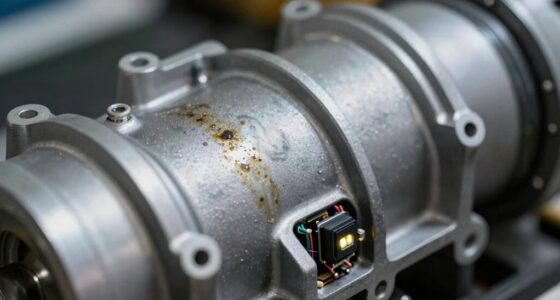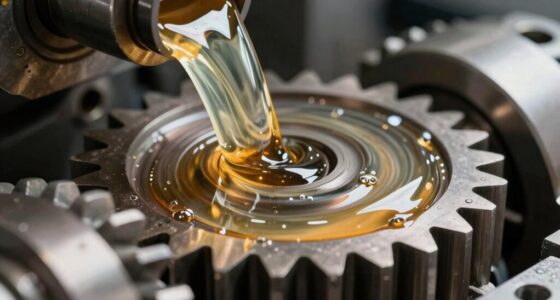
ATF oxidation happens when your transmission fluid is exposed to heat and oxygen, causing it to break down over time. This process produces sludge, varnish, and acids that clog components, reducing lubrication and cooling—ultimately affecting how smoothly your vehicle shifts. As the fluid deteriorates, shifts may become rough or slip. If you want to learn how to prevent this heat-driven aging and keep your transmission performing at its best, keep exploring further.
Key Takeaways
- Heat accelerates ATF oxidation, causing chemical breakdown and formation of harmful byproducts.
- Oxidation reduces fluid’s lubricating and cooling properties, impacting shift smoothness.
- Degraded ATF leads to rough shifts, slipping gears, and increased transmission wear.
- Regular fluid changes and cooling system maintenance prevent excessive oxidation.
- Monitoring fluid condition helps detect early signs of oxidation-related shift issues.
ATF oxidation occurs when automatic transmission fluid (ATF) is exposed to heat, oxygen, and contaminants, causing its chemical properties to break down over time. When this happens, the fluid’s ability to lubricate, cool, and transmit power diminishes, leading to fluid degradation that can impair your vehicle’s shifting performance. As the fluid ages, you might notice rough shifts, slipping gears, or even a burning smell, all signs that oxidation is compromising the transmission’s health. Understanding how oxidation affects ATF and what you can do to prevent it is key to maintaining smooth operation and prolonging the life of your transmission.
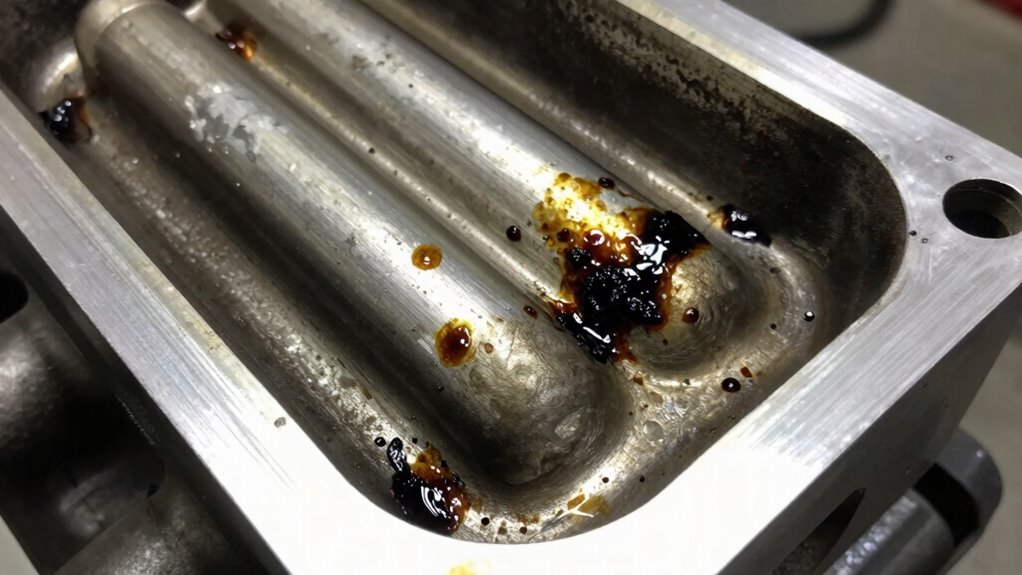
Oxidation is essentially a chemical reaction where the fluid’s molecules break down due to exposure to high temperatures and oxygen. Over time, this process results in the formation of varnish, sludge, and acids that can clog transmission components. These byproducts hinder fluid flow and reduce the fluid’s capacity to protect vital parts like clutches and valves. The more your transmission fluid oxidizes, the more you’ll experience fluid degradation, which accelerates wear and can eventually cause costly repairs. That’s why oxidation prevention should be a priority for any vehicle owner aiming for reliable performance.
To combat fluid degradation caused by oxidation, regular maintenance is essential. Changing your transmission fluid at manufacturer-recommended intervals helps ensure fresh fluid with optimal properties remains in the system. Using high-quality, properly formulated ATF with antioxidants can also substantially slow down the oxidation process. Some fluids contain special additives designed to neutralize acids and inhibit sludge formation, acting as a shield against heat-driven aging. Additionally, keeping your transmission cooler can reduce the temperature-induced rate of oxidation, so consider inspecting your cooling system and adding auxiliary coolers if needed. Proper fluid maintenance and monitoring are crucial for preventing long-term damage.
Preventing oxidation isn’t just about timely fluid changes; it’s about adopting a proactive approach to transmission health. Keeping an eye on fluid condition—checking for darkened color, burnt odor, or cloudiness—allows you to catch early signs of fluid degradation. In high-performance or heavily loaded vehicles, these measures become even more critical, as the fluid is subjected to more extreme conditions that accelerate oxidation. By prioritizing oxidation prevention, you’re not only safeguarding your transmission from premature failure but also ensuring smoother shifts and better overall vehicle performance.

Automatic 10R80 Transmission Service Kit w/Filter & ULV Fluid Compatible with F-150 2017+ & 2018-2021 Expedition/Mustang/Ranger Gas & Diesel
Genuine Parts | Direct fit replacement | 7 quarts of Mercon ULV fluid
As an affiliate, we earn on qualifying purchases.
As an affiliate, we earn on qualifying purchases.
Frequently Asked Questions
How Does ATF Oxidation Affect Transmission Performance?
When ATF oxidizes, it causes fluid degradation, which directly impacts your transmission’s performance. You’ll notice shifts becoming rougher or less smooth because the degraded fluid can’t lubricate and protect the moving parts effectively. Over time, this reduces shift smoothness and can lead to increased wear or even transmission failure. To keep your transmission functioning properly, regular fluid changes are essential to prevent oxidation and maintain ideal performance.
Can ATF Oxidation Be Reversed or Only Prevented?
You can’t reverse fluid degradation caused by ATF oxidation, but you can prevent further damage through proper maintenance strategies. Regular fluid changes and using high-quality additives help minimize oxidation, effectively slowing the aging process. Think of it like stopping rust from spreading on metal—though you can’t undo the damage, you can prevent it from worsening by maintaining your transmission fluid properly. This keeps your transmission shifting smoothly longer.
What Are the Signs of Severe ATF Oxidation?
You’ll notice signs of severe ATF oxidation through fluid degradation, such as a burnt smell, dark color, and increased viscosity. You might also experience rough or delayed shifts, slipping gears, or overheating. These symptoms indicate your transmission’s fluid has lost its effectiveness, risking damage and reducing transmission longevity. Addressing these issues promptly by replacing the fluid can help restore proper function and extend your transmission’s lifespan.
How Often Should ATF Be Checked for Oxidation?
Think of your ATF like a delicate dance partner, easily thrown off by fluid contamination and oxidation. You should check your ATF every 30,000 to 50,000 miles, or sooner if you notice shifting issues. Regular inspections help catch oxidation early, aided by oxidation inhibitors. Don’t wait until it feels like a rough ride—stay ahead by monitoring your fluid regularly and keeping it clean to preserve smooth shifting.
Does Temperature Influence the Rate of ATF Oxidation?
Yes, temperature markedly influences the rate of ATF oxidation. Higher temperatures accelerate thermal degradation, which decreases oil stability over time. When you operate your vehicle in hot conditions or under heavy loads, the ATF breaks down faster, leading to reduced shift performance. To maintain ideal performance, you should check and replace your ATF more frequently in hotter environments, as increased temperature speeds up oxidation and diminishes oil stability.

Hayden Automotive 678 Universal Rapid-Cool 9.5” x 11” Add-On Transmission Cooler – Not for Direct Replacement of the OE Cooler
Size Is 3/4 Inch X 11 Inch X 9-1/2 Inch
As an affiliate, we earn on qualifying purchases.
As an affiliate, we earn on qualifying purchases.
Conclusion
Understanding ATF oxidation helps you realize how heat ages your transmission fluid, much like how sunlight fades fabric over time. When you notice a change in shift feel, it’s a sign your ATF has oxidized, losing its effectiveness. Regular checks and fluid changes are your best tools to keep your transmission running smoothly. Think of fresh ATF as a well-oiled machine—without it, your car’s performance can feel as sluggish as a turtle in slow motion.
Nano-Micro Encapsulation of Drugs
As an affiliate, we earn on qualifying purchases.
As an affiliate, we earn on qualifying purchases.

Transmission Fluid Tester Kit Gasoline & Diesel Gearbox Oil Diagnostic Tool High-Precision Diagnostic Analysis Tool with 31.5in Probe Transmittance/Temperature Testing, 2.8in Display (4 Batteries)
【WHY NEED IT】Our transmission fluid tester features an advanced optical probe that measures light transmittance within the transmission…
As an affiliate, we earn on qualifying purchases.
As an affiliate, we earn on qualifying purchases.