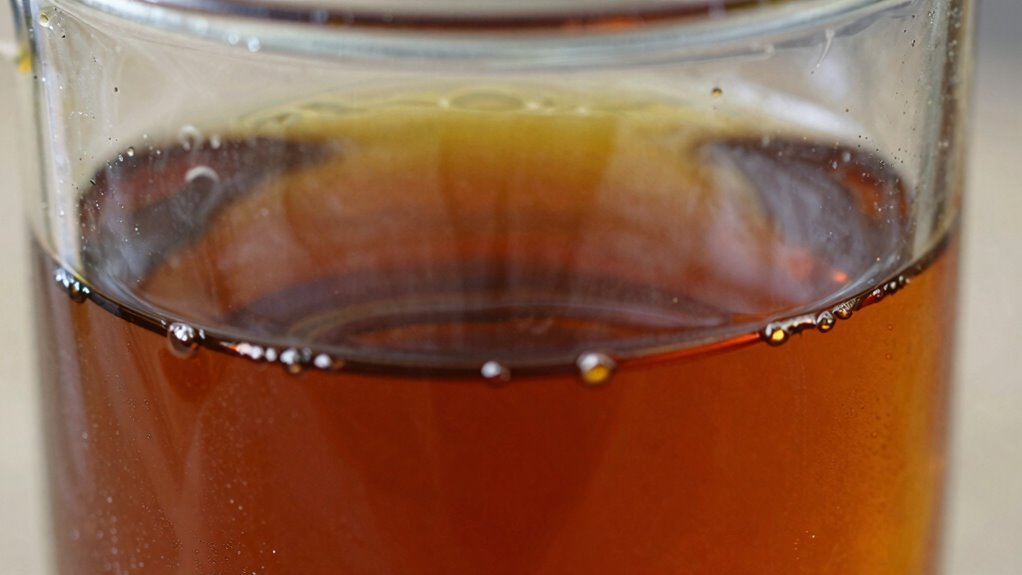

When you see labels like ‘low viscosity’ on ATF, they actually cover a broad range of grades designed for different temperature conditions. These viscosity grades guarantee your transmission shifts smoothly and stays protected during cold starts or hot operation. Choosing the right grade depends on the climate and vehicle requirements. If you want to understand how these hidden variations work and find the best fluid for your vehicle, there’s more to discover below.
Key Takeaways
- Viscosity grades specify fluid thickness at specific temperatures, not just label terms like “low viscosity.”
- Lower viscosity grades mean thinner ATFs, improving cold start flow but may reduce lubrication at high temperatures.
- Viscosity ranges ensure ATFs perform reliably across temperature variations, balancing cold flow and hot protection.
- SAE classifications define viscosity ranges, revealing the actual flow behavior behind “low viscosity” labels.
- Proper grade selection based on these ranges prevents transmission wear and ensures optimal shifting performance.

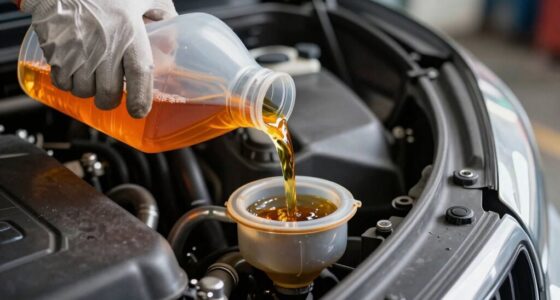
Have you ever wondered how automatic transmission fluids (ATFs) are classified? It’s not just about labels like “low viscosity” or “high viscosity.” Beneath these terms lies a detailed system that ensures your vehicle’s automatic transmission operates smoothly and efficiently. This classification system is based on viscosity grades, which describe the fluid’s thickness and flow characteristics at specific temperatures. Understanding these grades helps you select the right fluid for your vehicle, maximizing fluid performance and prolonging transmission life.
Automatic transmission relies heavily on the right viscosity to function properly. If the fluid is too thick, it won’t circulate freely, causing increased wear and reduced efficiency. Conversely, if it’s too thin, it might not provide enough lubrication or hydraulic pressure needed for shifting gears. That’s where viscosity grades come into play—they set standards for how fluids perform across temperature ranges. These grades are assigned by organizations like the Society of Automotive Engineers (SAE), which tests and classifies fluids according to their flow behavior at designated temperatures.
Viscosity grades ensure ATFs perform properly across temperature variations for smooth shifting and protection.
When you see a fluid labeled with a specific viscosity grade, such as Dexron VI or Mercon V, you’re looking at a standardized measure of its flow characteristics at cold and hot temperatures. These classifications aren’t arbitrary; they’re designed to ensure that the fluid maintains ideal performance no matter the climate. For example, a lower viscosity grade indicates a thinner fluid that flows more easily at low temperatures, helping cold starts and initial gear engagement. Higher viscosity grades are thicker fluids that provide better lubrication and protection at operating temperatures.
Choosing the correct viscosity grade is crucial for maintaining fluid performance. Using a fluid with a viscosity that’s too low can lead to inadequate lubrication, increased wear, and potential transmission failure. On the other hand, selecting a fluid with a viscosity too high can cause sluggish shifting and increased energy consumption. That’s why manufacturer recommendations are essential—you need to match the viscosity grade specified for your make and model to ensure your automatic transmission functions smoothly and reliably.
In essence, the classification of ATFs by viscosity grades isn’t just a technical detail; it’s a key factor in ensuring your vehicle’s automatic transmission performs as intended. By understanding how these grades work, you can make informed decisions about the fluids you use, helping your transmission operate efficiently across seasons and driving conditions. When you pay attention to viscosity grades, you’re actively supporting better fluid performance, extending the life of your transmission, and maintaining the overall health of your vehicle’s drivetrain. Recognizing the importance of viscosity grading systems can help you better understand the specifications and standards that ensure optimal transmission performance.

TRIAX DX6 ATF – Compatible with Dexron VI and Mercon SP/LV Applications – Full Synthetic, OEM Grade, Low Viscosity, Fill for Life Automatic Transmission Fluid (5 Quart)
Full synthetic, low-viscosity, with superior protection, low operating temperatures, and high shear resistance while preventing notchy or sticky…
As an affiliate, we earn on qualifying purchases.
As an affiliate, we earn on qualifying purchases.
Frequently Asked Questions
How Are ATF Viscosity Grades Determined and Standardized Globally?
You can determine ATF viscosity grades through viscosity measurement, which assesses how fluids flow at specific temperatures. These grades are standardized globally using international standards like ASTM and SAE, ensuring consistency. Manufacturers test ATFs under controlled conditions, and the results classify the fluids into grades such as ATF Dexron or Mercon. This standardization helps you compare products and select the right ATF for your vehicle, no matter where you are.
Do Different Vehicle Manufacturers Recommend Specific ATF Viscosity Grades?
Did you know that over 90% of vehicle owners stick to manufacturer recommendations? They often wonder if different vehicle brands suggest specific ATF viscosity grades. Yes, transmission fluid compatibility varies; some brands require specific viscosity grades for maximum performance. Always check your owner’s manual for precise labels, as viscosity grade labeling guarantees you select the right transmission fluid, helping your vehicle run smoothly and last longer.
How Does Temperature Affect ATF Viscosity Performance?
Temperature markedly impacts ATF viscosity performance by causing thermal expansion, which thin out the fluid at higher temperatures, and by affecting the viscosity index, which measures how much the fluid’s viscosity changes with temperature. As temperatures rise, ATF becomes less viscous, ensuring smooth operation, but if it gets too hot, it can thin too much. Conversely, cold temperatures increase viscosity, making shifting harder. Proper viscosity management maintains ideal transmission performance across temperature ranges.
Can Using the Wrong Viscosity Grade Damage Transmission Components?
Using the wrong viscosity grade is like putting the wrong key in a lock; it can cause serious damage. When fluid isn’t compatible, it leads to transmission wear, increased friction, and inefficient operation. Over time, this can harm components and reduce lifespan. Always choose the correct ATF viscosity grade to guarantee proper lubrication, prevent damage, and maintain smooth transmission performance. Your transmission depends on the right fluid for a reason.
Are Synthetic ATFS Measured Differently Than Conventional Types?
Synthetic ATFs are measured similarly to conventional types in terms of viscosity, but their synthetic differences mean they often maintain ideal viscosity over a broader temperature range. This results in more stable viscosity measurement under various conditions, providing better lubrication and performance. You’ll notice that synthetic ATFs typically offer improved flow at low temperatures and better protection at high temperatures, making viscosity measurement essential for ensuring they perform as intended.
SAE ATF viscosity chart
As an affiliate, we earn on qualifying purchases.
As an affiliate, we earn on qualifying purchases.
Conclusion
Understanding ATF viscosity grades reveals more than just labels; it uncovers the balance, the precision, and the performance behind each choice. When you consider viscosity, you’re not just selecting a fluid—you’re choosing reliability, efficiency, and protection. It’s about knowing what’s hidden beneath the numbers, what’s essential behind the surface. So, pay attention, compare carefully, and choose wisely—because behind every low-viscosity label lies a world of importance, waiting to be understood and appreciated.

Lucas Oil 11256 Low Viscosity Synthetic Multi-Vehicle Automatic Transmission Fluid, 1 Gallon (Pack of 1)
Durable friction modifiers insure smooth, chatter free shifts and a quiet locking torque converter
As an affiliate, we earn on qualifying purchases.
As an affiliate, we earn on qualifying purchases.
Lucas Oil 11256 Low Viscosity Synthetic Multi-Vehicle Automatic Transmission Fluid, 1 Gallon (Pack of 1)
Durable friction modifiers insure smooth, chatter free shifts and a quiet locking torque converter
As an affiliate, we earn on qualifying purchases.
As an affiliate, we earn on qualifying purchases.