
Understanding how fluid friction curves affect torque converter lockup is key to smooth operation. When fluid friction is too high or inconsistent, it causes harsh engagement and shuddering during lockup. Proper friction properties guarantee a seamless connection between engine and transmission, reducing vibrations. Changes in fluid viscosity and flow influence these curves, impacting overall performance. If you want to know how to optimize fluid conditions for smoother shifts, there’s more to discover ahead.
Key Takeaways
- Fluid friction curves determine the smoothness of clutch engagement during lockup, affecting shudder occurrence.
- Steep or uneven friction curves can cause abrupt pressure changes, leading to vibrations and shudder.
- Properly balanced fluid friction properties ensure consistent torque transfer and reduce the risk of shudder.
- Degradation or contamination alters friction curves, increasing turbulence and promoting uneven engagement.
- Maintaining optimal fluid viscosity preserves ideal friction curves, minimizing shudder during lockup transitions.
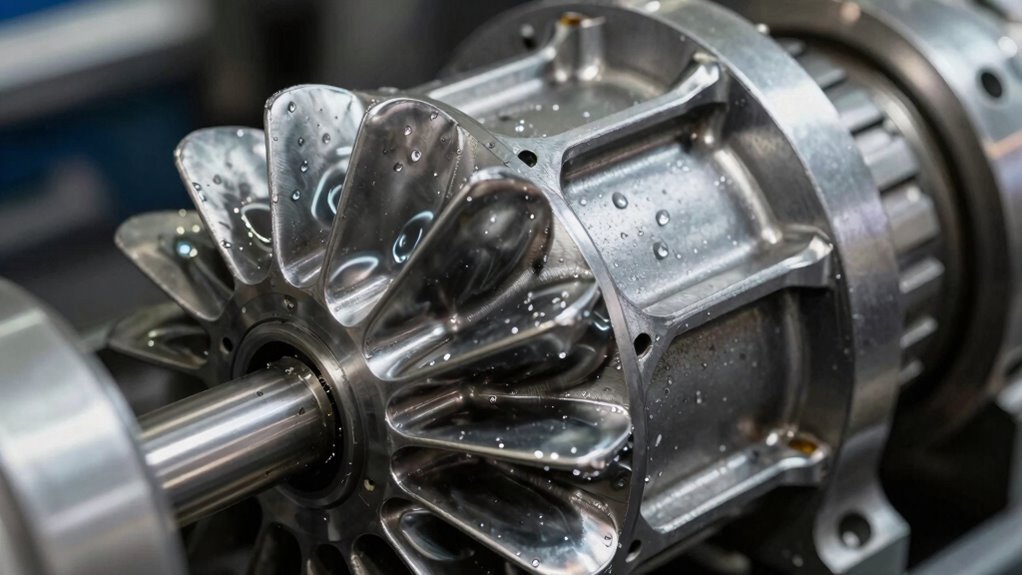
Torque converter lockup is a feature in automatic transmissions that improves fuel efficiency and reduces heat by directly connecting the engine to the transmission once certain conditions are met. When this lockup engages, it effectively eliminates the slipping that typically occurs in the converter, allowing power to flow more efficiently from the engine to the drivetrain. But understanding how fluid dynamics and friction properties influence this process is essential, especially when diagnosing issues like shudder.
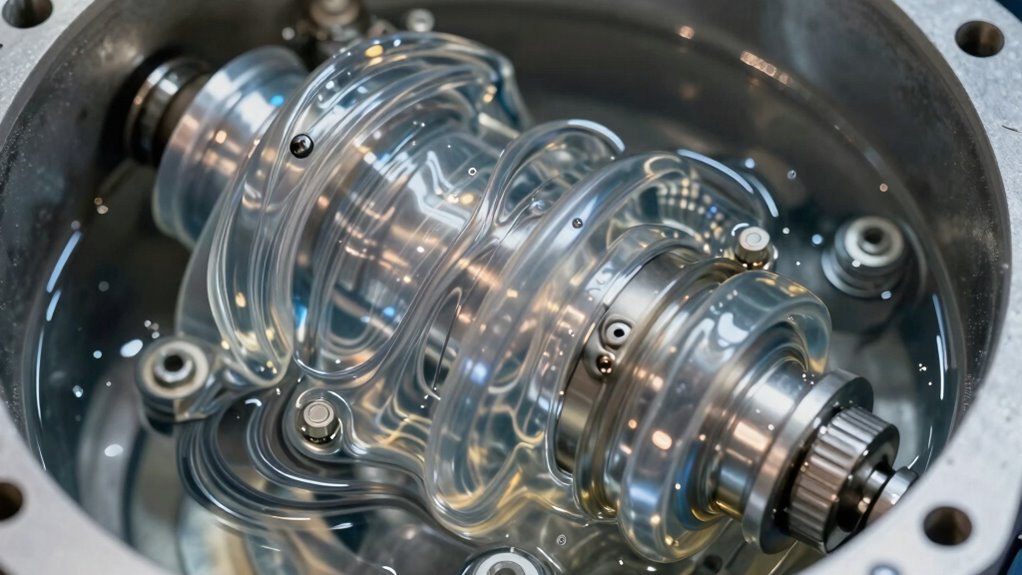
At the heart of torque converter lockup is the behavior of transmission fluid as it flows through the converter. The fluid’s fluid dynamics—its movement, pressure, and flow characteristics—determine how smoothly the lockup clutch engages and disengages. If the fluid flow is turbulent or inconsistent, it can cause uneven pressure distribution, leading to what’s known as shudder. This shudder manifests as a rhythmic vibration or shaking, often felt through the vehicle’s floor or seat. Essentially, the problem arises from the way the fluid interacts with friction surfaces inside the converter.
Fluid flow turbulence causes uneven pressure, leading to shudder during torque converter lockup.
The friction properties of the transmission fluid play a pivotal role here. The fluid must possess the right friction coefficients to enable a smooth lockup. When the friction is too high, the clutch can engage abruptly, causing harsh engagement or shudder. Conversely, if the friction is too low, the clutch may slip or fail to fully lock up, leading to increased heat and reduced efficiency. The ideal transmission fluid balances these friction properties, allowing for a seamless transition between slipping and locking states.
In practical terms, when you experience shudder, it’s often because the friction properties of the fluid are not aligning with the fluid dynamics inside the converter. Contaminated or degraded fluid can alter these properties, disrupting the smooth engagement of the lockup clutch. Over time, heat generated from slipping can change the fluid’s viscosity, further aggravating the problem. That’s why regular fluid changes and using the manufacturer-recommended fluid are vital for maintaining optimal fluid dynamics and friction properties.
Understanding how fluid dynamics and friction properties influence lockup engagement helps you appreciate the complexity behind smooth transmission operation. When shudder occurs, it’s a sign that either the fluid’s behavior or its interaction with the converter’s friction surfaces is compromised. Addressing this often involves inspecting and replacing the transmission fluid, ensuring it has the correct viscosity and friction characteristics to promote seamless lockup engagement. This proactive approach keeps your transmission functioning efficiently and prevents long-term damage caused by heat and excessive wear.

Valvoline Multi-Vehicle ATF Full Synthetic Automatic Transmission Fluid 1 Quart
For use in 95% of vehicles including most CVTs in operation with US registered light duty applications
As an affiliate, we earn on qualifying purchases.
As an affiliate, we earn on qualifying purchases.
Frequently Asked Questions
How Does Fluid Temperature Affect Torque Converter Lockup?
When fluid temperature changes, it affects fluid viscosity, making it more or less resistant to flow. Since torque converter lockup depends on fluid friction, higher temperatures lower viscosity, potentially causing premature lockup or shudder. Conversely, colder fluid increases viscosity, delaying lockup. This temperature sensitivity impacts smoothness and efficiency, so maintaining proper fluid temperature guarantees consistent lockup performance and reduces shudder by keeping viscosity within ideal ranges.
Can Lockup Shudder Be Completely Eliminated?
Imagine smoothing out a rippling pond; perfect torque converter design aims for this calm. You can’t always eliminate lockup shudder entirely, but optimizing fluid friction properties and refining torque converter design can reduce it notably. Think of it as tuning a musical instrument—careful adjustments minimize the vibrations. While complete elimination may be tough, consistent improvements make your drive smoother, lessening the shudder’s impact and enhancing overall performance.
What Role Do Transmission Fluid Additives Play?
You can improve transmission performance by using fluid additives, which contain specific additive formulations that enhance fluid stability. These additives help reduce shudder and smooth out lockup engagement by stabilizing the transmission fluid’s properties. When you choose the right additives, they help maintain consistent friction characteristics, preventing fluid breakdown and ensuring smoother shifting and lockup operations, ultimately leading to a more comfortable driving experience.
How Does Driving Style Influence Lockup Behavior?
Your driving habits and transmission tuning directly influence lockup behavior. Gentle accelerations and smooth shifts encourage seamless lockup, reducing shudder and wear. Aggressive driving can cause abrupt lockup, increasing vibrations. Proper transmission tuning guarantees lockup occurs at ideal speeds, enhancing efficiency. By maintaining steady driving habits and ensuring your transmission is correctly tuned, you promote smoother lockup, extend transmission life, and improve overall vehicle performance.
Are There Specific Vehicles More Prone to Lockup Shudder?
Certain vehicles are more prone to lockup shudder due to their transmission design and vehicle compatibility. You’ll find that trucks and older models with conventional automatics often experience this issue more than newer, electronically controlled transmissions. If your vehicle has a less refined transmission setup or specific fluid friction curves, you’re more likely to notice shudder during lockup. Regular maintenance and understanding your vehicle’s design can help mitigate this problem.

COEFEPIY Rebuild Kit for 30 Series Torque Converter Driven Pulley
Easy to install: Excellent upgrade smooth extra power easy spring change.
As an affiliate, we earn on qualifying purchases.
As an affiliate, we earn on qualifying purchases.
Conclusion
Understanding how fluid friction curves influence torque converter lockup helps you grasp the delicate dance inside your transmission. Think of it as a silent partner guiding your car smoothly forward, yet prone to shudder if misaligned. By mastering these details, you prevent unwanted vibrations and enjoy seamless driving—transforming a complex machine into a well-choreographed performance. Remember, in the world of transmissions, a small change can turn chaos into harmony, ensuring your ride remains steady and reliable.

Genuine Ford Fluid XL-3 Friction Modifier Additive – 4 oz.
For use on certain limited-slip differentials to reduce chatter and hypoid gear noise levels
As an affiliate, we earn on qualifying purchases.
As an affiliate, we earn on qualifying purchases.

GM Genuine Parts 24297076 Automatic Transmission Torque Converter
Some GM Genuine Parts may have formerly appeared as ACDelco GM Original Equipment (OE)
As an affiliate, we earn on qualifying purchases.
As an affiliate, we earn on qualifying purchases.