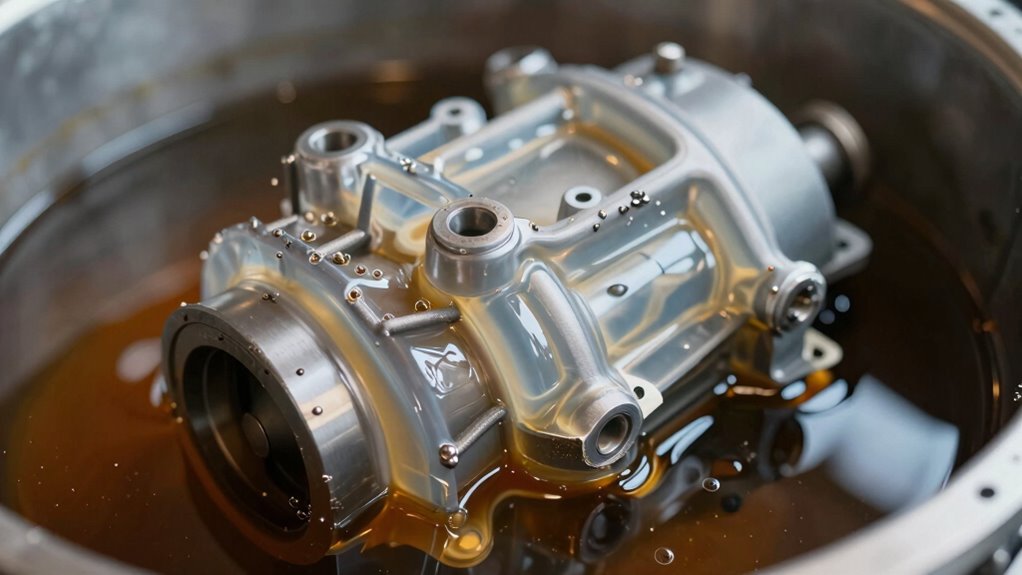

If your torque converter shudders, the first thing to check is your transmission fluid. Contaminated or degraded fluid—dark, smelly, or murky—causes poor lubrication and hydraulic issues that lead to shuddering. Regularly inspect the fluid level and condition; if it’s dirty or burnt-smelling, a fluid change or flush can often fix the problem. Understanding how fluid condition affects your transmission helps prevent damage, so keep exploring for more tips.
Key Takeaways
- Check if transmission fluid is dark, cloudy, or has a burnt smell, indicating contamination or degradation.
- Ensure fluid level is correct; low or overfilled fluid can cause shuddering during converter lockup.
- Inspect for water contamination, which appears as milky or frothy fluid, impairing hydraulic function.
- Look for metal shavings or debris in the fluid, signifying internal wear and potential converter issues.
- Replace or flush contaminated or degraded fluid to restore proper hydraulic pressure and reduce shudder.

A-Premium Transmission Oil Pan with Gasket & Drain Plug Compatible with Ram 1500 2500 3500 & Jeep Grand Cherokee & Dodge Charger, Challenger, Charger & Chrysler 300, 8-Speed Automatic Transmission
[Vehicle Fitment]: Compatible with Chrysler 300 2013-2021 (Rear Wheel Drive); Fit for Dodge Challenger 2015-2021 (Rear Wheel Drive),…
As an affiliate, we earn on qualifying purchases.
As an affiliate, we earn on qualifying purchases.
Recognizing Signs of Torque Converter Shudder
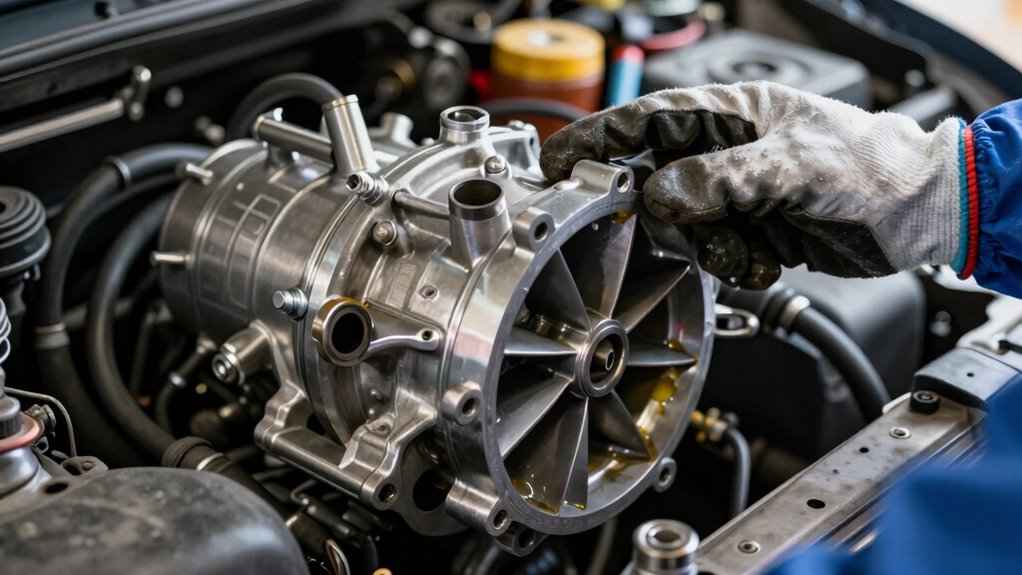
Recognizing the signs of torque converter shudder is crucial for timely diagnosis and repair. You’ll notice a rough, rumbling sensation during acceleration, especially when the transmission shifts into lockup. It may feel like driving over rumble strips or experiencing vibrations that pulse through the vehicle. Often, the shudder occurs during the changeover between gears or when the torque converter engages or disengages. You might also feel slipping, with the engine revving higher than usual without a corresponding increase in speed. Dark, burnt-smelling fluid on the dipstick signals contamination or degradation, which can cause shudder. Pay close attention to these symptoms—they’re your clues to a potential fluid issue. Proper fluid maintenance is essential in preventing such problems. Early detection helps prevent further damage and keeps your transmission running smoothly.

MotorPower Care Automatic Transmission Flush Cleaner Stop Slipping and Hesitation Clean solenoids, Certified Product
For All Vehicles with Automatic Transmission & CVT.
As an affiliate, we earn on qualifying purchases.
As an affiliate, we earn on qualifying purchases.
How Fluid Contamination Causes Shudder in the Torque Converter
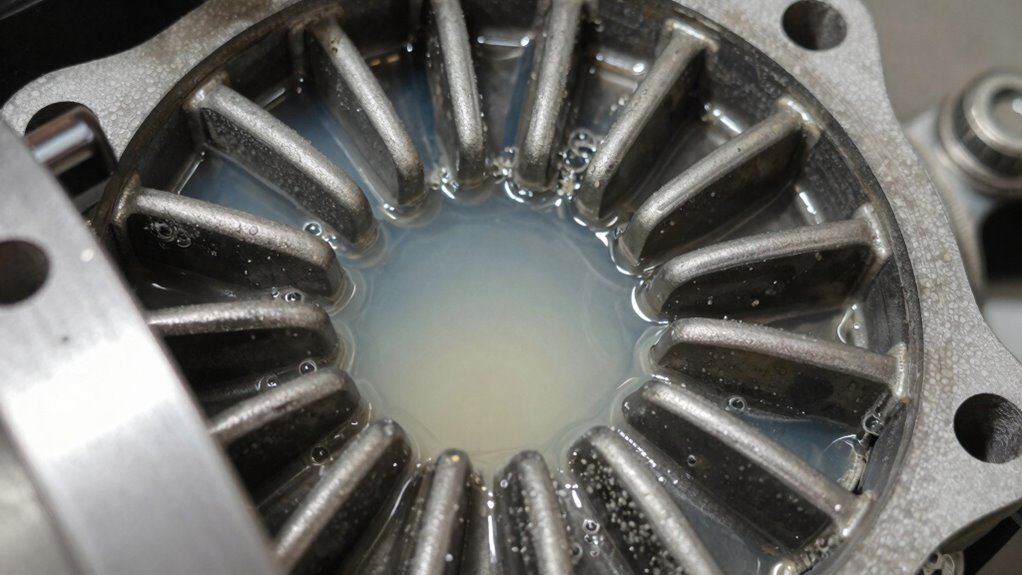
Contaminants like dirt, metal particles, or water in your transmission fluid can disrupt the torque converter’s smooth operation. These impurities often change the fluid’s color, turning it dark or brown, which signals problems inside. If ignored, they can cause internal damage that leads to shuddering and other transmission issues. Regularly checking and maintaining the fluid quality can help prevent these issues from developing.
Contaminant Types and Impact
Ever wonder how dirt and debris cause your torque converter to shudder? Contaminants like dirt, metal shavings, and water disrupt fluid flow, impairing smooth operation. Dirt and debris increase friction and clog internal passages, causing inconsistent torque transfer. Metal particles come from worn gears and bearings, accelerating wear and damaging components. Water contamination reduces lubrication, promotes corrosion, and leads to abrupt shifts or shuddering. Degraded fluid, dark and burnt smelling, indicates breakdown, which hampers proper hydraulic pressure. These contaminants compromise the transmission’s ability to engage smoothly, especially during lockup. As a result, you feel vibrations or shuddering. Regular fluid checks and replacements help prevent these issues by removing harmful particles, maintaining clean fluid, and ensuring your torque converter operates smoothly. Additionally, using high-quality, properly rated transmission fluid supports fluid integrity and helps mitigate contamination risks.
Fluid Color Indicators
When transmission fluid becomes contaminated, its color changes noticeably, providing a clear visual warning of trouble. You’ll notice these signs:
- The fluid darkens from bright pink to deep brown or red, indicating breakdown.
- It appears murky or cloudy, signaling dirt, debris, or metal shavings.
- Water contamination makes the fluid look milky or frothy.
- A burnt smell accompanies the color change, revealing overheating or fluid breakdown.
- Regular fluid checks help detect early signs of contamination before shudder occurs.
These visual clues help you identify issues early, preventing further damage. If the fluid looks dark, dirty, or smells burnt, it’s time for a transmission fluid flush and replacement. Regular inspections of fluid color are vital for maintaining smooth torque converter operation and avoiding shudder.
Internal Damage Risks
Contaminated transmission fluid directly risks internal damage to your torque converter by introducing dirt, debris, and metal shavings that wear down internal components. These particles act like abrasives, causing excessive friction and deterioration of the converter’s delicate parts. Over time, this damage can lead to cracks, warping, or broken fins inside the torque converter, impairing its ability to transfer power smoothly. Metal shavings circulating in the fluid can also clog internal passages, reducing fluid flow and increasing heat buildup. As damage worsens, shuddering becomes more frequent and severe, risking costly repairs. Regularly checking your fluid’s condition and replacing it when contaminated helps prevent these internal damages, ensuring your torque converter functions properly and prolongs its lifespan. Maintaining proper fluid quality is essential for optimal performance and preventing fluid-related issues like shudder.

COEFEPIY Rebuild Kit for 30 Series Torque Converter Driven Pulley
Easy to install: Excellent upgrade smooth extra power easy spring change.
As an affiliate, we earn on qualifying purchases.
As an affiliate, we earn on qualifying purchases.
How to Check Your Transmission Fluid Levels and Condition

To guarantee your transmission runs smoothly, start by performing a proper fluid check following your vehicle’s instructions. Look at the dipstick to recognize fluid conditions—healthy fluid should be pink and clear, while dark or burnt-looking fluid signals trouble. Interpreting the dipstick results helps you determine if your fluid levels are adequate or need attention before investigating further. Additionally, understanding how fluid quality impacts transmission health can help you identify early signs of potential issues.
Proper Fluid Check Procedure
Checking your transmission fluid properly is essential for maintaining smooth operation and preventing shudder issues. To do this effectively, follow these steps:
- Park your vehicle on a level surface and turn on the engine, allowing it to warm up.
- Locate the transmission dipstick, usually near the engine, and pull it out.
- Wipe the dipstick clean with a rag, then reinsert it fully.
- Remove the dipstick again to check the fluid level and color, looking for a pink hue and smooth consistency.
- Remember to observe the fluid’s proper condition, including its aroma and viscosity, to detect early signs of contamination or deterioration.
Ensure the fluid reaches the “Full” mark, and observe its condition. If it’s dark, burnt smelling, or contaminated, it’s time for a flush and fluid replacement. Proper checkups prevent shudder and prolong transmission life.
Recognizing Fluid Conditions
Understanding the condition of your transmission fluid is essential for diagnosing shudder issues and maintaining smooth operation. Check your dipstick regularly, noting the color, smell, and level. Healthy fluid should be pink and slightly translucent, with a faint smell. Dark, burnt fluid indicates contamination or degradation. If the fluid appears dark brown or red, it’s time for a flush. Low levels cause insufficient lubrication, leading to shudder. Use the table below to interpret fluid conditions:
| Condition | Appearance | Smell | Action |
|---|---|---|---|
| Healthy | Pink, translucent | Slightly sweet or none | Maintain regular checks |
| Contaminated | Dark brown, red, or black | Burnt or rancid | Flush and replace fluid |
| Degraded | Dark, thin, or streaked | Faint or burnt | Schedule a fluid change |
| Low Level | Minimal on dipstick | N/A | Top off with correct fluid |
Ensuring the transmission fluid is in good condition is crucial for preventing fluid-related issues such as shudder.
Interpreting Dipstick Results
Ever wondered if your transmission fluid is in good shape? Checking your dipstick is simple but vital. First, pull out the dipstick and wipe it clean with a rag to see the true level. Then, reinsert it fully and pull it out again. Next, observe the fluid’s appearance:
- Bright pink or red, indicating healthy fluid.
- Dark brown or black, showing contamination or degradation.
- Slightly smeared, meaning low fluid or uneven distribution.
- A burnt smell, signaling overheating or fluid breakdown.
If the fluid looks dark or smells burnt, it’s time for a flush. Low levels or contaminated fluid often cause shuddering, so proper interpretation helps prevent bigger issues. Regularly inspecting your transmission fluid and understanding its condition can also help you catch potential problems early.

Transmission Fluid Tester Kit Gasoline & Diesel Gearbox Oil Diagnostic Tool High-Precision Diagnostic Analysis Tool with 31.5in Probe Transmittance/Temperature Testing, 2.8in Display (4 Batteries)
【WHY NEED IT】Our transmission fluid tester features an advanced optical probe that measures light transmittance within the transmission…
As an affiliate, we earn on qualifying purchases.
As an affiliate, we earn on qualifying purchases.
What Dirty or Worn-Out Fluid Does to Your Transmission and Converter
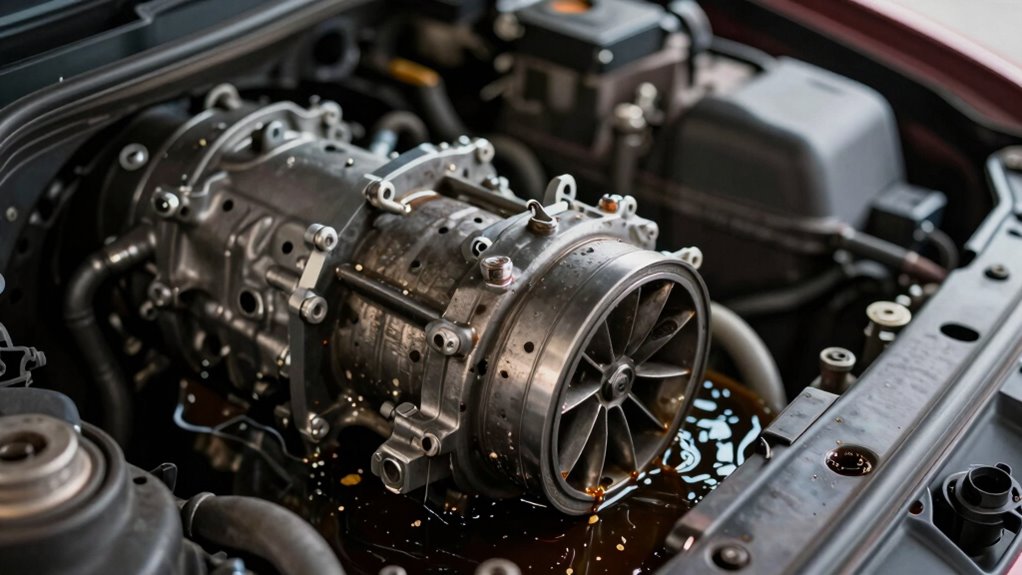
Dirty or worn-out transmission fluid can severely impair your vehicle’s performance by disrupting the smooth operation of the torque converter. Contaminants like dirt, debris, and metal particles thicken the fluid, making it less able to lubricate and cool internal components. When the fluid appears dark brown or red instead of its healthy pink hue, it’s a sign it’s degraded. Water contamination or metal shavings wear down parts, causing increased friction and potential shuddering. Over time, the fluid’s lubricating properties diminish, leading to slipping, grinding, and even overheating. This breakdown creates inconsistent power transfer and can damage seals and internal parts. Regular fluid checks and timely flushes guarantee your transmission and converter stay clean, functioning efficiently, and avoiding costly repairs. Ensuring that your transmission fluid is free of contaminants helps maintain optimal fluid quality and prolongs the lifespan of your vehicle’s components.
How to Fix Torque Converter Shudder Caused by Fluid Problems
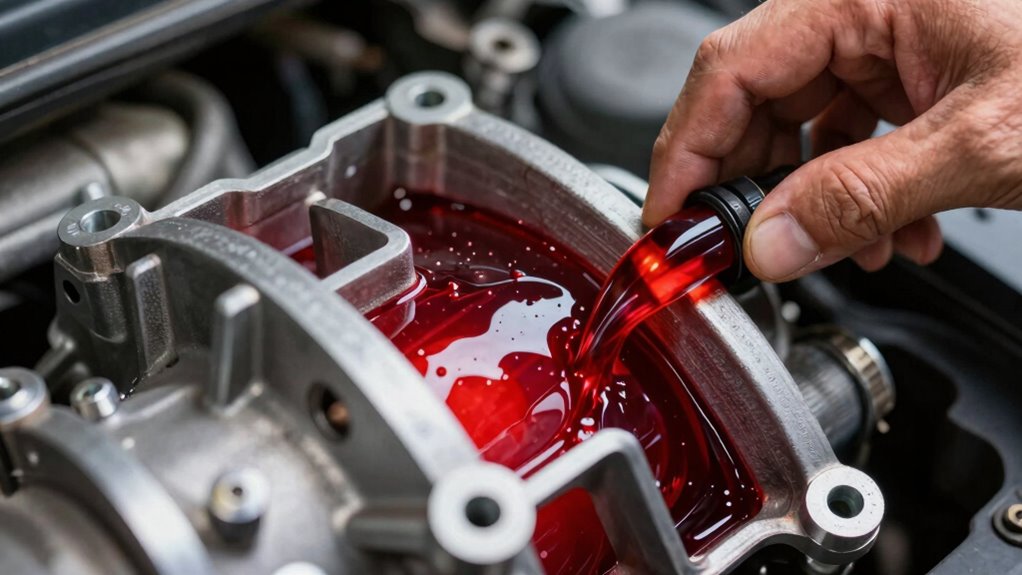
Fixing torque converter shudder caused by fluid issues starts with addressing the condition of your transmission fluid. First, check the fluid level with the dipstick; it should be full and bright pink. If it’s dark, burnt, or smells off, it’s time to replace it. Next, perform a transmission fluid flush:
Start by checking and replacing your transmission fluid to prevent torque converter shudder.
- Drain the old, contaminated fluid.
- Remove and replace the transmission filter.
- Refill with the recommended type, like Mercon V.
- Add a shudder conditioner if available.
This process clears debris, restores proper lubrication, and cools internal parts. Proper fluid maintenance is key to preventing future issues. If the shudder persists after these steps, further inspection or professional help might be necessary.
When to Seek Professional Help for Transmission and Converter Issues
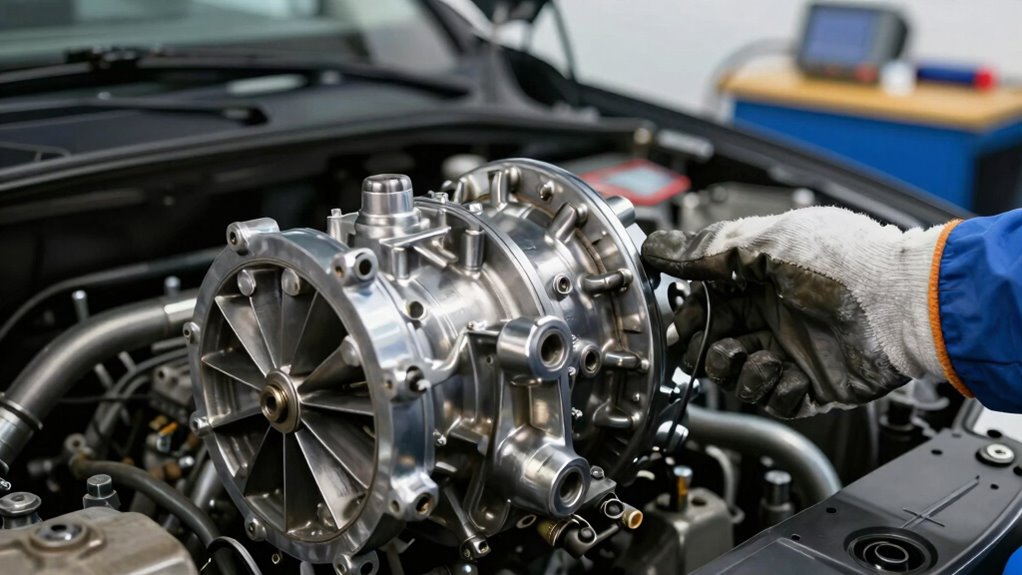
Recognizing when to seek professional help for transmission and converter issues is essential to prevent further damage and costly repairs. If your vehicle exhibits persistent shuddering during acceleration or lockup, despite fluid checks and replacements, it’s time to consult a mechanic. Unusual noises, slipping gears, or a burning smell indicate internal problems that require expert diagnosis. Additionally, if the transmission fluid remains dark or contaminated after a flush, or if you notice overheating signs, professional intervention is necessary. Ignoring these symptoms can lead to severe damage to the transmission or torque converter, increasing repair costs. When in doubt, trusting a certified technician ensures accurate diagnosis and proper repairs, helping you avoid extensive damage and ensuring your vehicle’s longevity. Regular maintenance and inspections can also help catch issues early before they escalate.
Frequently Asked Questions
Can Low Transmission Fluid Alone Cause Torque Converter Shudder?
Yes, low transmission fluid alone can cause torque converter shudder. When fluid levels drop, it fails to lubricate and cool the internal components properly, leading to increased friction and metal wear. This imbalance disrupts smooth power transfer, causing shudder during acceleration or lockup. Always check your transmission fluid first—if it’s low, topping it up or replacing it can often resolve the shudder before inspecting other parts.
How Often Should Transmission Fluid Be Checked for Optimal Performance?
You should check your transmission fluid at least every 30,000 miles or once a year, whichever comes first. Regular inspections help you catch contamination, low levels, or degradation early before they cause shudder or damage. Always check the fluid when the engine is warm and the vehicle is on a level surface. Keep an eye on fluid color and smell, and top up or replace as needed to maintain smooth shifting and performance.
What Are the Risks of Ignoring Fluid Contamination in the Transmission?
Ignoring fluid contamination can cause serious transmission damage, with up to 80% of transmission failures linked to neglected fluid issues. You risk costly repairs, reduced fuel efficiency, and complete transmission failure. Contaminants like dirt and metal particles accelerate wear, while degraded fluid causes overheating and component failure. Regularly checking and changing your transmission fluid helps prevent these risks, ensuring smooth operation and extending your transmission’s lifespan. Don’t overlook fluid health—your vehicle depends on it.
Are There Specific Signs Indicating Fluid Breakdown Before Shudder Occurs?
You can spot fluid breakdown before shudder happens by checking for a burnt smell, dark or cloudy color, and a lack of pink hue on the dipstick. If the fluid appears degraded, it may feel thicker or stickier, and you might notice overheating signs like a higher transmission temperature. Regularly inspecting your transmission fluid helps catch these issues early, preventing shudder and costly repairs down the line.
Is a Fluid Flush Effective for All Types of Transmission Shudder Issues?
A fluid flush isn’t effective for all transmission shudder issues. If the shudder stems from mechanical problems like worn bearings, damaged solenoids, or internal components, flushing the fluid won’t fix the root cause. However, if contamination or fluid breakdown causes the shudder, a flush can restore proper lubrication and smooth operation. Always diagnose the specific cause before opting for a flush to guarantee it’s the right solution.
Conclusion
By keeping an eye on your transmission fluid and addressing any contamination or wear, you can prevent torque converter shudder from sneaking up like an unwelcome shadow. Think of your fluid as the blood of your transmission—when it’s clean and healthy, everything runs smoothly. Regular checks and timely fixes keep your car humming along, turning potential trouble into a distant memory. Don’t let fluid issues turn your ride into a rough ride; stay vigilant and keep things flowing smoothly.