Cavitation erosion in your cooling system causes damage that looks like random leaks by gradually wearing away metal surfaces through collapsing vapor bubbles. When pressure drops, vapor bubbles form and violently collapse, punching tiny holes into parts like cylinder liners. This process weakens metal over time, leading to leaks, odd noises, and engine issues. To prevent this damage, proper maintenance, coolant quality, and system checks are essential — continue exploring to learn how to protect your engine more effectively.
Key Takeaways
- Cavitation erosion causes tiny holes and pitting, which can mimic the appearance of random coolant leaks on engine components.
- It results from vapor bubble collapse in the cooling system, damaging metal surfaces without actual fluid leakage.
- Visible signs include surface flaking and erosion, often mistaken for leaks or cracks in engine parts.
- Cavitation-related damage may lead to coolant loss, but the leaks are caused by material erosion, not gasket failure.
- Detecting cavitation requires inspecting internal surfaces, as surface damage can resemble leaks but isn’t caused by fluid escape.
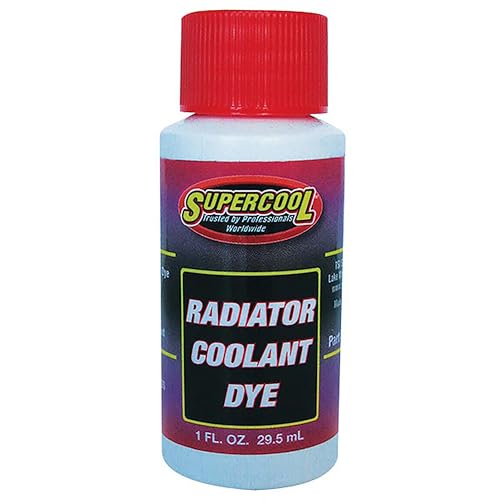
TSI Supercool Synthetic U/V Leak Detection Dye, 1 oz, 1 Application
Includes Synthetic U/V Leak Detection Dye
As an affiliate, we earn on qualifying purchases.
As an affiliate, we earn on qualifying purchases.
What Is Cavitation Erosion and How Does It Damage Engine Components?
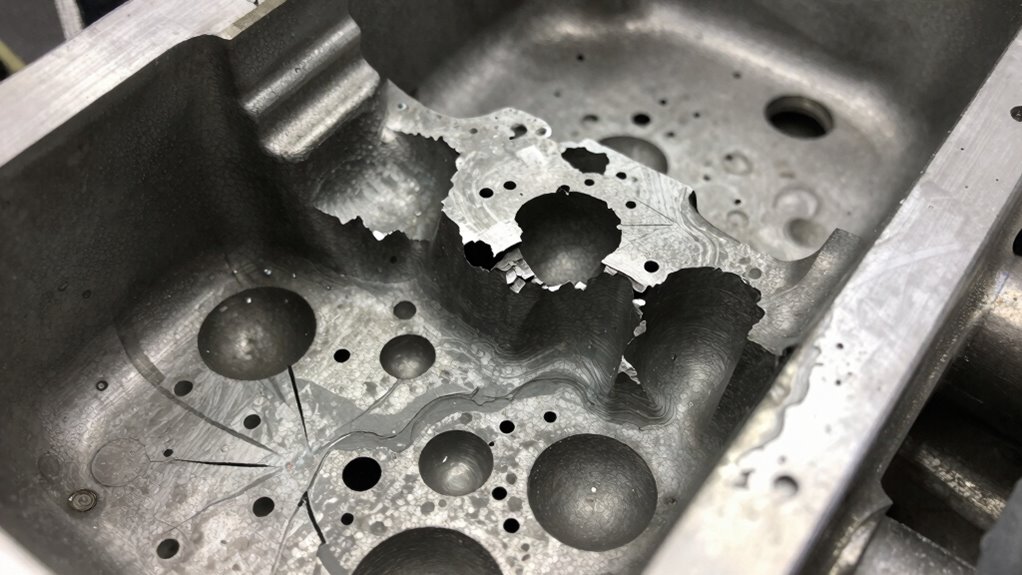
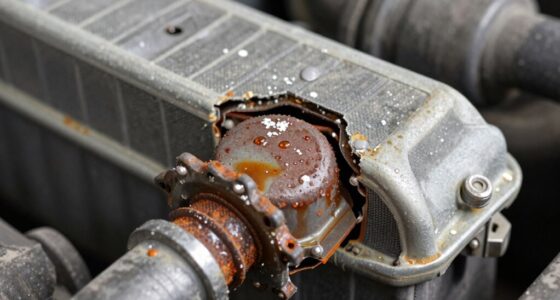
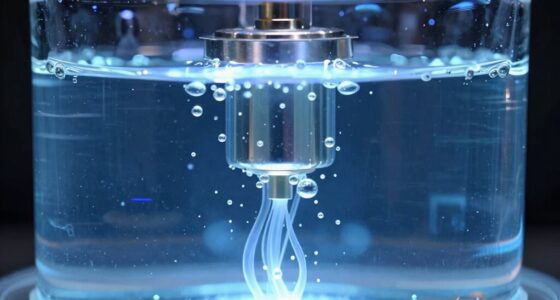
Cavitation erosion occurs when rapid pressure changes in your engine’s cooling system cause vapor bubbles to form and collapse violently. As these bubbles implode, they release powerful shockwaves that punch tiny holes into metal surfaces, especially cylinder liners. Over time, this constant bombardment causes material loss, creating pits and weakening components. You might notice coolant leaks or strange engine noises as the damage worsens. Cavitation doesn’t happen suddenly; it’s a slow process driven by factors like low coolant pressure, improper antifreeze levels, or system leaks. The force from collapsing bubbles can reach up to 60,000 PSI, eroding metal surfaces and compromising engine integrity. Without proper maintenance, cavitation erosion accelerates, leading to costly repairs and potential engine failure.
FILFEEL Pump Impeller Repair Kit Compatible with DF 200 DF 225 250 Outboard Motor 17400 93J02 Replacement
Fit- Engineered to match OEM specifications for outboards, this impeller kit ensures seamless integration with your existing pump…
As an affiliate, we earn on qualifying purchases.
As an affiliate, we earn on qualifying purchases.
How Does Cavitation Form in Cooling Passages and Cylinder Liners?
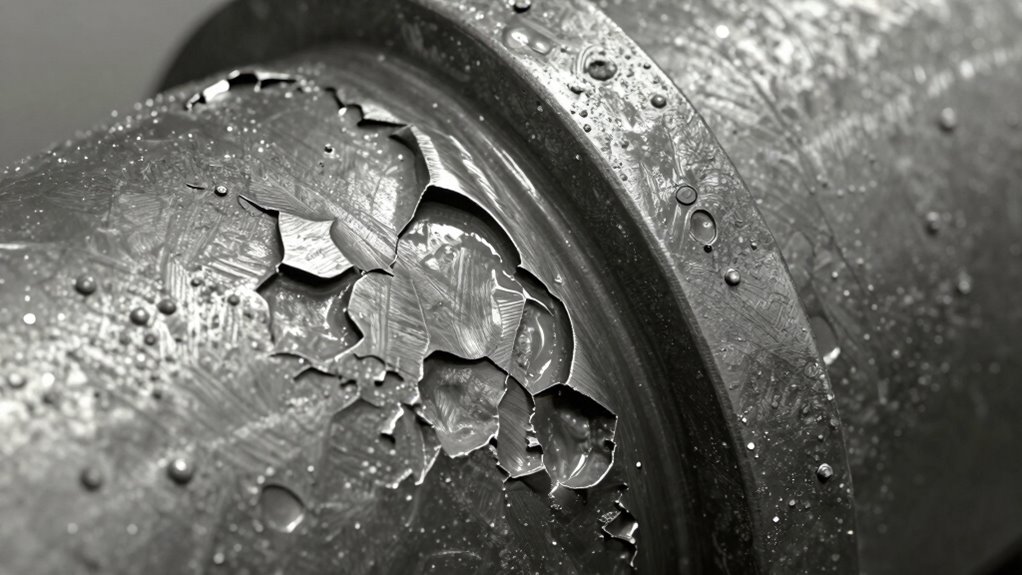
In cooling passages and around cylinder liners, cavitation begins when rapid pressure changes create conditions for vapor bubble formation. As the engine runs, vibrations and flow restrictions cause local pressure drops, making coolant boil and form tiny vapor bubbles. These bubbles are pushed into areas of higher pressure, where they collapse violently, generating shockwaves. The collapse produces intense forces that damage metal surfaces over time. Supporting caregivers’ emotional well-being can help mitigate stress caused by maintenance challenges related to engine repairs.

PT-6400-C Universal Cylinder Liner Puller Removal Tool for Mack Cummins Cat On Wet Liner from 3-7/8” to 6-1/4” Bore Replace M50010-B,3376015
Package included: 1pc Cylinder Liner Puller & 2* Replace feet.
As an affiliate, we earn on qualifying purchases.
As an affiliate, we earn on qualifying purchases.
How Can You Recognize Cavitation Damage Signs in Your Engine?

You can spot cavitation damage early by paying attention to unusual engine noises, like knocking or rattling sounds. Visible signs such as metal flaking or pitting on engine parts also indicate erosion. Additionally, coolant system symptoms like overheating or frequent leaks may point to cavitation-related issues. Being aware of ethical considerations in consumer choices, such as the environmental impact of maintenance repairs, can help you make more informed decisions about addressing engine problems.
Unusual Engine Noises
Have you noticed unusual noises coming from your engine? Cavitation damage can cause distinct sounds that signal trouble. You might hear knocking or rattling noises, especially during acceleration or high RPMs. These sounds result from collapsing vapor bubbles impacting metal surfaces, creating vibrations. High-frequency noises can also be a sign of cavitation forming in the cooling system, which can lead to further damage if not addressed promptly.
Watch out for:
- Sudden, sharp metallic pinging during engine operation
- Continuous knocking that worsens over time
- Rattling sounds when the engine is idling
- High-pitched squeals during acceleration
These noises often indicate cavitation bubbles collapsing near critical engine parts, weakening the liner walls and causing metal fatigue. Ignoring them can lead to severe damage, so pay close attention to any unusual engine sounds. Early recognition helps prevent costly repairs and keeps your engine running smoothly.
Visible Metal Flaking
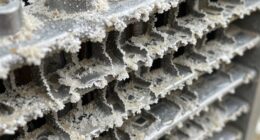
How can you spot cavitation damage just by looking at your engine? One clear sign is visible metal flaking on the cylinder liners or surrounding components. This flaking appears as tiny, irregular chips or peeling patches where the metal surface has been weakened by repeated bubble collapse. It often looks like peeling paint but is actually metal erosion. Recognizing cavitation damage signs early can help prevent extensive engine repairs down the line.
Coolant System Symptoms
Cavitation damage often reveals itself through specific coolant system symptoms that can alert you to underlying problems. You may notice irregularities that signal cavitation erosion is occurring. These signs include:
- Sudden drops in coolant levels without visible leaks
- Overheating engine despite normal coolant levels
- Coolant foaming or bubbling, indicating vapor bubble formation
- Unusual noise from the water pump or coolant circulation system
These symptoms suggest vapor bubbles are collapsing and damaging internal components. Additionally, coolant system maintenance can help prevent cavitation by ensuring proper function and early detection of issues. If you observe any of these signs, it’s essential to inspect your cooling system promptly. Left unchecked, cavitation can cause severe liner erosion, leading to costly repairs. Regular maintenance and monitoring can help catch these symptoms early and prevent extensive damage.

Orion Motor Tech Coolant Pressure Tester Kit, 19pc Radiator Pressure Tester Kit with 15 Radiator Adapters & Wrench, Cooling System Pressure Tester Kit with Vacuum Pump & Probe Thermometer
Comprehensive Tool Set: Orion Motor Tech's 19 pcs coolant pressure tester kit makes detecting internal & external pressure…
As an affiliate, we earn on qualifying purchases.
As an affiliate, we earn on qualifying purchases.
What Are the Main Causes of Cavitation Erosion?
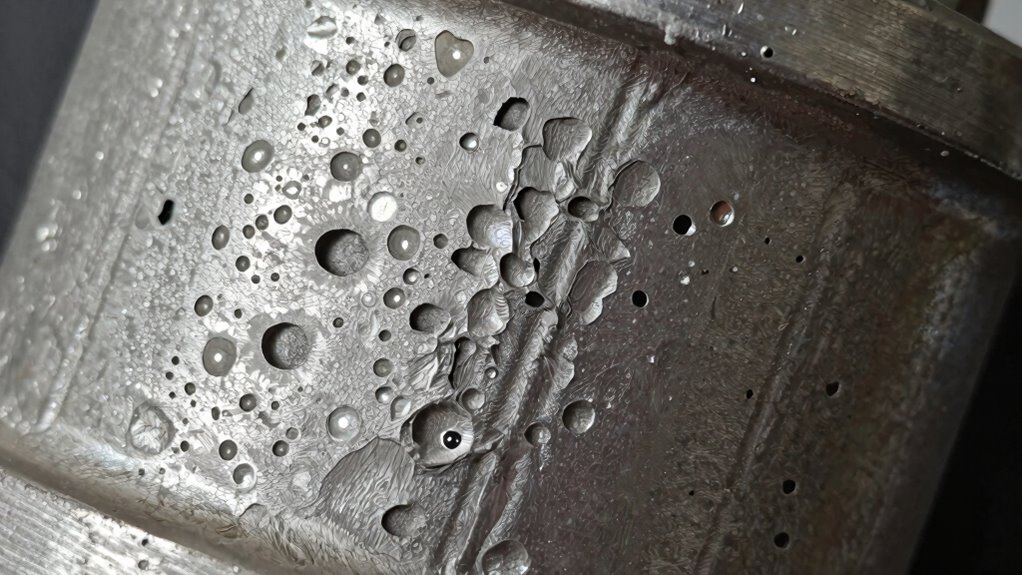
The main causes of cavitation erosion often stem from issues within the cooling system that disrupt pressure balance and promote vapor bubble formation. When coolant pressure drops, vapor bubbles form and collapse violently, damaging metal surfaces. Common problems include insufficient antifreeze, which weakens protective barriers, and leaks or faulty radiator caps that lower system pressure. Excessive clearance between cylinder liners and the crankcase prevents proper absorption of piston vibrations, increasing stress on liners. Using incorrect coolant, like acidic water, reduces corrosion resistance. Operating engines below ideal temperature also lowers coolant pressure, encouraging vapor bubble development. Additionally, rapid coolant flow or turbulence caused by obstructions or constrictions in cooling passages creates localized vacuum zones. Poor coolant maintenance can further exacerbate these issues by allowing debris and contaminants to impair flow and pressure stability. These factors collectively increase the likelihood of vapor bubble formation and cavitation damage over time.
How Can You Prevent Cavitation Damage in Your Cooling System?
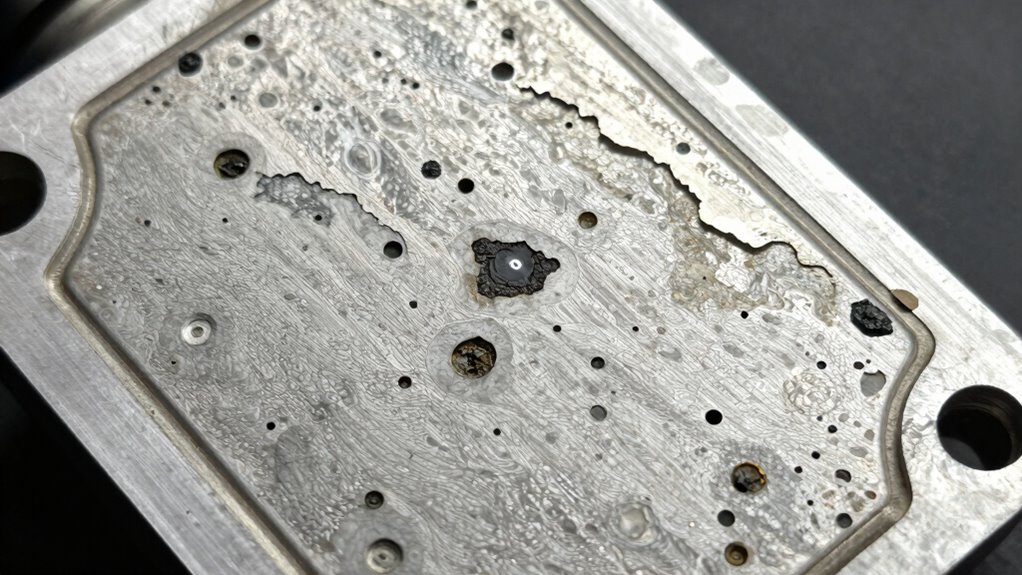
Preventing cavitation damage starts with proper maintenance and system design. You should regularly check coolant levels and quality to guarantee ideal pressure and prevent vapor bubble formation. Using the correct coolant type, like fully formulated or waterless options, helps create a protective barrier on metal surfaces. Maintain consistent system pressure with a properly functioning radiator cap and avoid leaks that lower pressure. Keep the cooling system clean by flushing and replacing coolant as recommended, removing deposits that can promote bubble formation. Additionally, ensure your system operates within the proper temperature range to avoid operating conditions that favor cavitation. Proper piercing hygiene and maintenance are also essential to prevent contamination that could contribute to system issues.
- Use specified coolants and additives to form protective films
- Regularly check and maintain system pressure
- Keep coolant clean and replace it on schedule
- Avoid leaks and operating below ideal temperatures
Why Is Coolant Quality and Additives Important for Cavitation Prevention?

Maintaining high coolant quality and proper additives is essential because they form a protective barrier that shields metal surfaces from cavitation damage. Quality coolant contains corrosion inhibitors like nitrite and molybdate, which create a thin oxide film on liner walls, preventing vapor bubble implosion. Additives also help maintain proper pH levels and prevent mineral deposits that could promote bubble formation. When coolant degrades or becomes contaminated, these protective layers break down, exposing metal to cavitation forces. Using the correct coolant type and ensuring additives are at proper levels help reduce vapor bubble formation and collapse. This minimizes pitting and erosion, extending the lifespan of engine components. Regularly checking coolant condition and replenishing additives is crucial to prevent cavitation-related damage. Understanding power requirements is also vital to ensure compatibility and proper functioning of cooling system components.
How Should You Monitor and Maintain Your Cooling System to Avoid Cavitation?
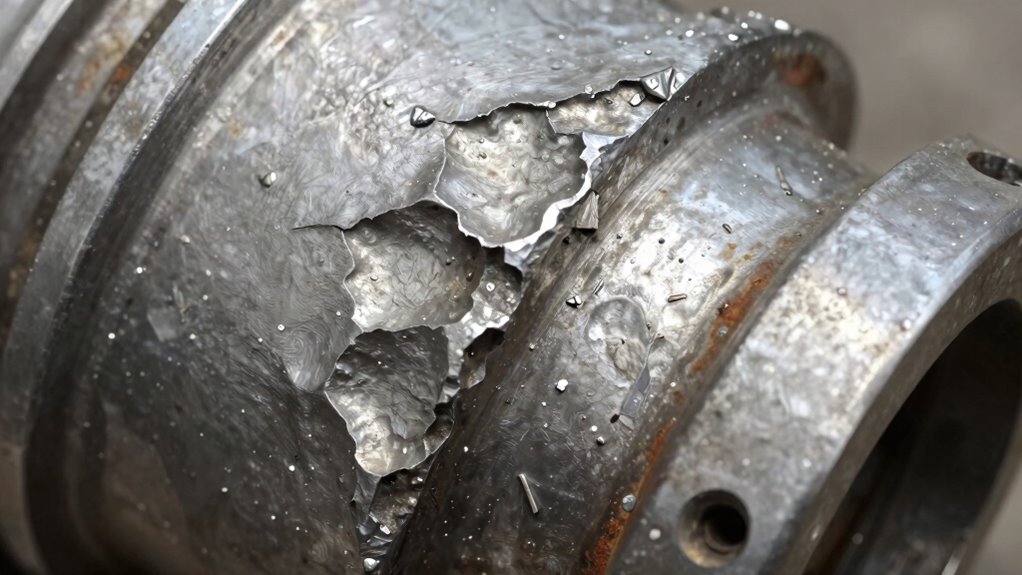
Regularly monitoring your cooling system is essential to prevent cavitation damage because it helps catch issues before they escalate. Keeping an eye on coolant levels, pressure, and temperature guarantees ideal conditions that minimize vapor bubble formation. You should:
- Check coolant concentration and pH regularly to prevent corrosion and bubble formation
- Inspect for leaks and faulty radiator caps that reduce system pressure
- Replace coolant according to manufacturer schedules to avoid contamination and additive depletion
- Clean cooling passages and replace filters to prevent mineral deposits that promote cavitation sites
- Ensure proper airless spray equipment operation, since improper pressure regulation can contribute to cavitation within the system.
Frequently Asked Questions
Can Cavitation Erosion Cause Engine Failure Without Obvious Leaks?
Yes, cavitation erosion can cause engine failure without obvious leaks. When vapor bubbles collapse against metal surfaces, they punch tiny holes, weakening the cylinder liners over time. This damage often occurs quietly, without visible leaks, but can lead to coolant entering the combustion chamber or loss of structural integrity. Regular maintenance and monitoring coolant quality help prevent unnoticed cavitation damage that could ultimately cause engine failure.
How Long Does It Take for Cavitation Damage to Become Visible?
Cavitation damage can stay hidden for months or even years before it shows. At first, tiny pits form silently, gradually growing with each collapse of vapor bubbles. You might notice nothing at all until a critical point when the damage becomes visible—small holes turn into larger perforations, risking engine failure. The timeline varies, but proactive maintenance is your best defense to catch it early before it’s too late.
Are Some Engine Types More Prone to Cavitation Erosion?
Yes, some engine types are more prone to cavitation erosion. You’ll find that high-performance, turbocharged, or engines with high RPMs tend to experience more cavitation because they create faster coolant flow and greater vibrations. Also, engines with poorly maintained cooling systems, incorrect coolant, or worn components are at higher risk. Regular maintenance and using proper coolants can profoundly reduce cavitation damage in these engines.
Does Higher Engine Speed Increase Cavitation Risk Significantly?
Isn’t it true that speed often amplifies chaos? Yes, higher engine speeds substantially increase cavitation risk because faster impeller rotation and coolant flow create more rapid pressure changes, forming vapor bubbles more frequently. These bubbles collapse violently against metal surfaces, accelerating erosion. As you push your engine to higher RPMs, you’re fundamentally inviting more shockwaves, making vigilant maintenance and proper coolant management essential to prevent severe cavitation damage.
Can Waterless Coolants Completely Eliminate Cavitation Erosion?
Waterless coolants can substantially reduce cavitation erosion but can’t eliminate it entirely. They have lower vapor pressures, making vapor bubble formation less likely during turbulent pressure changes. However, cavitation can still occur if the cooling system isn’t properly maintained, such as with incorrect coolant levels or system leaks. To minimize cavitation damage completely, you need to follow proper maintenance, use correct additives, and guarantee ideal operating conditions alongside choosing waterless coolants.
Conclusion
Keeping an eye on your cooling system can feel like a small task, but it’s often what prevents unexpected leaks and costly repairs. When you catch signs of cavitation early—like unusual noises or tiny leaks—you’re probably avoiding bigger damage down the line. It’s almost like noticing the first cracks in a dam before the whole thing gives way. Stay vigilant, maintain your coolant properly, and your engine will thank you for it.