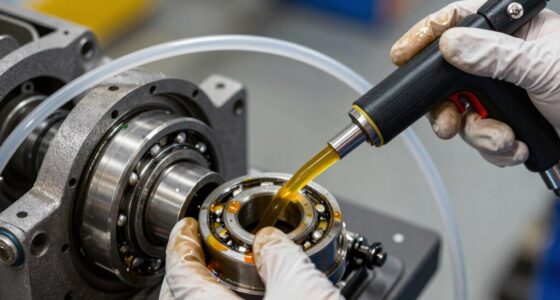

To determine relubrication intervals without guessing, start by consulting manufacturer recommendations and then tailor them based on your equipment’s operating conditions, load, and environment. Use simple condition monitoring tools like vibration or oil analysis and track your data over time to optimize schedules. Establish maintenance routines with lubrication charts or software for consistency. Stick to these data-driven practices to prevent failures and extend machinery life—keep exploring to master this essential maintenance skill.
Key Takeaways
- Use manufacturer guidelines as a baseline, then adjust based on real-world operating conditions.
- Incorporate condition monitoring data, like vibration or oil analysis, to refine intervals.
- Track equipment performance and lubrication history to identify optimal relubrication timing.
- Consider environmental factors such as dust, moisture, and load when setting schedules.
- Implement a digital maintenance system to automate and optimize relubrication intervals over time.
Have you ever wondered how often you should reapply lubricant to keep your machinery running smoothly? It’s a common question, and the answer isn’t always straightforward. The key lies in understanding lubrication frequency and integrating it into your maintenance scheduling. Instead of relying on guesswork or fixed time frames, you can adopt a more precise approach that ensures ideal machine performance and reduces downtime.
Understanding lubrication frequency helps optimize machinery performance and reduce downtime through precise maintenance scheduling.
First, consider that lubrication frequency depends on several factors: the type of equipment, operating conditions, load, speed, and environmental influences. For example, machinery working in dusty or humid environments typically requires more frequent lubrication than equipment operating in clean, dry settings. By analyzing these conditions, you can develop a maintenance schedule tailored to your specific needs. This proactive strategy minimizes the risk of over-lubrication, which can cause excess buildup and attract dirt, and under-lubrication, which leads to increased wear and potential failures.
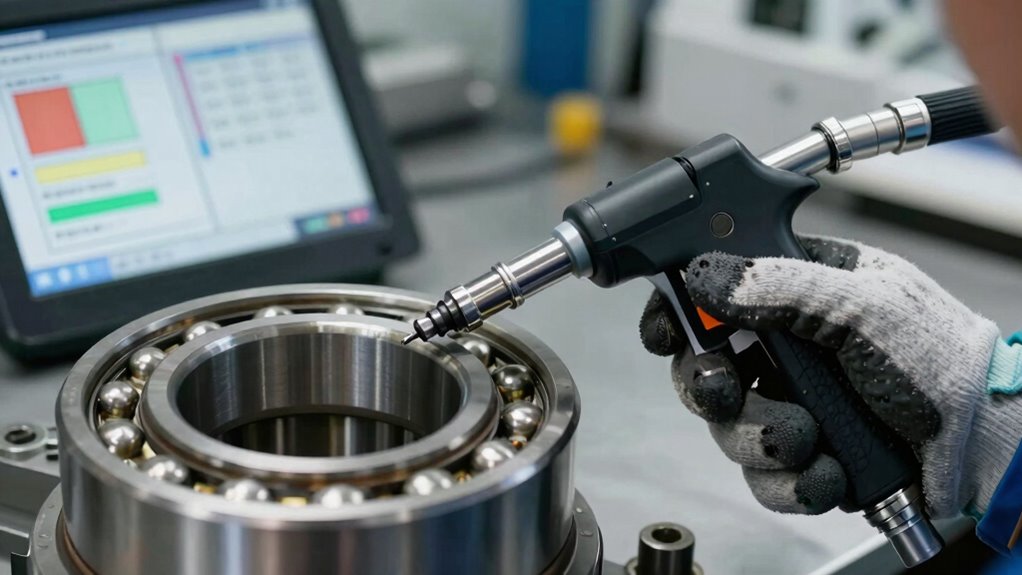
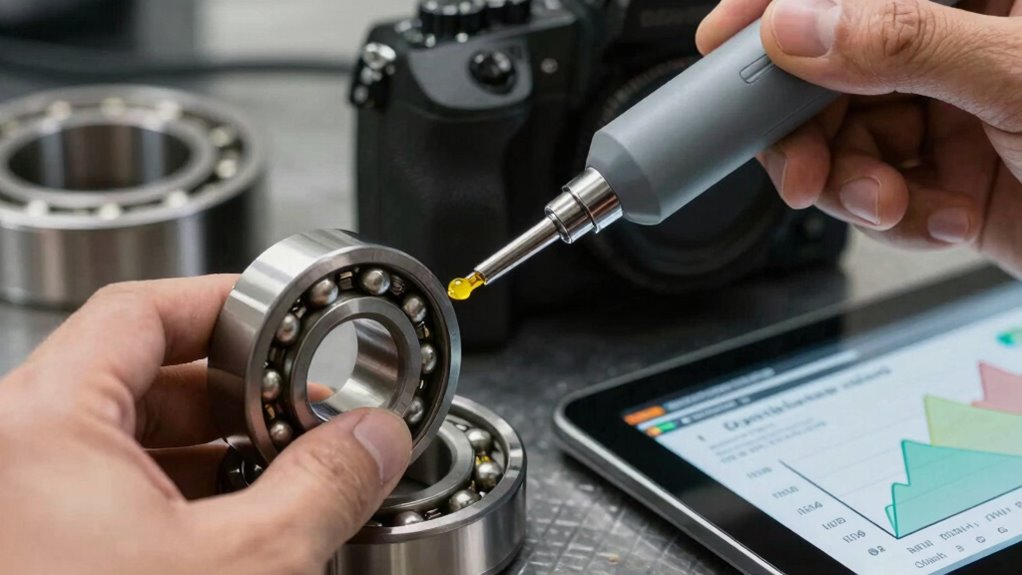
To refine your lubrication frequency, start by consulting the manufacturer’s recommendations, but don’t stop there. Regular inspections are essential; check for signs of inadequate lubrication like unusual noise, vibration, or heat. Tracking these indicators over time helps you adjust your schedule accurately. For critical machinery, implementing condition monitoring tools—such as vibration analysis or oil analysis—can provide real-time insights into lubrication health, enabling more precise timing for relubrication.
Another effective tactic is to establish a maintenance calendar based on historical data and operational patterns. For instance, if you notice that a particular bearing tends to need relubrication every 30 days under certain loads, stick to that interval unless conditions change. Using lubrication charts or digital maintenance software can streamline this process, making it easier to plan and document relubrication activities.
Remember, the goal isn’t just to avoid equipment failure but also to maximize efficiency. Proper lubrication at the right intervals reduces friction, lowers energy consumption, and extends the lifespan of your machinery. Consistent adherence to a well-planned maintenance schedule based on lubrication frequency ensures that your equipment stays in peak condition. It also minimizes unexpected breakdowns, saving you money and time in the long run.
In the end, establishing an effective relubrication interval isn’t about guesswork; it’s about strategic planning rooted in understanding your machinery’s needs. By paying close attention to operating conditions, monitoring performance, and maintaining a disciplined schedule, you can keep your equipment running smoothly and avoid costly downtime. This approach makes your maintenance routine smarter, more reliable, and ultimately more efficient. Incorporating color accuracy concepts from projector technology can even help in visual inspections, making it easier to spot lubrication issues visually.

Oil Analysis Premier Kit by Under My Hood with return postage included
NOT FOR USE ON AIRCRAFT!
As an affiliate, we earn on qualifying purchases.
As an affiliate, we earn on qualifying purchases.
Frequently Asked Questions
How Does Ambient Temperature Affect Relubrication Intervals?
Ambient temperature considerably impacts your relubrication intervals because ambient heat causes lubrication to break down faster, meaning you need to re-lube more often. Temperature fluctuations can also affect the lubrication’s consistency and effectiveness over time. When it’s hotter, your equipment may require more frequent relubrication to prevent wear and damage. Monitoring these temperature changes helps you adjust intervals accurately, ensuring ideal equipment performance and longevity.
Can Machine Vibration Influence Lubrication Frequency Requirements?
Vibration impact can increase lubrication frequency requirements because it accelerates wear and causes lubrication breakdown. If you notice higher machine vibrations, you should inspect and possibly lubricate more often. Noise correlation often indicates excessive vibration or inadequate lubrication, signaling you to adjust your lubrication schedule. By monitoring vibration and noise levels, you can optimize relubrication intervals, preventing equipment failure and extending service life more effectively than guesswork.
What Role Does Lubricant Type Play in Determining Intervals?
You should consider lubricant type when setting relubrication intervals because lubricant viscosity impacts how long it effectively protects your machinery. Thicker lubricants may last longer but can cause buildup, while thinner ones need more frequent application. Additionally, contamination control is essential; using the right lubricant helps prevent dirt and debris from compromising lubrication, ensuring your machine runs smoothly and reducing the need for unnecessary relubrication.
How Do Operating Cycles Impact Relubrication Scheduling?
You should know that operating cycles considerably influence lubrication frequency and maintenance planning. Studies show that machinery running continuously may need relubrication every 50 to 100 hours, while intermittent use extends this interval. By tracking operating cycles accurately, you guarantee timely lubrication, reducing wear and downtime. Adjust your relubrication schedule based on cycle duration, preventing over- or under-lubrication, and optimizing equipment performance and lifespan.
Are There Industry Standards for Establishing Relubrication Intervals?
Yes, industry standards exist for establishing lubrication schedules to optimize maintenance planning. You should follow guidelines from organizations like ISO, ASTM, or manufacturers’ recommendations, which help determine appropriate relubrication intervals based on equipment type, operating conditions, and lubricant properties. By adhering to these standards, you can guarantee consistent lubrication, reduce downtime, and extend equipment life, making your maintenance planning more reliable and effective.

Industrial Vibration Analyzer – VM-428 with External Sensor & PC Software, Acceleration 0.1–300 m/s², Velocity 1–850 mm/s, Displacement 1–3300 µm, 30Hz–14kHz, ISO Machine Rating
PROFESSIONAL VIBRATION ANALYZER – VM-428 WITH EXTERNAL SENSOR – Designed for advanced vibration diagnostics on motors, turbines, pumps,…
As an affiliate, we earn on qualifying purchases.
As an affiliate, we earn on qualifying purchases.
Conclusion
By following the shortcut formula for relubrication intervals, you turn guesswork into a precise science, like hitting the bullseye every time. This simple yet effective method keeps your machinery running smoothly and reduces unexpected breakdowns. Think of it as having a secret weapon in your maintenance toolkit—one that saves time, money, and headaches. Embrace this approach, and you’ll keep your equipment humming like a well-oiled machine, ready to perform at its best.
![Express Schedule Free Employee Scheduling Software [PC/Mac Download]](https://m.media-amazon.com/images/I/41yvuCFIVfS._SL500_.jpg)
Express Schedule Free Employee Scheduling Software [PC/Mac Download]
Simple shift planning via an easy drag & drop interface
As an affiliate, we earn on qualifying purchases.
As an affiliate, we earn on qualifying purchases.

INDUSTRIAL MAINTEANCE
As an affiliate, we earn on qualifying purchases.
As an affiliate, we earn on qualifying purchases.